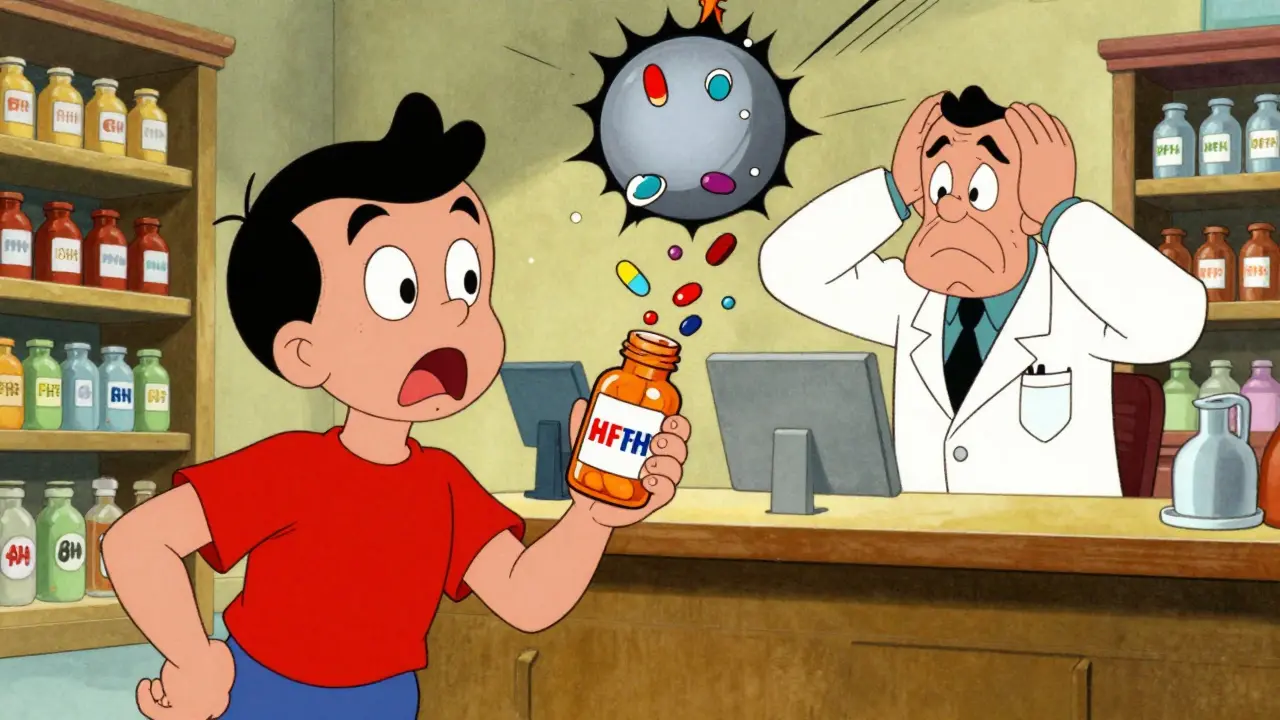
Imagine this: you pick up your prescription, pop open the bottle, and the pills don’t look right. Maybe they’re a different color. Maybe the label says something completely different than what your doctor prescribed. Your stomach drops. You didn’t make a mistake - the pharmacy did. And now you’re holding something that could hurt you.
Pharmacy errors happen more often than you think. In the U.S. alone, about 1.5 million people are affected by medication mistakes every year. Around one in five of all reported medical errors come from pharmacies filling the wrong drug. And it’s not just a paperwork glitch - it can lead to hospital visits, permanent damage, or even death. If you’ve been given the wrong medication, you need to act fast. Here’s exactly what to do, step by step.
Stop Taking the Medication Immediately
Don’t wait. Don’t think, “Maybe it’s just a different brand.” Don’t assume it’s harmless because you’ve taken it once. If the pills, liquid, or inhaler don’t match what your doctor prescribed - stop. Right now.
Some medications can cause serious harm within hours. Taking the wrong blood pressure drug could send your heart into distress. Swallowing someone else’s antidepressant might trigger seizures or hallucinations. Even over-the-counter lookalikes like ibuprofen and acetaminophen can cause liver or kidney damage if taken in the wrong dose or by the wrong person.
Your first job is to protect yourself. Put the medication away. Don’t flush it. Don’t throw it in the trash. Don’t return it to the pharmacy yet. Keep it sealed and safe. You’ll need it as evidence.
Contact Your Doctor Right Away
Call your prescribing doctor the moment you realize something’s wrong. Don’t wait until morning. Don’t text. Call. If they’re not available, go to an urgent care center or emergency room.
Your doctor needs to know what you took, how much, and when. They’ll check for dangerous interactions, assess your symptoms, and decide if you need tests - like blood work or an EKG. In some cases, they might give you a new prescription or advise you to go to the ER immediately.
One real case from 2022 involved a woman who was given ADHD medication instead of her thyroid pills. She didn’t notice until she started feeling jittery and dizzy. By the time she called her doctor, she’d already taken three doses. She ended up in the ER with a rapid heartbeat. Her doctor later said, “If she’d waited another day, we might have lost her.”
Call the Pharmacy - and Speak to the Manager
Don’t just say, “Hey, I got the wrong pills.” Call the pharmacy and ask to speak to the head pharmacist or manager. Tell them clearly: “I received the wrong medication. I need to speak to the person responsible for dispensing this.”
Pharmacists are trained to handle these mistakes. But if you talk to a technician or cashier, they might downplay it. The manager has the authority to review the dispensing log, check the prescription, and initiate an internal investigation. They may also offer to replace the medication at no cost.
Ask them to document the incident. Request a written report or email confirmation that they received your complaint. Write down the name of the person you spoke to, the time, and what they said. If they refuse to document it, write your own note and send it to them by email or certified mail. Keep a copy.
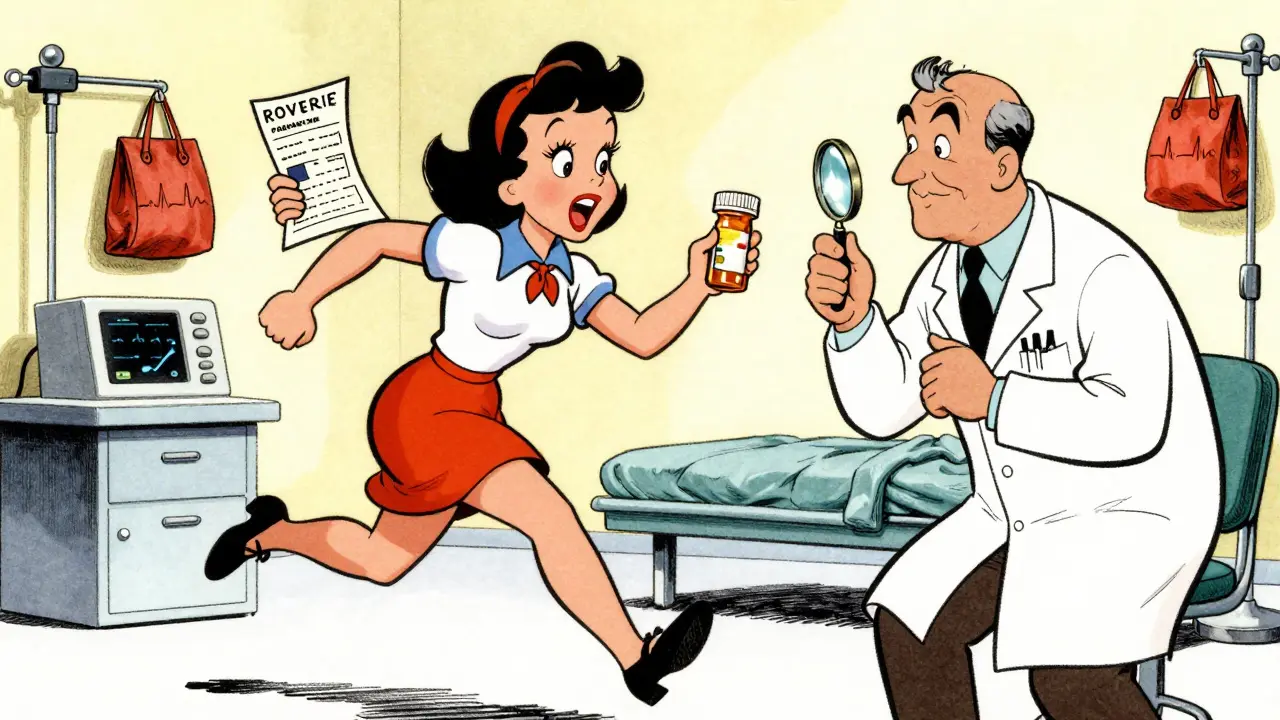
Preserve All Evidence
This is critical - and many people mess it up.
Save everything:
- The incorrect medication (in the original bottle)
- The original prescription label
- The pharmacy bag
- The receipt
- Your doctor’s original prescription (if you have a copy)
- Any photos or videos of the pills, bottle, and label
Do not return the medication to the pharmacy. They might destroy it. Do not give it to anyone - not even a nurse or friend. If you need to take it to the doctor, put it in a sealed bag and label it clearly.
Studies show that 92% of successful legal claims include photographic proof of the error. Video is even better. A short clip showing you reading the label, then holding up the pill next to the prescription - that kind of evidence can make a huge difference if you need to file a complaint or lawsuit later.
Report the Error - to the Right Places
Reporting isn’t just about getting justice. It’s about stopping this from happening to someone else.
In the U.S., you can report pharmacy errors to the FDA’s MedWatch program. They received over 92,000 medication error reports in 2022 - but experts believe less than 15% of all errors are ever reported. Why? Because people think it won’t matter. Or they’re afraid of retaliation.
Here’s what to do:
- File a report with the FDA MedWatch - it’s free and confidential
- Report to your state’s Board of Pharmacy - they license and monitor pharmacies
- Submit a report to the Institute for Safe Medication Practices (ISMP) - they collect data to improve safety nationwide
Some states, like Georgia and California, require pharmacies to report errors internally and to state agencies. But if you don’t report it, they might never know it happened. Your report could trigger an audit or force the pharmacy to fix broken systems.
Understand Your Legal Rights
Pharmacy errors are not just accidents - they’re often preventable. If you were harmed, you may have a legal case.
Pharmacists are trained professionals. They’re supposed to double-check prescriptions. When they don’t, it’s negligence. And negligence can lead to compensation.
Most cases settle out of court. The average settlement for a pharmacy error ranges from $50,000 to $500,000. In severe cases - like permanent injury, birth defects, or death - settlements have exceeded $10 million.
But here’s the catch: time matters. In most states, you have 1 to 3 years from the date you discovered the error to file a claim. In Georgia, it’s 2 years. In New York, it’s 2.5. Miss the deadline, and you lose your right to sue.
Don’t talk to insurance adjusters or pharmacy lawyers without a lawyer of your own. They will ask you for a recorded statement. They might say, “We’re sorry, here’s a gift card.” Don’t accept it. Don’t sign anything. Call a medical malpractice attorney who specializes in pharmacy errors. Most work on contingency - you pay nothing unless they win.
What Causes These Mistakes?
It’s not just “human error.”
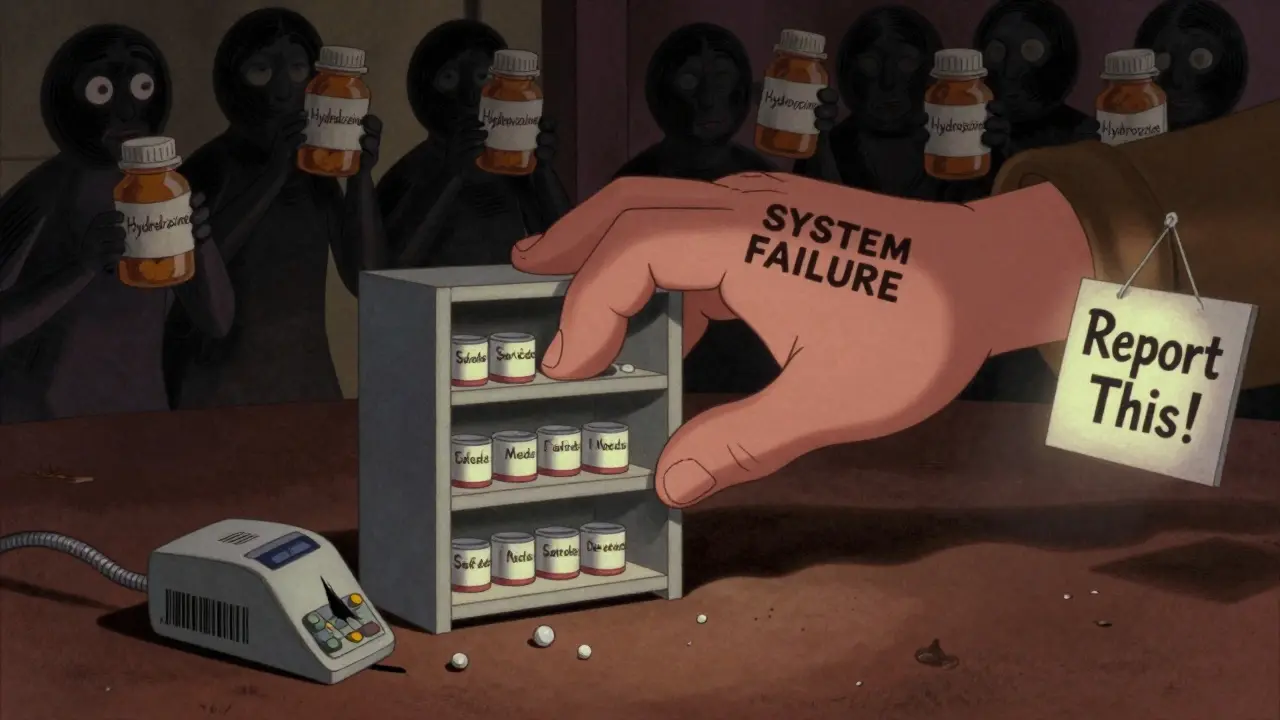
Pharmacies are under pressure. High volume. Low staffing. Rushed shifts. Lookalike drug names (like “Hydralazine” and “Hydroxyzine”) are a nightmare. Poor labeling. Outdated systems.
But the biggest fix? Technology. Barcode scanning reduces dispensing errors by 85%. Yet only 62% of U.S. pharmacies use it. Why? Cost. Resistance. Complacency.
Some pharmacies, like those in the Veterans Health Administration, cut medication errors by 55% in just four years by implementing full safety protocols - including mandatory double-checks for high-risk drugs like insulin, blood thinners, and opioids.
You have the right to ask: “Did you scan the prescription?” or “Can you double-check this with another pharmacist?” Don’t feel awkward. Your life is on the line.
How to Prevent This in the Future
Don’t assume it won’t happen again. Be your own safety net.
- Always check the label before leaving the pharmacy - compare the drug name, dose, and instructions to your prescription
- Ask the pharmacist: “Is this what my doctor ordered?”
- Use one pharmacy for all your prescriptions - they’ll catch interactions and duplicates
- Keep a printed list of all your medications, including dosages and why you take them
- Never take a new medication without reading the patient information sheet
And if you ever feel unsure - walk out. Call your doctor. Come back later. Better safe than sorry.
The Long-Term Cost of a Mistake
It’s not just about the immediate danger.
People who’ve had a medication error are 28% more likely to die within five years than those who haven’t. For heart and blood pressure meds, that risk jumps to 42%. That’s not a coincidence. It’s systemic failure.
These errors cost the U.S. healthcare system $8.4 billion a year - money spent on ER visits, hospital stays, and long-term care that could’ve been avoided.
But behind every number is a person. A mother who took the wrong thyroid pill and went into cardiac arrest. A veteran who got a child’s dose of painkiller and spent weeks in rehab. A teenager who took someone else’s ADHD meds and ended up in a psychiatric ward.
Your actions after a mistake don’t just protect you. They protect others.
What should I do if I accidentally took the wrong medication?
Stop taking it immediately. Call your doctor or go to the nearest emergency room if you feel unwell. Do not wait for symptoms to get worse. Save the medication, bottle, receipt, and label - these are critical for medical and legal purposes.
Can I get compensation if I was harmed by a pharmacy error?
Yes. If you suffered injury, hospitalization, or long-term health effects, you may be eligible for compensation. Most cases settle out of court, with average payouts between $50,000 and $500,000. You’ll need medical records, proof of the error, and documentation of expenses. Consult a medical malpractice attorney - most work on contingency, meaning you pay nothing unless you win.
How long do I have to file a claim after a pharmacy mistake?
It depends on your state. Most allow 1 to 3 years from the date you discovered the error. In Georgia, it’s 2 years. In New York, it’s 2.5. Missing the deadline means you lose your right to sue. Don’t wait - talk to a lawyer as soon as possible.
Should I return the wrong medication to the pharmacy?
No. Do not return it. Keep it sealed and safe. The pharmacy might destroy it, and you’ll lose vital evidence. If you need to show it to your doctor or lawyer, put it in a labeled bag and bring it with you.
How common are pharmacy errors?
About 1.5 million people in the U.S. are affected by medication errors each year. Pharmacy dispensing errors account for 26% of all medication-related incidents. Most go unreported - experts estimate less than 15% are ever documented. But when they are reported, they often reveal preventable system failures.
Gregory Parschauer
January 15, 2026 AT 02:32Let me just say this: if you didn’t double-check your prescription before walking out of that pharmacy, you’re part of the problem. We live in an age where barcode scanning is standard, yet people treat their meds like a lottery ticket. This isn’t ‘human error’-it’s systemic negligence masked as ‘busy work.’ And don’t even get me started on how pharmacies outsource verification to underpaid techs who’ve been on their feet for 12 hours. You think your life is worth less than their overtime budget? Wake up.
The FDA reports 92,000 errors annually? That’s a MINIMUM. Real numbers are closer to 600,000 because most people don’t have the energy-or the legal access-to fight back. And if you’re one of those who just ‘took a pill and hoped’? You’re not a victim. You’re a participant in a broken system that thrives on apathy.
Save the bottle? Of course. But also screenshot the label, timestamp it, and upload it to a blockchain-secured archive. If you’re not using decentralized evidence storage in 2025, you’re not serious about justice. And if the pharmacy refuses to document it? File a FOIA request with your state board. They’re legally obligated to respond. Stop being polite. Start being relentless.
jefferson fernandes
January 15, 2026 AT 03:26STOP. TAKE. A. BREATH.
You’re not alone. I’ve been there. My wife got a child’s dose of warfarin instead of her heart medication. She didn’t realize until her gums started bleeding at 3 a.m. We called the pharmacy-got a manager on the line within 17 minutes. They apologized, replaced it immediately, and offered a $100 gift card. We didn’t take it. We asked for a written incident report. They sent it within 48 hours.
Here’s the thing: most pharmacists are overworked, underpaid, and terrified of making a mistake. But that doesn’t excuse the lack of double-checks. You have every right to ask: ‘Can you have a second pharmacist verify this?’-and they MUST say yes. It’s not rude. It’s your right.
And yes-keep the bottle. Take photos. File with MedWatch. But don’t wait for a lawsuit to feel validated. You’ve already won by speaking up. That’s the first step toward fixing this system.
Adam Rivera
January 16, 2026 AT 13:48Hey, I just wanted to say-this post made me cry. Not because I’ve had a bad experience (thankfully, no), but because I’ve seen my dad go through it. He’s 78, on six meds, and the last time he got the wrong pills? He took them for three days before his caregiver noticed the bottle didn’t match the list.
He didn’t say anything because he didn’t want to ‘be a bother.’ That’s the real tragedy here: people think their safety is an inconvenience. But you? You’re not being a bother. You’re being brave.
My advice? Always use one pharmacy. Always bring your own printed list. And if you’re ever unsure? Walk out. Come back tomorrow. Better safe than sorry. Seriously. I’ve told every family member I know to do this. It’s not paranoia. It’s love.
John Pope
January 16, 2026 AT 23:45Pharmacy errors are not accidents-they are epistemological failures masked as bureaucratic inefficiency. The ontological weight of a misdispensed pill exceeds the materiality of the pharmaceutical itself; it becomes a symptom of late-stage capitalist healthcare commodification, where human life is reduced to throughput metrics and KPIs. The pharmacist isn’t a healer-they’re a node in a network of algorithmic neglect.
When you take the wrong medication, you’re not just ingesting a chemical compound-you’re ingesting the collapse of institutional accountability. The fact that only 15% of errors are reported? That’s not apathy. That’s epistemic violence. The system doesn’t want you to know. It doesn’t want you to document. It wants you to shut up and swallow.
And yet-here you are. Reading this. Questioning. Acting. That’s the spark. That’s the revolution. The barcode scanner isn’t a tool-it’s a metaphor. It’s the last flicker of human oversight in an automated dystopia. Use it. Demand it. Refuse to be a passive consumer of your own mortality.
And if you’re thinking, ‘But I’m just one person’? You’re wrong. You’re the first domino. And dominoes, my friend, have a way of toppling empires.
Nelly Oruko
January 17, 2026 AT 01:12uuhhh… i think i once got the wrong pills. i took one. felt weird. didn’t say anything. felt bad later. never told anyone. i’m so sorry.
vishnu priyanka
January 18, 2026 AT 15:28Man, this hit different. I’m from Kerala, India-we don’t have fancy pharmacies here. Sometimes the guy behind the counter just hands you a packet based on what the doctor scribbled. Once my aunt got diabetes meds instead of her blood pressure pills. She didn’t know until she passed out at the temple. We rushed her. She’s fine now.
But here’s the thing: no one reports it. Why? Because the system doesn’t care. The pharmacy owner is just a guy trying to keep his shop open. The doctor’s in another town. The government? Too busy.
I don’t know if your system works better, but I hope you fight for it. Because if we don’t speak up, the next person who gets the wrong pill… might be someone’s mom. Or dad. Or kid.
Alan Lin
January 19, 2026 AT 02:43I want to acknowledge the emotional labor this post requires from its readers. Many of you have lived this. Many of you are living it right now. And yet, you’re here-reading, reflecting, preparing to act. That takes courage. That takes resilience.
Let me be clear: this is not about blame. It’s about systemic reform. The pharmacist who made the error? They’re likely overworked, undertrained, and possibly traumatized themselves. But the system that allowed it to happen? That’s the target.
If you’ve been harmed, you deserve compensation. Not as charity. Not as pity. As justice. And if you haven’t been harmed yet-don’t wait. Ask for the double-check. Demand the barcode scan. Keep your records. Be the change.
I’ve trained pharmacy students. I’ve sat in board meetings. I’ve seen the paperwork. The tools exist. The will doesn’t. You’re the will now.
Pankaj Singh
January 20, 2026 AT 05:54Wow. Another entitled American whining about their meds. You think this is unique to the U.S.? In India, we don’t even get labeled bottles. You get a plastic bag with pills inside and a sticky note that says ‘take 2x a day.’ If you die? It’s your fault for not asking. You want justice? Go to a hospital where they don’t have running water and tell them you got the wrong antibiotic.
Stop acting like your life is so fragile. The real problem? You think you deserve a perfect system. Newsflash: you don’t. You deserve to survive. And if you can’t even read a label? Maybe you shouldn’t be managing your own meds.
Vinaypriy Wane
January 22, 2026 AT 03:57Thank you for writing this. I’ve been waiting for someone to say this out loud. I’m a retired pharmacist. I worked for 32 years. I’ve seen it all: rushed shifts, outdated software, managers who don’t understand pharmacology. I’ve caught errors myself-sometimes at the last second.
But I’ve also seen pharmacists cry because they were blamed for mistakes they didn’t make. The system is broken. Not the people. The system.
So yes-ask for the double-check. Yes-save the bottle. Yes-report it. But please… don’t hate the pharmacist. Hate the corporate structure that forces them to fill 120 prescriptions an hour. That’s the enemy.
And if you’re a patient: you’re not a burden. You’re a partner. We’re supposed to work together. Don’t be afraid to speak up. We’re here to help. Even if the system isn’t.
Diana Campos Ortiz
January 22, 2026 AT 23:07i read this at 3am. my hands were shaking. i’ve taken wrong meds before. didn’t say anything. felt guilty. felt scared. i’m going to print this out. and tape it to my medicine cabinet.
Jesse Ibarra
January 24, 2026 AT 09:43Let me be the first to say this: if you didn’t immediately sue the pharmacy after getting the wrong pills, you’re a coward. This isn’t ‘oops, my bad’-this is attempted manslaughter. You didn’t just get a mislabeled bottle-you got a death sentence wrapped in plastic. And you sat there? Took a photo? Filed a report? That’s not activism. That’s appeasement.
Real justice? You show up at the pharmacy with a lawyer. You livestream the confrontation. You tag every regulatory body. You make them lose their license. You make them pay $2 million. You make them cry in front of the cameras.
If you’re not willing to burn it all down-you’re part of the problem. This isn’t about safety. It’s about power. And power? It doesn’t give itself up. It’s taken.