Medication Travel Rules Checker
Select Your Destination
Travel Medication Requirements
Select a country to see requirements
Choose your destination to view specific medication rules and requirements
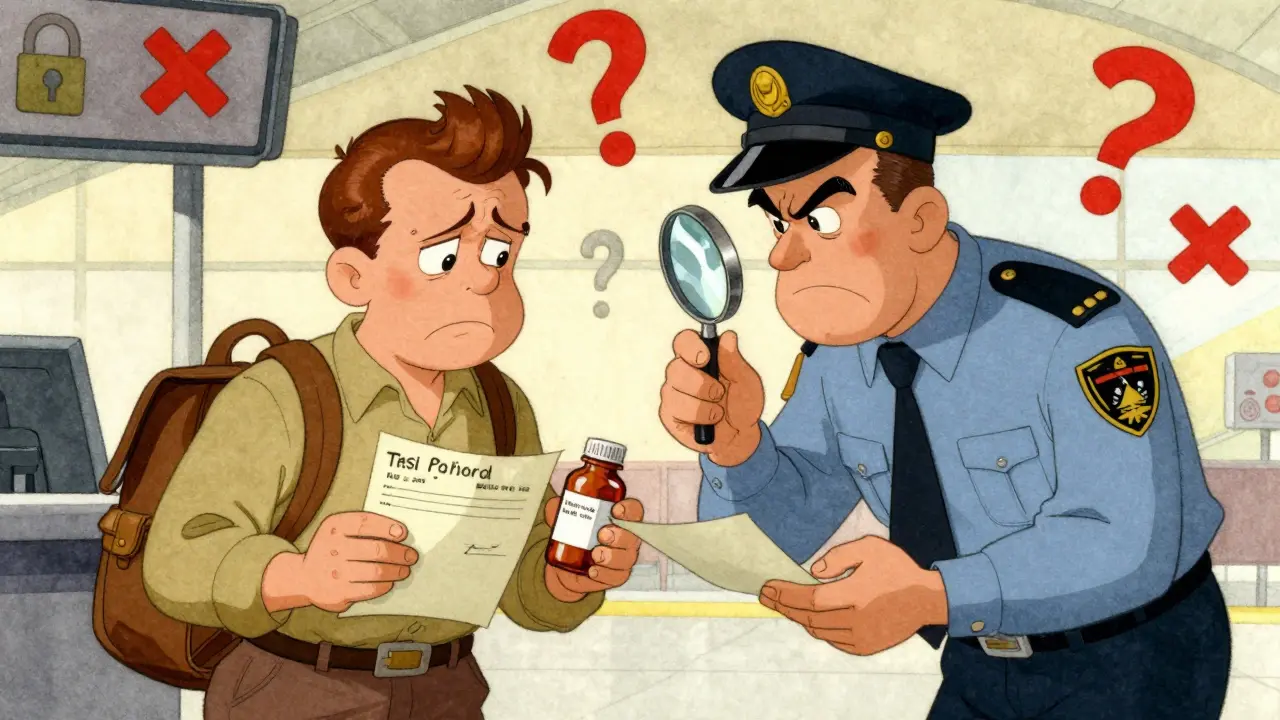
Carrying controlled medications across international borders isn’t just about packing your pills-it’s about having the right paperwork. One wrong step at customs can mean your medicine is seized, your flight delayed, or worse-facing legal trouble. You’re not alone if this feels overwhelming. Millions of travelers carry prescription drugs like oxycodone, Adderall, or diazepam every year, and many run into problems simply because they didn’t know what documents were required. The good news? With the right preparation, you can avoid all of it.
Why Travel Letters for Controlled Medications Matter
A travel letter isn’t just a nice-to-have. It’s a legal shield. Without it, even a small bottle of prescription painkillers or ADHD medication can trigger alarms at airport security or customs checkpoints. The U.S. Customs and Border Protection (CBP) reports that 53% of medication-related issues at U.S. ports of entry happen because pills were in unlabeled or repackaged containers. But even with the original bottle, if you don’t have a doctor’s letter explaining why you need the medication, you’re at risk. According to the CDC’s 2024 Yellow Book, travelers without proper documentation face a 23% chance of having their medication confiscated. That number drops to just 5% when they carry a complete letter from their doctor. That’s a 18-point difference between a smooth passage and a nightmare scenario. The reason? International drug treaties like the 1961 Single Convention on Narcotic Drugs and the 1971 Psychotropic Substances Convention give countries the power to restrict or ban certain medications. What’s legal in the U.S. might be illegal in Japan, the UAE, or Singapore. A doctor’s letter proves you’re not smuggling drugs-you’re managing a medical condition.What a Travel Letter Must Include
Not just any note will do. A valid travel letter needs specific details. Here’s what your doctor’s letter must have:- Your full name, exactly as it appears on your passport
- Generic and brand names of each medication (e.g., oxycodone, brand name OxyContin)
- Dosage strength and how often you take it (e.g., 10 mg, once daily)
- Prescribing physician’s name, license number, phone number, and clinic address
- Clear medical reason for the medication (e.g., chronic back pain, ADHD, severe anxiety)
- Duration of your trip and total quantity you’re carrying
- Doctor’s signature and official letterhead
Country-Specific Rules You Can’t Ignore
Not all countries treat medication the same way. Here’s what you need to know for top destinations:- Japan: Adderall, Ritalin, and most ADHD meds are illegal-even with a prescription. You need a Yakkan Shoumei import certificate. Apply at least 7-10 days before departure through the Japanese embassy. There’s a $50 fee. Zolpidem (Ambien) is also banned.
- United Arab Emirates: Any medication containing codeine, oxycodone, or diazepam requires prior approval. Even over-the-counter cough syrups with codeine can get you arrested.
- United Kingdom: You can bring up to three months’ supply with a valid prescription, but narcotics like morphine or fentanyl require a Controlled Drug Import Certificate.
- Australia: Schedule 8 drugs (including oxycodone and methadone) need pre-approval from the Therapeutic Goods Administration. Apply online at least 10 days ahead.
- United States: Foreign visitors can bring a 90-day supply for personal use. You need a prescription and doctor’s letter. Anything over that may be seized.
How to Carry Your Medication Safely
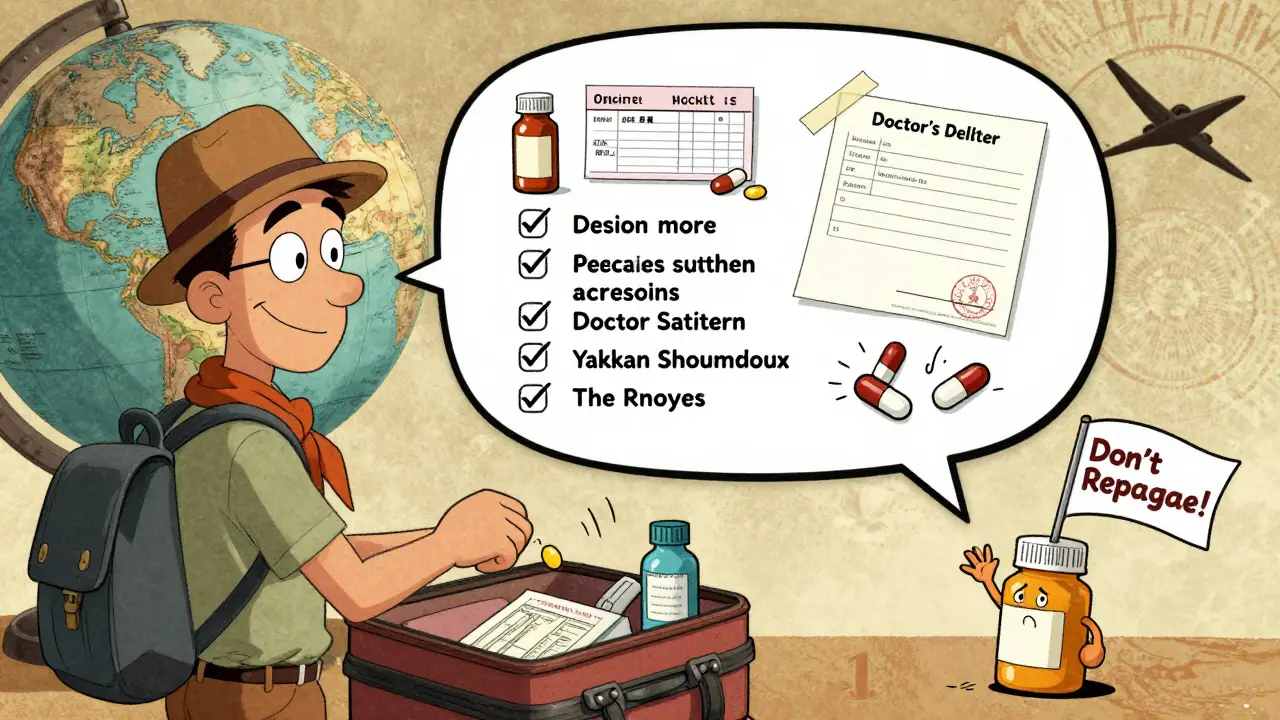
Even with perfect paperwork, how you pack your meds matters.- Keep all medications in their original pharmacy bottles with clear labels. Never transfer pills to pill organizers for travel.
- Bring a printed copy of your prescription, even if you have the bottle. Some countries require it.
- Carry your doctor’s letter in your carry-on, not checked luggage. If your bag gets lost, your meds go with you.
- If you’re flying, notify the airline ahead of time. Delta, United, and other major carriers now have ‘MediReady’ programs that flag your medication needs during check-in.
- Bring more than you think you’ll need. Delays happen. Flight cancellations happen. Plan for 10-15% extra.
When to Start Preparing
Don’t wait until the day before your flight. Here’s your timeline:- 6-8 weeks out: Schedule an appointment with your doctor to request the travel letter. Some clinics charge a small fee for this service.
- 4-6 weeks out: Check your destination country’s rules. Use the U.S. State Department’s travel website or the International Association for Medical Assistance to Travellers (IAMAT) for up-to-date info.
- 3-4 weeks out: If your destination requires special permits (like Japan’s Yakkan Shoumei), start the application. Processing can take up to 10 business days.
- 2 weeks out: Get your prescription translated if needed. Certified translations cost $25-$75. Don’t use Google Translate.
- 1 week out: Pack your documents in a clear plastic folder. Make two copies-one for your carry-on, one for your wallet.
Real Stories: What Happens When You Skip the Letter
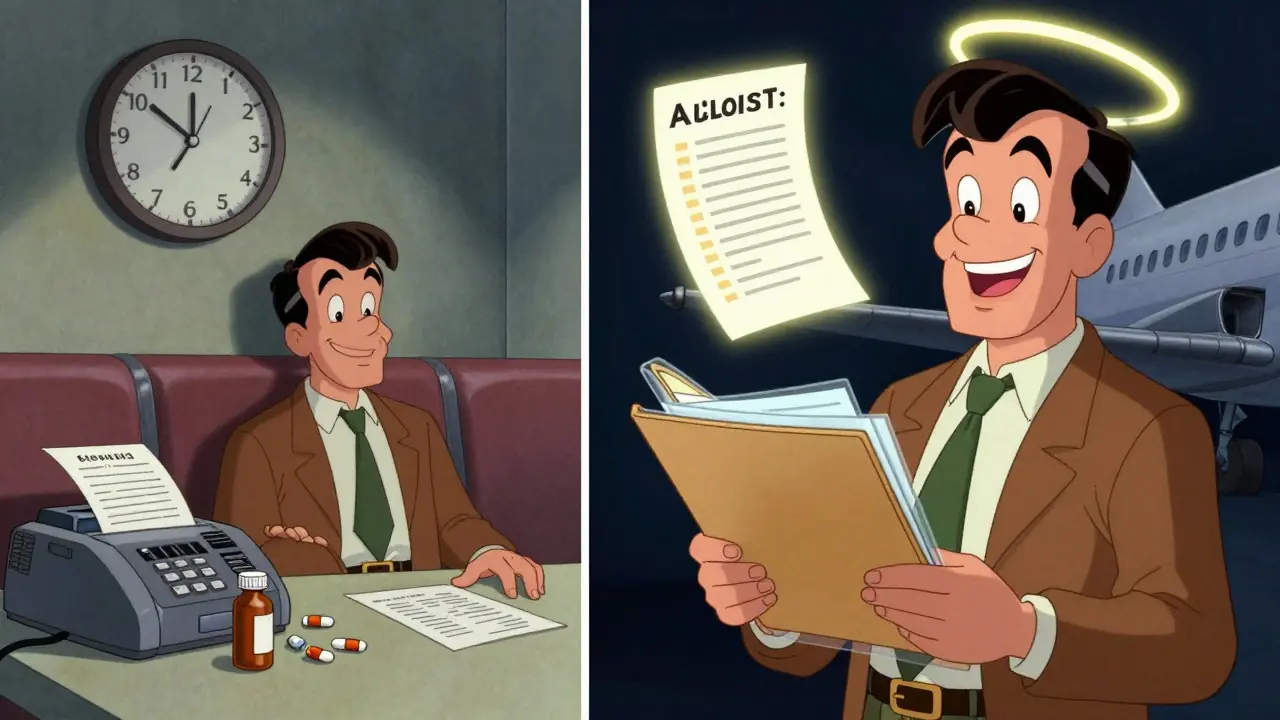
One traveler, ‘MedTraveler2023’ on TripAdvisor, was detained for 47 minutes at JFK Airport in August 2023 because they had 60 oxycodone tablets but no doctor’s letter. They had to call their doctor, who faxed the letter while they waited in a holding room. Another traveler, ‘GlobeHopperMD’ on Reddit, carried Adderall to 12 countries in 2024. They had a doctor’s letter with their passport number, generic and brand names, and medical reason. No issues-not even in Japan, where they also got the Yakkan Shoumei certificate. The difference? One person treated it like a formality. The other treated it like a legal requirement. One got on their flight. The other sat in a detention room.What’s Changing in 2025
The landscape is shifting. In early 2024, the FDA launched a pilot program for a mobile app called ‘Traveler Medication Pre-Clearance.’ It lets you upload your documents before you fly. Early results show a 65% reduction in processing time at Chicago O’Hare and Miami airports. The European Union now offers digital prescriptions through the EU Digital Health Certificate. If you’re traveling within Europe, you can access your prescription via your phone. By 2026, the International Narcotics Control Board plans to roll out a standardized international medication certificate. It won’t replace country-specific rules, but it will make the process more consistent. For now, though, you still need to do the work. Don’t wait for automation. Start now.Final Checklist: Before You Fly
Use this to make sure you’re covered:- ☑ Doctor’s letter with all required info
- ☑ Original prescription bottles with labels
- ☑ Printed copy of your prescription
- ☑ Certified translation (if needed)
- ☑ Country-specific permits (Yakkan Shoumei, Controlled Drug Certificate, etc.)
- ☑ Extra medication (10-15% more than needed)
- ☑ Copies of all documents in your carry-on and wallet
- ☑ Contact info for your doctor saved on your phone
Can I bring my controlled medication in my checked luggage?
No. Always keep controlled medications in your carry-on. Checked bags can be lost, delayed, or opened without your knowledge. If your meds are in a checked bag and get confiscated, you won’t have access to them during your trip-and you’ll have no way to prove they’re yours.
Do I need a letter for over-the-counter drugs like ibuprofen or allergy pills?
Generally, no. Non-controlled OTC medications like ibuprofen, acetaminophen, or loratadine don’t require a letter. But if you’re carrying large quantities (e.g., 100 tablets of pseudoephedrine), some countries may ask for proof you’re not reselling them. When in doubt, bring a receipt or pharmacy label.
What if my doctor won’t write a travel letter?
Ask if they can refer you to a travel medicine clinic. Many hospitals and urgent care centers offer this service. Alternatively, use a verified service like IAMAT or MedTraveler.org. They can generate a compliant letter based on your prescription details. Don’t risk your trip-find a way to get the letter.
Can I ship my medication ahead to my destination?
Almost never. The FDA and most countries consider shipping personal medication as commercial importation unless it’s through a licensed pharmacy. Even then, it’s risky. Customs will likely hold or destroy the package. Always carry your meds with you.
What happens if my medication is confiscated at customs?
If your meds are seized, you’ll likely be asked to sign a form acknowledging the confiscation. You won’t get them back. You may also face fines or questioning. If you have a doctor’s letter, you can request to speak with a supervisor-but the decision to confiscate is final. Prevention is the only real solution.
Celia McTighe
December 29, 2025 AT 02:35Ryan Touhill
December 29, 2025 AT 12:08Teresa Marzo Lostalé
December 29, 2025 AT 20:44ANA MARIE VALENZUELA
December 31, 2025 AT 03:36Bradly Draper
December 31, 2025 AT 09:47Gran Badshah
December 31, 2025 AT 17:50Ellen-Cathryn Nash
January 1, 2026 AT 14:51Samantha Hobbs
January 2, 2026 AT 05:34Nicole Beasley
January 2, 2026 AT 16:19sonam gupta
January 3, 2026 AT 13:18Julius Hader
January 4, 2026 AT 18:17Vu L
January 5, 2026 AT 23:51James Hilton
January 7, 2026 AT 04:04Mimi Bos
January 8, 2026 AT 03:48