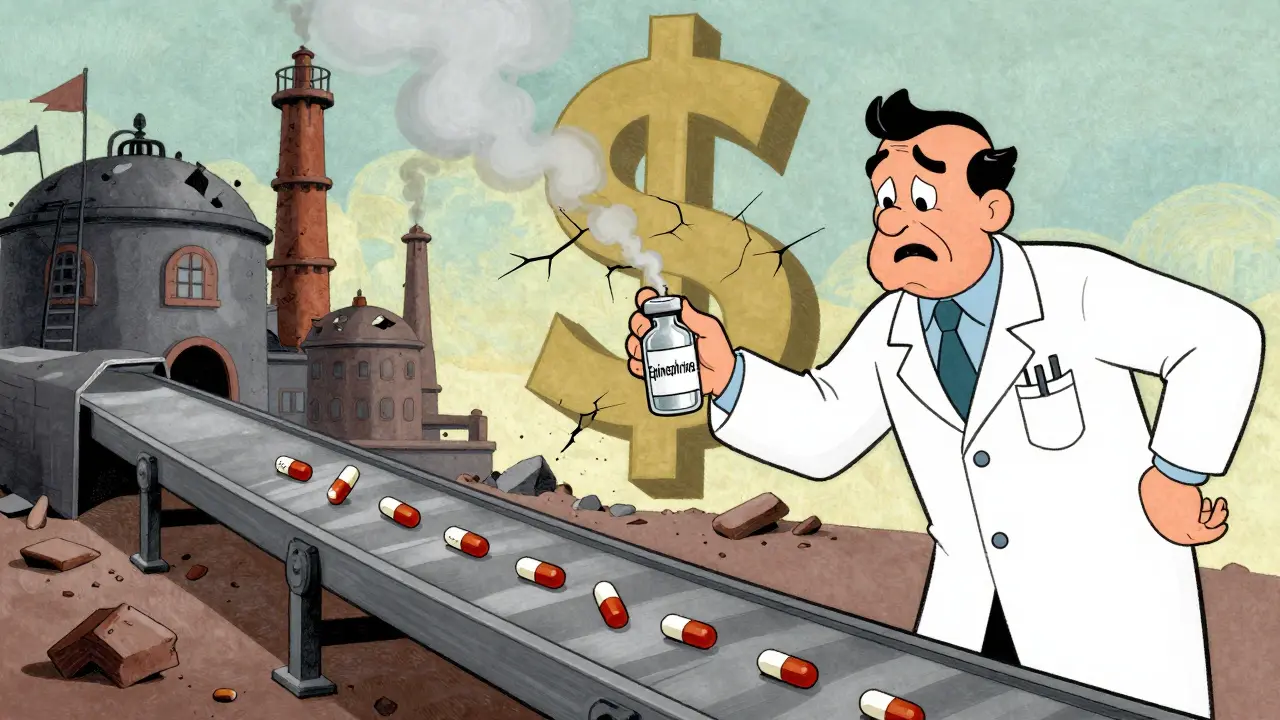
By the end of 2025, more than 270 generic drugs were still in short supply across the U.S. healthcare system. These aren’t rare specialty meds-they’re the pills and injections millions rely on every day: antibiotics, IV fluids, chemotherapy drugs, epinephrine, heparin. And the reason they’re running out isn’t because of a sudden spike in demand. It’s because the system that makes and moves them is broken.
Why Generic Drugs Are the First to Go Missing
Generic drugs make up 90% of all prescriptions filled in the U.S., but they only account for about 13% of total drug spending. That’s because they’re cheap. Really cheap. Some sterile injectables cost less than $5 per dose. That low price sounds good for patients and insurers-but it’s a death sentence for manufacturers trying to stay in business.When a company can only make a few cents profit per unit, there’s no money left for quality control upgrades, backup equipment, or extra inventory. If a factory in India gets shut down by an FDA inspection-or a tornado hits a plant in Kentucky-there’s no cushion. No one else is making it, because no one else can afford to.
Compare that to brand-name drugs. Companies like Pfizer or Merck spend billions on R&D, so they charge more. That lets them build global supply chains with multiple factories, stockpile raw materials, and absorb cost spikes. Generic makers? They’re running on fumes.
The Global Bottleneck: Where Your Medicine Comes From
Almost 40% of the active ingredients (APIs) in U.S. drugs come from China. Another big chunk comes from India. These countries produce APIs at a fraction of the cost because labor is cheaper, regulations are looser, and scale is massive.But here’s the catch: the FDA has known for years that many of these facilities have inconsistent quality. In 2023, a single inspection failure in India halted production of cisplatin, a key chemotherapy drug. The result? Nationwide shortages that delayed cancer treatments for months.
And it’s not just one plant. For many older generics, manufacturing has collapsed down to just one or two factories worldwide. That’s not a supply chain-it’s a single point of failure. If that one line goes down, the whole country runs out.
Sterile Injectables: The Most Fragile Link
Not all drugs are created equal. Oral pills are simple to make. Sterile injectables? They’re a whole different beast.IV fluids, antibiotics, and cancer drugs that go directly into the bloodstream must be made in ultra-clean rooms, with air filtered to near-surgical standards. The equipment is expensive. The process takes longer. The margin for error is zero. One tiny contamination, and the entire batch is destroyed.
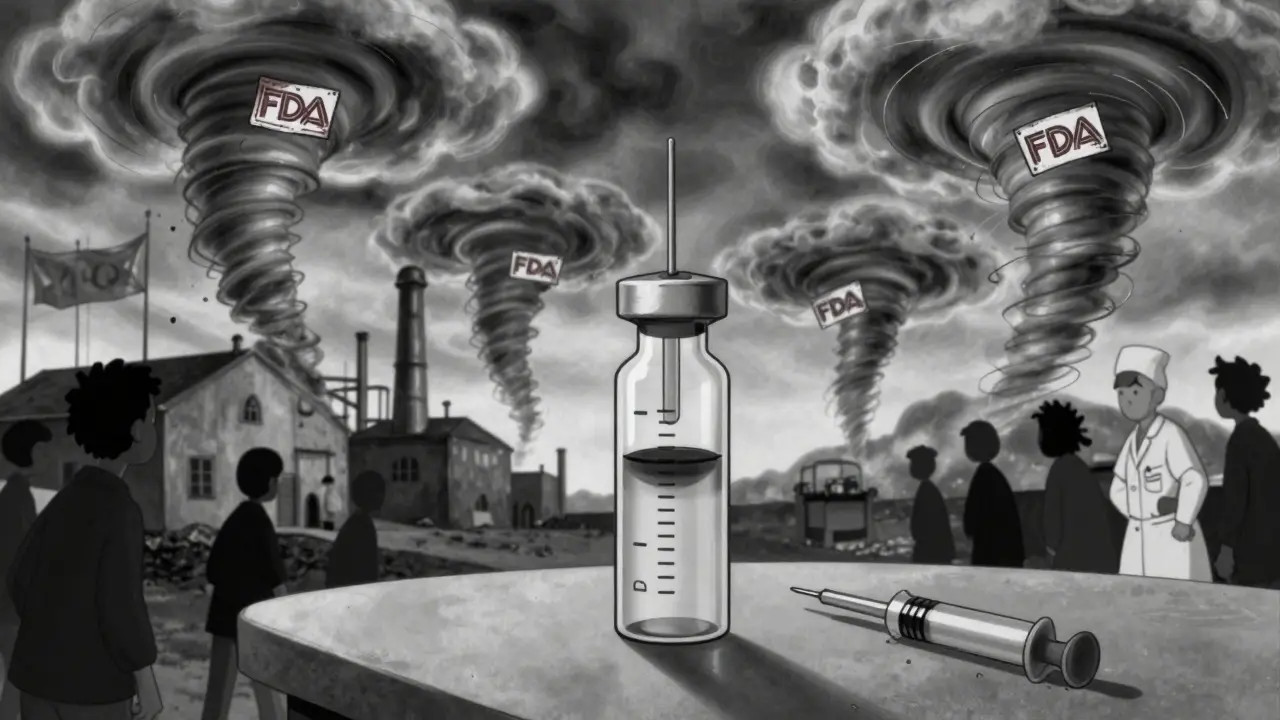
That’s why sterile injectables make up the majority of drug shortages. In 2024, over half of all shortages involved injectables. A tornado in 2023 knocked out a Pfizer facility that produced 15 different injectable medications. No one else could step in fast enough. Patients went without.
Who Pays the Price?
It’s not just hospitals that feel the crunch. Patients do too.Doctors have to swap one drug for another-even if it’s less effective, has more side effects, or isn’t approved for their patient’s condition. Pharmacists spend 20 to 30% of their workweek tracking down alternatives, compounding meds by hand, or rationing doses. Nurses delay treatments. Surgeries get canceled. Cancer patients wait weeks for their next infusion.
One hospital pharmacist in Ohio told a reporter they once had to stretch a single vial of epinephrine across three emergency cases because there was no backup. That’s not medicine. That’s triage.
Why Solutions Keep Failing
Politicians talk about bringing drug manufacturing back to the U.S. It sounds good. But it’s not that simple.Rebuilding domestic production for critical generics would take 5 to 7 years and cost between $20 and $30 billion. There aren’t enough trained workers. The FDA can’t inspect new plants fast enough. And even if you build them, who will run them profitably when the market still demands $3-per-dose prices?
Proposed tariffs on Chinese and Indian APIs? They might sound like a fix-but they’ll just make drugs more expensive, and likely cause more shortages as manufacturers cut back to stay competitive.
Some lawmakers want mandatory six-month stockpiles of essential drugs. But who pays for that? Hospitals? Taxpayers? The system isn’t designed to hold inventory-it’s designed to squeeze every penny out of every pill.
What’s Actually Being Done?
There are signs of movement. The FDA has started cracking down harder on foreign manufacturers with poor records. The Department of Health and Human Services is pushing for more transparency-requiring labels that say where APIs come from.Some states are experimenting with public-private partnerships to fund production of high-risk generics. The Association of Accessible Medicines is pushing for incentives to keep manufacturers in the game. But progress is slow. Federal agencies are understaffed. Regulations are outdated. And without a major shift in how we pay for these drugs, nothing will change.
The Real Problem Isn’t Geography-It’s Economics
This isn’t a problem of trade policy or national security. It’s a problem of value.We treat life-saving generic drugs like commodities, not essentials. We expect them to be cheap, but we don’t pay enough to make them reliably. We blame China or India, but the real failure is ours: a system that rewards low prices over resilience, and punishes anyone who tries to do the right thing.
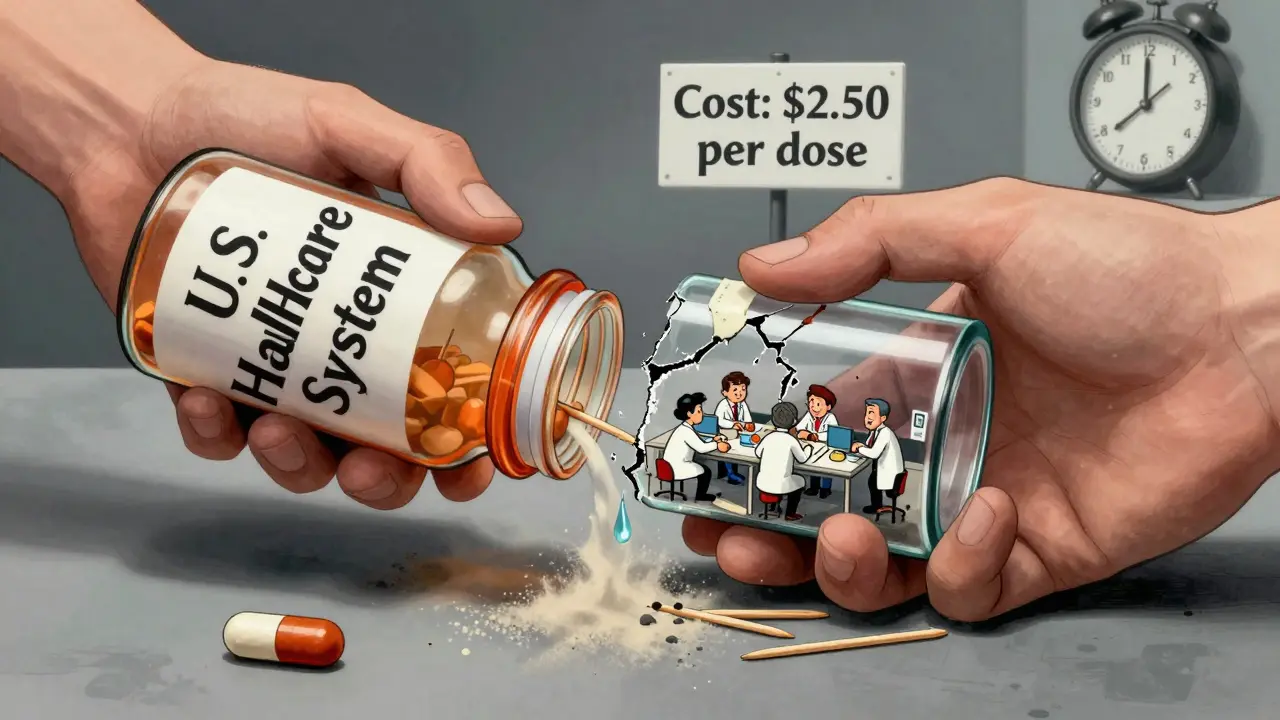
Until we accept that some medicines can’t be made for $2.50 a dose-and start paying what it actually costs to produce them safely-we’ll keep seeing the same shortages. The same delays. The same scared patients and overworked nurses.
It’s not about where the pills are made. It’s about whether we’re willing to make sure they’re always there when someone needs them.
Sarah Williams
December 21, 2025 AT 06:18This is insane. I had to wait three weeks for my dad’s antibiotics last year. He’s 78 and immunocompromised. We almost lost him because a pill was ‘too cheap to make.’
Theo Newbold
December 22, 2025 AT 02:23Let’s be clear: this isn’t a supply chain issue. It’s a market failure. When you commoditize life-saving medicine, you get exactly what you pay for: fragility. The FDA’s inspection backlog alone is a national security risk. And no, ‘buying American’ won’t fix it unless you’re willing to pay $20 per IV bag instead of $3.
Profit margins on generics are below 2% for most manufacturers. That’s not capitalism-it’s economic suicide disguised as efficiency.
Meanwhile, brand-name drug CEOs take home $50M/year. We’re rewarding failure and punishing responsibility.
Until we restructure reimbursement models to include resilience premiums, this cycle will repeat every 18 months. And yes, I’ve done the spreadsheets.
Jay lawch
December 23, 2025 AT 02:29Of course America has shortages. You outsource everything to China and India and then act surprised when your medicine vanishes. You think you’re saving money? You’re just outsourcing your health to foreign governments who don’t care about your children.
China controls 80% of the world’s antibiotic precursors. India? They’re just middlemen with weak labs and zero accountability. This isn’t globalization-it’s surrender.
Our ancestors built steel mills and factories. Now we’re a nation of consumers who can’t even get epinephrine because we’re too lazy to pay $5 more for a drug made in Ohio.
Bring back manufacturing. Ban imports. Let the FDA shut down every foreign plant with a single violation. We don’t need cheap medicine. We need safe medicine. And if that costs more, then so be it. Your life is worth it.
Wake up, Americans. This isn’t politics. This is survival.
Christina Weber
December 23, 2025 AT 11:29There are multiple grammatical and factual errors in this article. First, ‘270 generic drugs’ were in short supply-this number is outdated; the FDA’s 2024 report lists 324 active shortages, including 87 brand-name drugs. Second, the claim that generics account for ‘13% of total drug spending’ is misleading-it’s 13% of total spending on *prescription drugs*, not all pharmaceutical expenditures, which include biologics and specialty meds.
Additionally, the phrase ‘death sentence for manufacturers’ is hyperbolic. Most generic manufacturers are subsidiaries of larger conglomerates like Teva, Mylan, or Sun Pharma-they’re not small businesses. They’re profit-driven entities that chose low-margin markets intentionally.
Also, ‘sterile injectables’ make up 57% of shortages-not ‘over half’-and the FDA’s own data shows 43% of these shortages are due to manufacturing delays, not natural disasters.
Accuracy matters. This isn’t a blog post. It’s public health discourse.
Cara C
December 24, 2025 AT 13:40I just want to say thank you for writing this. I’m a nurse in rural Iowa, and I’ve seen this firsthand. We’ve had to use expired saline bags because the new ones didn’t arrive. We’ve had to call three pharmacies just to find one vial of heparin.
It’s not about politics. It’s not about blame. It’s about people. The old man who can’t get his chemo. The kid with pneumonia who can’t get antibiotics. The mom who cries because her baby’s IV line is empty.
We need to stop treating medicine like a commodity and start treating it like a right. I don’t know how to fix it-but I know we can’t keep pretending this is normal.
Erika Putri Aldana
December 26, 2025 AT 09:28Why are we even talking about this? Just make everyone pay more. Problem solved. 🙄
Also, China’s evil. End of story.
Sandy Crux
December 27, 2025 AT 09:04…and yet, the article fails to mention the role of consolidated pharmacy benefit managers (PBMs) in suppressing generic drug pricing through opaque rebate structures…
It’s not just the manufacturers-it’s the middlemen who negotiate, then claw back margins, leaving no room for inventory, quality, or resilience.
Moreover, the FDA’s ‘crackdown’ on foreign plants is performative; they lack the staffing to inspect more than 2% of facilities annually. This isn’t regulation-it’s theater.
And calling it an ‘economic’ problem? That’s a euphemism for ‘we refuse to fund public goods.’
It’s not just the system that’s broken. It’s the entire moral architecture of American healthcare.
mukesh matav
December 28, 2025 AT 14:43I work in a pharma lab in Hyderabad. We make APIs for several U.S. generics. The FDA inspectors come once every three years. Sometimes they find issues. We fix them. Sometimes they don’t come at all.
But we’re not bad people. We’re workers trying to feed our families. When the U.S. demands $1 per vial, and the Indian government taxes us 18%, what are we supposed to do?
Don’t blame us. Blame the price. Blame the system.
And yes-I’ve seen nurses cry because they couldn’t get the drug. I’ve seen babies go without. I’m not proud. But I’m not the villain.
Peggy Adams
December 29, 2025 AT 08:30OMG I knew this was happening but I didn’t think it was THIS bad. Like… my mom’s chemo got delayed for 6 weeks. She’s fine now but… what if she wasn’t? This is terrifying. Why isn’t this on the news? 😭
Dan Adkins
December 31, 2025 AT 06:05It is an incontrovertible fact that the structural deficiencies inherent in the American pharmaceutical distribution paradigm are symptomatic of a broader societal malaise characterized by a pervasive disregard for public health infrastructure. The commodification of essential therapeutics constitutes a moral abdication of state responsibility, wherein profit imperatives supplant the sanctity of human life.
Furthermore, the geopolitical outsourcing of active pharmaceutical ingredient production is not merely an economic strategy-it is a strategic vulnerability of catastrophic proportion, especially when juxtaposed against the geopolitical volatility of the Indo-Pacific region.
It is therefore imperative that the United States, as a sovereign nation, reassert its capacity for self-sufficiency in critical medicinal production, through federal investment, workforce development, and regulatory modernization-ideally under the auspices of a publicly administered pharmaceutical enterprise.
One cannot, in good conscience, continue to permit the life-sustaining medications of its citizens to be contingent upon the whims of foreign regulatory regimes and market fluctuations.
It is not merely policy that must change. It is the very ethos of healthcare delivery.
Grace Rehman
December 31, 2025 AT 20:29So we’re saying the solution is to pay more for pills? Wow. Groundbreaking. 🙃
Meanwhile, the same people who want $20 epinephrine are the ones who won’t pay $100 for a monthly insulin plan. We want miracles but we don’t want to fund them. That’s not a system-it’s a tantrum.
And let’s not pretend China’s the bad guy. We outsourced this because we were lazy and greedy. Now we’re mad the house we built on sand collapsed.
Fix the incentives. Stop pretending cheap is good. Pay for quality. Or keep watching people suffer. Either way, we’re all complicit.
Jerry Peterson
January 1, 2026 AT 11:49My cousin works at a generic drug plant in Kentucky. He told me they had to shut down for two months after a pipe burst. No insurance. No backup. No money to fix it fast. They lost their contract. Now he’s unemployed.
That’s the human side no one talks about. It’s not just patients suffering. It’s the people trying to make the medicine.
We need to stop pointing fingers. We need to build something better. Together.