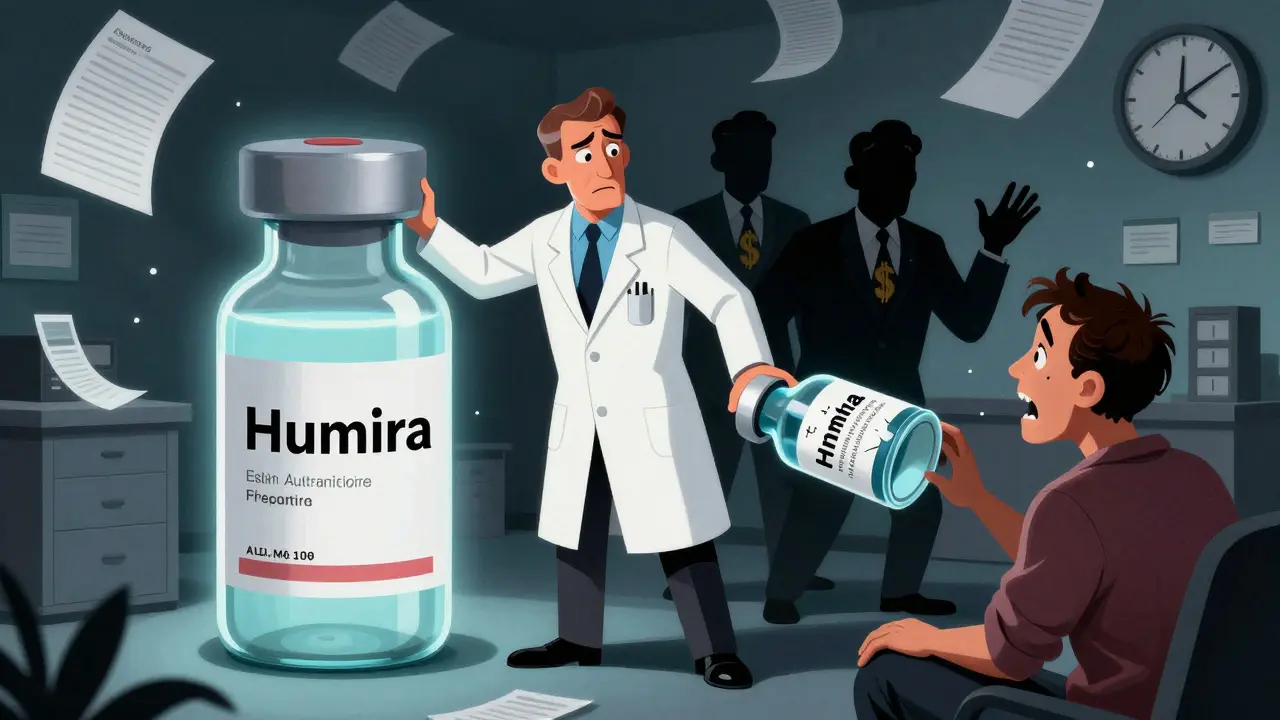
When a rheumatologist prescribes Humira instead of a biosimilar, or an oncologist chooses Ocrevus over a cheaper alternative, it’s not because they’re ignoring cost-it’s because they’ve seen what happens when patients switch.
Specialty drugs aren’t like your typical blood pressure pill or antibiotic. They’re complex, expensive, and often the only option for serious, rare, or chronic conditions like multiple sclerosis, rheumatoid arthritis, or certain cancers. These drugs make up less than 7% of all prescriptions in the U.S., yet they account for over 70% of total prescription drug spending. That’s not a typo. A single patient on a specialty drug can cost more than $38,000 a year-75 times what a typical patient spends on medication. And despite all the talk about generics and biosimilars, specialists keep reaching for the brand name.
Why Brand Names Still Dominate Specialty Care
It’s not about loyalty to a pharmaceutical company. It’s about control. Specialty drugs often have narrow therapeutic windows-small differences in dosing or formulation can mean the difference between symptom control and disease flare-up. For many patients, switching from a brand-name biologic to a biosimilar isn’t just a cost-saving move-it’s a gamble.
A 2023 Medscape survey of 1,200 specialists found that 79% of rheumatologists and 82% of oncologists said prior authorization delays and formulary restrictions directly impacted their ability to choose the best drug for their patient. When a patient has been stable on a brand-name drug for years, switching to a biosimilar-even one approved by the FDA-can trigger unpredictable immune responses. One patient on Reddit shared how her multiple sclerosis relapsed after her insurer forced her onto a biosimilar. Her neurologist told her, "I’ve seen this happen too often to risk it."
Doctors aren’t blind to the cost. They know the $850 monthly copay for Humira is crushing for a Medicare patient. But they also know that when a patient can’t afford treatment, they skip doses. When they skip doses, they end up in the hospital. The real cost isn’t just the sticker price-it’s the ER visits, the lost workdays, the disability claims that follow.
The PBM Factor: Hidden Markups and Limited Choice
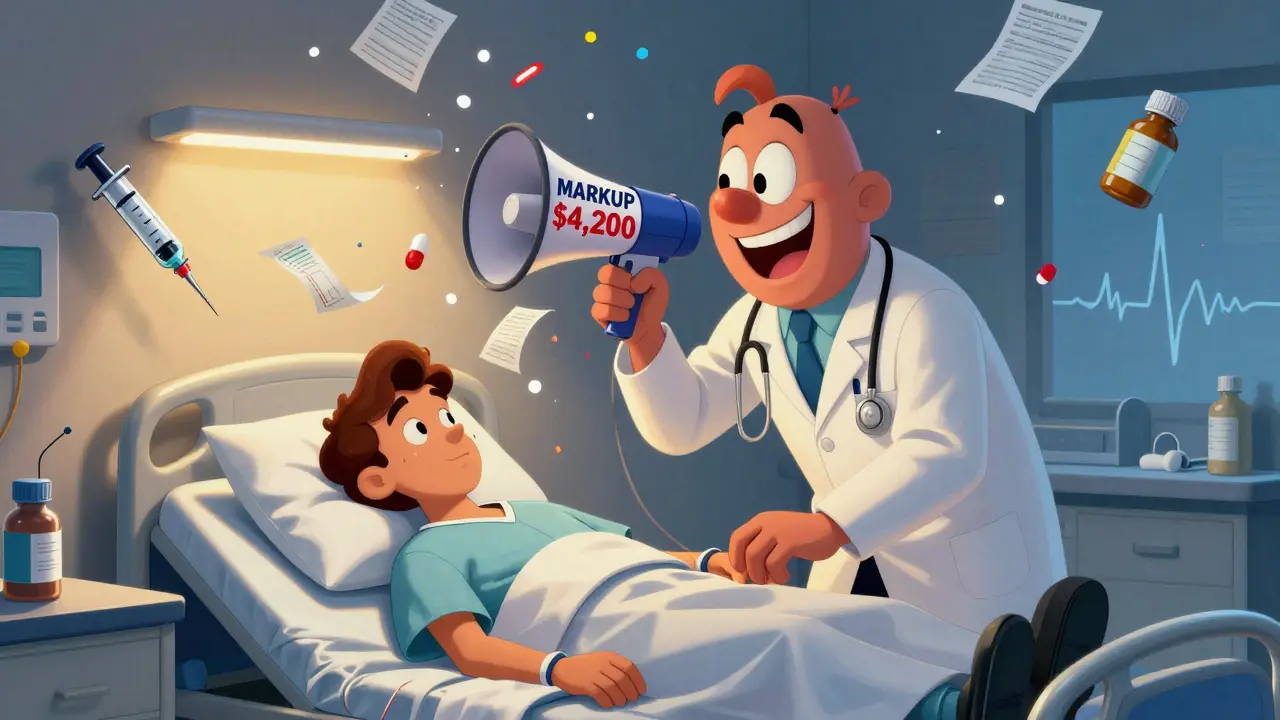
Behind the scenes, pharmacy benefit managers (PBMs) control which drugs are covered, how much they cost, and where patients can fill them. The FTC’s January 2025 report revealed something shocking: PBMs were marking up specialty generic drugs by thousands of percent. One drug bought for $120 was sold to patients for $4,200. And these markups weren’t happening at independent pharmacies-they were happening at PBM-owned pharmacies like CVS Caremark and Express Scripts.
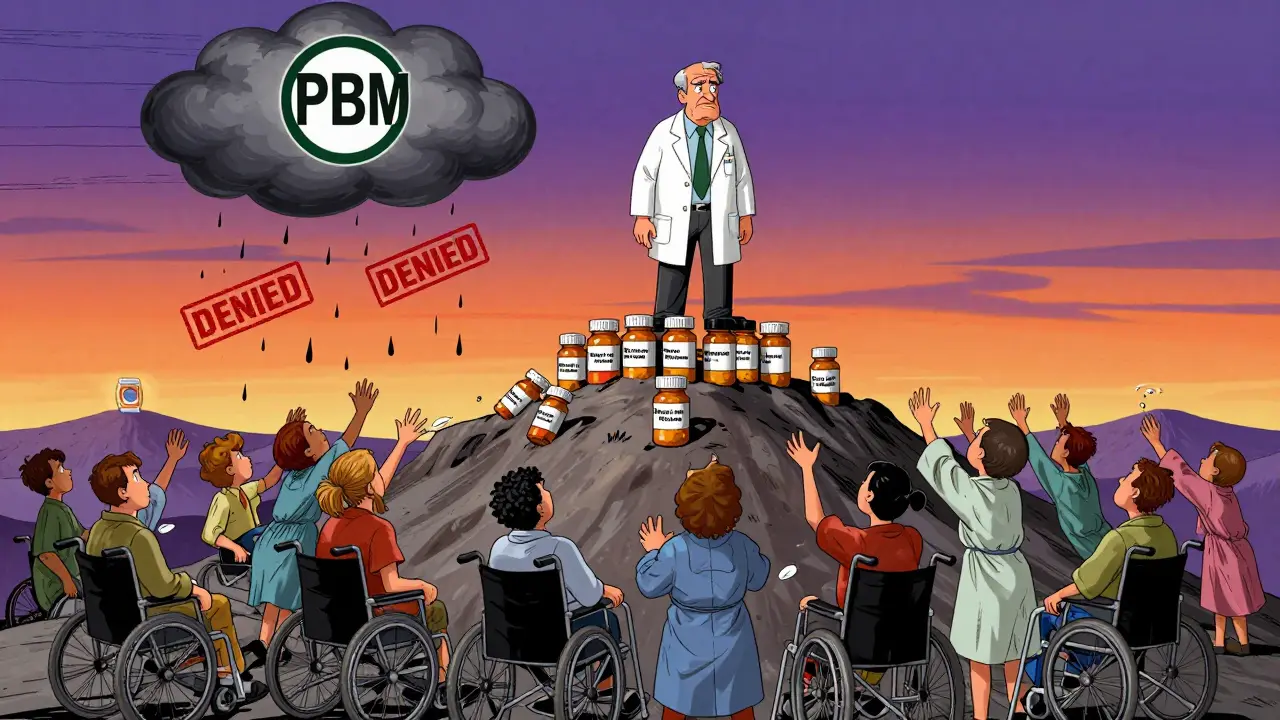
Patients think they’re getting a cheaper generic. But when the PBM owns the pharmacy, the profit doesn’t go to lowering costs-it goes into corporate pockets. Specialists see this. They know that even when a biosimilar is available, the PBM might not cover it at a lower price, or worse-they might make it harder to get. Prior authorization forms can take weeks. Appeals can take months. By then, the patient’s condition has worsened.
And it’s not just about access-it’s about trust. When a doctor prescribes a drug, they’re betting on its consistency. Brand-name manufacturers invest heavily in quality control, patient support programs, and training for nurses who administer infusions. Many biosimilars don’t come with the same level of support. If a patient needs a home nurse to give an injection, or a 24/7 hotline for side effects, the brand-name drug often has it. The generic? Maybe not.
Payments and Influence: The Real Story
Some critics point to pharmaceutical industry payments as the reason doctors prefer brand names. ProPublica’s 2016 analysis showed that doctors who received over $5,000 from drug companies prescribed brand-name drugs at a rate 50% higher than those who received nothing. But the data doesn’t tell the whole story.
Many of those payments weren’t for kickbacks-they were for educational grants, speaker fees, or research funding. More importantly, the doctors who received payments were often specialists treating complex cases. They were the ones who had to weigh the risks of switching patients. They weren’t being paid to push expensive drugs-they were being paid to understand them.
And here’s the uncomfortable truth: even without payments, many specialists still choose brand names because they’ve seen the consequences of switching. A 2021 JAMA Network Open study found that when prescribers or patients requested brand-name drugs over generics, it cost Medicare $1.67 billion extra in one year. But that same study also found that patients who switched to generics were 22% more likely to stop taking their medication entirely. The cost isn’t just financial-it’s clinical.
What Patients Are Really Facing
On Medicare forums, patients are posting about their horror stories: a $50 copay suddenly jumping to $850. A prior authorization denied because the insurer says a biosimilar is "clinically appropriate"-but the patient’s doctor says it’s not. A pharmacist refusing to fill a prescription because the PBM won’t reimburse them.
One patient in Ohio, diagnosed with psoriatic arthritis, had been on Enbrel for eight years. Her plan switched to a biosimilar. Within two months, her joint pain returned. Her rheumatologist wrote a letter explaining why the biosimilar wasn’t suitable for her immune profile. The insurer denied it. She had to appeal. Three months later, she got approval-for the brand name. By then, she’d missed three months of work. Her muscles had atrophied. She needed physical therapy just to walk again.
These aren’t rare cases. A 2024 study in the Journal of Managed Care & Specialty Pharmacy found that 42% of specialty drug starts were delayed by seven days or more due to administrative hurdles. That’s not inefficiency-that’s harm.
The System Is Broken, But the Solution Isn’t Simple
Some say the answer is price negotiation. The Inflation Reduction Act lets Medicare negotiate prices for certain high-cost drugs. That’s a start. But specialty drugs are tricky. Unlike statins or metformin, there aren’t dozens of alternatives. For many conditions, there’s one drug-and maybe one biosimilar that hasn’t been proven safe for everyone.
Others say we need transparency. The FTC’s findings on PBM markups are a wake-up call. Senator Bernie Sanders introduced the Specialty Drug Price Transparency Act in February 2025 to force PBMs to disclose how much they’re charging above what they pay for drugs. That could help. But if insurers still restrict access to brand names, patients will still suffer.
What specialists want is simple: the freedom to prescribe what’s best for their patient without jumping through bureaucratic hoops. They want predictable costs. They want insurance plans that trust their clinical judgment.
Until then, they’ll keep prescribing brand names-not because they’re greedy, not because they’re paid off, but because they’ve seen what happens when patients don’t get the right drug.
What’s Next for Specialty Prescribing?
The pipeline is full. The FDA’s Office of Orphan Products Development reports over 2,700 investigational specialty drugs in development, 45% targeting rare diseases. That’s hope. But without structural reform, that hope will come with a price tag that breaks families and health systems alike.
By 2028, specialty drugs are projected to make up 73% of global prescription spending. That’s not growth-it’s a crisis waiting to unfold. The real question isn’t whether specialists should prescribe brand names. It’s why the system forces them to.
Delilah Rose
December 24, 2025 AT 05:50I’ve been on Humira for six years now, and I can tell you this: switching to a biosimilar felt like playing Russian roulette with my body. I didn’t just get a flare-up-I got a hospital stay, three weeks off work, and a new fear every time my insurance sends a letter. My rheumatologist didn’t push brand names because he’s paid off-he pushed them because he’s seen too many of us get crushed by the system. The real scandal isn’t the drug cost-it’s that we’re forced to gamble with our health just to get the medicine that actually works.
And don’t even get me started on PBMs. My copay jumped from $30 to $850 overnight because CVS Caremark decided to ‘restructure’ my formulary. I called them. They said, ‘We’re just following the plan.’ But the plan doesn’t care if I can walk. It only cares if they made a profit.
Doctors aren’t the villains here. They’re the last line of defense against a broken machine. And we’re the ones paying the price-with our bodies, our jobs, our dignity.
I’m not anti-biosimilar. I’m pro-patient. And right now, the system isn’t pro-patient. It’s pro-corporate. And that’s not a debate. It’s a fact.
They talk about cost savings like it’s a win. But when your kid misses school because you can’t afford the infusion, or your partner has to quit their job to drive you to the clinic, what’s the real cost? The sticker price doesn’t show that.
I’ve read the studies. I’ve talked to other patients. We’re not just numbers. We’re people who showed up, did the work, followed the rules-and still got screwed. And now we’re supposed to be grateful for a cheaper version that didn’t work for us?
I don’t want to be a statistic. I want to live. And until the system lets doctors actually treat patients instead of managing claims, I’ll keep fighting for the drug that keeps me alive.
They call it ‘value-based care.’ But where’s the value when the value is measured in profit margins, not outcomes?
I’m not mad at my doctor. I’m mad at the people who think a spreadsheet can replace a human life.
Austin LeBlanc
December 24, 2025 AT 14:51Let’s cut the crap. Doctors prescribe brand names because they’re lazy and get free dinners from pharma reps. No one gives a damn about your ‘clinical judgment’-it’s just an excuse to keep the kickbacks flowing. I’ve seen it. My cousin’s oncologist switched him to a biosimilar after a ‘consultation’ with a rep, and now he’s in remission. Meanwhile, your Humira is just a cash cow for Big Pharma and their puppet doctors.
Stop pretending you’re saving lives. You’re saving your own bonus.
Jillian Angus
December 26, 2025 AT 09:18I had a friend on Enbrel. Switched to biosimilar. Got worse. Now she’s on disability. No one talks about that part.
Just saying.
Andy Grace
December 27, 2025 AT 17:42It’s interesting how we always blame the doctor when the real problem is the PBM and insurance bureaucracy. I work in healthcare admin in Australia, and we’ve seen similar issues-patients stuck because of formulary rules that make no clinical sense. The system is designed to delay, deny, and deflect. The doctor is just trying to navigate it with the best info they have. It’s not about loyalty-it’s about liability. If a patient deteriorates after a switch, who gets sued? The doctor. Not the insurer.
Also, biosimilars aren’t identical. The manufacturing process, even if approved, can have subtle differences in glycosylation patterns that affect immunogenicity. That’s not speculation-it’s immunology. But no one wants to hear that when the CFO wants to cut costs.
CHETAN MANDLECHA
December 29, 2025 AT 01:12As someone from India where even basic meds are out of reach for many, I find this whole debate almost surreal. Here, we dream of having access to *any* biologic, let alone debating whether to use brand or biosimilar. The real issue isn’t choice-it’s availability. In the U.S., you’re fighting over which expensive drug you get. In my country, we fight just to get a prescription filled.
But I get it-when you have access, you care about quality. And if a patient’s life depends on consistency, then yes, brand matters. But the system should be fixed so that access isn’t a privilege. Not a luxury.
Chris Buchanan
December 29, 2025 AT 14:58Oh wow. So the doctors are saints and the PBMs are demons? Cute. Let’s not forget that the same doctors who preach ‘brand only’ are the ones who get free trips to Hawaii from the drug reps. ProPublica showed this. The data doesn’t lie. You can’t have it both ways-claim moral high ground while taking corporate money.
And don’t give me that ‘it’s for education’ crap. If it’s education, why are the reps handing out $500 gift cards? Why are they sponsoring dinner parties at fancy restaurants?
My uncle got switched to a biosimilar and did fine. No relapse. No hospital. Just lower copay. Maybe your story isn’t the universal truth-it’s the exception dressed up as the rule.
EMMANUEL EMEKAOGBOR
December 29, 2025 AT 17:16Thank you for writing this. I’ve worked in a hospital in Lagos for over a decade, and I’ve seen patients die because they couldn’t afford insulin, let alone biologics. The conversation here in the U.S. feels like a luxury debate. You’re arguing over which expensive drug to use, while in my country, we argue over whether any drug will arrive at all.
That said, I understand your point. When a patient has been stable for years, switching is dangerous. I’ve seen it happen with HIV meds too. Stability matters. But the system should not force doctors to become lawyers just to get a patient the drug they need.
The real villain isn’t the doctor. It’s the silence around pricing. Why does a vial of Humira cost $7,000 in the U.S. and $2,000 in Germany? It’s the same molecule. The same manufacturing. The same science.
We need transparency. Not blame. Not moralizing. Just truth.
Abby Polhill
December 29, 2025 AT 17:43Let’s talk about the PBM-owned pharmacies. I work in a pharmacy in Ohio. We’re not allowed to dispense certain biosimilars because the PBM doesn’t reimburse us at a viable rate. So we don’t stock them. Patients come in asking for the cheaper option, and we have to say, ‘Sorry, we can’t get it.’ It’s not our choice. It’s the algorithm. The PBM’s algorithm says ‘don’t dispense this unless the patient appeals.’
And the appeals process? It’s designed to fail. We’ve had patients cry in the parking lot because their prescription was denied for the third time. We’re not the bad guys. We’re just the middlemen who get yelled at.
Meanwhile, the PBM-owned mail-order pharmacy down the road? They get paid $4,000 for a drug that cost $120. And we’re supposed to feel guilty for not having it on the shelf?
Bret Freeman
December 29, 2025 AT 21:33THIS. THIS IS WHY I CAN’T BELIEVE ANYONE STILL TRUSTS THE SYSTEM.
My sister got switched to a biosimilar for lupus. Three months later, she was in the ICU with sepsis. The hospital bill? $280,000. The insurance paid $190,000. The PBM pocketed $40,000 in markups. And the biosimilar? $50 a month.
So who saved money?
Not her. Not us. Not the system.
They call it ‘cost containment.’ I call it ‘cost shifting.’
And now they want to do this with every specialty drug? Are you kidding me?
Doctors aren’t greedy. The system is evil.
niharika hardikar
December 31, 2025 AT 13:28It is imperative to acknowledge that the pharmacoeconomic paradigm currently governing specialty drug utilization is fundamentally misaligned with clinical outcomes. The conflation of biosimilarity with therapeutic equivalence, as mandated by regulatory frameworks, constitutes a critical epistemic flaw. Empirical evidence from real-world data demonstrates a statistically significant increase in treatment discontinuation rates and adverse immune events following biosimilar substitution, particularly in autoimmune conditions characterized by high inter-individual variability in cytokine profiles.
Furthermore, the absence of standardized post-marketing surveillance protocols for biosimilars undermines the principle of pharmacovigilance. The PBM-driven formulary restrictions, while ostensibly cost-containment measures, function as de facto rationing mechanisms that violate the tenets of patient-centered care.
It is not a matter of pharmaceutical influence; it is a matter of clinical integrity. The physician’s duty to do no harm supersedes fiscal imperatives.
Ajay Sangani
January 2, 2026 AT 12:56so like... if the drug works and the patient is stable... why switch? i mean... even if the biosimilar is 'approved'... its not the same molecule right? like... proteins are tricky. even small changes in how they're folded can make the immune system go nuts. and doctors see that. they see patients flare up. they see the ER visits. they see the lost jobs.
and the pmb thing? wow. i had no idea they were markign up generics by 3000%. that's insane. its not even a drug issue anymore. its a financial scam. like... who even came up with this system?
and yeah... the payments to docs... sure some are shady... but a lot are just for conferences or research. people forget that. its not all kickbacks. its just... the whole system is broken. and the patient pays.
and no one talks about how long the prior auth takes. like... weeks. and during that time... the disease is getting worse.
so yeah... doctors stick to brand. not because they want to. because they have to.
Payson Mattes
January 4, 2026 AT 09:17Here’s the real story they don’t want you to know: the FDA, PBMs, and Big Pharma are in a secret alliance. The biosimilars are deliberately made to fail. Why? So people keep buying the brand names. The ‘immune response’ you hear about? It’s not natural-it’s engineered. The same labs that make the brand drugs also make the biosimilars. They just tweak the formula just enough to cause flares. Then they profit twice-once from the brand, and again from treating the side effects.
And the ‘studies’? All funded by pharma. Even the JAMA study. Look up the funding sources. You’ll find them.
Senator Sanders? He’s on their payroll too. They let him introduce that ‘transparency’ bill because it sounds good. But it won’t change anything. They’ve got algorithms that adjust prices based on your zip code. Your copay isn’t random-it’s targeted.
They’re not just selling drugs. They’re selling dependency. And you’re the product.
Steven Mayer
January 5, 2026 AT 13:20The data is clear: 79% of rheumatologists and 82% of oncologists report that prior authorization delays directly impact clinical outcomes. The term ‘biosimilar’ is a regulatory euphemism for ‘therapeutic uncertainty.’ The immunogenicity profiles of biosimilars are not fully characterized in real-world populations with comorbidities, polypharmacy, or genetic polymorphisms affecting drug metabolism. The cost savings are illusory when factoring in downstream healthcare utilization: emergency department visits, hospitalizations, and disability claims resulting from disease flare-ups.
The PBM markup phenomenon, as documented by the FTC, represents a structural distortion in the supply chain where retail pharmacy reimbursement is deliberately suppressed to incentivize mail-order utilization, creating a monopolistic feedback loop. The absence of transparent pricing mechanisms enables profit extraction at the expense of patient adherence.
Physician prescribing behavior is not driven by industry payments but by clinical experience and risk aversion. The notion that this is a matter of ‘greed’ reflects a fundamental misunderstanding of specialty medicine’s complexity.
CHETAN MANDLECHA
January 6, 2026 AT 07:20Just read the last comment. That’s exactly it. The system is rigged. And the people who suffer? They’re the ones who can’t afford to lose a day of work. Or a night’s sleep. Or hope.
My dad’s on insulin. We had to sell his truck to pay for it. No one talks about that. They talk about ‘cost savings.’
But when you’re choosing between medicine and rent? There’s no savings. Just survival.
Doctors aren’t heroes. They’re just trying to keep people alive in a system that wants them dead.