Medication Safety Audit Tool
Safety Checklist
Your Safety Score
Needs Improvement
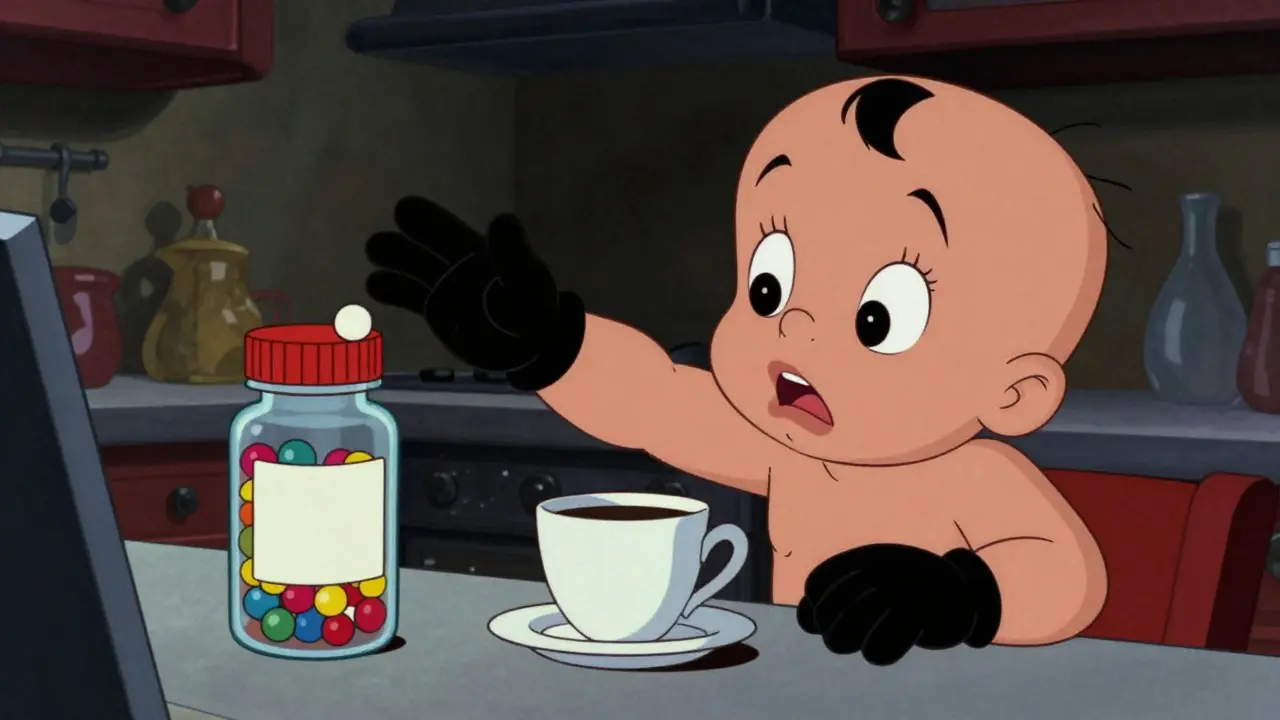
Imagine this: you’re rushing out the door for work. You grab your keys, your phone, and maybe a coffee. But in your haste, you leave a bottle of painkillers on the kitchen counter or a tube of heartworm paste near the dog’s food bowl. It feels harmless until you remember that children under five visit emergency rooms roughly 60,000 times a year just because they found something they shouldn’t have eaten. And it’s not just kids-our pets are at risk too. In fact, keeping medications safely stored is one of the most critical parts of any home safety plan.
We often trust child-resistant caps to do all the heavy lifting. But here is the hard truth: those caps only stop about half of accidental ingestions. The rest happen because we get complacent. We put pills in unmarked jars, store them in purses within reach of toddlers, or keep veterinary drugs in the same cabinet as our own prescriptions. This guide breaks down exactly how to secure your home against these risks, protecting both your little ones and your furry friends.
The Reality of Accidental Ingestion
It helps to understand why this matters so much. According to data from Nationwide Children's Hospital, the majority of pediatric medication poisonings occur when children find meds left unattended in places like nightstands, countertops, or open bags. The Centers for Disease Control and Prevention (CDC) notes that prescription drugs account for 20% of all pediatric poisoning cases, with children aged 1 to 4 being the most vulnerable group.
Why is this happening? Because curiosity kills the cat-and potentially harms a toddler. A study published in the Journal of Pediatrics highlights that locked storage reduces pediatric medication exposures by 92% compared to cabinets with simple latches. Yet, many households still rely solely on child-proof packaging. While ASTM standards require containers to resist opening forces of 70-80 pounds, determined toddlers (and clever dogs) can sometimes figure them out. Relying on a single layer of defense is a gamble you don't need to take.
Separate Worlds: Human vs. Pet Medications
One of the biggest mistakes people make is mixing human and pet medications. They look similar, smell similar, and often live in the same bathroom cabinet. This is dangerous for two reasons: mix-ups and attraction.
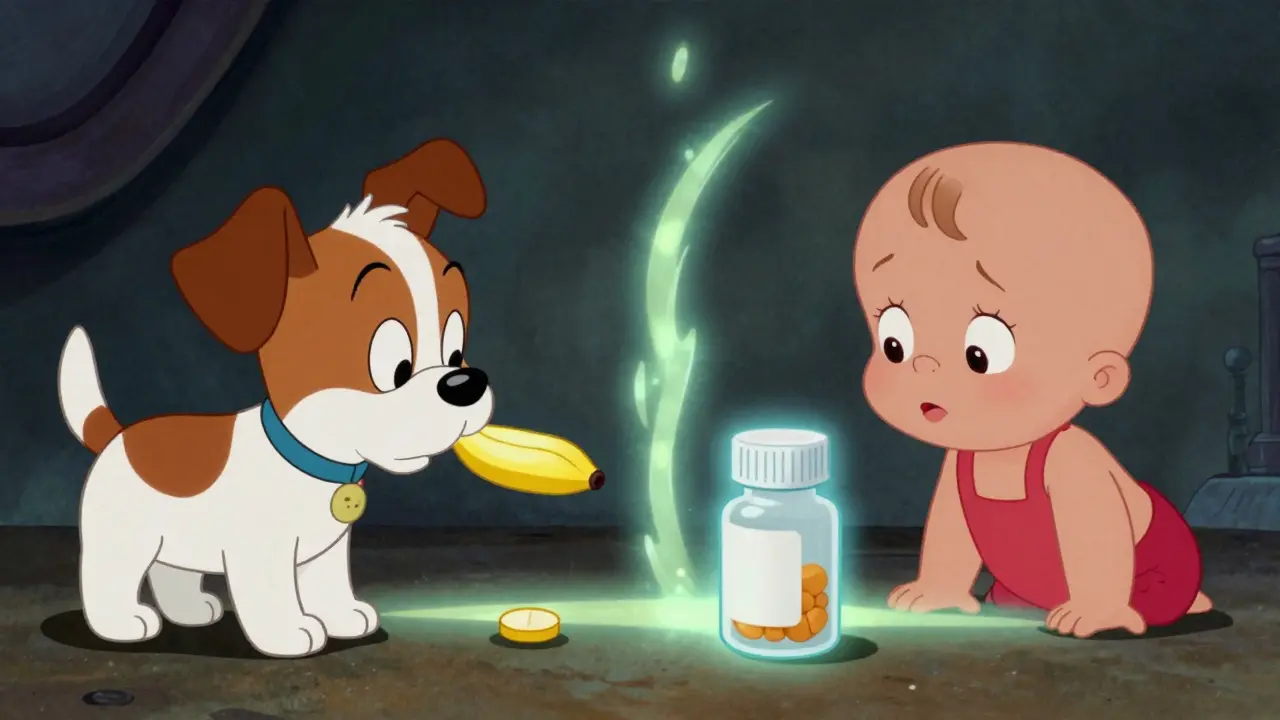
First, let’s talk about attraction. FDA data shows that 42% of pet medications are flavored with things like banana or strawberry to make them palatable for animals. To a child, these flavors signal "candy." Research indicates this increases the risk of child attraction by 300% compared to unflavored human meds. Second, there is the issue of toxicity. For example, ivermectin, commonly used in heartworm preventatives, is toxic to humans in high doses but deadly to certain dog breeds even in small amounts. Conversely, some human topical creams, like 5-fluorouracil, have a 100% fatality rate in cats with minimal exposure.
The American Academy of Pediatrics now recommends storing human and pet medications at least 15 feet apart. If space is tight, use separate locked containers. The CDC reports that separating these items reduces mix-up errors by 89%. Don’t let convenience override safety; a few extra steps today can prevent a tragedy tomorrow.
| Factor | Human Medications | Pet Medications |
|---|---|---|
| Flavoring | Usually bitter or neutral | Often sweet (banana/strawberry) |
| Child Attraction Risk | Low to Moderate | High (due to flavor) |
| Common Mix-up Errors | Dosing errors | Species-specific toxicity (e.g., Ivermectin) |
| Storage Temperature | Strict (68-77°F / 20-25°C) | Wider range (50-85°F / 10-29°C) |
Where and How to Store Your Meds
If you want to build a robust safety plan, location is everything. The old advice was "up and away," but modern guidelines are more specific. Here is what you need to know:
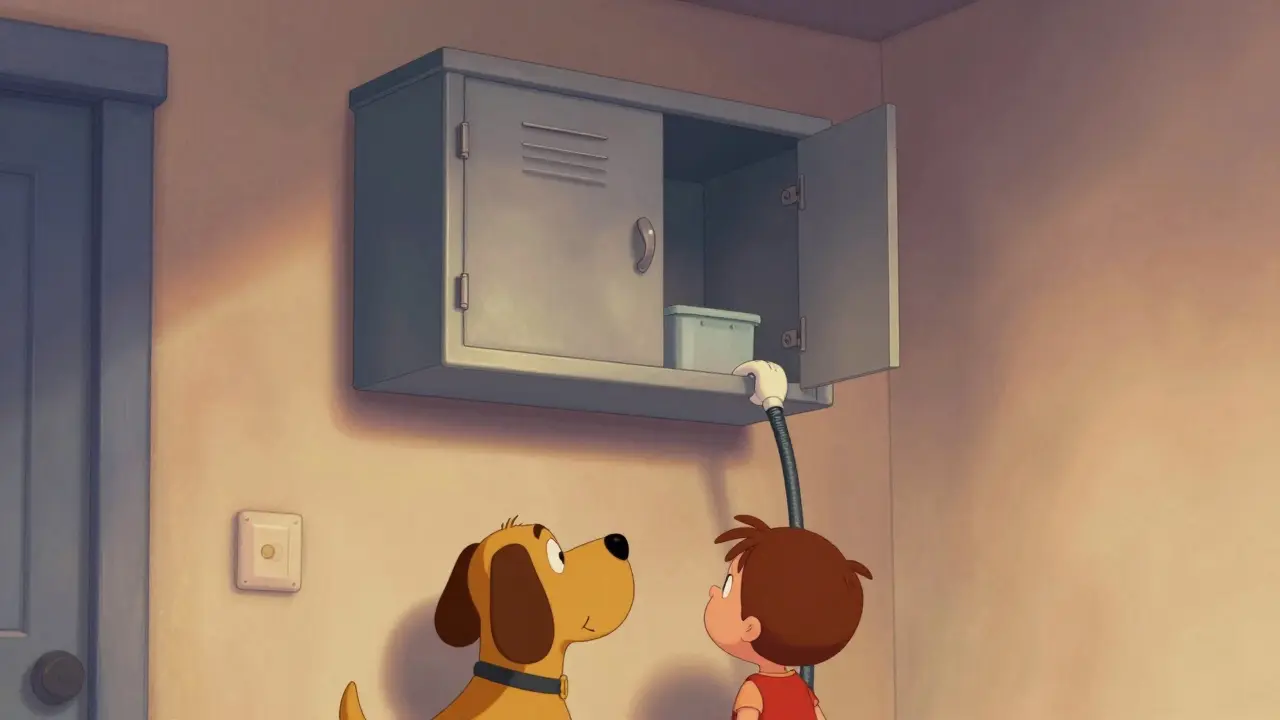
- Height Matters: Seattle Children's Hospital recommends storing medications at least 5 feet off the ground. Why? Because toddlers as young as 18 months can climb furniture to reach counters. If you can’t go that high, ensure the area is completely inaccessible.
- Lock It Up: Child-resistant caps are not enough. Use a locked cabinet, a wall-mounted lockbox, or even a small gun safe. These cost between $25 and $150 and provide a physical barrier that no amount of chewing or twisting can overcome.
- Avoid the Bathroom: Bathrooms are humid. Moisture degrades up to 40% of common medications within 30 days. Plus, bathrooms are often where parents spend time without children nearby, leading to open bottles. A kitchen pantry (if locked and high) or a bedroom closet is safer and drier.
- Keep Original Packaging: Never transfer meds to unmarked containers. CDC studies show 35% of medication errors happen when drugs lose their labels. Keep the original box and leaflet if possible.
For controlled substances like opioids, the bar is higher. The DEA mandates storage in containers with UL TRTL-30x6 certification, which provides 30 minutes of resistance against tools. Even if you don’t have opioids, treating all meds with this level of caution is wise.
Temperature and Humidity Control
You might think putting meds in the fridge solves everything, but it doesn’t. In fact, improper refrigeration can ruin some drugs. About 70% of medications should be stored at room temperature (68-77°F or 20-25°C). Only 25% actually need refrigeration (36-46°F or 2-8°C), such as certain insulins or eye drops.
Humidity is the silent killer. Bathrooms and kitchens near sinks are prime spots for moisture buildup. If you must store meds in these areas, use a desiccant pack (like silica gel) in the container to absorb excess moisture. Always check the label. If it says "store in a cool, dry place," the bathroom cabinet is likely not that place.
Disposal: The Final Step of Safety
Storing meds safely isn’t just about current prescriptions; it’s about getting rid of the old ones. Many people flush expired meds, thinking it’s the safest option. However, the FDA warns against flushing unless specifically instructed, due to environmental concerns. Instead, look for drug take-back programs.
In the US, the DEA hosts National Take Back Days twice a year, expanding to over 11,000 locations. Locally, many pharmacies offer drop-off kiosks. If no program is available, mix the meds with an unappealing substance like dirt, cat litter, or used coffee grounds, seal them in a plastic bag, and throw them in the trash. Remove personal information from the label first. This prevents both ingestion and identity theft.
Building a Household Routine
Technology and hardware help, but habits save lives. Creating a routine around medication management ensures that safety becomes second nature.
- Weekly Audits: Once a week, check your medication stash. Toss anything expired or unused. This keeps your storage area clutter-free and reduces temptation.
- The "Close the Lid" Rule: Make it a family rule that pill bottles are never left open. If you take a med, close the lid immediately before walking away, even for a second.
- Educate Older Kids: Teach older children that medicine is not candy. Explain that even colorful gummy vitamins can be harmful if taken in large quantities.
- Pet Training: Train your pets to stay away from the medication area. Use commands like "leave it" consistently. If your dog has a history of scavenging, consider a crate or baby gate during medication times.
Dr. Gary Smith from Nationwide Children's Center emphasizes that behavioral changes are key. Locked storage works best when combined with consistent habits. It takes about 21 to 30 days to form a new habit, so stick with it. Visual reminders, like a sticky note on the cabinet saying "LOCKED," can help reinforce the behavior.
Special Considerations for Vulnerable Groups
Safety plans must also account for accessibility. Elderly individuals or those with arthritis may struggle with child-resistant packaging. The NIH notes that 40% of older adults report difficulty opening these caps. The solution? Install a lower lockbox with an easy-open mechanism for authorized users, or ask your pharmacist for non-child-resistant packaging if you are the sole user and have no children or pets in the home. However, if others visit, switch back to secure storage.
For households with both young children and senior citizens, balance is crucial. Ensure the storage location is high enough for kids but reachable for seniors, perhaps using a step stool kept in a fixed, safe location. Communication is vital-ensure all caregivers, babysitters, and family members know where the meds are and how to access them in an emergency.
Are child-resistant caps enough to protect my kids?
No, they are not sufficient on their own. Studies show that child-resistant caps prevent only 50-80% of accidental ingestions. Toddlers can learn to open them, and older siblings often help younger ones. You must combine caps with locked storage for maximum safety.
Should I store pet medications in the same place as human meds?
Absolutely not. Pet meds are often flavored to attract animals, making them appealing to children. Additionally, mixing them increases the risk of dosing errors. Store them at least 15 feet apart, ideally in separate locked containers.
Is the bathroom a good place to store medicines?
Generally, no. Bathrooms are humid, which can degrade medications. Also, they are often accessible to children and pets. A high, locked cabinet in a bedroom or closet is a better choice.
How do I properly dispose of expired medications?
Look for local drug take-back programs or pharmacy drop-off boxes. If unavailable, mix meds with unappealing substances like coffee grounds or cat litter, seal in a bag, and trash them. Do not flush unless the label explicitly instructs you to.
What height should medications be stored at?
Seattle Children's Hospital recommends at least 5 feet off the ground. Toddlers can climb furniture to reach lower counters. If 5 feet isn't feasible, ensure the storage unit is locked and placed out of direct reach.