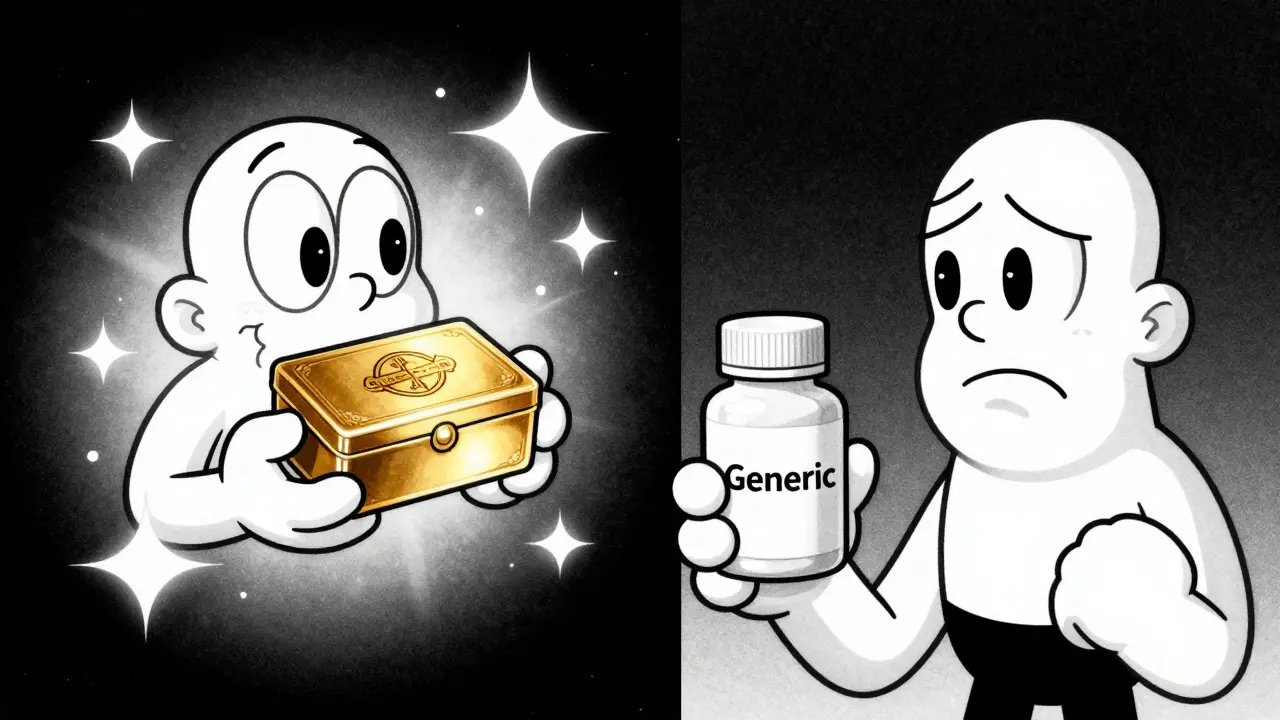
Imagine taking two identical pills. One is in a fancy box with a famous brand name, and the other is in a plain white bottle labeled "Generic." Even if the chemistry inside is exactly the same, you might feel significantly more relief from the first one-or feel more side effects from the second. This isn't just in your head; it's a measurable biological response. The placebo effect is a phenomenon where a person's belief in a treatment causes a real change in their health outcomes, regardless of the actual pharmacological ingredients. When it comes to generic drugs, your brain's perception of value and quality can either amplify the healing process or trigger a negative reaction known as the nocebo effect.
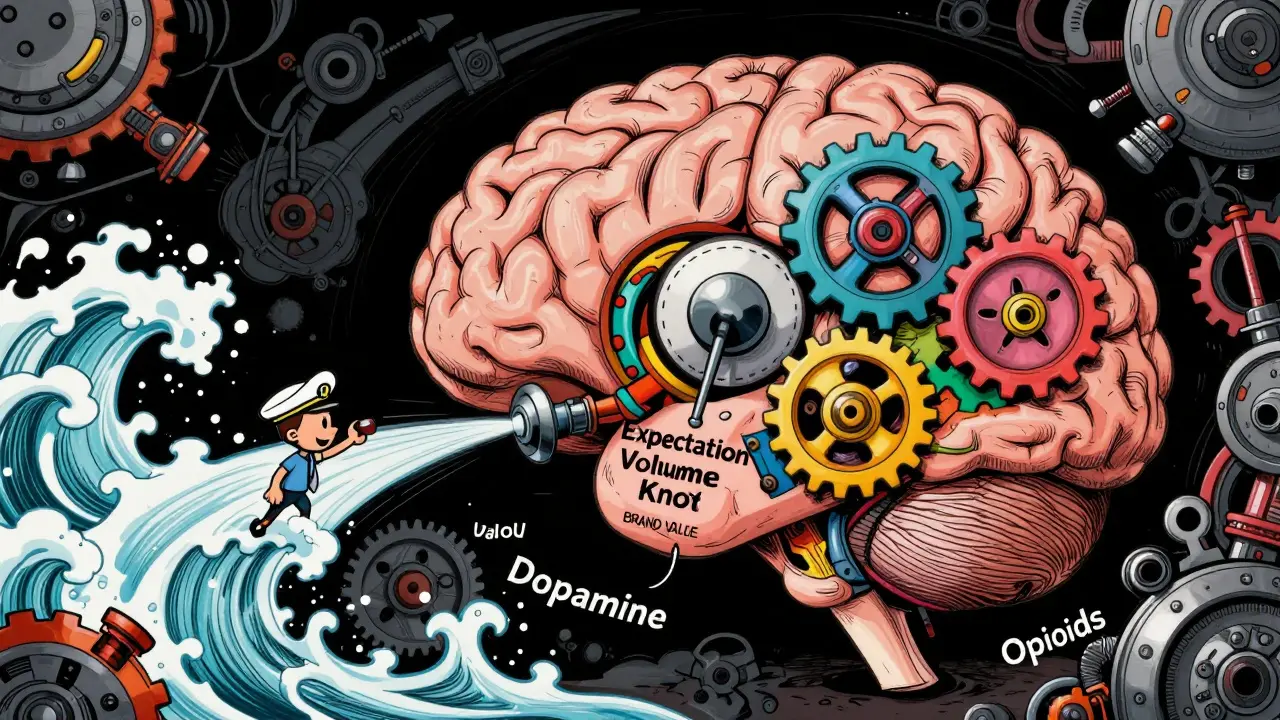
For most of us, the switch from a brand-name drug to a generic is a financial decision. We trust the pharmacist when they say it's the "same thing." But while the molecules are the same, the psychological experience is not. Research shows that our expectations act like a volume knob for the medicine's effectiveness. If you believe a drug is high-quality, your brain can actually trigger the release of endogenous opioids and dopamine, making the treatment feel more effective.
The Power of the Brand Name
Why does a logo matter when the active ingredient is identical? It comes down to trust and expectation. A 2016 study published in Health Psychology by Dr. Julia Faasse and her team looked at people suffering from headaches. They gave one group a placebo labeled as "Nurofen" (a well-known brand) and another a placebo labeled as "Generic Ibuprofen." The results were striking: the "Nurofen" placebo prompted relief equivalent to actual ibuprofen, while the generic placebo barely worked. The branding alone increased the placebo effect by about 30-40%.
This happens because we associate brand names with higher quality and reliability. When we see a brand we recognize, our brain pre-loads a positive outcome. This doesn't just change how we feel; it changes our biology. Functional MRI (fMRI) scans from the University of Hamburg showed that people receiving brand-name placebos had much stronger activity in the dorsomedial prefrontal cortex-the part of the brain that processes expectations. Essentially, the brand name tells your brain, "This is going to work," and your brain starts the healing process before the drug even hits your bloodstream.
The Nocebo Effect: When Negative Thoughts Create Symptoms
The flip side of this is the nocebo effect, which is the experience of negative side effects caused by the expectation of harm rather than the drug itself. This is a major hurdle for generic drug adoption. If you've heard that a generic version "isn't as good" or is "cheaply made," you are more likely to notice-or even invent-side effects.
Take statins, for example. In large clinical trials, some patients stopped taking their medication because of muscle pain, even though they were taking a completely inert placebo. According to research by Dr. Ulrike Bingel, this happens because patients are hyper-aware of the symptoms they expect to see. If you're worried about a generic drug, you might start monitoring your body more closely. A slight twinge in your leg, which you would have ignored otherwise, suddenly becomes "proof" that the generic drug is causing muscle pain.
| Feature | Brand-Name Perception | Generic Perception |
|---|---|---|
| Placebo Response | Higher (Stronger relief) | Lower (Reduced relief) |
| Side Effect Reporting | 25-40% fewer reported | Higher reported frequency |
| Brain Activity | Increased Prefrontal Cortex activation | Lower expectation-based activation |
| Patient Confidence | Higher perceived quality | Higher anxiety over efficacy |
Does Price Change How Medicine Works?
You might think that a more expensive drug is better simply because of the price tag. Science confirms this bias is incredibly strong. In a study led by Professor Karin Tinnermann, participants were given a cream. Those who were told the cream was expensive rated their pain as twice as intense as those who thought they were using a cheap generic. Surprisingly, spinal cord recordings showed that these people were actually experiencing more pain physically.
This suggests that price is a powerful psychological cue. When we perceive something as "premium," we expect it to behave differently. In the world of pharmacy, this is why some patients report that their generic antidepressant "doesn't work as well" as the brand they used previously, even when blood tests show the drug concentrations in their system are identical. The medicine is doing its job, but the mind is blocking the benefit because the "value" perception has dropped.
The Impact on Different Conditions
Not all medications are affected by perception in the same way. The placebo and nocebo effects are most powerful in conditions where symptoms are subjective. For example, in chronic pain management and depression, about 30-40% of the improvement can be attributed to the placebo response. If you switch to a generic and feel a dip in your mood, it might not be the drug-it might be the loss of the "brand-name confidence" that was helping you feel better.
On the other hand, conditions with objective measurements, like high blood pressure, are less influenced by these psychological tricks. While you might feel more anxious taking a generic beta-blocker, your actual heart rate and blood pressure usually respond to the chemical compound regardless of whether the packaging is fancy or plain.
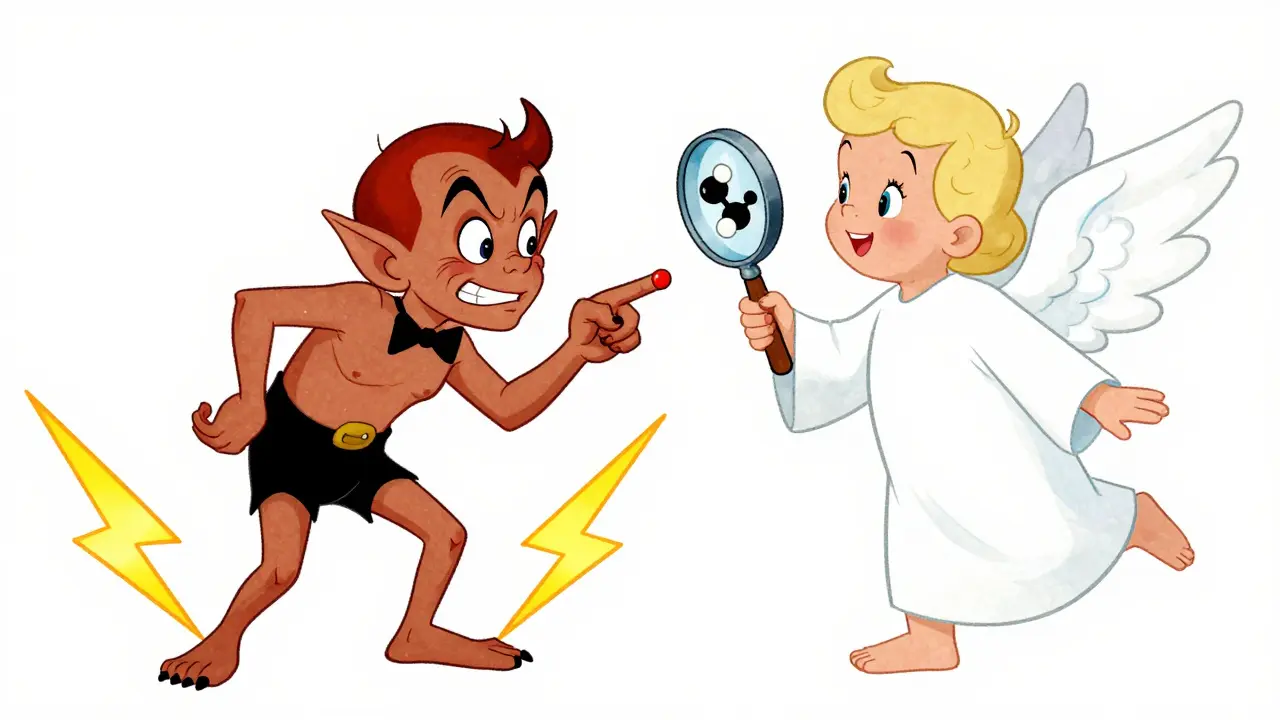
How to Overcome the "Generic Gap"
If you're a patient or a caregiver, how do you stop your brain from sabotaging your treatment? The key is a process called "expectation priming." Instead of just accepting a generic, it helps to actively remind yourself of the facts. The FDA requires generic drugs to deliver the same amount of active ingredient as the brand-name version, usually within a very tight range of 8-13%-which is well within the therapeutic window for almost every medication.
Education is the best antidote to the nocebo effect. When pharmacists explain the rigorous testing generics undergo, patients often report better outcomes. Simply knowing that 90% of prescriptions in the US are generics can normalize the experience and reduce the anxiety associated with "cheap" medicine. If you find yourself doubting a generic, try focusing on the fact that the active molecule-the part that actually does the heavy lifting in your body-is identical to the expensive version.
The Future of Medication Perception
The medical industry is starting to realize that the bottle matters almost as much as the pill. Some companies are developing "expectation-optimized" generics. This involves using color psychology-like blue and white schemes-to trigger feelings of trust and cleanliness, effectively "hacking" the placebo response to make generics feel more premium without raising the price.
Researchers at the University of Oxford have even experimented with short educational videos that explain how placebos work before patients start a generic regimen. Interestingly, this "priming" increased treatment efficacy by 28%. By teaching people how their minds influence their healing, they actually made the medicine work better. It turns out that understanding the trick is often the best way to make the trick work in your favor.
Are generic drugs actually less effective than brand-name drugs?
Pharmacologically, no. Generic drugs must contain the same active ingredients and meet the same standards for strength, quality, and purity as the brand-name version. However, because of the placebo effect, some people *feel* they are less effective because they have lower expectations for a generic product.
What is the difference between the placebo and nocebo effect?
The placebo effect is a positive response where believing a treatment will work actually helps you feel better. The nocebo effect is the opposite: it's when negative expectations or fear of a drug lead to the experience of side effects or a worsening of symptoms, even if the substance is inert.
Can I "trick" my brain into making a generic drug work better?
Yes. By focusing on the factual equivalence of the drug and reminding yourself that the active ingredient is identical to the brand-name version, you can reduce negative expectations. This is known as cognitive reframing and can help mitigate the nocebo effect.
Why do some people have a stronger placebo response than others?
About 30% of the population is highly suggestible, meaning they are more prone to placebo and nocebo responses. This can be due to personality traits, past experiences with healthcare, or higher levels of trust in medical authority.
Does the price of a drug affect its physical impact on the body?
While the price doesn't change the chemistry, it changes your brain's reaction. Studies have shown that people who believe they are taking an expensive medication show different activation patterns in the prefrontal cortex and can even exhibit different physiological responses in the spinal cord regarding pain.
Beth LeCours
April 5, 2026 AT 16:40this is just basic stuff.
Goodwin Colangelo
April 6, 2026 AT 16:52It's honestly wild how much our brains can mess with our physical recovery. I've seen this happen a lot with patients who are terrified of generics. The trick is really just shifting the focus to the active molecule. If you can get your head around the fact that the chemistry is identical, the anxiety usually drops and the drug starts working like it should. Just keep reminding yourself that the FDA doesn't play games with the active ingredient levels.
Brian Shiroma
April 7, 2026 AT 12:36Oh sure, because telling someone their muscle pain is just a 'negative thought' is totally the cure. I'm sure everyone loves being told their physical suffering is just a psychological glitch in the matrix. Truly an empathetic way to handle healthcare.
Will Baker
April 7, 2026 AT 13:37Actually, the whole 'identical' argument is a joke. Even if the active ingredient is the same, the fillers and binders can vary wildly between brands and generics. Some people genuinely react to the inactive ingredients, so pretending it's all just in the head is just lazy science. I love how this post ignores the actual biochemistry of excipients just to push a 'mind over matter' narrative.
Rachelle Z
April 7, 2026 AT 13:42Omg, the drama in these threads is always so spicy!! 🌶️ I totally see both sides here!!! Like, the mind is powerful but fillers are a thing too!!!! 🤯 Let's all just get along and take our pills in peace!!! ✨
sophia alex
April 7, 2026 AT 19:14Imagine thinking a cheap generic made in some third-world factory is the same as an American-made brand name. Pathetic. 🙄 The quality control in the US is lightyears ahead of any generic alternative. If you want the best, you pay for the best, and anyone pretending otherwise is just delusional. 💅🇺🇸
Joey Petelle
April 8, 2026 AT 19:05Ah yes, the quaint notion that our 'noble' American industry is the only one with standards. How absolutely quaint. We're all just dancing to the tune of corporate branding while pretending we're the peak of civilization. It's a poetic tragedy, really, that we've traded actual health for a fancy logo and a feeling of superiority. Truly a masterclass in capitalist hypnosis.
Joseph Rutakangwa
April 9, 2026 AT 03:26keep it simple. focus on the facts. generics work. dont overthink it
Hope Azzaratta-Rubyhawk
April 9, 2026 AT 07:13It is absolutely imperative that we embrace the efficiency of generics to lower healthcare costs for everyone! We must aggressively push for better education so that no one is misled by the deceptive allure of brand-name marketing! The data is clear, the science is settled, and any hesitation to switch to a generic is simply a failure of understanding! We can all achieve better health outcomes if we just stop letting these corporate logos manipulate our psychology!
angel sharma
April 9, 2026 AT 21:27This is such an incredible realization because it shows us that we have the power within our own minds to amplify the healing process and if we can just shift our perspective and believe in the science of the medication we are taking then we can truly unlock a higher level of wellness and vitality for everyone across the globe regardless of the price tag on the bottle! Let's all strive to be more mindful and positive about our health journeys because a positive mindset is the greatest catalyst for any medical treatment to work its magic on our bodies and souls!
Branden Prunica
April 10, 2026 AT 10:59I am literally shaking right now. This is an absolute nightmare! Imagine the horror of realizing that my entire health history might just be a series of expensive placebos. I can't even process this. My brain is a liar! My doctor is a liar! The pharmacy is a liar! Everything is a lie and I feel like my whole life has been a staged play where the only thing that mattered was the font on the bottle! This is honestly the most devastating thing I've ever read on the internet. I can't believe we're just puppets to a logo. A LOGO! This is complete and utter chaos!