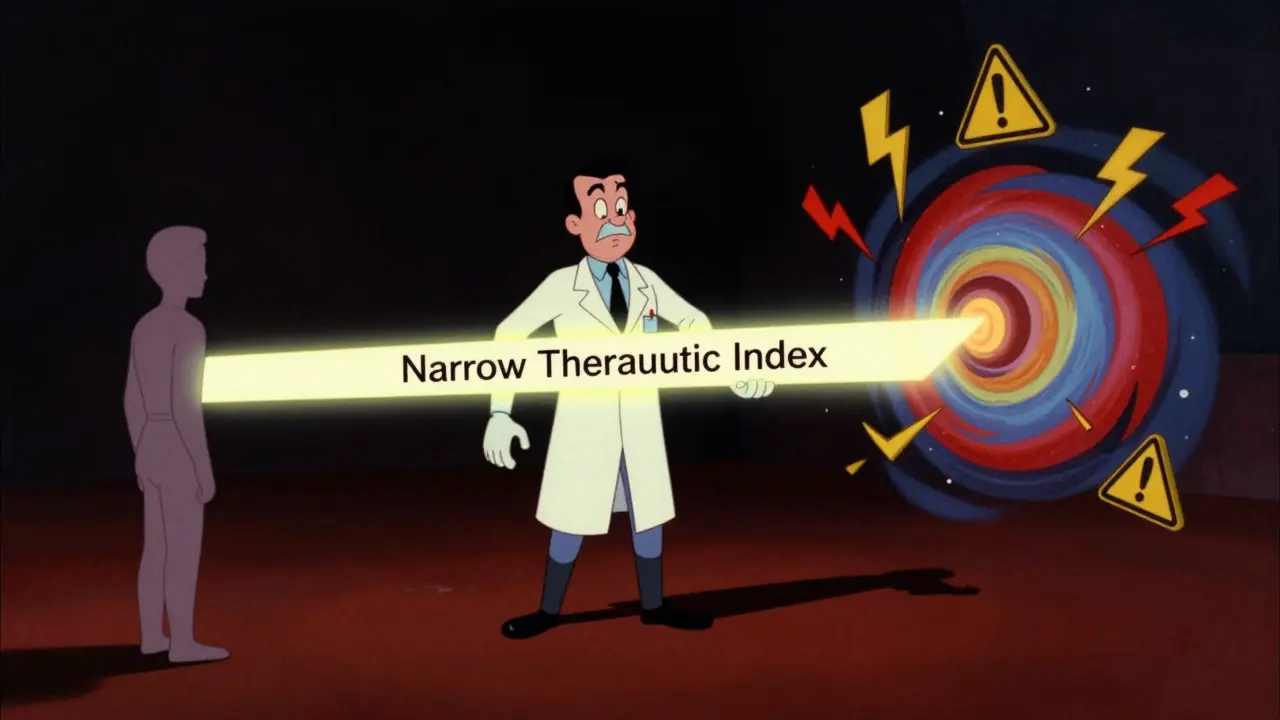
Imagine a medication where taking just slightly too little means it doesn't work at all, but taking just slightly too much could land you in the hospital. This is the reality for patients on Narrow Therapeutic Index (NTI) drugs. These are medications with a very small window between being effective and becoming toxic. For pharmacists, these drugs represent one of the most stressful parts of their job, especially when it comes to swapping brand-name versions for generic ones.
You might assume that if a generic drug is approved by regulators, it’s perfectly safe to swap out anytime. But for NTI drugs, that simple assumption can be dangerous. Small differences in how your body absorbs the drug-differences that are technically allowed within current regulations-can lead to serious health issues. This article breaks down why pharmacists are raising alarms about NTI generics, what the data says about safety, and how healthcare professionals are navigating this complex landscape in 2026.
What Makes NTI Drugs Different?
To understand the concern, we first need to define what an NTI drug actually is. Most medications have a wide "therapeutic window." If you take a bit more or less than prescribed, your body handles it fine, and the drug still works. Think of it like adjusting the volume on a radio; turning it up or down a notch doesn’t break the song.
NTI drugs are different. Their therapeutic window is razor-thin. A tiny change in dose or blood concentration can cause the treatment to fail completely or trigger severe side effects. Common examples include:
- Warfarin: A blood thinner used to prevent clots.
- Levothyroxine: Used to treat thyroid conditions.
- Phenytoin: An anti-seizure medication.
- Carbamazepine: Another drug for seizures and nerve pain.
Because the margin for error is so small, these drugs often require regular blood tests to monitor levels in the patient's system. When a pharmacist swaps a brand-name version of one of these drugs for a generic from a different manufacturer, they aren't just changing the pill's color or shape. They are potentially changing how the drug behaves in the patient's body.
The Bioequivalence Gap: Why Pharmacists Are Worried
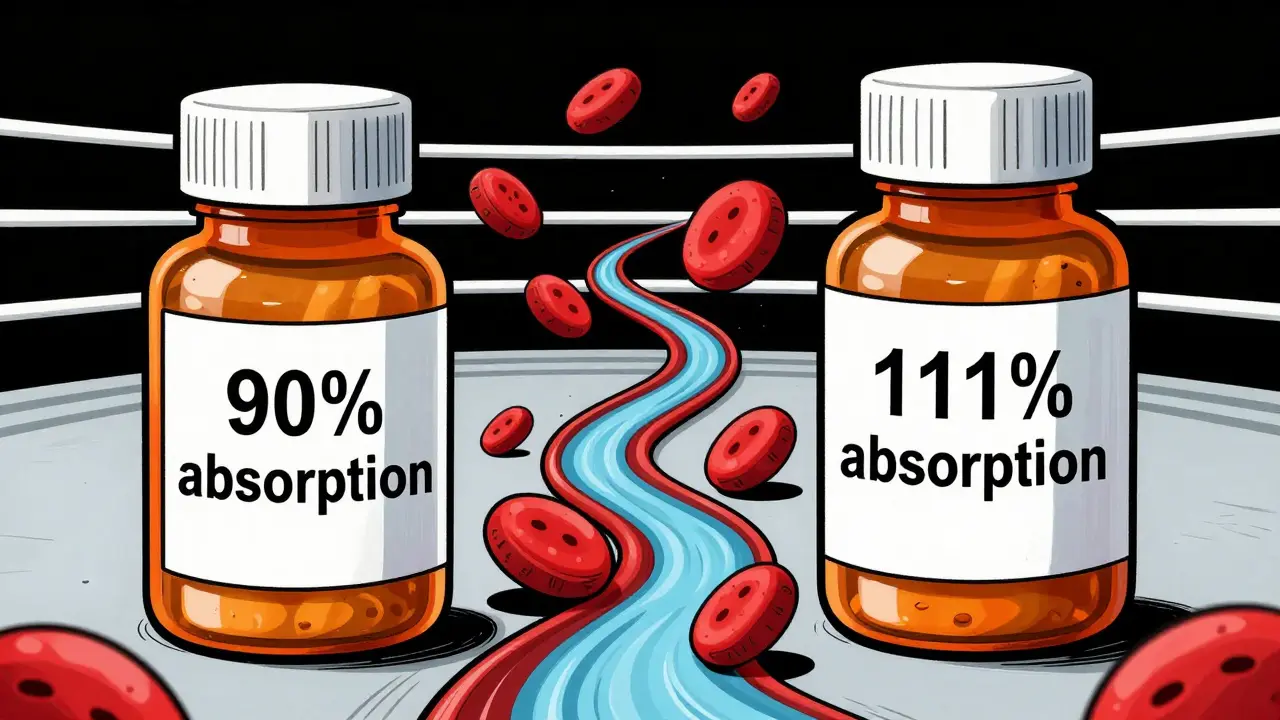
The core of the professional debate revolves around "bioequivalence." This is the measure of how similar a generic drug is to the original brand-name drug in terms of absorption and effect. For most standard drugs, regulatory bodies like the FDA allow a bioequivalence range of 80% to 125%. In other words, if the brand releases 100 units of medicine into your bloodstream, the generic can release anywhere from 80 to 125 units and still be considered equivalent.
For NTI drugs, however, this wide range is unacceptable. The FDA has tightened this rule for specific high-risk NTI drugs, recommending a narrower range of 90% to 111%. While this is an improvement, many pharmacists argue it is still not tight enough for clinical stability.
Here is why this matters in practice:
- Manufacturer Switching: There isn't just one company making generic warfarin. There are dozens. Generic Manufacturer A might produce a drug that sits at the 90% end of the acceptable range. Generic Manufacturer B might produce one that sits at the 111% end. Both are legally "equivalent."
- Clinical Impact: If a stable patient switches from Manufacturer A to Manufacturer B, their effective dose jumps by nearly 23%. For a blood thinner like warfarin, this spike could cause dangerous bleeding. For levothyroxine, it could trigger heart palpitations or anxiety.
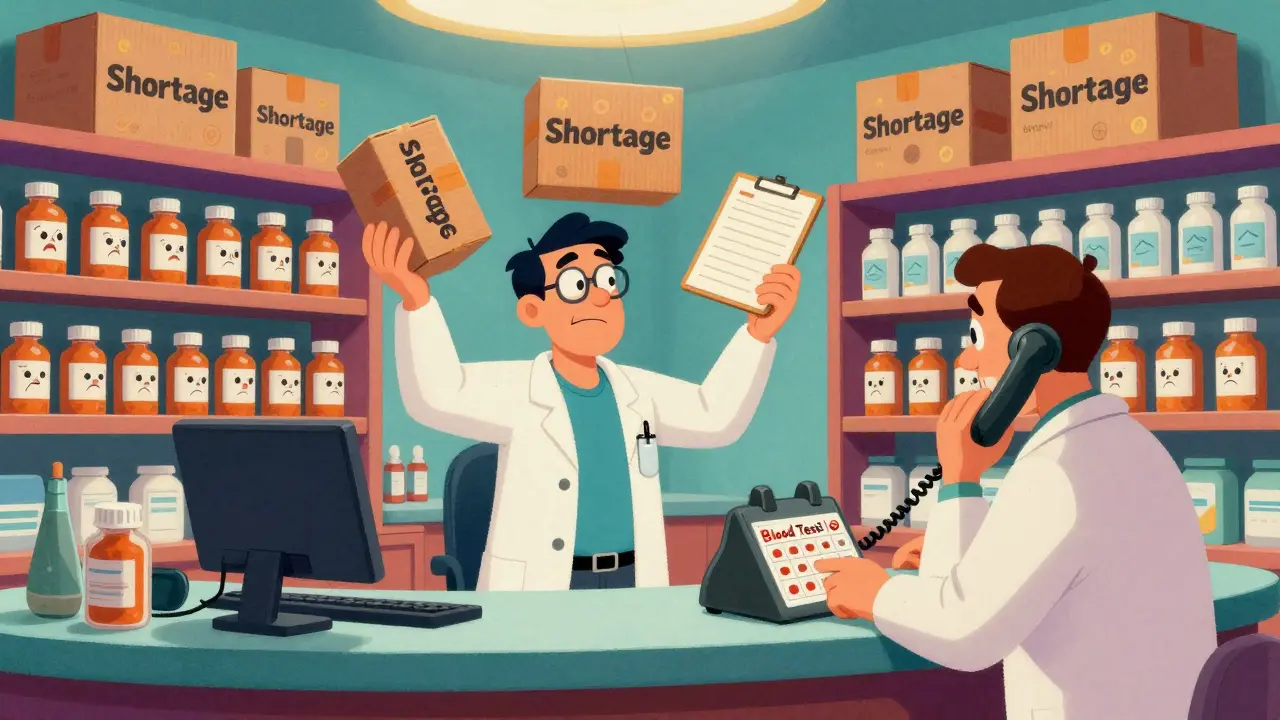
- Supply Chain Chaos: Drug shortages force pharmacies to switch manufacturers frequently. In 2024, the FDA reported that inconsistent switching between generic manufacturers exacerbated 23% of NTI drug shortages. This forces pharmacists to constantly manage unstable patient regimens.
| Feature | Standard Generics | NTI Generics (Recommended) |
|---|---|---|
| Bioequivalence Range | 80% - 125% | 90% - 111% |
| Risk of Toxicity | Low | High with small variations |
| Monitoring Required | Rarely | Frequently (Blood tests) |
| Substitution Anxiety | Minimal | Significant (68% of pharmacists concerned) |
Real-World Data: What the Surveys Say
This isn't just theoretical worry. Recent data paints a clear picture of the stress pharmacists face. According to a 2024 survey by the American Society of Health-System Pharmacists (ASHP), which included 1,200 pharmacists across hospital and community settings, 68% reported active concerns about substituting NTI generics.
The numbers get even starker when you look at specific behaviors:
- Refusal to Substitute: A 2024 study by the University of Florida College of Pharmacy found that 34% of pharmacists would not automatically substitute generic warfarin. Compare that to only 8% who refuse to substitute non-NTI drugs.
- Adverse Events: The FDA Adverse Event Reporting System (FAERS) logged 1,247 adverse events linked specifically to NTI generic substitutions between 2020 and 2024. That is more than three times the number of adverse events reported for non-NTI generic swaps during the same period.
- Physician Requests: Doctors are catching on too. The National Community Pharmacists Association (NCPA) surveyed 850 independent pharmacists in 2025 and found that 73% regularly receive requests from physicians to avoid NTI generic substitutions entirely.
Dr. Lucinda L. Maine, CEO of the American Association of Colleges of Pharmacy, highlighted this tension in a 2024 commentary, noting that 62% of pharmacists express anxiety about therapeutic outcomes when switching between different generic manufacturers. It’s a profession-wide consensus: the current system creates unnecessary risk.
The Supply Chain Vulnerability
If the science is tricky, the logistics are worse. NTI drugs make up only about 6% of all generic prescriptions filled in the U.S., yet they account for 22% of pharmacist substitution concerns. More alarmingly, they represent a disproportionate share of drug shortages.
In Q1 2025, there were 270 active drug shortages reported by ASHP. NTI drugs accounted for 17% of these shortages. Why does this happen? A major factor is manufacturing concentration. According to the University of Minnesota's Resilient Drug Supply Project, 80% of generic drugs are finished in foreign countries. For NTI drugs, this dependency is even higher.
When a single factory overseas has a problem, domestic supply dries up instantly. Because there are fewer companies willing to manufacture complex NTI drugs due to the stricter quality controls required, the market is fragile. The FTC’s 2025 investigation into drug middlemen specifically flagged NTI shortages as a priority concern, citing opaque practices by group purchasing organizations that destabilize availability.
This volatility forces pharmacists into a difficult position: keep a patient on a brand-name drug that costs significantly more, or risk switching them to a generic that might run out next month or behave differently than the last batch.
How Pharmacists Are Managing the Risk
Faced with these challenges, pharmacists aren't just waiting for regulations to catch up. They are implementing strict protocols to protect patients. Here is how leading health systems are handling NTI generics in 2026:
1. Source Consistency
The golden rule for NTI management is consistency. The ASHP’s 2025 Toolkit recommends maintaining a single source for NTI medications whenever possible. About 63% of hospital systems now implement this practice. If a patient is stable on Generic Brand X, the pharmacy will try hard to keep them on Generic Brand X, even if another generic is cheaper or more available.
2. Enhanced Monitoring
Therapeutic drug monitoring (TDM) is non-negotiable. When a switch occurs, pharmacists ensure patients have follow-up blood tests scheduled sooner rather than later. For example, after switching warfarin, INR levels (a measure of blood clotting time) are checked within days, not weeks.
3. Prescriber Notification
Communication is key. Currently, laws vary wildly by state. As of early 2025, only 28 states have specific restrictions on NTI drug substitution. However, 61% of pharmacists prefer state laws that require notifying the prescriber before any NTI generic swap. Many pharmacists voluntarily call doctors to inform them of a manufacturer change, allowing the doctor to adjust doses proactively.
4. Specialized Training
Handling NTI drugs requires advanced knowledge of pharmacokinetics. A 2024 ACCP study found that 78% of hospital pharmacists feel they need additional training beyond their standard degree to manage these risks effectively. Consequently, 81% of pharmacy residency programs now include specialized NTI drug management training.
Looking Ahead: Regulatory Changes in 2026
There is some hope on the horizon. In April 2025, the FDA announced a new bioequivalence framework for "critical dose" drugs. This update is expected to implement even stricter standards for 12 high-priority NTI drugs by 2026. Pharmacists view this with cautious optimism-it’s a step in the right direction, but implementation details remain to be seen.
However, new economic pressures are emerging. The Medicare Drug Price Negotiation Program (MDPNP), rolling out in 2026, includes three NTI drugs in its initial list. Industry leaders warn that reimbursement delays associated with these negotiations could create cash flow issues for community pharmacies, potentially impacting the steady supply of these critical medications.
The future of NTI care seems to point toward greater pharmacist autonomy. A 2025 report by AMCP suggests that 74% of healthcare systems plan to implement pharmacist-led NTI drug stewardship programs by 2027. This means pharmacists will have more authority to decide when to substitute and when to stick with the brand, prioritizing patient stability over cost savings.
What is an NTI drug?
An NTI (Narrow Therapeutic Index) drug is a medication where small changes in dose or blood concentration can lead to serious therapeutic failure or adverse reactions. Examples include warfarin, levothyroxine, and phenytoin. Because the difference between a helpful dose and a harmful dose is very small, these drugs require careful monitoring.
Are generic NTI drugs safe?
Generic NTI drugs are generally safe and approved by regulators, but they carry higher risks than standard generics. While they meet legal bioequivalence standards, slight variations between different manufacturers can affect how the drug works in your body. This is why pharmacists often recommend sticking to one specific generic manufacturer or using the brand name if stability is a concern.
Why do pharmacists hesitate to substitute NTI generics?
Pharmacists hesitate because switching manufacturers can alter the drug's bioavailability. Even if two generics are both "approved," one might absorb faster or slower than the other. For NTI drugs, this small difference can cause side effects or reduce effectiveness. With 68% of pharmacists reporting concerns, many prefer to maintain consistency to avoid adverse events.
What should I do if my pharmacy switches my NTI generic?
If your pharmacy switches the manufacturer of your NTI drug, contact your doctor immediately. You may need more frequent blood tests to monitor your levels. Do not stop taking your medication, but be aware of any new symptoms. Ask your pharmacist if they can order your preferred manufacturer to maintain consistency.
Do all states allow automatic substitution of NTI drugs?
No, laws vary by state. As of early 2025, 22 states require prescriber notification before substituting NTI drugs, and 6 states prohibit automatic substitution entirely. In other states, pharmacists may substitute unless the doctor writes "Dispense as Written" on the prescription. Check your local regulations or ask your pharmacist.