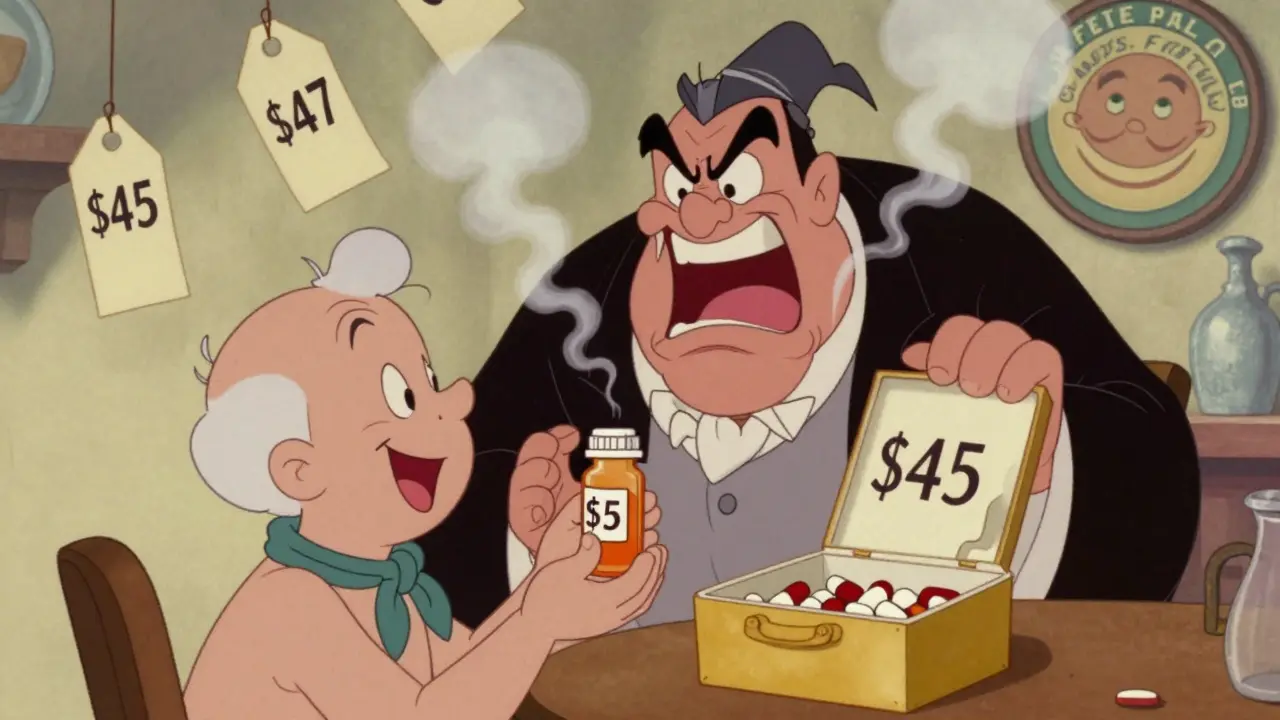
Imagine needing a daily pill to manage your blood pressure, diabetes, or cholesterol. You fill the prescription, and the pharmacist hands you a small bottle. The price? $5. That’s it. Now imagine the same pill, made by the same company, in the same packaging-except it has a brand name on it. That one costs $45. Same chemical. Same effect. Same safety record. Just a different label. This isn’t a scam. It’s the reality of the U.S. drug system-and generics are the only thing keeping millions of people from choosing between medicine and rent.
What Exactly Are Generic Drugs?
Generic drugs are exact copies of brand-name medications. They contain the same active ingredients, work the same way in your body, and meet the same strict safety standards set by the FDA. The only differences? The name, the color or shape of the pill, and the price. Generics hit the market after the original patent expires, usually 10 to 12 years after a drug first launches. That’s when other companies can legally make and sell the same medicine without paying for the original research.
Since the 1984 Hatch-Waxman Act created the modern pathway for generic approval, these drugs have become the backbone of affordable care. Today, 90% of all prescriptions filled in the U.S. are for generics. But here’s the twist: they make up only 13.1% of total drug spending. That means for every $100 spent on prescriptions, just $13 goes to generics-even though they’re the medicine nine out of ten people are taking.
The Real Cost Difference: Generics vs. Brand Names
The numbers don’t lie. In 2023, the average out-of-pocket cost for a generic prescription was $7.05. For a brand-name drug? $27.10. That’s nearly four times more. But some cases are even starker:
- Sildenafil Citrate (the active ingredient in Viagra): dropped from $49.90 to $3.07 per pill-94% cheaper.
- Emtricitabine/Tenofovir (used for HIV prevention): fell from $20.46 to $2.13-90% cheaper.
- Efavirenz, emtricitabine, tenofovir combo: went from $1,000 per month to $65-saving patients $131 million in one year alone.
And it’s not just rare cases. A 2021 analysis of 1.4 billion Medicare claims found that 93% of all generic prescriptions cost $20 or less out-of-pocket. Over 82% cost under $20. Nearly everyone paying for generics pays under $50. That’s not a discount. That’s a lifeline.
Where the System Fails You-Even When Generics Exist
Here’s the ugly truth: just because a generic exists doesn’t mean you’re getting the best price. Insurance plans, pharmacies, and middlemen have rigged the system in ways that hurt patients-especially those with Medicare Part D or no insurance at all.
Take Medicare. In 2018, Medicare Part D spent $2.6 billion more than it needed to on prescriptions. Why? Because patients were paying more at their local pharmacy than they would have if they’d gone to Costco. For 90-day fills, Medicare overspent by nearly 30%. Some people without insurance paid less than those with coverage.
And it gets worse. Insurance companies often move generics into higher cost tiers-like “preferred brand” or “specialty”-even though they’re not special. When that happens, your copay jumps from $5 to $40. A 2024 analysis found this practice increased patient spending by 135%, even as drug prices overall dropped by 38%.
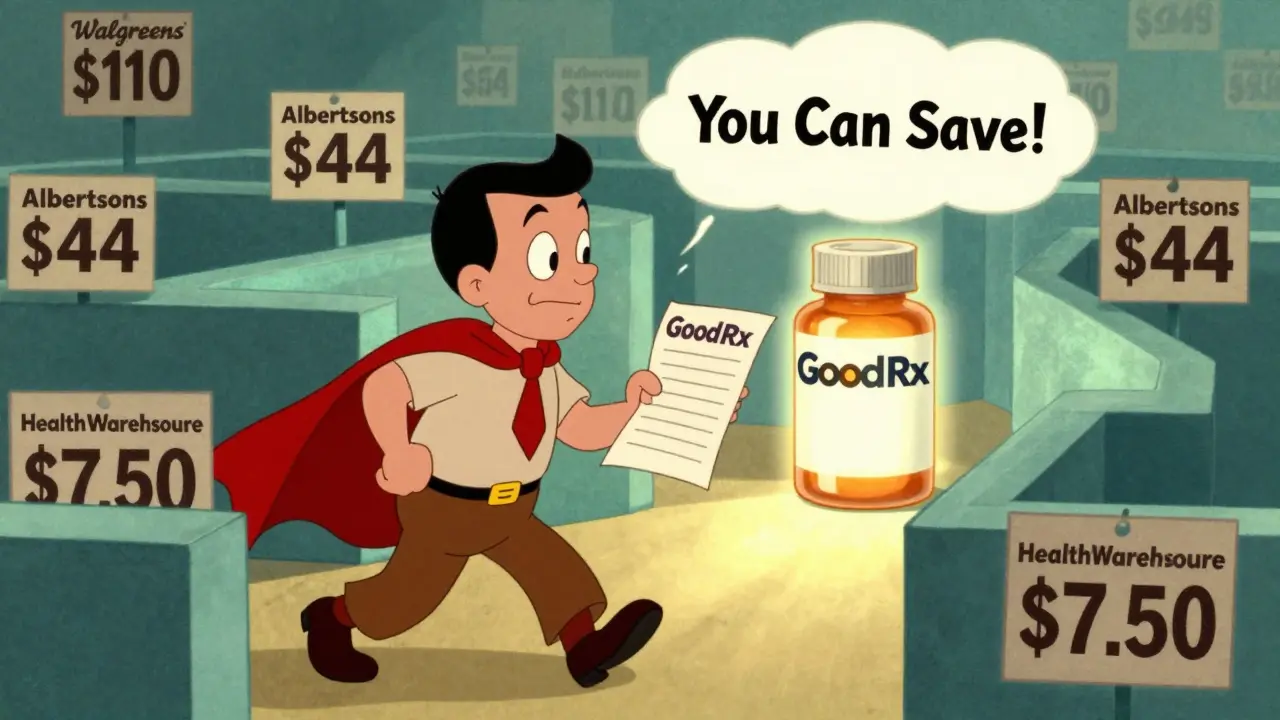
Then there’s the retail pharmacy markup. A 2023 NIH study compared prices across 200 common generics. At Albertsons, Pantoprazole 20mg cost $44. At a direct-to-consumer pharmacy, it was $9.20. That’s 79% less. Rosuvastatin 5mg? $110 at Walgreens. $7.50 at Health Warehouse. 93% savings. Same drug. Same manufacturer. Just a different place to buy it.
Why Do Prices Vary So Much?
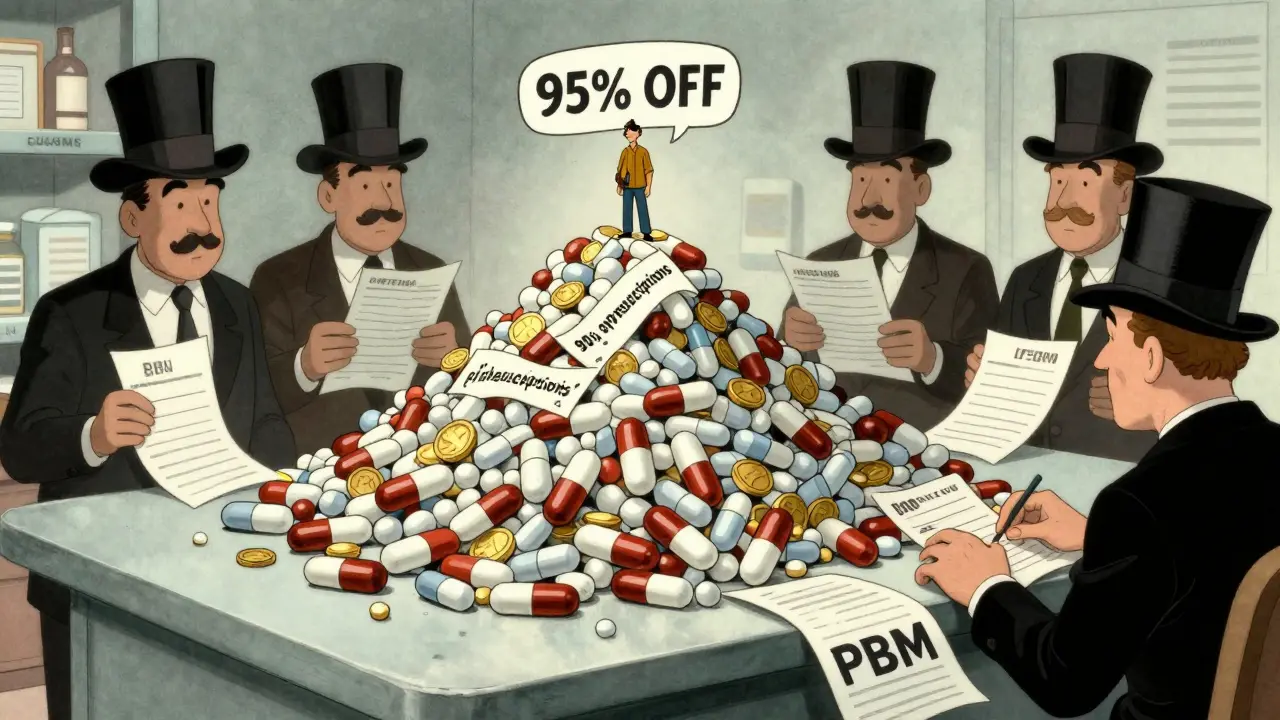
It’s not about manufacturing. Generics cost pennies to make. The problem is the supply chain. Drug manufacturers sell to distributors. Distributors sell to pharmacy benefit managers (PBMs). PBMs negotiate rebates with drugmakers-and those rebates are secret. The price you see at the counter? It’s not the real price. It’s what’s left after the middlemen take their cut.
That’s why the total cost of a generic (what you pay + what your insurer pays) fell by 80% between 2011 and 2019, but your out-of-pocket share actually went up. Patients paid 41.8% of generic costs, while paying only 32.1% of brand-name costs. That’s backwards. You’re paying more for the cheaper option.
And the system isn’t broken by accident. It’s designed that way. PBMs profit from higher list prices, even if the actual cost is low. So they push brand-name drugs with big rebates-even when generics are available and cheaper.
How to Save Money on Generic Drugs
You don’t have to overpay. Here’s how to fix your prescription costs right now:
- Ask for the generic-every time. Even if your doctor writes a brand name, the pharmacist can substitute unless the doctor checks “dispense as written.”
- Use direct-to-consumer pharmacies like HealthWarehouse, Blink Health, or GoodRx. These cut out the middleman and offer cash prices that beat insurance copays.
- Compare prices with GoodRx or SingleCare. Enter your drug and zip code. You’ll see prices at nearby pharmacies-and often find a $5 generic that your insurance won’t cover.
- Ask about 90-day fills. Many generics cost less per pill when bought in bulk. Costco often has the best prices-even without a membership.
- Challenge your insurance tier. If your generic is in a high-cost tier, call your insurer. Ask why. Request a tier exception. You might be surprised how often they say yes.
The Bigger Picture: Generics Save Billions-But Not Everyone
Over the past decade, generic and biosimilar drugs saved the U.S. healthcare system $445 billion. That’s more than the annual GDP of countries like Ireland or Norway. Without generics, millions would go without treatment. Hospitals would be overwhelmed. Families would face bankruptcy.
But those savings aren’t reaching everyone equally. The people who need help the most-low-income seniors, those on fixed incomes, people with chronic conditions-are the ones still overpaying because of opaque pricing, bad insurance design, and pharmacy markups.
The U.S. pays nearly three times more for drugs than other wealthy countries. Yet 9 out of 10 prescriptions here are generics. That’s the paradox. We’ve created a system where the cheapest drugs are the most expensive to buy-if you don’t know how to navigate it.
What Needs to Change
Real reform means fixing the middlemen. PBMs should be required to pass rebates directly to patients at the pharmacy counter. Insurance plans should be banned from putting generics in high-cost tiers. Pharmacies should be forced to disclose the true cash price before you pay.
Until then, the power is in your hands. You don’t need to accept a $50 copay for a $7 pill. You don’t need to believe that “brand” means better. You don’t need to be confused by insurance jargon. You just need to know the truth: generics work. And they’re meant to save you money. The system isn’t working for you. But you can still make it work for you.
kenneth pillet
January 18, 2026 AT 10:54Just picked up my generic metformin for $3 at Walmart yesterday. My insurance wanted to charge me $42. I didn't even bother calling them. Just paid cash. Same pill. Same results. Why do we still pretend this system makes sense?
Emma #########
January 20, 2026 AT 04:50I wish more people knew this. My mom was paying $80 a month for her blood pressure med until I showed her GoodRx. Now she saves $70 every time. She cries every time she walks out of the pharmacy. Not from sadness-from relief.
Naomi Keyes
January 20, 2026 AT 10:03Let’s be clear: the PBM system is a legal cartel. They don’t just ‘negotiate rebates’-they extract rents from patients while pretending to be cost-savers. The FDA approves generics, yes-but the market doesn’t reward them. Instead, it rewards opacity, complexity, and patient confusion. This isn’t capitalism; it’s rent-seeking dressed in white coats.
Jay Clarke
January 21, 2026 AT 17:11They want you to think generics are ‘good enough’-but they don’t want you to know they’re 95% cheaper. That’s not a loophole. That’s a crime. And the people who profit from this? They send their kids to private schools while you’re choosing between insulin and groceries. Wake up.
Chuck Dickson
January 22, 2026 AT 02:18You’re not alone. I used to think brand names were ‘better’-until I got hit with a $1,200 bill for a generic that should’ve cost $15. Now I’m on a mission to teach everyone I know how to fight this. It’s not about being ‘cheap.’ It’s about being smart. And you deserve to be healthy without going broke.
Nishant Sonuley
January 23, 2026 AT 12:17India makes 40% of the world’s generics-and we still pay more than most countries because we let middlemen run the show. I’ve bought my asthma inhaler from a Canadian pharmacy for $12. My neighbor pays $140 through his ‘good’ insurance. The system is rigged, but we’re not powerless. Knowledge is the first dose of medicine.
Jake Moore
January 24, 2026 AT 07:57Here’s a tip: if your pharmacy won’t tell you the cash price before you pay, walk out. Then go to HealthWarehouse or Blink. You’ll save 70-90%. I’ve done it for my dad’s cholesterol med. He didn’t believe me until he saw the receipt. Now he sends the link to everyone in his book club.
Danny Gray
January 26, 2026 AT 04:52It’s funny how we celebrate innovation in tech but treat medical science like a charity case. If a phone chip dropped 95% in price, we’d call it Moore’s Law. But when a lifesaving pill does the same? We call it ‘generic’ like it’s second-class. The real innovation here isn’t the pill-it’s the audacity to charge $50 for it.
Jodi Harding
January 27, 2026 AT 18:22My aunt died because she skipped her meds to afford rent. Generics saved millions. But they didn’t save her. The system didn’t care.
Eric Gebeke
January 27, 2026 AT 20:35People who don’t use GoodRx are either lazy or brainwashed. You’re literally paying for someone else’s profit margin. And you call yourself an adult? This isn’t ‘healthcare.’ It’s a tax on desperation.
Dayanara Villafuerte
January 28, 2026 AT 00:31Just used GoodRx for my thyroid med-$4.50 at CVS. My insurance copay? $48. 😤 I’m not mad. I’m just… done. 🤷♀️💊 #GenericsAreNotCheapTheyreJustExploited
Zoe Brooks
January 29, 2026 AT 11:56It’s wild how we’ve normalized paying more for the cheaper thing. Like buying a used car and paying extra for the dealership’s ‘service package.’ The system doesn’t need fixing-it needs dismantling. And we’re the ones holding the wrench.
Andrew McLarren
January 31, 2026 AT 04:25While the moral imperative is clear, structural reform requires legislative action. The PBM rebate system must be transparent, and tiering practices must be regulated under the Medicare Modernization Act. Patient out-of-pocket costs must align with actual acquisition cost, not negotiated rebates.
Andrew Short
January 31, 2026 AT 07:49Anyone who still trusts their insurance to save them money is either naive or complicit. You’re not a patient-you’re a revenue stream. And the system? It’s not broken. It’s working exactly as designed: to extract, not to heal.