
Otitis externa, commonly called swimmer’s ear, isn’t just a minor annoyance after a dip in the pool. It’s a real infection that can turn a sunny day into days of pain, muffled hearing, and discomfort. Unlike middle ear infections, which happen behind the eardrum, swimmer’s ear attacks the skin lining your outer ear canal - the tube that runs from your eardrum to the outside of your head. When this skin gets irritated, moist, and damaged, bacteria or fungi move in and take hold. The result? Pain that worsens when you tug on your earlobe, itching, swelling, and sometimes pus or fluid draining out.
Why Your Ear Gets Infected After Swimming
< p>Swimming is the classic trigger, but it’s not the water itself that causes the problem. It’s what happens when water stays trapped in your ear canal. Your ear naturally makes wax - cerumen - which acts like a protective barrier. It’s slightly acidic, with a pH between 5.0 and 5.7, and that acidity keeps most bacteria and fungi from growing. But when water sits in your ear for hours, it washes away that protective layer. The skin swells, cracks, or gets scratched (often by cotton swabs or fingernails), and suddenly, your ear is wide open for invaders.The most common bacteria responsible are Pseudomonas aeruginosa (found in 35-54% of cases) and Staphylococcus aureus (20-30%). These bugs thrive in damp environments - think hot tubs, lakes, and even showers. Fungal infections, called otomycosis, are less common but still happen in about 10% of cases. Aspergillus, a mold often found in soil and decaying leaves, is the usual culprit.
People who swim often, especially kids, are at higher risk. But so are people with eczema, those who use hearing aids or earbuds regularly, or anyone who cleans their ears too aggressively. Even a single swim can set off an infection if the conditions are right. The CDC estimates that about 1 in 10 Americans will get swimmer’s ear at least once a year.
How Bad Can It Get?
Not all cases are the same. Symptoms fall into three clear levels of severity:
- Mild: Itching, slight redness, mild discomfort - maybe a little fluid draining. This affects about 45% of cases.
- Moderate: More pain, more swelling, hearing feels muffled, and the ear canal is partially blocked. This happens in 35% of cases.
- Severe: Intense pain that radiates to your face or neck, complete blockage of the ear canal, swollen lymph nodes, and fever over 101°F. This occurs in about 20% of cases and needs urgent care.
If left untreated, severe cases can lead to complications. In rare cases - about 0.03% - the infection can spread to the bone around the ear, especially in people with diabetes. This is called malignant otitis externa and can be life-threatening. That’s why it’s not something to ignore.
What Ear Drops Actually Work?
The good news? Most cases of swimmer’s ear respond well to topical ear drops. The right treatment depends on whether it’s bacterial or fungal, and how bad it is.
For mild cases: Over-the-counter drops with 2% acetic acid and hydrocortisone - like VoSoL HC Otic or Swim-Ear - are the first line of defense. These work in two ways: the acetic acid restores the ear’s natural acidity to kill bacteria, and the hydrocortisone reduces swelling and itching. Studies show they’re about 85% effective for mild infections. Many people use them after swimming to prevent infection, and that’s a smart move - they cut recurrence risk by 65%.
For moderate to severe cases: You’ll need a prescription. The gold standard is ciprofloxacin 0.3% with dexamethasone 0.1%, sold as Ciprodex. This combo kills bacteria and shuts down inflammation fast. Clinical trials show it clears up symptoms in 92% of patients within 7 days. Other fluoroquinolone drops like ofloxacin (generic) work almost as well and cost less - around $45 compared to Ciprodex’s $147.50 without insurance.
For fungal infections, you need antifungals. Clotrimazole 1% solution works in 93% of cases. Acetic acid drops won’t touch fungi - they’ll only delay real treatment.
Here’s how the most common options compare:
| Type | Brand/Example | Best For | Effectiveness | Cost (10mL, no insurance) | Risks |
|---|---|---|---|---|---|
| Acetic Acid + Hydrocortisone | Swim-Ear, VoSoL HC | Mild cases, prevention | 85% | $15 | Stinging on application |
| Fluoroquinolone + Steroid | Ciprodex | Moderate to severe bacterial | 92% | $147.50 | Costly |
| Generic Fluoroquinolone | Ofloxacin (OtiRx) | Moderate to severe bacterial | 90% | $45 | None significant |
| Aminoglycoside (e.g., Neomycin) | Neomycin/Polymyxin B | Older option | 80-85% | $25 | Can damage hearing if eardrum is ruptured |
| Antifungal | Clotrimazole 1% | Fungal (otomycosis) | 93% | $30 | Not for bacterial infections |
One key thing to know: antibiotic drops with steroids work better than antibiotics alone. A 2020 NEJM study found that combination drops cleared infections in 92% of cases, while antibiotic-only drops only worked in 75%. The steroid cuts swelling, letting the antibiotic reach the infected tissue.
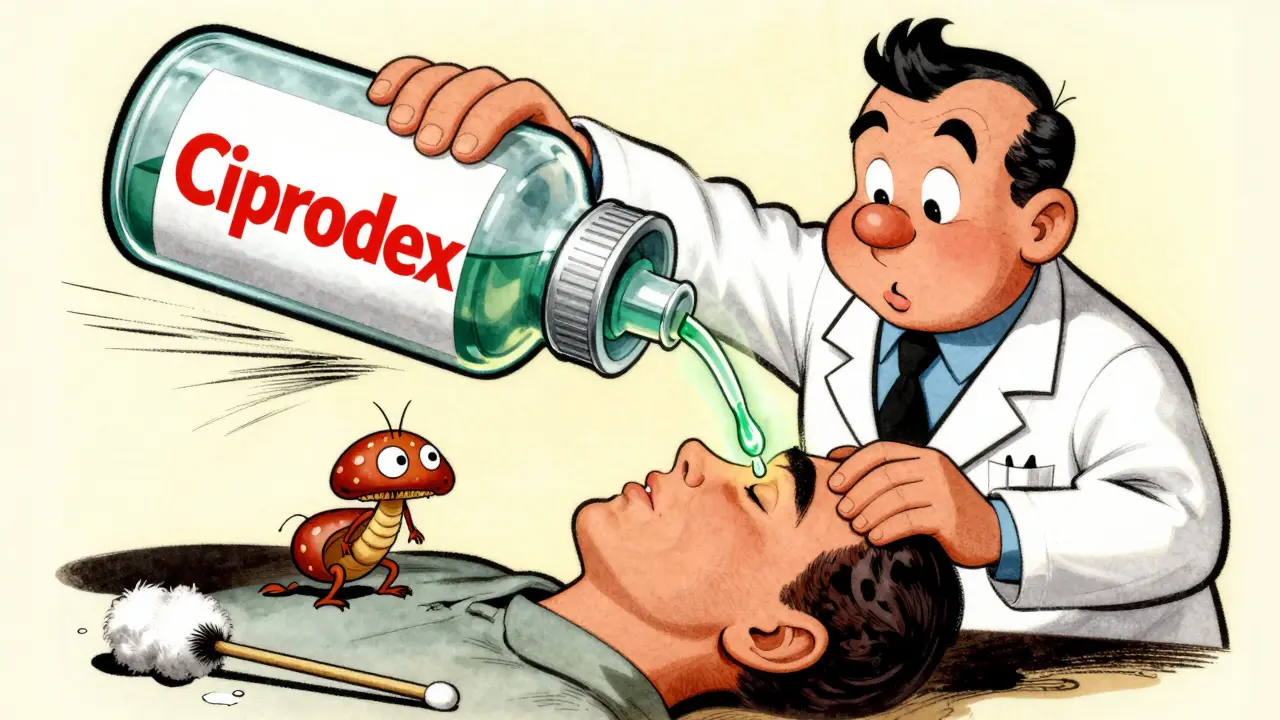
How to Use Ear Drops Right
Even the best drops won’t work if you use them wrong. Most people mess up the basics. Here’s how to do it right:
- Wash your hands.
- Warm the bottle in your hands for 1-2 minutes - cold drops can make you dizzy.
- Lie on your side with the infected ear facing up.
- Pull your earlobe gently up and back to straighten the canal.
- Put in the exact number of drops your doctor prescribed.
- Stay lying down for 5 full minutes. This lets the drops sink in.
- Place a cotton ball at the ear opening to keep the drops from leaking out.
- Don’t stick anything - not cotton swabs, not fingers - into your ear canal.
Skipping the 5-minute wait cuts effectiveness by 40%, according to Mayo Clinic data. And using cotton swabs? That’s a major mistake. You’re not cleaning - you’re pushing debris deeper and scraping the skin, making the infection worse.
When You Need a Doctor
You don’t need to see a doctor for every case of mild itching. But if you have:
- Pain that doesn’t improve after 2-3 days of OTC drops
- Fever, swelling, or redness spreading beyond the ear
- Drainage that’s thick, bloody, or smells bad
- Diabetes or a weakened immune system
…then get checked. Your doctor may need to clean out your ear canal - a process called debridement. This removes pus, wax, and dead skin so the drops can actually reach the infection. Studies show this single step improves drop effectiveness by 30-40%. In severe cases, your doctor might insert a small sponge-like wick into your ear canal to help the drops travel deeper. It’s uncomfortable, but it works.
What Doesn’t Work - and What’s Dangerous
Many people try home remedies: alcohol, vinegar rinses, garlic oil, or even heat lamps. These rarely help and can make things worse. Alcohol dries out the skin and causes more irritation. Vinegar alone won’t kill the bacteria if the infection is already established.
And never use aminoglycoside drops like neomycin if you’re not sure your eardrum is intact. If you’ve had ear tubes, a past rupture, or even just a history of ear infections, these drops can damage your hearing. The FDA requires warning labels on these products for this very reason.
Also, don’t use antibiotics if you don’t need them. Overprescribing has led to a 12% rise in fluoroquinolone-resistant Pseudomonas strains between 2015 and 2020. That means the drugs we rely on are slowly losing power.
Preventing It From Coming Back
Once you’ve had swimmer’s ear, you’re more likely to get it again. Prevention is easier than treatment:
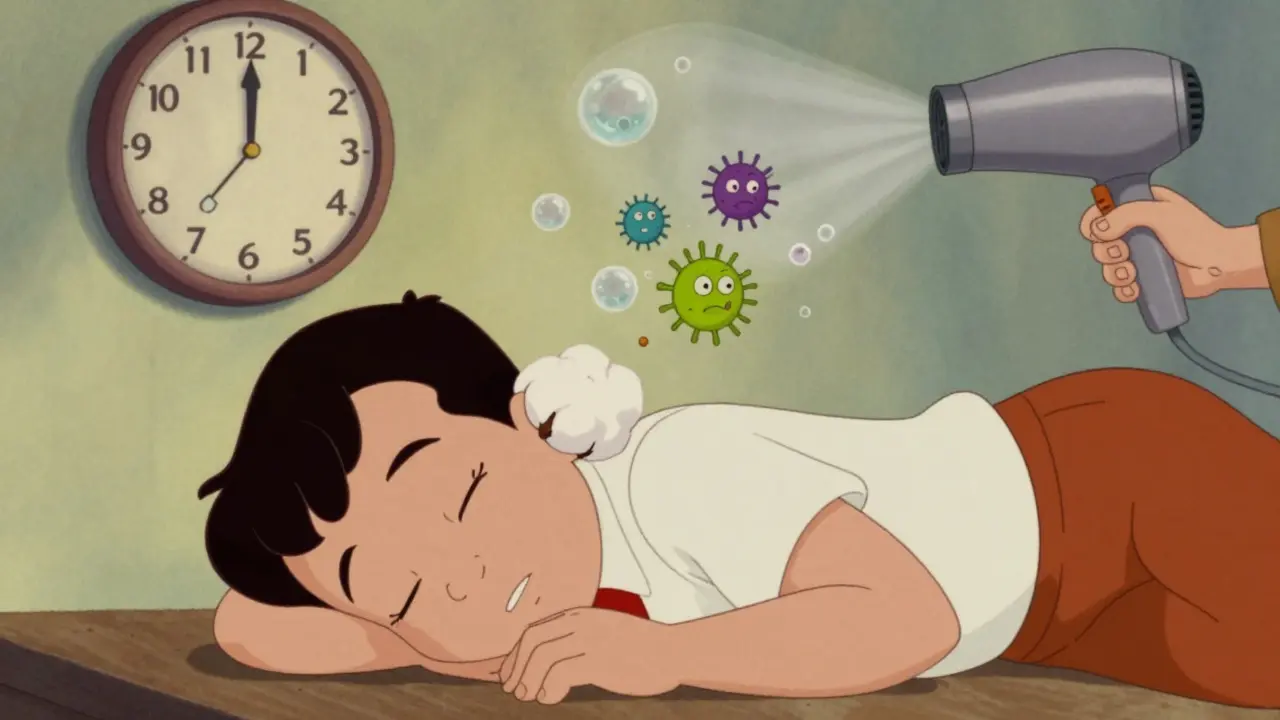
- After swimming or showering, tilt your head to drain water.
- Dry your ears gently with a hair dryer on low, held at least a foot away.
- Use OTC acetic acid drops (like Swim-Ear) after swimming - it’s cheap, safe, and cuts recurrence by 65%.
- Avoid cotton swabs, bobby pins, or anything else that goes inside your ear.
- If you wear hearing aids or earbuds, clean them regularly and give your ears a break.
People who follow these steps reduce their risk by more than half. It’s not magic - just smart hygiene.
What’s New in Treatment?
There’s progress. In March 2023, the FDA approved a new version of ofloxacin called OtiRx with extended-release technology. It lasts 24 hours instead of 12, so you only need one dose a day. Early results show 94% effectiveness.
Researchers are also testing microbiome-based therapies - treatments that restore the good bacteria in your ear canal to naturally block bad ones. It’s still in early trials, but it could be a game-changer.
Telemedicine is helping too. Mayo Clinic’s video consultation program diagnosed swimmer’s ear with 88% accuracy - meaning you might not need to leave your house for a simple case.
But the biggest challenge isn’t new drugs - it’s people misusing old ones. The FDA says 18% of emergency visits for worsening ear infections happen because someone used the wrong OTC product. Don’t be one of them.
Swimmer’s ear is common, treatable, and preventable. But it doesn’t fix itself. Use the right drops, use them correctly, and don’t wait until the pain is unbearable. Your ears will thank you.
Sangeeta Isaac
January 21, 2026 AT 15:26this post just saved my hearing.
Rod Wheatley
January 23, 2026 AT 14:48You're not cleaning your ear-you're pushing wax deeper, scraping the skin, and inviting bacteria to a party they didn't RSVP to.
I'm a physical therapist who sees this daily.
The ear canal is self-cleaning. Seriously. Your body knows what it's doing.
If it itches? Use a damp cloth on the outer part. That's it.
If you're swimming regularly? A few drops of Swim-Ear after? Game-changer.
I've had patients go from chronic infections to zero in 3 weeks just by stopping the swabbing and using the drops.
It's not magic. It's biology.
Stop fighting your body.
Let it work.
And if you're diabetic? Please. Don't wait till it's 'bad enough.'
Check in early.
Your foot might be the first thing people warn you about-but your ear? It can kill you quietly.
Roisin Kelly
January 23, 2026 AT 20:28my grandma used olive oil and it worked fine.
Melanie Pearson
January 25, 2026 AT 08:20The normalization of self-diagnosis and self-treatment via OTC products is a direct consequence of deregulation and the erosion of clinical oversight.
One must ask: who benefits?
Not the patient.
Not the public health system.
The corporations that profit from the illusion of convenience.
This is not medicine.
It is commodified symptom management.
Alex Carletti Gouvea
January 27, 2026 AT 06:48you think they're safe?
i'd rather just let it run its course than risk some foreign chemical in my ear.
Uju Megafu
January 28, 2026 AT 10:46why do you trust a lab over your ancestors?
garlic oil, warm salt, even tea tree-these are real remedies.
you’re just scared of what you don’t understand.
Stephen Rock
January 29, 2026 AT 06:24they don't tell you 80% of those cases were mild and would've cleared anyway.
the real stat? 70% of people who use Ciprodex still get reinfected within 6 months.
the system is rigged.
Dee Monroe
January 29, 2026 AT 08:56We’ve forgotten that the ear canal isn’t a pipe to be scrubbed, but a delicate ecosystem, like a rainforest, where balance matters more than sterility.
The fact that acetic acid works isn’t because it’s a chemical weapon-it’s because it’s a mimic. It’s the ear’s own voice, amplified.
And the steroid? It’s not suppressing inflammation-it’s whispering to the body, saying, ‘Calm down, we’ve got this.’
Maybe the real miracle isn’t the drops-it’s that our bodies still remember how to heal, even when we’ve spent decades telling them they’re incapable.
We’re not just treating an infection.
We’re relearning trust.
Trust in biology.
Trust in time.
Trust that sometimes, the best medicine is not doing anything at all.
Jarrod Flesch
January 31, 2026 AT 07:332 drops, 5 mins, cotton ball.
done.
no drama.
no panic.
just smart.
👍
Jerry Rodrigues
February 2, 2026 AT 06:26now i know it's just bad habits.
no more q-tips.
no more ignoring the itch.
just drops and patience.
Ben McKibbin
February 2, 2026 AT 10:08We’ve turned a natural process into a ritual of violation.
The ear doesn’t need your help.
It needs your restraint.
And yet, we’ve been sold the lie that more intervention equals better health.
The data says otherwise.
The biology says otherwise.
The silence after you stop swabbing? That’s your ear breathing again.
Philip Williams
February 3, 2026 AT 06:30However, I would like to see a follow-up analysis on adherence rates.
How many patients actually complete the full 7-day course?
And what percentage of recurrent infections stem from premature discontinuation?
This data would significantly enhance the practical utility of the recommendations.
Barbara Mahone
February 4, 2026 AT 20:50No drops. No prescriptions.
Just quiet care.
She never had swimmer’s ear.
Maybe there’s wisdom in traditions we’ve forgotten to listen to.