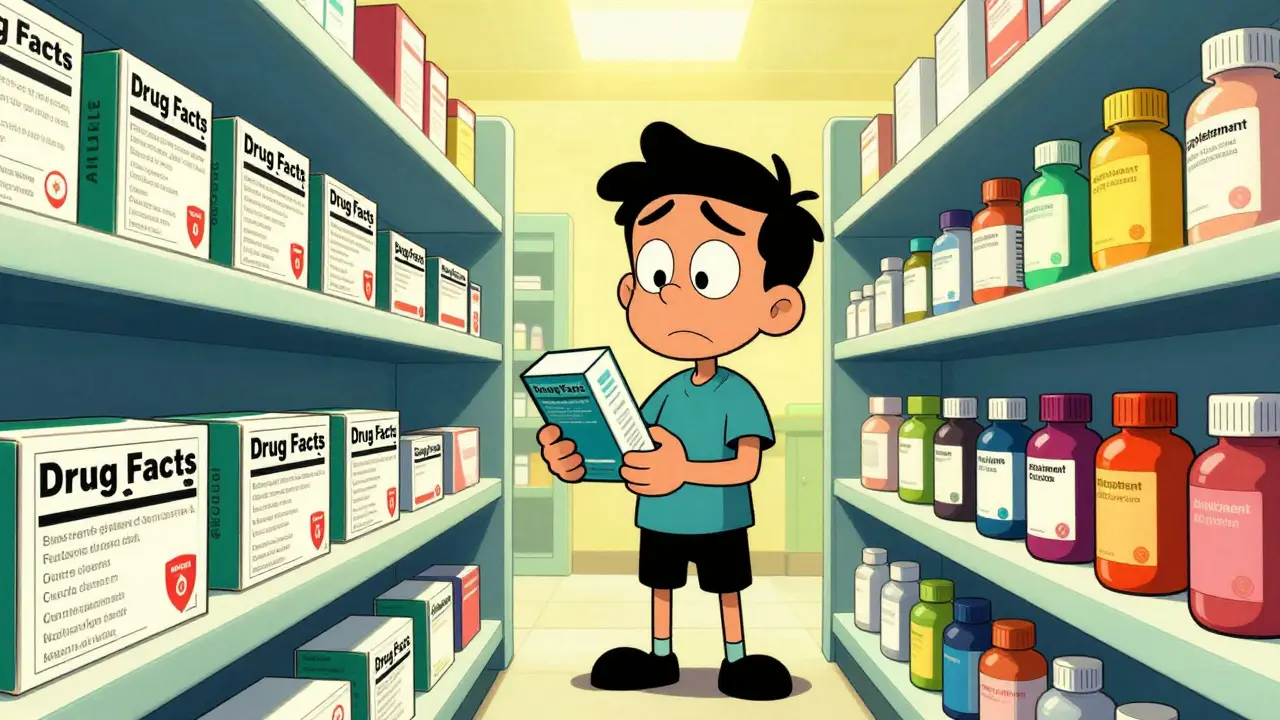
Walk down the aisle of any pharmacy in Bristol or anywhere else in the UK and US, and you’ll see a striking visual similarity. On one side, you have boxes of ibuprofen or antihistamines. On the other, bottles of multivitamins, fish oil, and protein powders. They sit next to each other. They look professional. They often carry the same trusted brand names. It is easy to assume they are regulated by the same rules.
They are not.
This assumption is dangerous. The Drug Facts label mandated for over-the-counter (OTC) medications contains critical safety data that is completely absent from the labels of dietary supplements. When you buy an OTC painkiller, the law requires the manufacturer to tell you exactly what it does, who should avoid it, and how it interacts with other drugs. When you buy a vitamin or herbal supplement, those requirements vanish. This regulatory gap creates a false sense of security for millions of consumers who believe that if it is sold on a shelf, it has been proven safe by health authorities.
The Two Different Worlds of Regulation
To understand why your vitamin bottle lacks warning labels, you have to look at the laws governing them. In the United States, where much of this global supply chain originates, OTC medications are regulated under strict drug laws. Since 1999, the U.S. Food and Drug Administration (FDA) has required all OTC drugs to display a standardized "Drug Facts" panel. This panel is non-negotiable. It must list active ingredients with precise measurements, specific therapeutic uses, detailed warnings about contraindications, dosage directions, and pregnancy precautions.
Dietary supplements, however, live in a different legal universe. They are regulated as food products under the Dietary Supplement Health and Education Act (DSHEA) of 1994. Under DSHEA, supplements do not need FDA approval before they hit the market. Manufacturers do not have to prove their products are safe or effective. Instead of a "Drug Facts" label, they use a "Supplement Facts" panel. While the layout looks similar, the content requirements are drastically weaker. The Supplement Facts panel focuses on ingredient lists and serving sizes but omits the rigorous safety disclosures mandatory for medications.
This distinction is crucial. A study published in the AMA Journal of Ethics in May 2022 found that 72% of surveyed consumers incorrectly believed that supplements undergo the same FDA safety review as medications. This misconception persists because the packaging looks identical, but the legal obligations behind it are worlds apart.
What Is Missing From Your Supplement Bottle?
If you compare a box of OTC allergy medication to a bottle of herbal immune support, you will notice several glaring omissions on the supplement label. These are not minor details; they are critical safety information.
| Label Element | OTC Medication (Drug Facts) | Dietary Supplement (Supplement Facts) |
|---|---|---|
| Precise Dosage Instructions | Required. Must specify exact amount for specific symptoms. | Optional. Often vague (e.g., "take as directed"). |
| Drug Interactions | Required. Must list known interactions with prescription drugs. | Rarely listed. Only 17% of supplement labels warn about interactions (JAMA Internal Medicine, 2021). |
| Pregnancy/Breastfeeding Warnings | Required if risks exist. Prominent placement. | Often missing or buried in fine print, even for high-risk ingredients like Vitamin A. |
| Sodium Content | Required per dosage unit (21 CFR 201.64(c)). | Not required. Risk for hypertension patients. |
| Active Ingredient Forms | Must specify chemical form (e.g., Retinol vs. Beta-Carotene). | Often ambiguous. May list International Units (IU) without specifying source. |
The most significant gap is the lack of interaction warnings. According to a 2021 study in JAMA Internal Medicine, only 17% of supplement labels warn about potential interactions with prescription medications. In contrast, 100% of OTC medication labels provide this information. If you are taking blood thinners, antidepressants, or heart medication, a supplement label might not tell you that St. John’s Wort or high-dose Vitamin E could interfere with your treatment.
Another hidden risk involves sodium content. The FDA requires OTC medications to list sodium per dose, which is vital for people with high blood pressure. This requirement does not extend to supplements. You could be ingesting significant amounts of sodium through a daily multivitamin or electrolyte powder without ever seeing it on the label.
The Danger of Ambiguous Ingredients
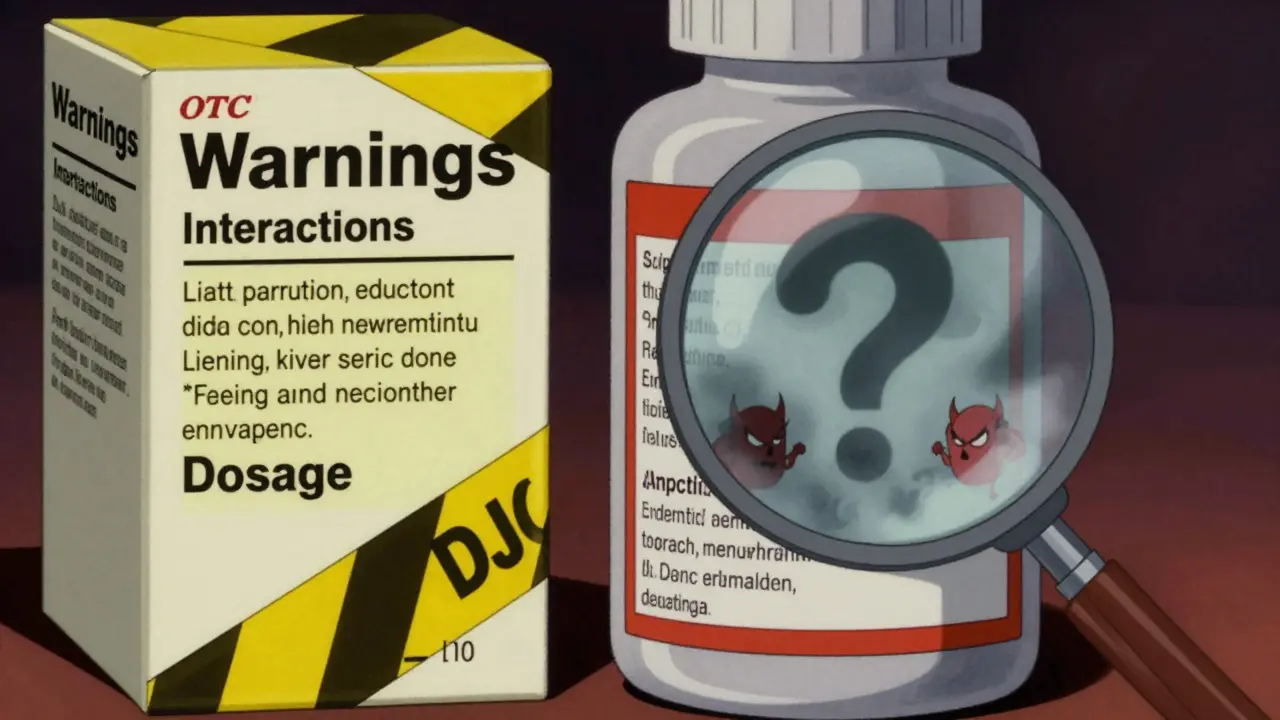
Even when supplements list their ingredients, the information can be misleading. OTC drugs must list active ingredients in standard metric units (milligrams or micrograms). Supplements, however, often use proprietary blends or ambiguous measurements.
Take Vitamin A as an example. High doses of pre-formed Vitamin A (retinol) are teratogenic, meaning they can cause birth defects. OTC acne medications containing isotretinoin (a Vitamin A derivative) require strict Risk Evaluation and Mitigation Strategy (REMS) programs, including mandatory pregnancy tests and contraception. Yet, many prenatal vitamins contain Vitamin A levels exceeding the 10,000 IU daily limit recommended during pregnancy. An analysis by the American Medical Association noted that while these supplements carry the same biological risks, their warnings are often generic and buried in fine print.
Compounding the issue is the measurement system. Supplement labels often list Vitamin A in International Units (IU) without specifying whether it comes from retinol (risky) or beta-carotene (safe). This makes it impossible for a consumer to assess their actual risk. A 2023 draft guidance from the FDA proposed requiring manufacturers to list amounts in mcg RAE (Retinol Activity Equivalents) to clarify this, but as of mid-2026, this remains a voluntary or transitional recommendation rather than a strict mandate for all products.
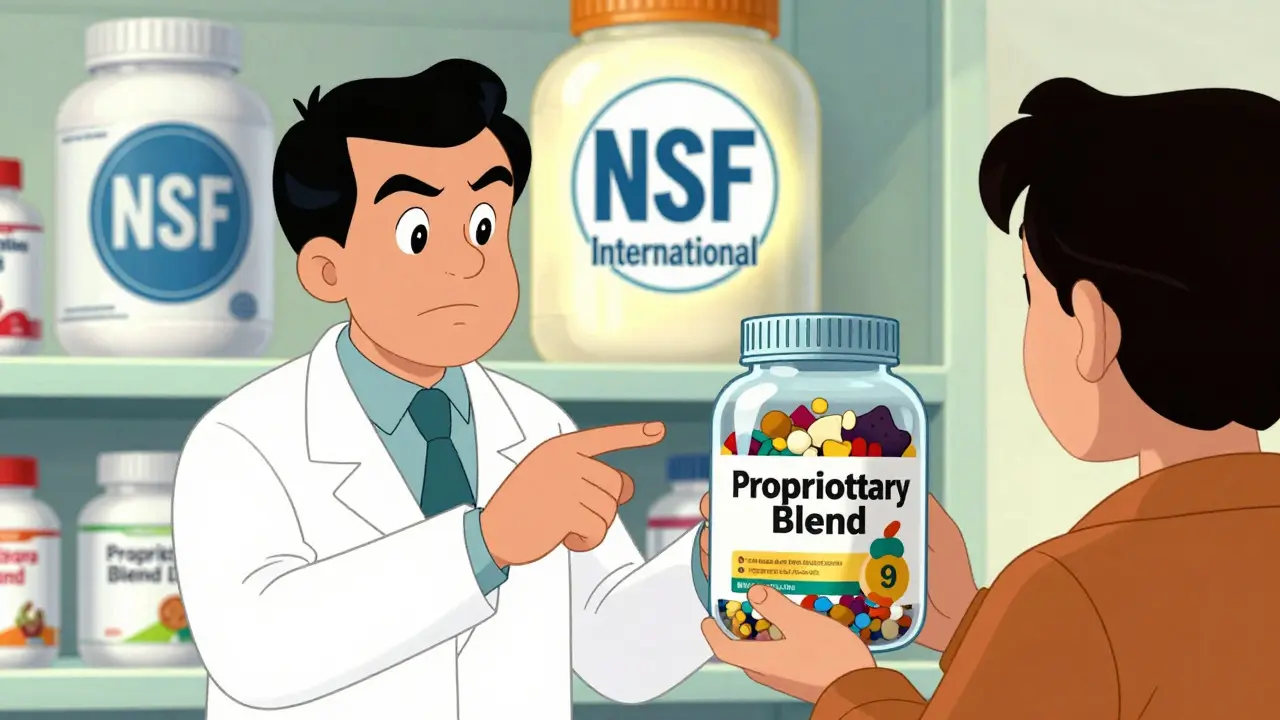
Proprietary blends are another red flag. A 2022 analysis by NSF International found that 41% of protein supplements and 63% of weight loss supplements used proprietary blends. This means the manufacturer hides the exact amount of each ingredient inside the mix. You might see "Immune Support Blend: 500mg," but you won’t know if that’s 499mg of cheap filler and 1mg of the active herb. OTC drugs cannot do this; every active ingredient must be quantified.
Why Do These Gaps Persist?
You might wonder why regulators haven’t fixed this obvious disparity. The answer lies in market power and lobbying. The U.S. dietary supplement industry generated $54.2 billion in sales in 2022, growing at 8.3% annually. This massive revenue stream translates into political influence. The industry spent $8.2 million on federal lobbying in 2022 alone, successfully resisting efforts to strengthen labeling requirements.
The regulatory approach is also fundamentally different. For OTC drugs, the burden of proof is on the manufacturer to show safety *before* marketing. For supplements, the burden is on the FDA to prove a product is "adulterated" or "misbranded" *after* it causes harm. A 2023 Government Accountability Office investigation revealed that the FDA takes an average of 427 days to act on reports of dangerous supplements, compared to just 45 days for problematic OTC medications.
Dr. Pieter Cohen, Associate Professor of Medicine at Harvard Medical School, stated in a 2023 JAMA commentary that current labeling requirements create a "false sense of security." He argues that consumers assume pharmacy shelves equal safety, but the reality is that supplements operate with far less oversight. Dr. Daniel Fabricant, former FDA Division Director for Dietary Supplement Programs, acknowledged in a 2022 interview that the Supplement Facts panel was never designed to convey the same level of risk information as the Drug Facts label.
How to Protect Yourself
Since you cannot rely on the label alone, you must take extra steps to ensure your safety. Here is a practical checklist for navigating the supplement aisle:
- Check for Third-Party Certification: Look for seals from independent organizations like NSF International, USP (United States Pharmacopeia), or ConsumerLab.com. As of September 2023, over 2,147 products held NSF/ANSI Standard 173 certification. These groups test for purity, potency, and contaminants, filling the gap left by weak FDA enforcement.
- Use Independent Databases: Resources like Examine.com, which reported 4.7 million monthly users in 2023, provide unbiased analysis of supplement ingredients, including potential side effects and interactions that labels omit.
- Consult Your Pharmacist: Walgreens pharmacists documented over 14,000 inquiries in Q1 2023 alone regarding why supplements lack detailed warnings. Pharmacists are trained to spot interactions between supplements and prescription drugs. Always ask them to check your regimen.
- Read the Fine Print for Pregnancy: If you are pregnant or planning to be, scrutinize Vitamin A content. Avoid supplements listing "retinol" or "palmitate" in high doses. Opt for those using beta-carotene, which the body converts to Vitamin A only as needed, reducing toxicity risk.
- Beware of Proprietary Blends: If a product hides its ingredient amounts behind a "blend," assume the worst-case scenario for dosing. Choose brands that list individual ingredient quantities transparently.
Future Changes and Consumer Awareness
The landscape is slowly shifting. In June 2023, the FDA issued draft guidance proposing enhanced labeling for high-dose Vitamin A supplements, pushing for clearer metrics and prominent pregnancy warnings. Additionally, the National Institutes of Health launched the Supplement Label Database in January 2023, now housing data on 65,000 products. While participation is voluntary, it signals a move toward greater transparency.
Consumer awareness is also driving change. Online communities, such as Reddit’s r/Supplements, have become hubs for sharing experiences with adverse reactions due to missing label information. A 2023 thread asking why vitamin labels don’t warn about interactions garnered over 1,200 upvotes, highlighting widespread frustration. Amazon reviews show that 32% of negative feedback for top-selling multivitamins cites confusion over dosage safety or lack of clear warnings.
As the market grows, so does the demand for accountability. Industry analysts at Grand View Research project continued growth in the supplement sector, but note that consumer preference is shifting toward brands that offer Drug Facts-level transparency. Until regulations catch up, the responsibility falls on you to read beyond the front of the bottle, verify claims with independent sources, and treat supplements with the same caution you would reserve for medications.
Do vitamins need FDA approval before being sold?
No. Unlike OTC medications, dietary supplements do not require FDA approval before they reach the market. Manufacturers are responsible for ensuring their products are safe, but they do not have to provide evidence of safety or efficacy to the FDA beforehand. This is governed by the Dietary Supplement Health and Education Act (DSHEA) of 1994.
Why doesn't my supplement label list drug interactions?
The Supplement Facts panel is not legally required to list drug interactions with the same specificity as the Drug Facts label for OTC medications. Studies show that only 17% of supplement labels include such warnings, whereas 100% of OTC drug labels do. This is a major regulatory gap that consumers must navigate independently.
Is it safe to take high-dose Vitamin A during pregnancy?
High doses of pre-formed Vitamin A (retinol) can cause birth defects. Many prenatal vitamins exceed the recommended 10,000 IU daily limit, yet often lack prominent warnings. It is safer to choose supplements that use beta-carotene instead of retinol, or to consult your healthcare provider to verify the source and amount of Vitamin A in your prenatal formula.
What does "proprietary blend" mean on a supplement label?
What does "proprietary blend" mean on a supplement label?
A proprietary blend allows manufacturers to group multiple ingredients together and list only the total weight of the mixture, hiding the individual amounts of each component. This practice affects 41% of protein supplements and 63% of weight loss supplements, making it difficult for consumers to know if they are receiving an effective dose of key ingredients.
How can I verify if a supplement is safe and pure?
Look for third-party certification seals from organizations like NSF International, USP, or ConsumerLab.com. These independent bodies test products for purity, potency, and contaminants. Additionally, use resources like Examine.com for unbiased research on ingredient safety and potential interactions.