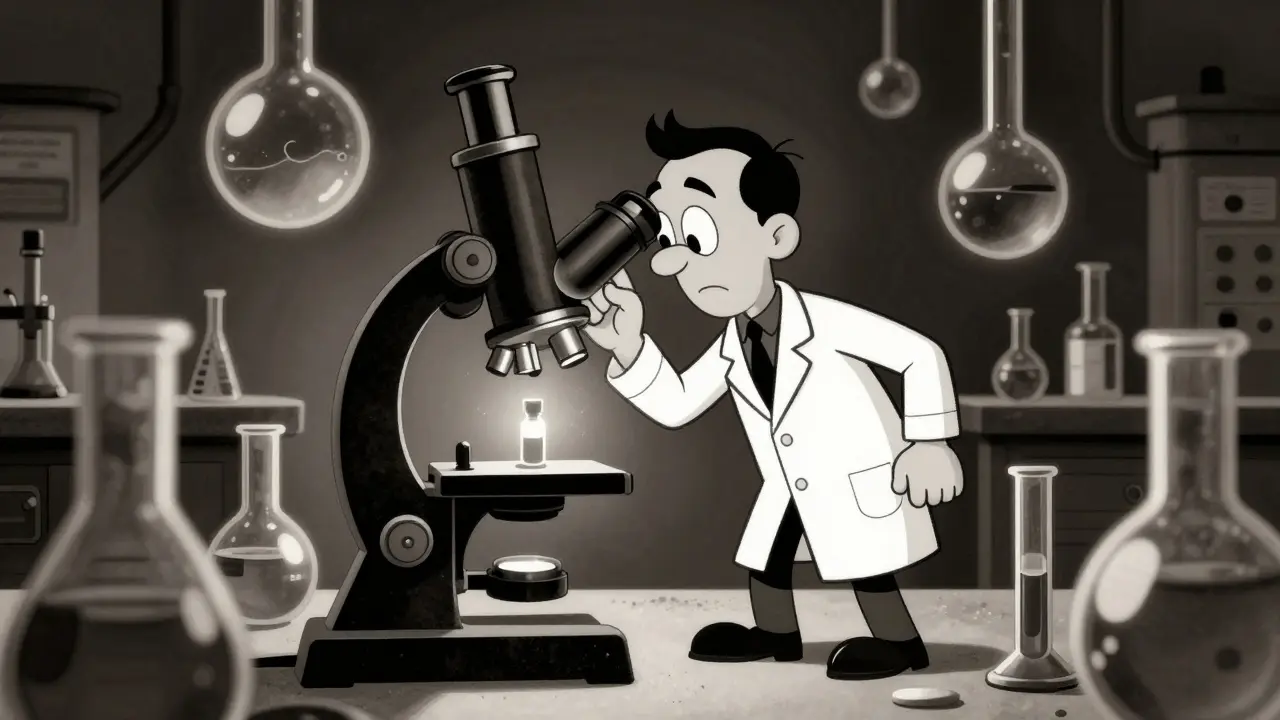
Developing a drug for a disease that only a few thousand people have is a massive financial gamble. For most pharma companies, the cost of research and development would far outweigh any potential profit. This is where orphan drug exclusivity is a regulatory period of market protection that prevents competitors from selling the same drug for the same rare disease. By guaranteeing a window of time without competition, the government turns a "commercial dead end" into a viable business opportunity.
The Core Logic of Rare Disease Protection
Before 1983, treatments for rare conditions were alarmingly scarce. The U.S. Congress stepped in with the Orphan Drug Act is a landmark piece of legislation designed to incentivize the development of drugs for diseases affecting small populations . To qualify, a drug must treat a condition affecting fewer than 200,000 people in the U.S. annually, or the developer must prove they can't recover their R&D costs through sales.
The results were immediate and dramatic. In the decade before the law, only 38 drugs for rare diseases were developed. In the 35 years following its passage, the FDA granted orphan status to over 500 drugs. It's a simple trade: the government gives the company a legal monopoly for a set time, and in exchange, patients with rare diseases get life-saving treatments that would otherwise never exist.
How the Seven-Year Clock Works
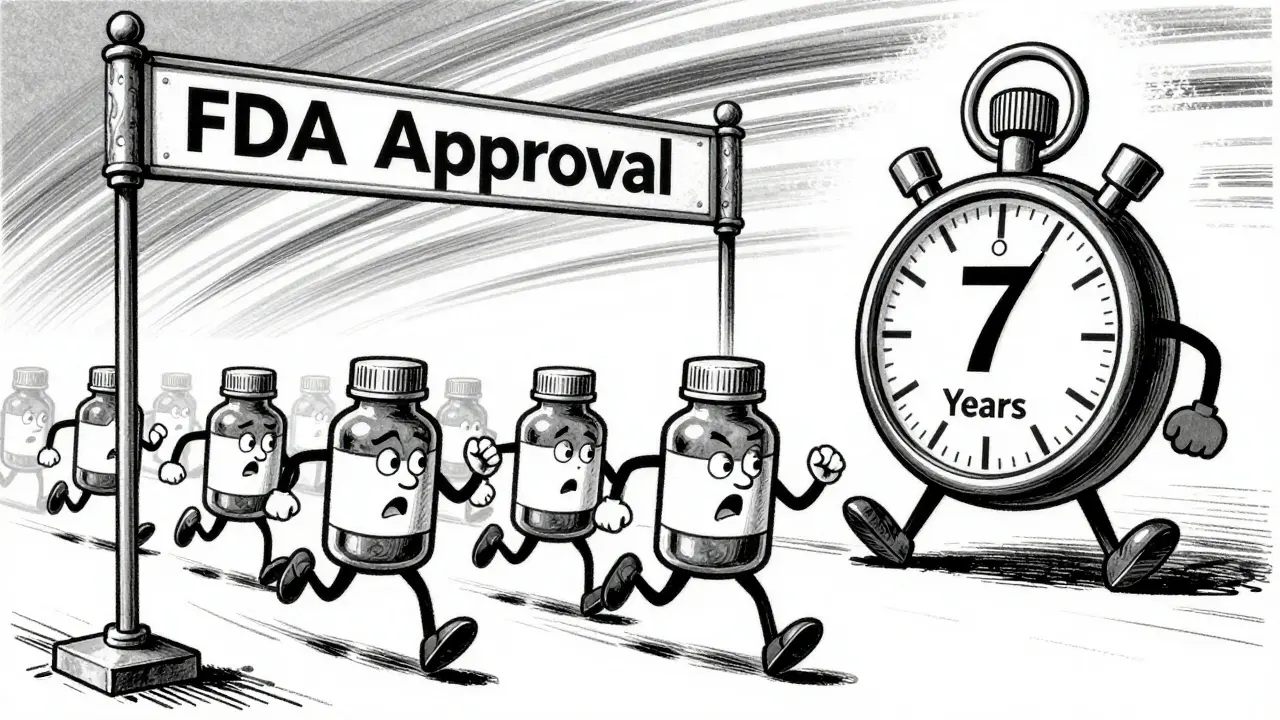
In the United States, the FDA is the federal agency responsible for protecting public health by ensuring safe and effective drugs reach the market provides seven years of market exclusivity. This clock doesn't start when you apply for the designation; it starts the moment the marketing application is approved. During this window, the FDA will not approve another application for the same drug for the same rare disease.
Think of it as a "horse race." Many companies can apply for orphan designation for the same drug-disease pair, but only the first one to cross the finish line-meaning the first to get marketing authorization-wins the seven-year prize. If you're second, you're out of luck unless you can prove your version of the drug is "clinically superior." In the real world, proving clinical superiority is incredibly hard; it requires showing a substantial therapeutic improvement, a bar that has only been met in a handful of cases since 1983.
| Feature | United States (FDA) | European Union (EMA) |
|---|---|---|
| Standard Exclusivity Period | 7 Years | 10 Years |
| Pediatric Extension | Varies by act | +2 Years (upon completion) |
| Reduction Clause | None | Can be reduced to 6 years |
| Primary Focus | The Drug-Disease "Dyad" | The Rare Disease Indication |
Exclusivity vs. Patents: What's the Difference?
People often confuse orphan exclusivity with patents, but they are very different tools. A patent protects the chemical composition or the method of use of a drug. If you have a patent, you can stop anyone from making your molecule. Orphan exclusivity, however, is a regulatory barrier. It tells the FDA: "Do not approve a competitor's application for this specific use."
For most drugs, the patent is the primary shield. In fact, research from IQVIA shows that orphan exclusivity was the dominant factor in delaying generics for only about 12% of approved orphan drugs. However, the power of orphan exclusivity is that it applies even if a competitor develops their drug independently without referencing the original product. This prevents companies from simply "engineering around" a patent to get to market faster.
The Strategy of "Salami Slicing"
Because exclusivity is tied to a specific disease indication, some companies use a tactic known as "salami slicing." This involves seeking separate orphan designations for different subsets of a disease or for entirely different rare conditions using the same drug. By doing this, a company can stack multiple layers of protection, extending their market dominance over several years.
A famous example of this tension is Humira. While it is a massive blockbuster drug with a huge non-orphan market, it also received multiple orphan designations. This led to criticism from generic manufacturers who argue that the system creates artificial monopolies for drugs that would have been profitable even without the extra protection.
The Financial Impact and Patient Trade-off
The economic impact of these protections is staggering. The global orphan drug market hit $217 billion in 2022. Oncology is the biggest winner here, making up over 43% of all orphan approvals. For a small biotech company, these seven years are a lifeline. One manager noted that without this protection, they couldn't justify spending $150 million to treat a condition that only affects 8,000 people.
But there is a catch. When you grant a seven-year monopoly, prices usually skyrocket. While 78% of patient advocacy groups agree that these incentives are essential to get drugs developed, nearly half of them express deep concern over the resulting costs. It's a brutal balancing act: we need the incentives to cure rare diseases, but the price of those cures can be unsustainable for the healthcare system.

Common Pitfalls in the Application Process
If you're a developer, timing is everything. Most experts recommend applying for orphan designation during Phase 1 or early Phase 2 clinical trials. If you wait too long, you risk another company beating you to the approval finish line and stealing the exclusivity window.
Another common mistake is failing to provide a robust epidemiological study. The FDA doesn't just take your word for it that a disease is rare; you need hard data showing the prevalence is under the 200,000-person threshold. Most applications that provide this data see a 95% approval rate, but those that are vague often face delays or rejection.
What happens if a drug has both orphan and non-orphan uses?
Orphan exclusivity only protects the drug for the specific rare disease indication. If the drug is also approved for a common condition, generic versions can enter the market for that common use, but they still cannot be marketed for the rare disease until the seven-year period ends.
Can a competitor break orphan exclusivity?
Yes, but only by proving "clinical superiority." This means the competitor must show that their version of the drug is significantly safer or more effective than the original. Because the FDA's standard for "substantial therapeutic improvement" is so high, this rarely happens.
When does the seven-year period actually start?
The clock starts on the date the FDA approves the marketing application (NDA or BLA), not on the date the drug was granted orphan designation.
Are there other incentives besides exclusivity?
Yes. Companies can also receive tax credits covering 25% of qualified clinical trial costs and significant user fee waivers, which can be worth over $3 million per application.
How does the EU system differ from the US?
The European Medicines Agency (EMA) generally provides a longer exclusivity period of 10 years, compared to the 7 years offered by the FDA. However, the EU system allows for the period to be reduced to 6 years under certain circumstances.
What's Next for Orphan Drugs?
The landscape is shifting. We are seeing more "New Molecular Entities" getting orphan designations-nearly 72% of new approvals are predicted to be orphan drugs by 2027. However, regulators are starting to push back against the "salami slicing" strategy. There are active discussions about requiring companies to prove an "unmet medical need" rather than just meeting a population count.
For those in the industry, the focus is now on refining the "same drug" determination process to avoid legal battles like the Ruzurgi case. Whether you are a biotech startup or a patient advocate, the goal remains the same: ensuring the reward for innovation doesn't outweigh the accessibility of the cure.
Trey Kauffman
April 12, 2026 AT 11:13Oh sure, let's just give giant corporations a legal monopoly and call it a "trade" for the public good. Truly a masterpiece of capitalist benevolence. 🙄
Ben hogan
April 12, 2026 AT 13:58The intellectual vacuum required to support this system is staggering. Only a peasant would fail to see that "salami slicing" is just a euphemism for corporate greed masquerading as regulatory compliance. It's honestly embarrassing that people think this is a viable way to handle healthcare.
Robin Walton
April 13, 2026 AT 22:06I can't imagine how scary it must be for families waiting for these treatments, but it's really heartening to know there's a system that actually encourages companies to find cures for rare diseases.
Chad Miller
April 15, 2026 AT 12:59this whole thing is a joke lol just a way for pharma to make billions while people suffer its basiclly legal theft i dont even know why we pretend its for the patients
Simon Stockdale
April 16, 2026 AT 15:46USA does it best because we actually get stuff done while the EU just sits around with their 10 year rules and red tape and bureaucrats who dont know how to run a bizness and that is why our biotech is way ahead of the rest of the world no matter what the critics say!!
Danny Wilks
April 17, 2026 AT 09:03It is quite fascinating to observe how the regulatory frameworks of the United States and the European Union diverge in their approach to incentivizing the pharmaceutical industry, particularly when one considers the nuanced difference between a drug-disease dyad and a general indication. While the American system emphasizes the speed of market entry through its competitive "horse race" mentality, the European approach seems to prioritize a slightly more extended period of security, albeit with the caveat of potential reductions in exclusivity based on specific criteria.
Kelly DeVries
April 18, 2026 AT 01:30omg the salami slicing part is literally so evil like imagine just chopping up a disease to make more money thats just wild lol
Victor Parker
April 18, 2026 AT 06:17Big Pharma and the govt are just playing us 👁️. They create the "rare" labels to hide the real stuff from us while they print money 💸. Wake up people!! 🤡
Suchita Jain
April 18, 2026 AT 16:00It is imperative that the pharmaceutical industry maintains a higher standard of ethical conduct regarding the pricing of these life-saving medications. One must wonder if the developers feel any shred of remorse when setting prices that are fundamentally inaccessible to the average citizen of a developing nation.
Thabo Leshoro
April 19, 2026 AT 17:40The pharmacokinetic profiles... and the efficacy endpoints... must be truly rigorous... to meet that clinical superiority bar!!! It's a huge hurdle... for any generic... or biosimilar... trying to break in!!!
Lynn Bowen
April 19, 2026 AT 22:09The distinction between patents and regulatory exclusivity is an important detail that many people overlook when discussing healthcare policy.