Statin Timing Calculator
Does Timing Matter For Your Statin?
Select your statin to see if timing affects effectiveness and side effects.
Select your statin to see results
Pro Tip
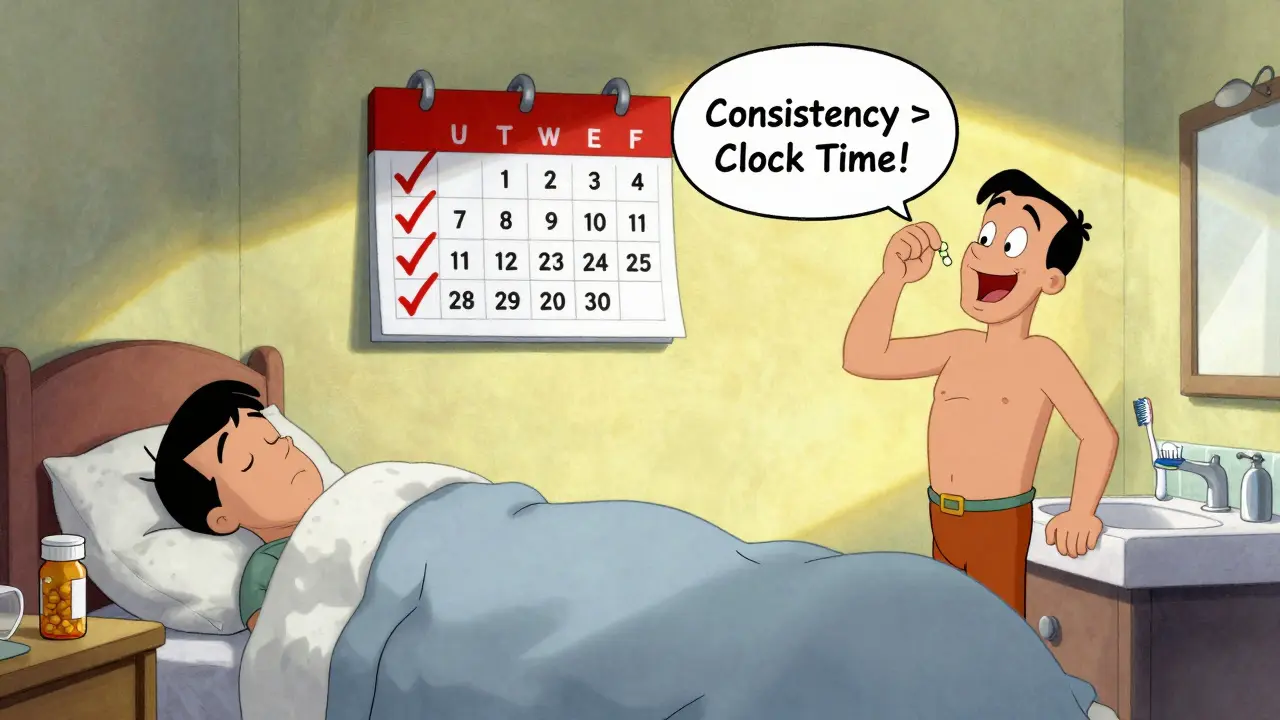
Focus on consistency rather than timing. Set a daily reminder or link your medication to a habit like brushing teeth.
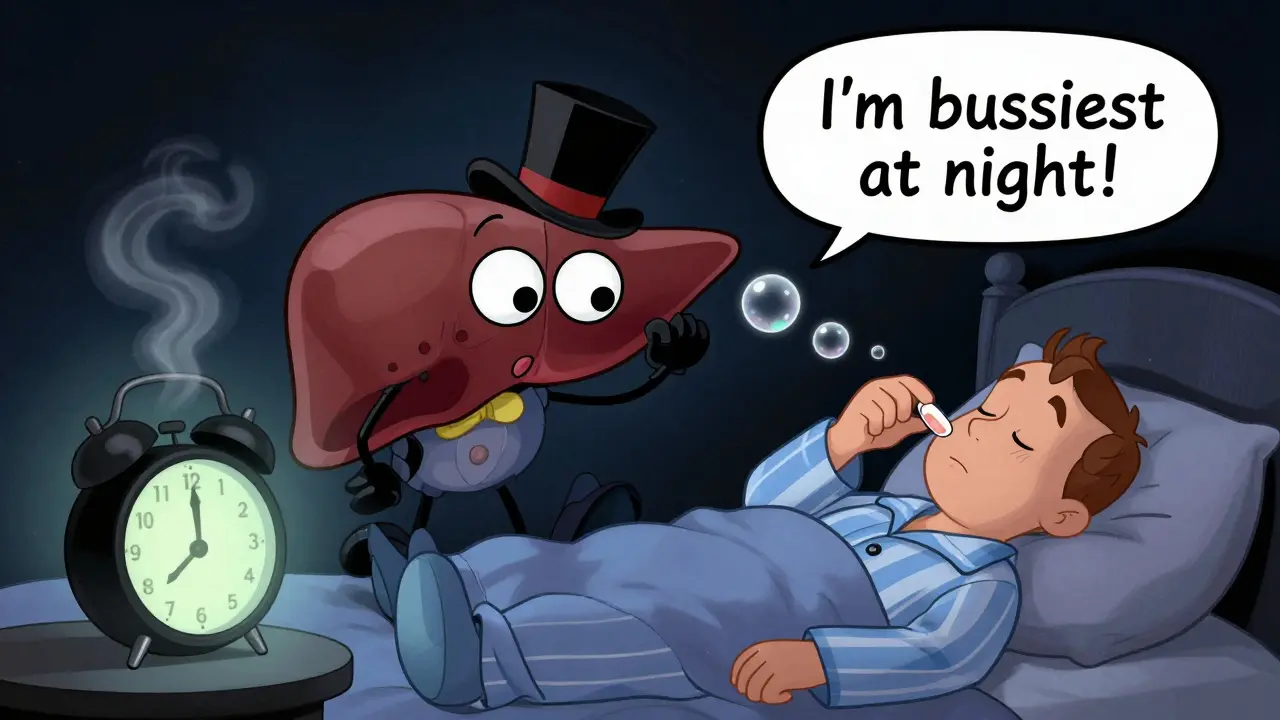
For decades, doctors told patients to take statins at night. The reasoning seemed solid: your liver makes most of its cholesterol while you sleep. So, taking the drug at bedtime would catch it at its peak production. But here’s the twist - that advice doesn’t apply to everyone anymore. Today, whether you take your statin at night or in the morning doesn’t matter as much as you think - if you’re on the right kind of statin.
Why Night Dosing Was the Rule
Back in the 1980s and 90s, statins like simvastatin, lovastatin, and fluvastatin were the go-to choices. These drugs didn’t stick around in your body for long. Their half-lives were short - sometimes less than 3 hours. That meant if you took them in the morning, the drug was mostly gone by midnight, when cholesterol production spiked. So, doctors pushed nighttime dosing. Studies showed it worked better. One 1995 study found that taking simvastatin at night lowered LDL cholesterol by 13.4% more than taking it in the morning. That’s not a small difference - it’s the kind of gap that can affect heart attack risk.At the time, this made sense. Your body’s internal clock controls cholesterol synthesis. Between midnight and 4 a.m., your liver goes into high gear, cranking out cholesterol. If your statin was only active for a few hours, timing it to overlap with that window was critical. It wasn’t just theory - it was measurable. Patients on evening doses consistently saw better numbers on their lipid panels.
The Game Changer: Long-Acting Statins
Then came the newer statins - atorvastatin, rosuvastatin, pitavastatin, and even pravastatin. These weren’t like the old ones. They stayed in your bloodstream for 12 to 20 hours. That meant even if you took them at 8 a.m., they were still working at 2 a.m. when your liver was making cholesterol. No need to wait until bedtime.A 2017 meta-analysis of 17 studies with over 3,300 patients showed the difference clearly. For short-acting statins, evening dosing lowered LDL by 7.3% to 15% more than morning dosing. But for long-acting ones? The difference was barely 0.5% to 2.5%. That’s less than the natural day-to-day variation in cholesterol levels. In clinical terms, it’s meaningless. The National Lipid Association says a 5-7% difference is needed to matter - these newer statins barely hit 3%.
Today, about 65% of statin prescriptions in the U.S. are for long-acting versions. That means for most people, the old rule is outdated. If you’re on atorvastatin or rosuvastatin, your body doesn’t care if you take it with breakfast or before bed. The drug’s already there.
Side Effects: Does Timing Make a Difference?
A lot of people worry about muscle pain, liver issues, or even diabetes risk from statins. Many assume taking them at night might reduce side effects. But the data says otherwise.A 2021 analysis of 4.2 million statin prescriptions found no difference in side effect rates between morning and evening dosing. Muscle aches? Same rate. Liver enzyme spikes? No difference. New-onset diabetes? No link to timing. The FDA’s own adverse event database shows 8.7% of night-takers reported side effects versus 8.9% of morning-takers - statistically no different.
So if side effects are your main concern, don’t switch your dose time hoping to avoid them. If you’re having muscle pain or fatigue, talk to your doctor about dosage, drug interactions, or switching statins - not timing.
Adherence Is the Real Issue
Here’s the part no one talks about enough: people forget to take their pills. A lot.A 2019 Mayo Clinic study tracked nearly 12,500 statin users. Those told to take their meds at night had 11.3% lower adherence than those who took them in the morning. That’s over two extra missed doses per month. Why? Because life happens. You’re out late. You forget. You sleep through your alarm. You’re on vacation. You skip dinner. Nighttime dosing sounds simple - until it’s 11 p.m. and you’re exhausted, scrolling on your phone, and your pill bottle is still on the kitchen counter.
One Reddit user shared: “I kept forgetting my simvastatin at night. My doctor switched me to morning rosuvastatin. My LDL actually improved because I never miss a dose now.” That’s not anecdotal magic - it’s real-world math. Better adherence beats perfect timing every time.
A 2020 study proved it. Patients on simvastatin who used a smartphone alarm to take their pill at 8 a.m. had a 92% adherence rate. Those taking it at night without reminders? Only 76%. Even though evening dosing was theoretically better, the morning group ended up with nearly the same LDL reduction - because they actually took the pill.
What Should You Do?
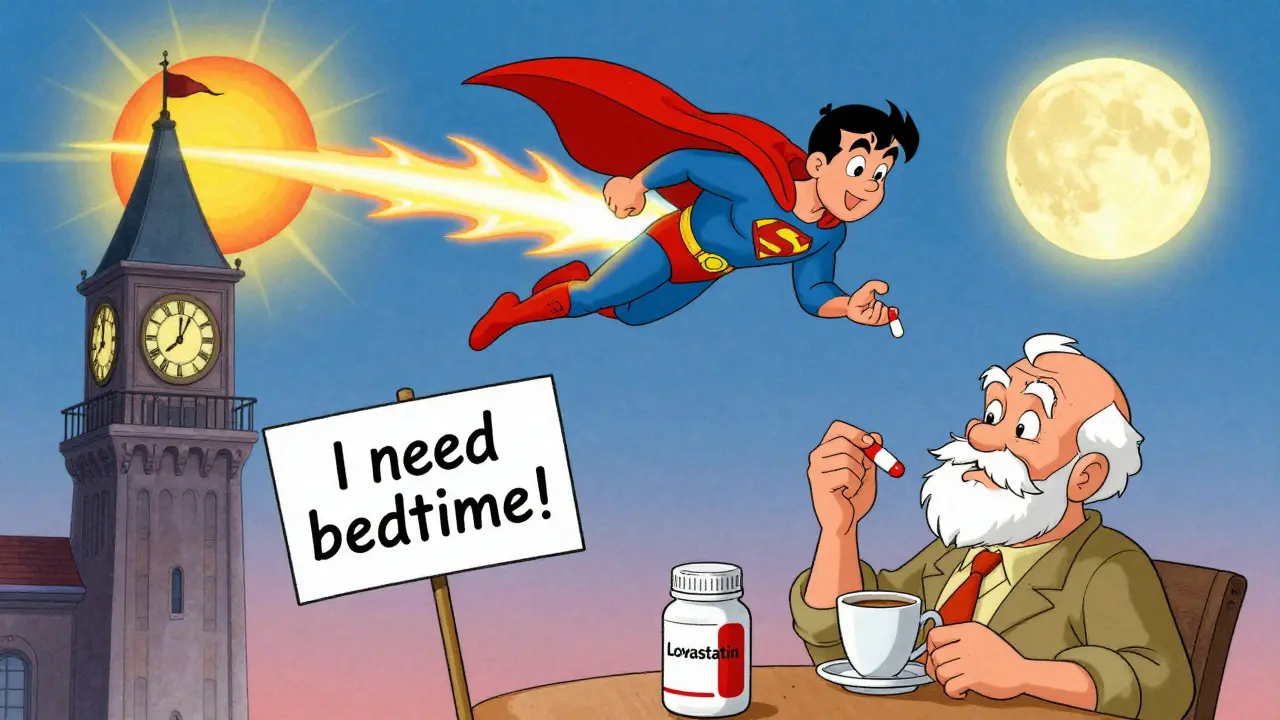
The answer isn’t “night or morning.” It’s “what works for you.”If you’re on simvastatin, lovastatin, or fluvastatin: Evening dosing is still ideal - but only if you can do it consistently. If you keep forgetting, switching to morning dosing is better than skipping doses. Your doctor might even consider switching you to a long-acting statin like atorvastatin or rosuvastatin, which gives you flexibility.
If you’re on atorvastatin, rosuvastatin, pitavastatin, or pravastatin: Take it whenever it fits your routine. Morning with coffee? Fine. With dinner? Fine. Before bed? Fine. The drug will work the same. Pick the time you’re most likely to remember.
Don’t let outdated advice make you feel guilty. If you’ve been taking your statin in the morning for years and your cholesterol is under control - don’t change a thing. The American College of Cardiology says: if you’re stable, don’t disrupt your routine.
What’s Changing in the Industry
The prescribing landscape has shifted dramatically. In 2010, only 55% of new statin prescriptions were for long-acting versions. By 2023, that number jumped to 82%. That’s because doctors know the evidence: consistency beats clock time.Pharmacies now recommend morning dosing for all statins unless a patient is on a short-acting one and struggles with adherence. The FDA and European regulators have updated labels to reflect this. Rosuvastatin and atorvastatin labels no longer say “take at night.” Simvastatin and lovastatin still do - but only because they’re short-acting.
Even the next generation of statins is moving toward convenience. Pfizer has a patent pending for a timed-release simvastatin that slowly releases the drug overnight - meaning you could take it in the morning and still get the nighttime effect. That’s the future: no more guessing. Just one pill, one time, every day.
The Bottom Line
The night vs. morning statin debate isn’t about science anymore - it’s about behavior. The data is clear: for most people today, timing doesn’t impact effectiveness. What does? Taking the pill every day.Don’t stress over the clock. Focus on the calendar. Set a phone reminder. Put the bottle next to your toothbrush. Link it to a daily habit - brushing your teeth, eating breakfast, turning off the lights. That’s what keeps your LDL down, not whether you took it at 10 p.m. or 7 a.m.
If you’re unsure what statin you’re on, check the label or ask your pharmacist. If you’re on a short-acting one and keep forgetting - talk to your doctor. Switching to a long-acting statin or adjusting your dosing time could make a bigger difference than you think.
Statins save lives. But they only work if you take them. And that’s not about timing. It’s about you.
Coy Huffman
February 2, 2026 AT 22:51man i used to take my simvastatin at night like a good boy… until i started forgetting it every other day. switched to morning rosuvastatin and my ldl dropped even more. turns out consistency > timing. also i don’t have to wake up half-asleep to swallow a pill. peace.
¯\_(ツ)_/¯
Amit Jain
February 4, 2026 AT 11:01very simple: if you take statin every day, it works. if you skip, it doesn’t. morning or night, doesn’t matter. just take it. your heart will thank you.
Keith Harris
February 5, 2026 AT 17:46oh wow, so the medical establishment finally admitted they were wrong? groundbreaking. let me grab my torch and pitchfork - because this is the first time in 30 years they’ve corrected a dumbass guideline without being dragged through the mud by actual data. congrats, science. you took a decade longer than it should’ve.
and yes, i know you’re still prescribing simvastatin to 35% of people. that’s not progress, that’s negligence wrapped in a white coat.
Kunal Kaushik
February 6, 2026 AT 01:02my dad took simvastatin at night for 10 years… then switched to morning atorvastatin after his doctor said ‘you’re forgetting it too much.’ now he takes it with his coffee and his numbers are better than ever 😊
life’s too short to stress over pill times. just make it part of your routine. 🤝
Prajwal Manjunath Shanthappa
February 7, 2026 AT 19:05It is, of course, entirely unsurprising that the medical community-after decades of dogmatic adherence to a hypothesis rooted in circadian biochemistry-has only now, in the face of overwhelming pharmacokinetic evidence, capitulated to behavioral pragmatism. One must wonder: how many myocardial infarctions were attributable not to hypercholesterolemia, but to patient non-adherence induced by arbitrary temporal mandates? The epistemological lag here is not merely unfortunate-it is tragic.
Wendy Lamb
February 8, 2026 AT 13:13My mom switched to morning rosuvastatin after she kept missing her night dose. Her cholesterol improved. She sleeps better. No more guilt.
If it works for you? Keep doing it. If it doesn’t? Try something else. No shame in either.
Antwonette Robinson
February 9, 2026 AT 22:55Wow. So the takeaway is… take your pill when you remember? Groundbreaking. I’m sure the FDA will issue a press release. Maybe next they’ll tell us ‘drinking water helps with hydration.’
Ed Mackey
February 10, 2026 AT 19:49i’ve been taking my atorvastatin at night for 5 years… but i just realized i’ve been taking it after dinner, not right before bed. does that count? i mean, it’s still evening… right? 😅 sorry, i’m bad with timing. but i haven’t missed a day in 3 years. that’s gotta count for something.
Katherine Urbahn
February 10, 2026 AT 23:50It is imperative to note, with the utmost gravity, that the erosion of clinical precision in favor of behavioral convenience constitutes a dangerous precedent in pharmacological stewardship. The circadian regulation of HMG-CoA reductase is not a suggestion-it is a physiological imperative. To abandon temporal specificity is to surrender to mediocrity. One must ask: Who authorized this paradigm shift? And by what evidence, precisely, was the foundational pharmacokinetic model rendered obsolete?
Alex LaVey
February 12, 2026 AT 20:32Love this breakdown. Honestly, statins are one of those meds where the biggest enemy isn’t the drug-it’s forgetting to take it. I tell my patients: ‘Pick a time you won’t forget. Brush your teeth? Coffee? Bedtime? Pick it. Stick with it.’
And if you’re on a short-acting one and struggling? Talk to your doc. There’s a better option out there. You’re not failing-you’re just using the wrong tool for your life.