QT Prolongation Risk Calculator
QTc Assessment
Your QTc value is 0 ms.
0 risk factor(s) present:
Why Methadone Can Slow Your Heart’s Electrical Signal
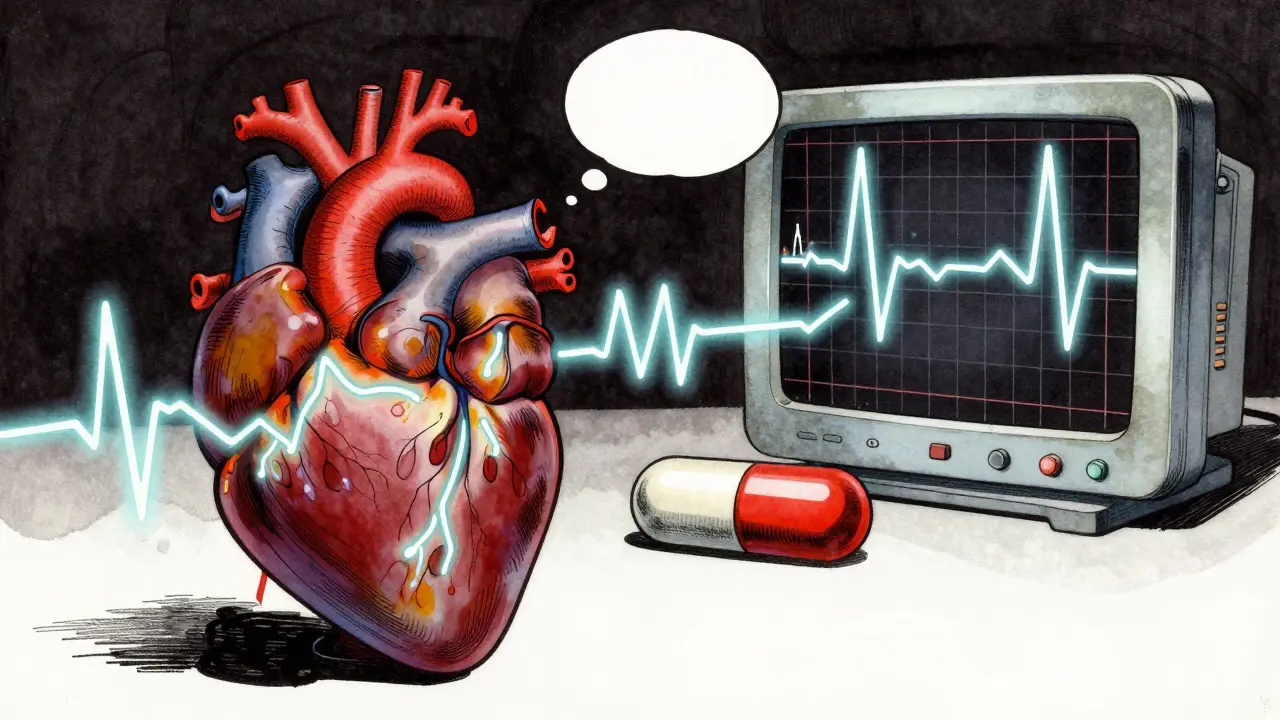
Methadone saves lives. For people recovering from opioid addiction, it reduces cravings, prevents withdrawal, and cuts overdose deaths by one-third. But behind that benefit is a quiet danger: it can mess with your heart’s rhythm. Specifically, methadone can prolong the QT interval on an ECG - a measurement that shows how long it takes your heart to recharge between beats. When this interval gets too long, it opens the door to a dangerous arrhythmia called Torsades de Pointes, which can lead to sudden cardiac arrest.
This isn’t theoretical. Between 2000 and 2022, the FDA logged 142 confirmed cases of Torsades de Pointes linked to methadone. Many more likely went unreported because sudden deaths in people on methadone are often blamed on overdose - not heart rhythm problems. The truth? You can die from a heart arrhythmia even if you’re not using other drugs.
How Methadone Affects Your Heart
Methadone blocks a specific potassium channel in the heart called hERG (KCNH2). This channel is responsible for letting potassium leave heart cells during the recovery phase of each heartbeat. When it’s blocked, the heart takes longer to reset. That delay shows up on an ECG as a longer QT interval.
It’s not just one mechanism. Methadone also slows your heart rate slightly by blocking calcium channels and has anticholinergic effects that can further disrupt rhythm. Add in low potassium, low magnesium, or other QT-prolonging drugs - and the risk spikes.
The dose matters. Studies show QT prolongation increases with higher doses, but it’s not linear. Some people on 50 mg show a long QT, while others on 300 mg don’t. That’s why we can’t just say, “Above 100 mg = danger.” We need to look at the whole picture.
What’s a Normal QT Interval?
Doctors measure the QT interval and correct it for heart rate - that’s the QTc. Here’s what matters:
- Normal: ≤430 ms for men, ≤450 ms for women
- Borderline: 431-450 ms (men), 451-470 ms (women)
- Significantly prolonged: >450 ms (men), >470 ms (women)
- High risk: >500 ms - this quadruples your risk of sudden death
A 60 ms increase from your baseline QTc is just as concerning as hitting 500 ms. That’s why we always compare to your own starting point.
Who’s at Highest Risk?
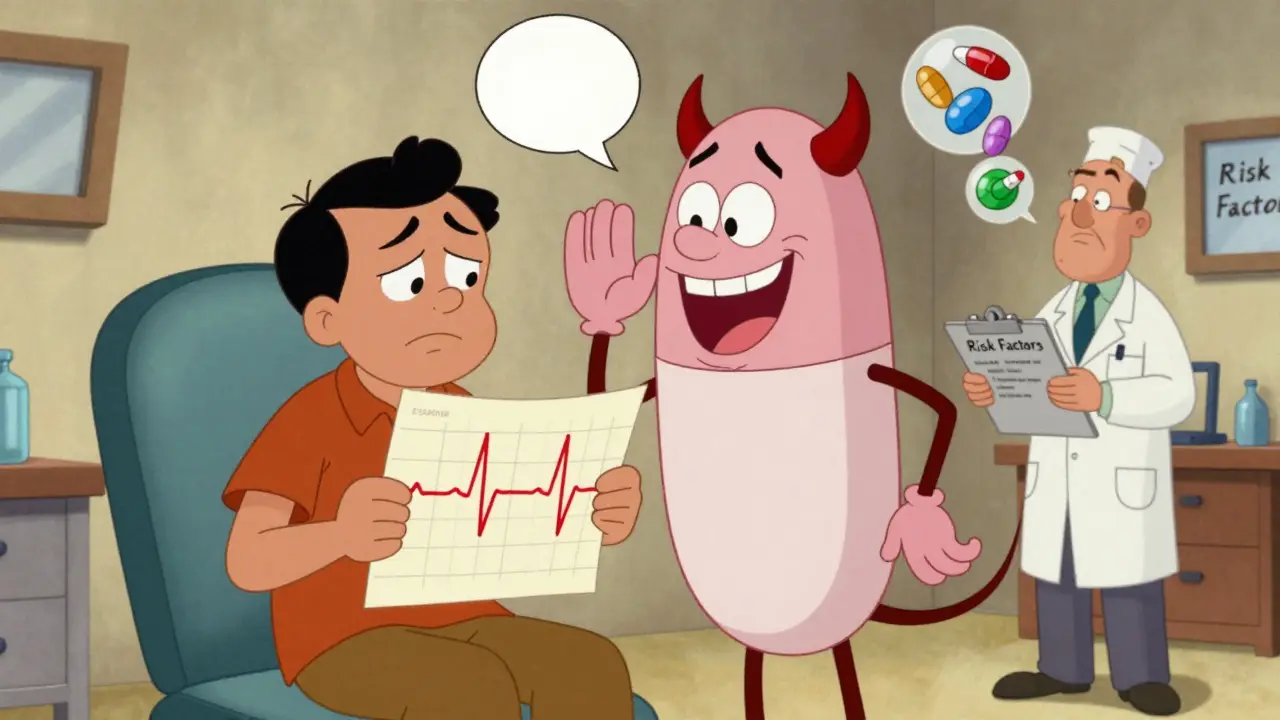
Not everyone on methadone needs monthly ECGs. Risk is layered. The more factors you have, the higher your danger.
- Gender: Women have 2.5 times higher risk than men
- Age: Over 65? Your heart doesn’t bounce back as easily
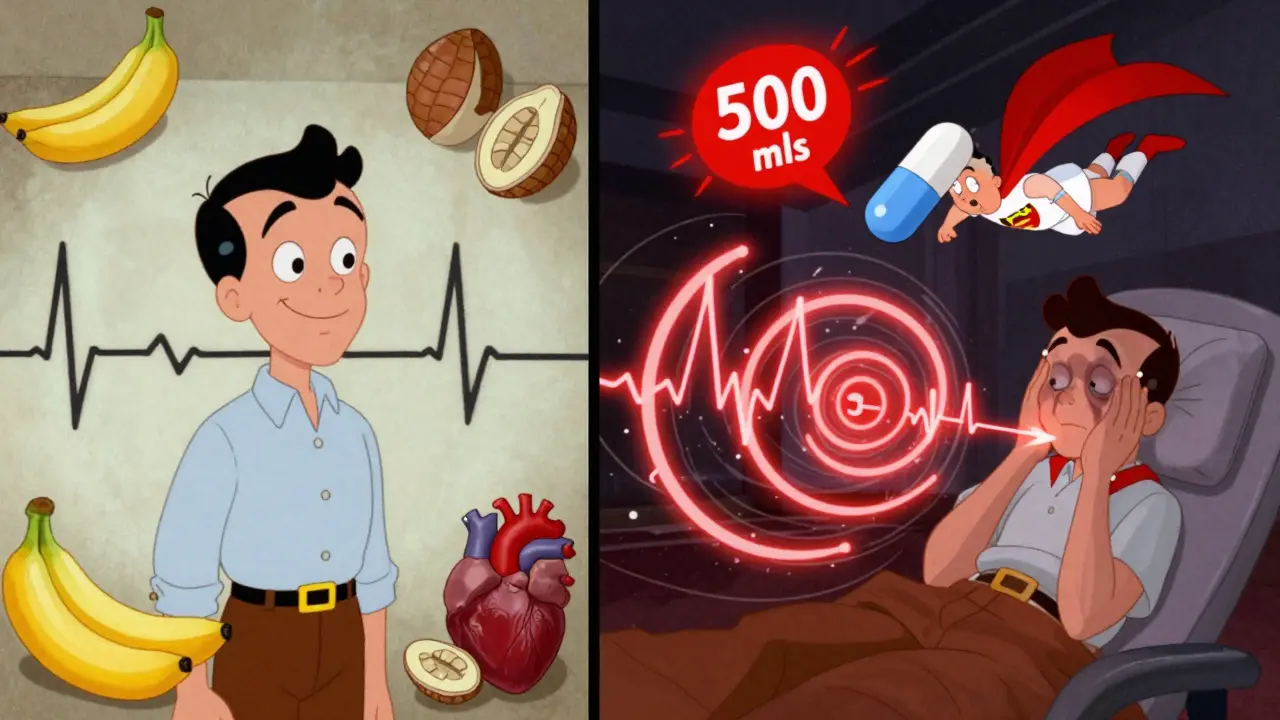
- Electrolytes: Potassium below 3.5 mmol/L or magnesium below 1.5 mg/dL are red flags
- Heart health: History of heart failure, low ejection fraction (<40%), or prior heart attack
- Other meds: Antidepressants (like amitriptyline), antipsychotics (like haloperidol), antibiotics (like moxifloxacin), or even some antifungals (fluconazole)
- Drug interactions: Fluvoxamine, voriconazole, and other CYP3A4 inhibitors can spike methadone levels by 50%
- Genetics: Congenital long QT syndrome - rare, but deadly if missed
- Sleep apnea: Affects about half of methadone patients. Low oxygen at night stresses the heart.
One study of 127 patients found that if you’re on over 100 mg/day, have low potassium, and take another psychotropic drug, your odds of QT prolongation jump nearly fourfold.
When and How Often Should You Get an ECG?
Guidelines are clear: baseline ECG before starting methadone. Don’t skip it. Even if you feel fine.
After starting, wait 2-4 weeks for methadone to reach steady state, then check again. After that, frequency depends on your risk level:
- Low risk: QTc under 450 (men) or 470 (women), no other risk factors → every 6 months
- Moderate risk: QTc 450-480 (men), 470-500 (women), or 1-2 risk factors → every 3 months
- High risk: QTc over 480 (men), 500 (women), or 3+ risk factors → monthly, and consider switching to buprenorphine
If your QTc jumps more than 60 ms from baseline, or hits 500 ms or higher - stop increasing the dose. Correct electrolytes. Get a cardiologist involved. Buprenorphine is a safer alternative with far less QT risk.
What Happens If You Ignore Monitoring?
Some clinics skip ECGs because they’re “expensive” or “inconvenient.” But here’s what happens when you do:
- Patients report inconsistent monitoring - 68% of users on Reddit said their clinic didn’t follow guidelines
- Those without regular ECGs felt less safe - only 47% trusted their treatment
- Those with consistent monitoring? 82% felt confident
A 2023 study in JAMA Internal Medicine showed clinics with structured QT monitoring cut serious cardiac events by 67%. That’s not a small win. That’s life-saving.
Underreporting is a huge problem. If someone dies suddenly on methadone, it’s often labeled “overdose.” But if their QTc was 520 ms and they had low potassium? That’s arrhythmia. Not overdose.
What Should You Do If You’re on Methadone?
Ask your provider these questions:
- “Did I get a baseline ECG before I started?”
- “What’s my current QTc? Is it trending up?”
- “Have my potassium and magnesium been checked this month?”
- “Am I taking any other meds that could interact?”
- “Should I be tested for sleep apnea?”
If you’re on high doses or have multiple risk factors, don’t wait for your next appointment. Push for an ECG. Bring a printed copy of your latest results. Know your numbers.
Alternatives to Methadone
If your QTc is creeping up, or you have multiple risk factors, buprenorphine is the go-to alternative. It’s just as effective for opioid dependence but has minimal QT prolongation risk. Studies show its QTc impact is barely above placebo.
Switching isn’t always easy - insurance, clinic policies, and patient preference play roles. But if your heart is at risk, safety should come first. There’s no shame in switching to a medication that protects your heart as much as your recovery.
Final Takeaway
Methadone isn’t dangerous because it’s bad. It’s dangerous because we treat it like it’s just another pill. It’s a powerful drug with real cardiac risks. But those risks are predictable, measurable, and manageable.
ECG monitoring isn’t bureaucracy - it’s basic care. If you’re on methadone, you deserve to know your heart is safe. And if you’re a provider, you owe your patients more than assumptions. You owe them a baseline ECG. You owe them regular checks. You owe them the chance to live - not just survive.
Himanshu Singh
January 23, 2026 AT 17:35also, potassium isn't just a supplement you take when you feel like it. it's a lifeline. low mag? low k? you're playing russian roulette with your heart.
siva lingam
January 24, 2026 AT 14:26Chloe Hadland
January 24, 2026 AT 18:10Marie-Pier D.
January 25, 2026 AT 05:40if you're on methadone and you've never had a baseline ekg? go get one. today. your heart doesn't care how 'stable' you feel.
Gina Beard
January 25, 2026 AT 08:30Alexandra Enns
January 26, 2026 AT 15:11Jamie Hooper
January 28, 2026 AT 05:23Shanta Blank
January 29, 2026 AT 02:20Don Foster
January 30, 2026 AT 11:03Patrick Gornik
January 30, 2026 AT 21:38we're not healing people. we're managing risk metrics. and when the metric doesn't show a problem? we assume the person is fine. but the heart doesn't report to hr. it just stops.
and yes, i know the stats. i've seen the autopsy reports. they don't say 'overdose'. they say 'sudden cardiac death'. and then the chart gets closed. no follow-up. no investigation. just another statistic buried under bureaucratic silence.
Tommy Sandri
February 1, 2026 AT 18:31Viola Li
February 3, 2026 AT 14:03Marlon Mentolaroc
February 4, 2026 AT 01:45we're not saving people. we're just giving them a longer path to death.
Shelby Marcel
February 5, 2026 AT 01:29Amelia Williams
February 6, 2026 AT 14:32