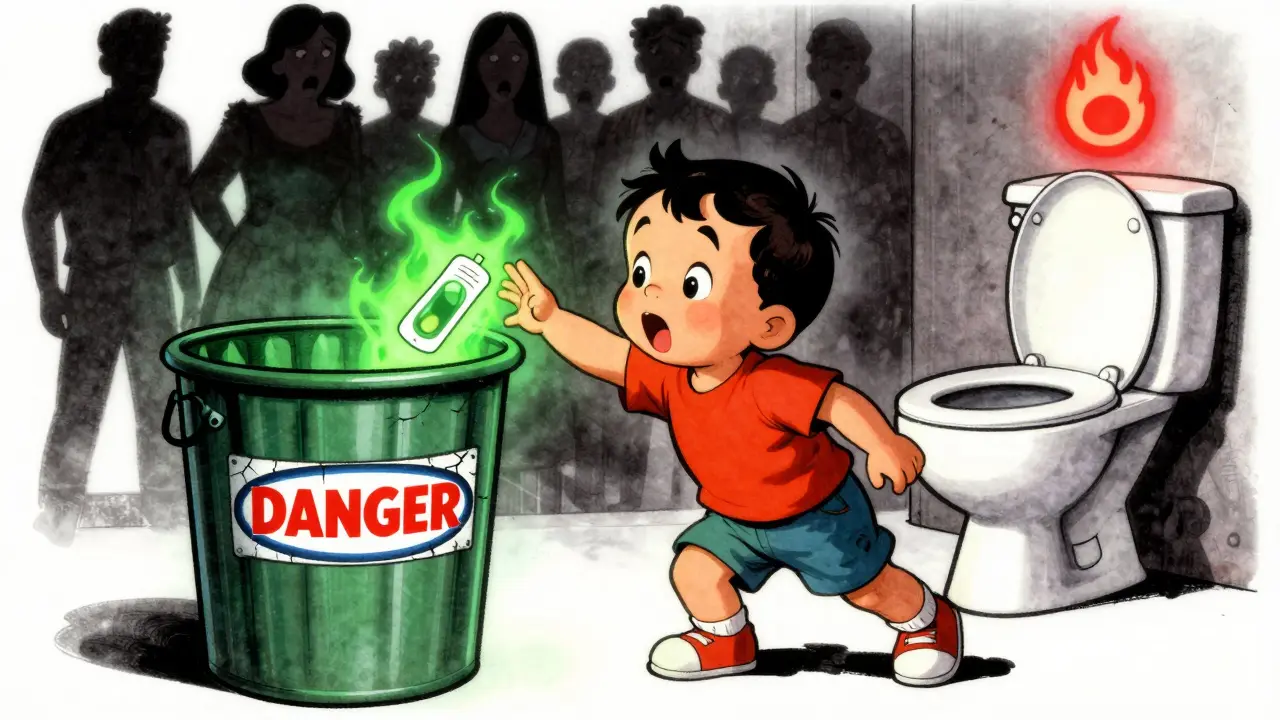
Every year, thousands of accidental poisonings happen because someone found a pill in the trash. It could be a grandchild rummaging through a bin, a teenager looking for something to get high, or even a well-meaning neighbor cleaning up after a relative. The truth is, not all medications belong in the garbage. Some are so dangerous that even one pill can kill. That’s why the FDA has a special list - medications you must never toss in the trash.
Why Some Medications Can’t Go in the Trash
Most pills and patches can be safely thrown away if you mix them with coffee grounds or cat litter and seal them in a plastic bag. But for certain drugs, that’s not enough. These medications are powerful enough to stop your breathing with a single dose. If they end up in a landfill or a neighbor’s trash, they become a ticking time bomb.
The FDA is the U.S. Food and Drug Administration, a federal agency responsible for protecting public health by regulating medications and medical devices created the Flush List because of the rising number of overdose deaths. In 2021, over 107,000 people in the U.S. died from drug overdoses - and opioids made up nearly 70% of those. Many of those deaths came from pills that were thrown in the trash, then dug out by someone who didn’t know what they were.
Here’s the hard part: you can’t just guess. You have to know which drugs are on the list. If you’re not sure, flushing is the only safe option for these specific medications. The alternative? Risking a child’s life, a teenager’s addiction, or a family member’s death.
The FDA Flush List: Exact Medications to Flush Immediately
The FDA’s Flush List isn’t long, but it’s deadly serious. These are the only medications you should ever flush down the toilet. Not because it’s convenient - but because it’s the only way to destroy them fast enough to prevent harm.
- Buprenorphine - found in SUBOXONE, SUBUTEX, BELBUCA, BUTRANS, BUAVAIL, ZUBSOLV
- Fentanyl - in ABSTRAL, ACTIQ, DURAGESIC, FENTORA, ONSLIS
- Hydromorphone - sold as EXALGO
- Meperidine - known as DEMEROL
- Methadone - in DOLOPHINE, METHADOSE
- Morphine - brands include ARYMO ER, AVINZA, EMBEDA, KADIAN, MORPHABOND ER, MS CONTIN, ORAMORPH SR
- Oxymorphone - OPANA and OPANA ER
- Tapentadol - NUCYNTA and NUCYNTA ER
- Sodium oxybate - XYREM and XYWAV
- Diazepam rectal gel - DIASTAT and DIASTAT ACUDIAL
- Methylphenidate transdermal system - DAYTRANA
These aren’t random drugs. They’re all either powerful opioids or sedatives that can shut down breathing in minutes. Fentanyl, for example, is 50 to 100 times stronger than morphine. A single patch, if pulled from the trash, can kill an adult - or a child.
What Happens When You Throw These Away?
Real stories show why this isn’t theoretical.
In early 2023, a 3-year-old in Minnesota found a fentanyl patch in a trash bag. He put it on his arm. By the time his parents noticed he wasn’t breathing, he was in the ICU. He survived - barely. That case was reported by a nurse on Reddit, but it’s not unique. The American Association of Poison Control Centers recorded over 8,900 cases of fentanyl exposure in 2022. Nearly half involved children under 5.
Another case in Ohio involved a teenager who found oxymorphone pills in a neighbor’s trash. He took one. He never woke up. That death led to a local law requiring special disposal for all Schedule II medications.
And it’s not just kids. People struggling with addiction often search through trash for leftover pills. The SAMHSA Substance Abuse and Mental Health Services Administration, a U.S. government agency focused on mental health and addiction treatment found that over half of people who misused prescription painkillers got them from friends or family - often by taking them from their trash.
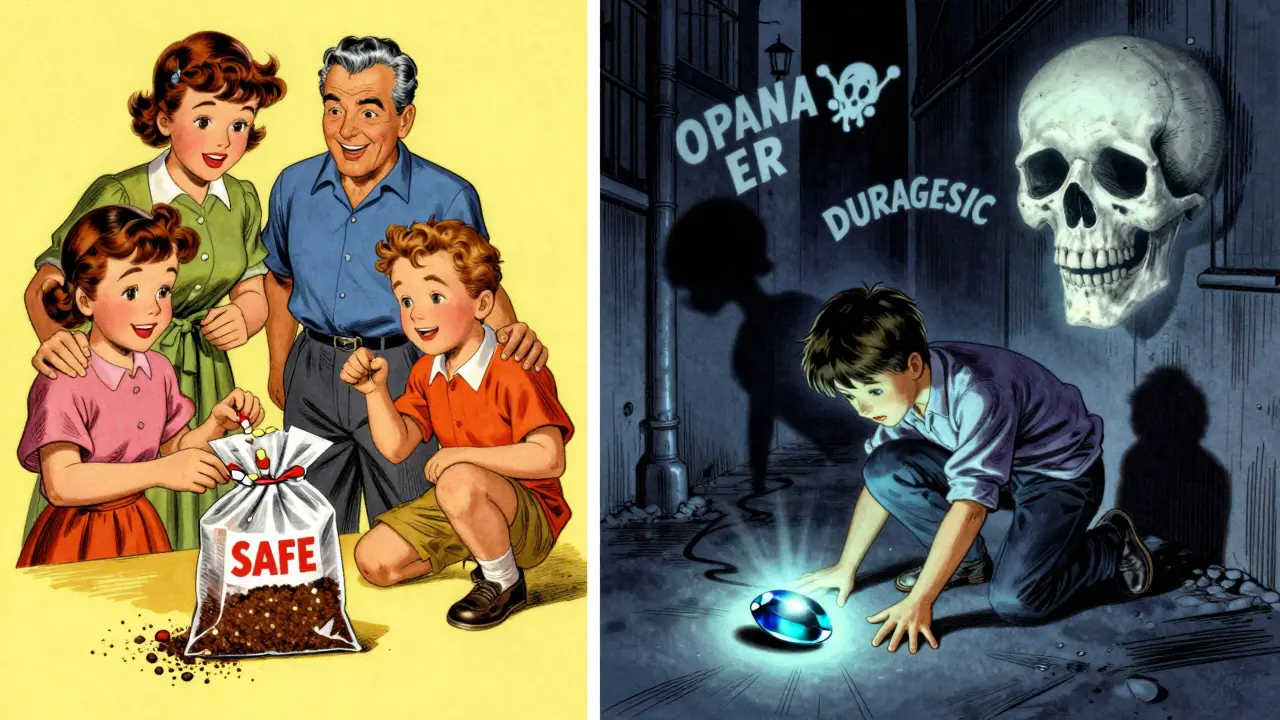
What About the Environment? Isn’t Flushing Bad for Water?
Yes, flushing medication can end up in rivers and drinking water. Studies show wastewater plants remove only 30% to 90% of pharmaceuticals. Some, like carbamazepine, barely get filtered at all.
But here’s the trade-off: the EPA U.S. Environmental Protection Agency, responsible for protecting human health and the environment and the FDA both agree: for these specific drugs, the risk of death outweighs the risk of water contamination.
Dr. John Scott from the EPA said it plainly: “The environmental impact of flushing one fentanyl patch is negligible compared to the potential for multiple fatalities if it’s left in the trash.”
Think of it this way: you wouldn’t leave a loaded gun in the backyard because it might rust. You’d lock it up or destroy it. These medications are just as dangerous - and just as urgent to remove.
What Do You Do With Everything Else?
For all other medications - the ones not on the flush list - you still need to be careful. Don’t just toss them in the trash. Here’s what the FDA recommends:
- Take pills or liquids out of their original bottles.
- Don’t crush tablets or capsules - just leave them as they are.
- Mix them with something unappealing: used coffee grounds, dirt, cat litter, or even hot sauce.
- Put the mixture in a sealed plastic bag.
- Throw the bag in your household trash.
This makes the drugs hard to recover and less tempting to misuse. It also stops people from rinsing pills out of bottles and drinking them.
What About Take-Back Programs?
Many pharmacies and police stations offer drop-off bins for unused medications. Walgreens has over 2,000 kiosks. CVS has nearly 1,800. Some cities, like those in Minnesota, have over 300 collection points.
But here’s the problem: only about 15% of people use them. Why? Convenience. Most people don’t drive across town to drop off a few pills. That’s why the flush list exists - it’s an immediate, at-home solution for the most dangerous drugs.
There’s also a new tool gaining traction: disposal packets. Companies like DisposeRx sell single-use powder packets. You add water, drop in your pills, and the powder turns them into a gel that can’t be recovered. These are being used in over 1,200 pharmacies - but they’re not yet standard.
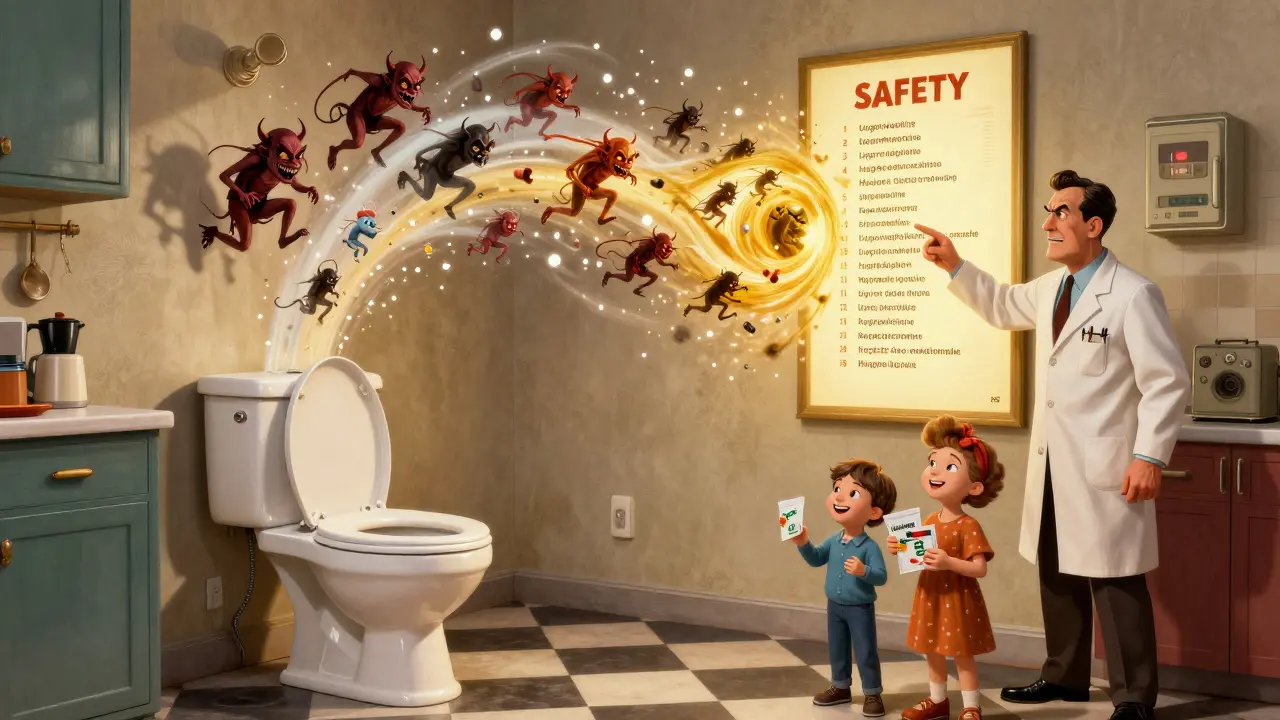
How to Know What to Do
Most people don’t know what’s on the flush list. A 2022 study found only 43% of patients could correctly identify which drugs needed flushing.
Here’s how to avoid mistakes:
- Check the label. If it says “fentanyl,” “oxymorphone,” or “buprenorphine,” flush it.
- Look for the brand names listed above.
- Ask your pharmacist - they’ve seen this before.
- If you’re unsure, and the drug is strong, risky, or addictive - flush it.
When in doubt, err on the side of safety. A single dose of these drugs can kill. That’s not a guess. That’s science.
What’s Changing in 2026?
New laws are being proposed. The SNIPED Act, introduced in Congress in 2023, would require doctors to give disposal instructions with every prescription for Schedule II drugs. Some manufacturers are testing packaging with built-in disposal powder - like envelopes with activated charcoal that neutralize pills when water is added.
But until those become standard, the rules stay the same: flush what’s on the list. Mix and trash the rest.
Final Rule: When in Doubt, Flush
You don’t need to memorize every brand name. If a medication is strong, addictive, or life-threatening - and you’re not sure what to do - flush it. The toilet is not a dumping ground. But for these drugs, it’s the only safe exit.
Don’t wait for a tragedy. Don’t assume someone else will clean up after you. If you have one of these drugs, act now. Your family, your neighbors, and maybe even a stranger could be saved because you chose the right way to dispose of it.
Can I flush all my old pills down the toilet?
No. Only medications on the FDA Flush List should be flushed. Flushing other drugs can harm the environment. For everything else, mix them with coffee grounds or cat litter, seal them in a plastic bag, and throw them in the trash.
What if I don’t have a toilet? Can I just throw them away?
If you’re unsure and the medication is on the flush list, do not throw it in the trash. Contact your local pharmacy or health department. Many offer mail-back programs or emergency disposal instructions. In emergencies, some police stations accept controlled substances.
Is it safe to flush medications if I have a septic tank?
Yes. The FDA’s guidance applies regardless of your sewage system. The risk of accidental overdose far outweighs potential septic system concerns. Flushing these drugs is still the safest public health choice.
Why doesn’t the FDA just ban these drugs instead of asking people to flush them?
These drugs are still medically necessary. Fentanyl saves lives in hospitals. Methadone helps people recover from opioid addiction. Buprenorphine is a lifeline for chronic pain. The goal isn’t to remove them from medicine - it’s to remove them from homes safely when they’re no longer needed.
Can I mix flush-list drugs with other meds before flushing?
No. Flush them alone. Mixing them with other drugs can interfere with the disposal process and make it harder for water systems to handle them. The FDA recommends flushing each flush-list drug separately and immediately.
Sophia Rafiq
February 28, 2026 AT 08:00And yes I know about the water thing. Environmental impact is a slow burn. A kid dead is a flash fire.
Martin Halpin
March 2, 2026 AT 05:07Instead we get this performative ‘flush it’ nonsense while Big Pharma makes billions off opioid prescriptions and then tells us to flush the evidence. It’s not safety - it’s damage control with a side of guilt.
Eimear Gilroy
March 3, 2026 AT 17:10Also - is there an official FDA database I can search? I’d love to bookmark it.
Charity Hanson
March 5, 2026 AT 00:43But here’s the thing - if you’re in the US and you’ve got fentanyl or oxy in your cabinet? Flush it. Don’t wait. Don’t think ‘maybe it’ll be useful later.’ It won’t. It’ll kill someone. I’ve seen it. It’s not dramatic. It’s real.
Sumit Mohan Saxena
March 5, 2026 AT 12:15Furthermore, the proposed SNIPED Act represents a necessary evolution in pharmaceutical stewardship. It is imperative that healthcare providers integrate disposal counseling into routine prescription workflows.
Byron Duvall
March 7, 2026 AT 06:24And don’t tell me it’s for safety - why don’t they just make these drugs illegal? Oh right - because they’re making money off them.
Next thing you know they’ll be putting RFID chips in pill bottles. I’m keeping mine in a locked safe. And I’m not flushing anything.
Full Scale Webmaster
March 8, 2026 AT 07:13You have a 3-year-old dying because someone didn’t flush a patch? That’s not negligence - that’s moral bankruptcy.
And don’t get me started on the environmentalists crying about water contamination while kids are OD’ing in the next county.
Here’s the truth: if you’re too lazy to flush a pill, you’re too lazy to be a responsible adult. Stop pretending you’re ‘saving the planet’ while your cousin’s kid is in a coma because you threw a patch in the trash. You’re not a hero. You’re a liability.
Lisa Fremder
March 9, 2026 AT 01:45And who’s paying for the water treatment? Taxpayers. Again.
Maybe if we stopped giving out prescriptions like candy we wouldn’t need this nonsense. But no - let’s just flush our problems away. Classic America.
Justin Ransburg
March 10, 2026 AT 02:12It’s easy to overlook, but the responsibility of safe medication disposal is a civic duty - not a suggestion.
I’ve shared this with my entire family, and we now have a designated disposal bin in the medicine cabinet. Small actions save lives.
Angel Wolfe
March 11, 2026 AT 21:16This isn’t about safety - it’s about control. They don’t trust us. They don’t trust you. They don’t trust anyone.
And now they’re turning your toilet into a surveillance tool. Next they’ll be installing cameras in the sewer pipes. You think I’m joking? Look at what they did with the vaping ban. This is step one.
Vikas Meshram
March 12, 2026 AT 03:04Also, the term 'flush' is misleading - it implies immediate dissolution. In reality, many of these compounds persist in wastewater. A more accurate term would be 'immediate disposal via municipal sewage system under controlled conditions.'
Ben Estella
March 13, 2026 AT 01:39I’ve been on methadone for 12 years. I don’t flush it. I lock it. I don’t let my kids near it. I don’t let anyone touch it.
But now I’m supposed to flush it because some guy in Ohio let his kid play with a patch? That’s not responsibility - that’s fear. And fear doesn’t fix anything. It just makes people hide more.