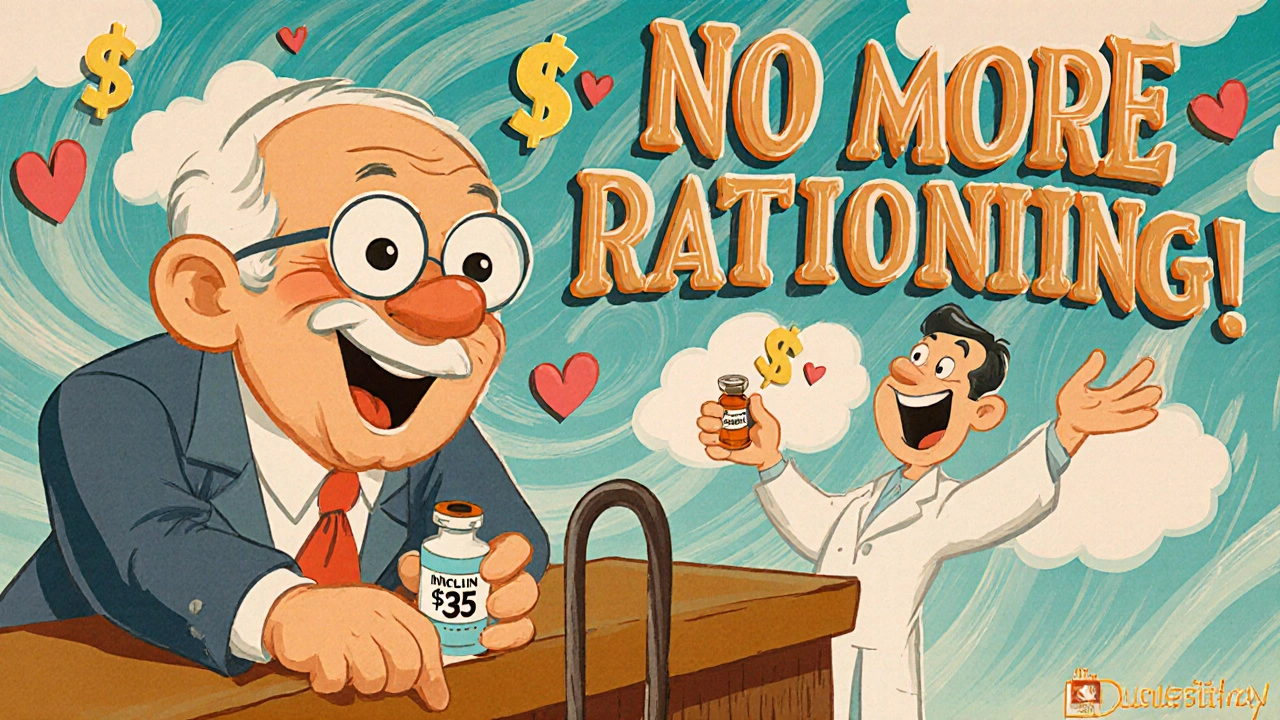
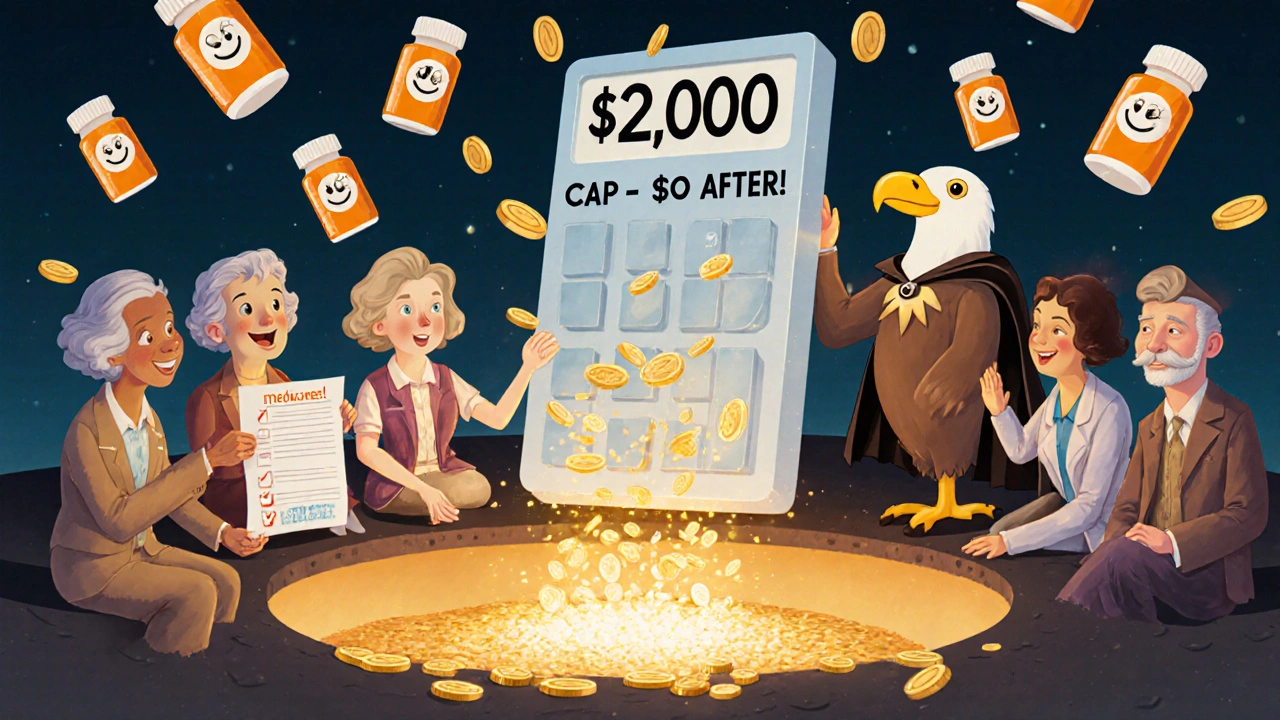
Starting in 2025, Medicare drug coverage changed in ways that could save you thousands of dollars a year-if you know how to use it. For millions of seniors, the old system with its confusing "donut hole" and unpredictable drug bills is gone. Now, there’s a hard limit: you’ll pay no more than $2,000 out of pocket for your prescriptions in 2025, no matter how many medications you take. That’s not a rumor. It’s law. And it’s already in effect.
What Changed in Medicare Part D for 2025?
Medicare Part D is the part of Medicare that covers prescription drugs. Before 2025, you paid your deductible, then 25% of drug costs until you hit the coverage gap (also called the donut hole). Once there, you paid a lot more-sometimes 75% or more-for your meds until you spent enough to qualify for catastrophic coverage. That phase could take years to reach, and many people never made it. Now? The donut hole is gone. Completely.
Here’s how it works now:
- You pay your deductible (up to $590 in 2025, though some plans have $0).
- After that, you pay 25% of the cost of your drugs. The plan pays 65%, and drugmakers chip in 10%.
- Once your total out-of-pocket spending (deductibles, copays, coinsurance) hits $2,000, you’re done. For the rest of the year, you pay $0 for covered drugs.
That $2,000 cap is the biggest change since Part D started in 2006. It’s not a suggestion. It’s a guarantee. If you take insulin, diabetes meds, cancer drugs, or multiple heart or arthritis pills, this change could cut your annual drug bill in half-or more.
Who Gets Extra Help?
If your income is low, you might qualify for the Extra Help program-also called the Low-Income Subsidy. This federal program pays for your Part D premiums, deductibles, and copays. In 2025, you could get full help if you’re single and make less than $22,590 a year, or married and make less than $30,660. Even if you’re just below those limits, you might still get partial help.
Extra Help isn’t just a discount. It’s a full shield. People who get it pay no more than $4.50 for generics and $11.20 for brand-name drugs. They also don’t pay a late enrollment penalty if they didn’t sign up when first eligible. About 14.5 million people get Extra Help, but many more could. Only about half of eligible seniors apply.
You can apply online at SSA.gov, call Social Security at 1-800-772-1213, or visit your local office. You don’t need to wait for open enrollment. Extra Help starts the month after you’re approved.
Insulin Costs Are Now $35 a Month
If you use insulin, you’re probably already aware of this-but if not, here’s the good news: since 2023, Medicare caps insulin at $35 per 30-day supply, whether it’s covered under Part D or Part B. That’s true for all brands: Humalog, Lantus, NovoLog, Basaglar, you name it. No more choosing between food and insulin. No more rationing doses.
AARP estimates this saves the average diabetic beneficiary $1,150 a year. That’s not just a relief-it’s life-changing. And it’s automatic. You don’t need to apply. Just show your card at the pharmacy.
How to Pick the Right Plan
Even with these big changes, you still need to choose a plan every year. The rules didn’t make it easier-you still have to compare. In 2025, there are about 48 Part D plans available on average per person. That’s down from 55 in 2024. Many stand-alone plans disappeared. The market is shrinking, and the big players-UnitedHealthcare, Humana, CVS Health, Cigna, and WellCare-now control nearly 80% of the market.
So how do you pick?
- Make a list of every drug you take, including dose and frequency.
- Go to Medicare.gov and use the Plan Finder tool. Enter your drugs, zip code, and pharmacy.
- Look at the total cost: premium + deductible + your estimated drug costs for the year.
- Check if your pharmacy is in-network. If your local pharmacy isn’t covered, you might pay double.
- Don’t assume your current plan is still the best. About 83% of people just renew without checking. That’s how people end up paying more.
Some plans have $0 premiums but higher drug costs. Others have high premiums but cover your drugs better. The lowest premium isn’t always the cheapest overall.
What Counts Toward the $2,000 Cap?
This is where people get tripped up. Not everything you pay counts toward your $2,000 limit.
What counts:
- Deductibles
- Copays
- Coinsurance
What doesn’t count:
- Your monthly premium
- Drugs not covered by your plan
- Drugs bought outside your plan’s network (unless you get an exception)
- Over-the-counter meds
That means if you pay $100 a month in premiums, that $1,200 doesn’t help you reach the cap. Only the money you pay at the pharmacy when you pick up your prescriptions counts. So if you’re close to the cap, don’t forget to track your out-of-pocket spending. Your plan sends you a statement every month.
Where to Get Free Help
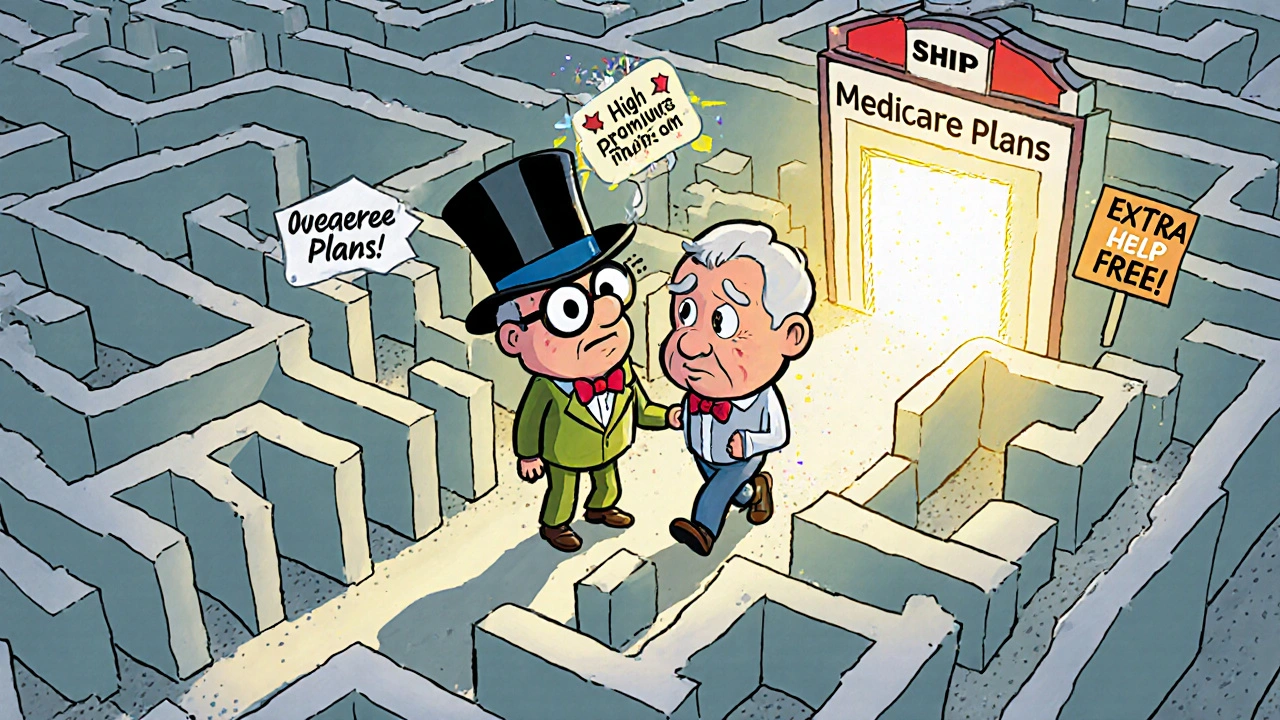
You don’t have to figure this out alone. Free, local help is available through State Health Insurance Assistance Programs, or SHIPs. These are government-funded counselors who know Medicare inside and out. They don’t sell plans. They don’t get paid by insurers. They just help you.
There are over 13,500 SHIP locations across the country. You can find yours at shiphelp.org or call 1-877-839-2675. They’ll sit with you for an hour, compare your drugs to every plan in your area, and show you exactly how much you’ll save.
Over 4 million seniors use SHIP every year. If you’re confused, overwhelmed, or just want to make sure you’re not overpaying, this is your best move.
When Can You Change Plans?
You can only switch plans during the Annual Enrollment Period: October 15 to December 7. That’s when you can join, switch, or drop a Part D plan. Changes take effect January 1.
There are a few exceptions. If you qualify for Extra Help, you can change plans anytime. If you move out of your plan’s service area, you can switch. If your plan drops your drug or changes its cost-sharing, you can switch mid-year.
But if you’re happy with your plan and your drugs are covered? You don’t have to do anything. Your plan will renew automatically. But don’t assume that’s smart. Plans change every year. Your drug’s tier might go up. Your pharmacy might drop out. Your premium might rise. That’s why checking once a year takes five minutes but can save you hundreds.
What If You Can’t Afford Your Drugs?
If you’re still struggling-even with the $2,000 cap and Extra Help-there are other options. Drug manufacturers often have patient assistance programs. Some offer free or discounted drugs to people with low income. Ask your pharmacist or doctor. Many have brochures or websites you can check.
Nonprofits like NeedyMeds.org and RxAssist.org list free or low-cost drug programs. You can search by drug name and see what’s available. These aren’t scams. They’re real, government-vetted programs.
And if you’re still paying too much, call Medicare at 1-800-MEDICARE. Sometimes, they can help you get an exception to cover a drug not on your plan’s list.
Final Thought: Don’t Wait Until It’s Too Late
Medicare Part D in 2025 is simpler, fairer, and more protective than ever. But only if you act. The cap, the insulin limit, the Extra Help-none of it helps if you don’t know it exists. Don’t wait until you’re stuck with a $1,000 bill for your heart meds. Check your plan. Talk to a SHIP counselor. Use the Plan Finder. Make sure your drugs are covered. Confirm your pharmacy is in-network. And if you’re on a fixed income, apply for Extra Help-even if you think you don’t qualify. The rules are looser than you think.
This isn’t just about money. It’s about health. You can’t manage your diabetes if you skip insulin. You can’t fight cancer if you can’t afford your chemo. The system is finally designed to keep you alive. Now, make sure you’re using it.
What is the Medicare Part D out-of-pocket cap for 2025?
In 2025, the maximum amount you’ll pay out of pocket for covered prescription drugs under Medicare Part D is $2,000. Once you reach that limit, you pay $0 for covered drugs for the rest of the year. This cap includes your deductible, copayments, and coinsurance-but not your monthly premium.
Does Medicare cover insulin for $35 a month?
Yes. Since 2023, Medicare caps the cost of insulin at $35 per 30-day supply, regardless of whether it’s covered under Part B or Part D. This applies to all FDA-approved insulins, including Humalog, Lantus, and NovoLog. You don’t need to apply-just present your Medicare card at the pharmacy.
How do I know if I qualify for Extra Help?
In 2025, you may qualify for Extra Help if you’re single and earn less than $22,590 per year, or married and earn less than $30,660. Your assets (like savings and investments) must also be under $11,520 for individuals or $23,010 for couples. You can apply online at SSA.gov, call Social Security, or visit your local office. Even if you’re close to the limit, you might still get partial assistance.
Can I switch Medicare drug plans anytime?
Most people can only change plans during the Annual Enrollment Period, which runs from October 15 to December 7 each year. But if you qualify for Extra Help, move out of your plan’s service area, or your plan drops your drug, you can switch at other times. Always check with Medicare or a SHIP counselor before making a change.
What if my pharmacy isn’t in my plan’s network?
If your preferred pharmacy isn’t in-network, you’ll pay much more for your drugs-or may not be able to fill them at all. Use the Medicare Plan Finder tool to see which pharmacies are covered before you choose a plan. You can also call your pharmacy directly and ask if they accept your Part D plan. If you’re stuck, ask your SHIP counselor for help finding a plan that includes your pharmacy.
Do I need to re-enroll in Medicare Part D every year?
No, you don’t have to re-enroll if you’re happy with your current plan. Most people (about 83%) are automatically renewed. But that doesn’t mean you should skip checking. Plans change their costs, formularies, and pharmacy networks every year. What was cheap last year might be expensive this year. Always review your options during Open Enrollment to avoid surprises.
gerardo beaudoin
November 30, 2025 AT 18:49So if I hit $2,000 in out-of-pocket costs by August, I just walk into the pharmacy and get my meds for free the rest of the year? No tricks? No fine print? That’s wild. I’ve been paying way too much for years thinking I had to tough it out.
linda wood
December 1, 2025 AT 07:45Ohhh so THAT’S why my grandma stopped crying when she got her insulin bill last month 😅 I thought she finally found a miracle cure. Turns out it’s just the government finally remembering old people aren’t disposable. Who knew?
LINDA PUSPITASARI
December 1, 2025 AT 19:48YESSSS this is life changing 🙌 I just applied for Extra Help last week and got approved in 3 days!! My monthly meds used to cost $400 now they’re $11 💸 I didn’t even know I qualified til I read this post 😭 thank you thank you thank you
Robert Bashaw
December 3, 2025 AT 08:39Let me get this straight - the government finally did something that doesn’t suck? The $2,000 cap? The $35 insulin? The fact that they didn’t bury this under 17 pages of legalese? I’m not just shocked, I’m suspicious. Someone’s gonna come out with a ‘Medicare Part D Repeal Act’ by Christmas. This feels too good to be true. I’ve been burned before. But… I’ll take it. For now.
stephen idiado
December 5, 2025 AT 00:47Cap at $2K? Please. You’re ignoring formulary tiers, step therapy, and prior authorization hurdles. The cap is a marketing illusion - if your drug isn’t on the formulary, you pay full price. The system still punishes the chronically ill. This isn’t reform. It’s rebranding.
Sohini Majumder
December 5, 2025 AT 09:48OMG I just spent 4 hours on medicare.gov and now I’m crying 😭 like who designed this site?? It’s like a 1998 Geocities page built by a robot who hates humans. And why is there no ‘click here to cry’ button??
Jennifer Wang
December 6, 2025 AT 20:50While the $2,000 out-of-pocket cap represents a significant structural improvement to Medicare Part D, it is imperative to note that beneficiaries must still navigate complex plan-specific formularies and tiered cost-sharing structures. The cap applies only to out-of-pocket expenditures defined under 42 CFR § 423.100, which explicitly excludes premiums and non-formulary drugs. Consequently, individuals taking multiple specialty medications may still face substantial financial burdens if their required drugs are not covered under their selected plan. It is therefore essential that enrollees utilize the Medicare Plan Finder tool with precise, up-to-date medication lists and confirm pharmacy network participation prior to enrollment. Failure to do so may result in unintended cost exposure, despite the cap.
Latika Gupta
December 7, 2025 AT 10:29I just looked up my neighbor’s meds on the plan finder… she’s on 12 prescriptions. I don’t know her but I’m worried for her. Should I call her? I don’t want to be weird but… she’s 78 and walks with a cane. I think she doesn’t know about this. Should I knock on her door? I don’t know how to do this without being creepy.
Joy Aniekwe
December 7, 2025 AT 16:41So you’re telling me I can finally afford my arthritis meds without selling my TV? And this is the first time in 10 years I’m not terrified to open a pharmacy bill? I’m not crying. You’re crying.
Sullivan Lauer
December 7, 2025 AT 19:15Let me tell you something - I’m 72, I’ve been on Medicare since 2012, and I’ve spent more on insulin than I have on my mortgage in the last five years. I’ve skipped doses. I’ve cried in parking lots. I’ve eaten ramen for three weeks straight just to pay for my heart pills. And now? Now I can breathe. Not just a little. I mean full, deep, I-can-sleep-at-night breaths. This isn’t policy. This is mercy. And if you’re not thanking whoever made this happen, you’re not human. I’m not shouting. I’m not yelling. I’m just… whispering thank you to the wind, because I don’t know who else to say it to.