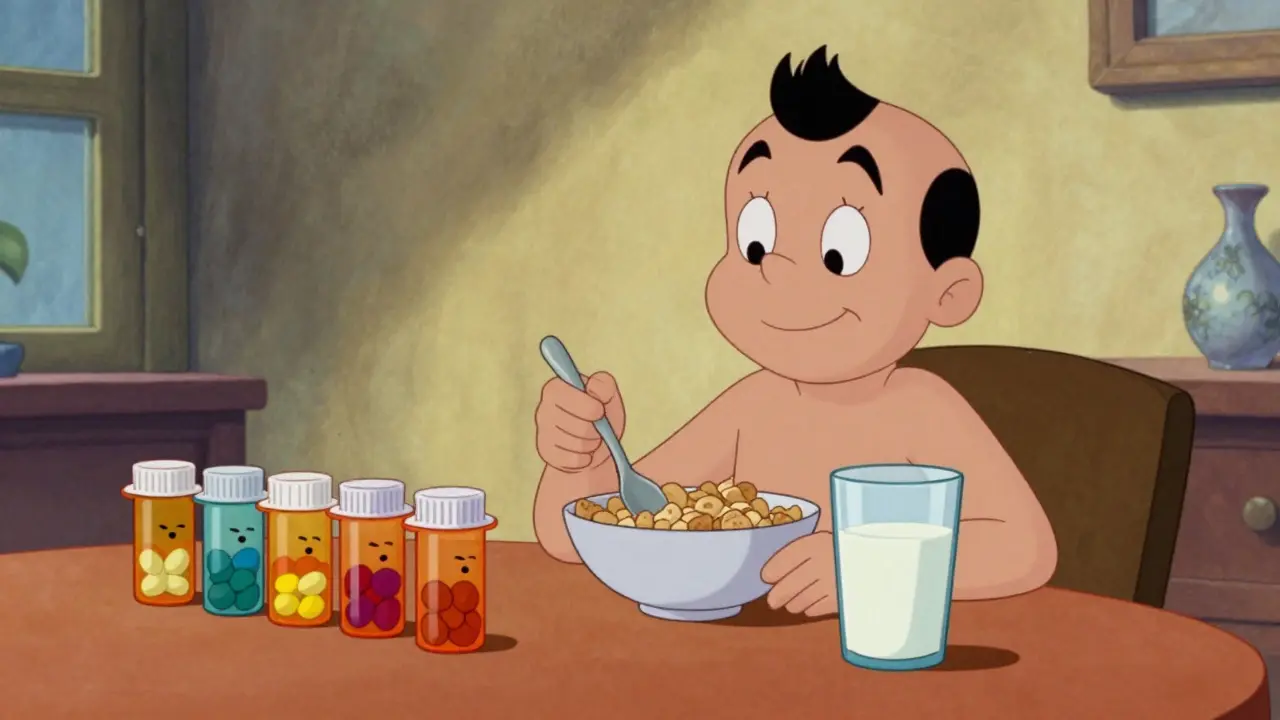
You take your morning pills. Maybe it’s three. Maybe it’s seven. You assume the active ingredients are doing the heavy lifting, right? That’s what matters. But there’s a hidden layer in every tablet you swallow-the inactive ingredients, also known as excipients like fillers, binders, and preservatives that help manufacture and stabilize drugs but have no therapeutic effect themselves. For most people, these substances are harmless. But for a growing number of patients taking multiple generic medications, they are becoming a source of serious health issues.
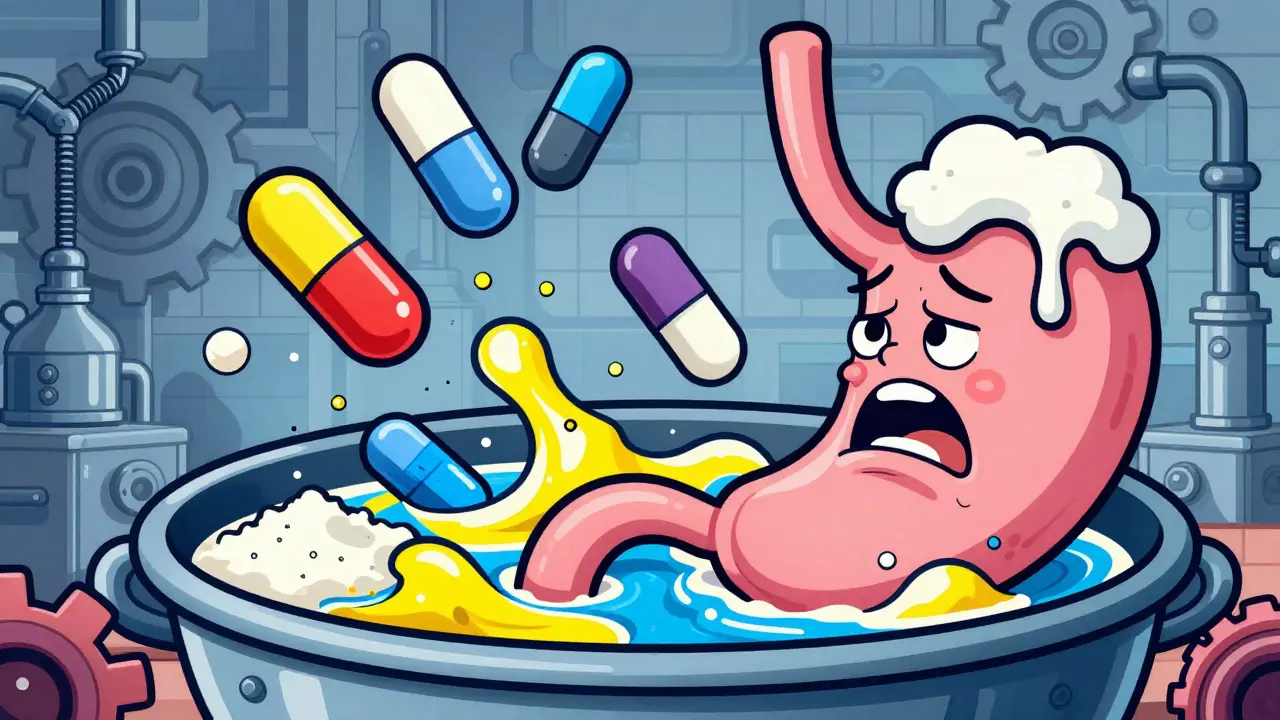
The problem isn’t just one pill. It’s the combination. When you take five different generic drugs, you aren’t just ingesting five active compounds. You’re ingesting dozens of different inactive ingredients. Some might overlap. Some might clash. And because regulations don’t require manufacturers to match these non-active components across brands or even between generic versions of the same drug, you could be accidentally stacking up doses of allergens or irritants without ever knowing it.
Why Inactive Ingredients Matter More Than You Think
We tend to think of "inactive" as meaning "does nothing." That’s a dangerous assumption. Excipients serve critical functions: they hold the pill together, control how fast it dissolves, protect the drug from moisture, and sometimes even mask bad tastes. Without them, many medications wouldn’t work at all.
However, "inactive" does not mean "inert." These substances can interact with your body. A 2020 study published in PubMed Central (PMC7122736) revealed a startling fact: a patient taking ten prescription medications ingests an average of 2.8 grams of inactive ingredients daily. That’s nearly six pounds of excipients every year. While small amounts are generally safe, cumulative exposure changes the equation.
Consider lactose. It’s a common filler in tablets. About 65% of the global population has some degree of lactose intolerance. Most people tolerate tiny amounts, but if you take three different generic antibiotics, each containing 50mg of lactose, you’ve just consumed 150mg in one go. Add in painkillers and vitamins, and you might cross your personal tolerance threshold, leading to bloating, gas, or diarrhea-symptoms often misdiagnosed as side effects of the active drug itself.
Other common culprits include:
- Propylene glycol: Found in 46% of oral liquid medications, it can cause neurological symptoms in sensitive individuals when accumulated.
- Tartrazine (Yellow No. 5): A dye affecting about 4% of patients, potentially triggering hives or asthma.
- Bisulfites: Preservatives that cause asthmatic reactions in 5-10% of people with asthma.
When you combine generics from different manufacturers, you lose control over which specific excipients you’re getting. One brand of levothyroxine might use corn starch; another uses talc. Both are legal. Both are "safe" on their own. But together, with other meds, they create a complex chemical cocktail inside your gut.
The Regulatory Gap: Why This Happens
To understand why this is such a blind spot, we need to look at how generic drugs are approved. The Drug Price Competition and Patent Term Restoration Act of 1984 (Hatch-Waxman Act) created the modern pathway for generics. Its goal was affordability, and it succeeded. Today, roughly 90% of prescriptions in the U.S. are filled with generics, saving billions of dollars annually.
But here’s the catch: the FDA requires generic drugs to demonstrate bioequivalence only for the active ingredient. The concentration of the active drug in your blood must fall within 80-125% of the reference brand-name drug. There is no requirement for the inactive ingredients to match. As long as the excipients are "acceptable" and don’t interfere with the drug’s function, they can vary wildly.
This creates a fragmented landscape. An analysis by the FDA’s Inactive Ingredient Database found 27 different inactive ingredient combinations across generic versions of just one drug: levothyroxine sodium tablets. Imagine trying to track potential interactions when every manufacturer plays by slightly different rules.
The European Medicines Agency (EMA) acknowledges this reality, stating that a generic medicine’s inactive ingredients, name, appearance, and packaging can differ from the reference product. While the EMA has moved to require detailed justification for high-risk excipients since January 2024, the U.S. system remains largely reactive rather than proactive regarding cumulative exposure.
Real-World Consequences: From Gut Distress to Therapeutic Failure
It’s not just theory. Patients are experiencing real harm. On pharmacy forums and social media groups, stories abound. One user on Reddit described developing severe gastrointestinal distress after being prescribed three new generic medications, despite having taken similar active ingredients before without issue. The culprit? Lactose overload from the combined fillers.
Data supports these anecdotes. A 2022 survey by the National Community Pharmacists Association found that 23% of pharmacists encounter at least one patient per month with suspected adverse reactions to inactive ingredient combinations. Reports filed with the FDA Adverse Event Reporting System (FAERS) between 2020 and 2023 highlight a pattern:
| Symptom Category | Percentage of Reports | Potential Excipient Culprit |
|---|---|---|
| Gastrointestinal Distress | 47% | Lactose, Magnesium Stearate, Propylene Glycol |
| Skin Reactions (Rashes/Hives) | 29% | Tartrazine, Benzyl Alcohol, Dyes |
| Reduced Medication Effectiveness | 18% | Binders affecting absorption rates |
The most dangerous scenario involves drugs with narrow therapeutic indices, like digoxin or warfarin. Here, small changes in absorption can lead to therapeutic failure or toxicity. If a binder in one generic slows down dissolution, while another speeds it up, the net effect on your blood levels can be unpredictable. Dr. David Stevens of Enclara Pharmacia warns that these variations can lead to adverse reactions when multiple generics are combined, a risk often overlooked in standard clinical practice.
How to Protect Yourself: A Practical Checklist
You don’t need to stop taking generics-they are vital for healthcare accessibility. But you do need to become an informed consumer. Here is how to manage the risk of inactive ingredient interactions.
- Ask for the NDC Number: Every medication has a National Drug Code (NDC). This unique identifier tells you exactly which manufacturer made your pill. Two bottles of "Generic Metformin" from different pharmacies might have different NDCs and thus different inactive ingredients.
- Use Digital Tools: Don’t rely on memory. Use resources like DailyMed (used by 87% of hospital pharmacists) or the FDA’s Inactive Ingredient Database. Enter your NDC numbers to see the full list of excipients.
- Calculate Cumulative Exposure: If you know you are sensitive to lactose, add up the milligrams from every pill you take. If you’re sensitive to dyes, check for tartrazine or red #40 across all your prescriptions and OTC supplements.
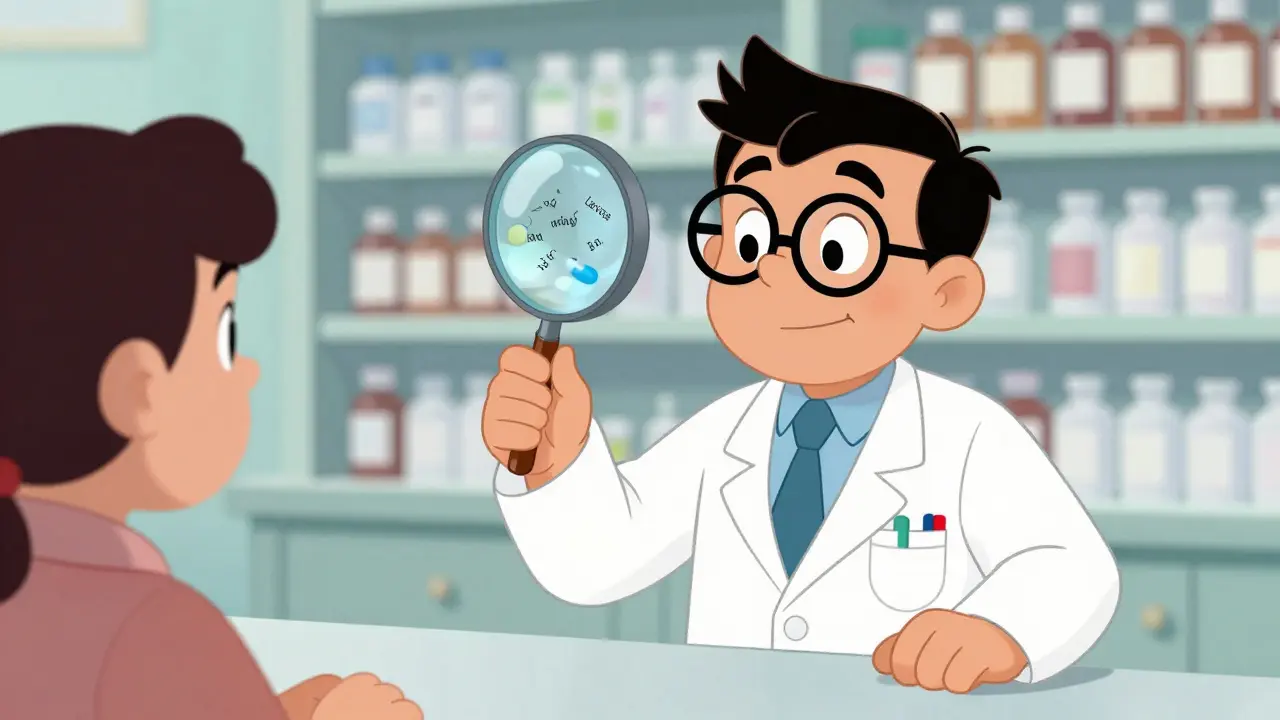
- Consolidate Manufacturers: Ask your pharmacist if you can get all your generics from the same manufacturer. While not always possible, sticking to one brand reduces the variability of excipients in your system.
- Watch for New Symptoms: If you start a new combination of meds and develop unexplained rashes, bloating, or headaches, consider the excipients before assuming it’s the active drug. Switching to a different generic version of the same drug might resolve the issue.
A study in the American Journal of Health-System Pharmacy showed that 78% of patients with suspected excipient-related issues achieved resolution after working with pharmacists to select compatible generic formulations. The key is communication.
The Future of Excipient Safety
The industry is waking up to this problem. The FDA launched the "Inactive Ingredient Transparency Initiative" in January 2024, requiring manufacturers to disclose all inactive ingredients in digital product labeling by December 2025. This will make it easier for patients and providers to screen for conflicts.
Technology is also stepping in. AI-powered tools like MedCheck AI, released in late 2023, can analyze prescription combinations for potential excipient interactions with nearly 90% accuracy. As polypharmacy rises-with the average Medicare beneficiary now taking 4.8 prescription medications daily-these tools will become essential.
Regulators are also considering stricter rules. Proposed FDA rulemaking may soon require cumulative exposure assessments for high-risk excipients in patients taking multiple drugs. Until then, the responsibility falls partly on you. By understanding that "inactive" doesn’t mean "irrelevant," you can take control of your medication safety.
What are inactive ingredients in generic medications?
Inactive ingredients, or excipients, are non-drug components added to medications to aid in manufacturing, stability, and delivery. They include fillers (like lactose), binders (like cellulose), lubricants, and preservatives. While they do not treat the condition, they ensure the drug works correctly and remains stable until you take it.
Can inactive ingredients cause allergic reactions?
Yes. Common excipients like lactose, propylene glycol, certain dyes (e.g., tartrazine), and bisulfites can trigger allergic or hypersensitivity reactions in susceptible individuals. Symptoms range from mild skin rashes and gastrointestinal discomfort to severe anaphylaxis in rare cases.
Why do generic drugs have different inactive ingredients than brand names?
The FDA requires generic drugs to be bioequivalent to brand-name drugs in terms of the active ingredient's performance, but it does not require the inactive ingredients to match. Manufacturers choose excipients based on cost, availability, and formulation needs, leading to variations between brands and even between different generic makers of the same drug.
How can I check the inactive ingredients in my medications?
You can find this information on the medication label or package insert. For more detail, use the National Drug Code (NDC) listed on the bottle to search the FDA’s Inactive Ingredient Database or the DailyMed website. Pharmacists can also provide this information upon request.
Is it safe to take multiple generic medications together?
For most people, yes. However, if you have known sensitivities to specific excipients (like lactose or dyes), taking multiple generics containing those same ingredients can lead to cumulative exposure and adverse effects. It is advisable to review all your medications with a pharmacist to identify potential overlaps.
Kelly Feehely
May 4, 2026 AT 07:04Wake up sheeple!!! The FDA isn't protecting you, they are actively poisoning you with this chemical sludge. They want you sick so you keep buying their 'cures'. It's a massive profit-driven conspiracy to keep the population dependent on Big Pharma. You think lactose is the problem? No, it's the whole system designed to fail you.
Prudence Wesson
May 4, 2026 AT 11:40Oh, please. This article is absolutely riddled with inaccuracies and fear-mongering rhetoric. Excipients are rigorously tested for safety within approved limits. To suggest that standard regulatory frameworks are insufficient is not only incorrect; it is dangerously misleading. One must adhere to established scientific consensus rather than anecdotal evidence. Do not spread misinformation.
Kartik Agarwal
May 5, 2026 AT 14:26I appreciate the nuanced discussion regarding excipient bioequivalence parameters. However, we must contextualize this within the broader pharmacokinetic framework. While the Hatch-Waxman Act prioritizes active pharmaceutical ingredient (API) equivalence, the cumulative load of non-active components in polypharmacy regimens presents a distinct clinical challenge. We need more robust data on synergistic effects of fillers like microcrystalline cellulose versus starches in specific metabolic phenotypes. It is imperative that we engage in constructive dialogue about optimizing therapeutic outcomes through personalized excipient profiling.
Allison Maier
May 5, 2026 AT 22:00this is such a mess :/ why do they put junk in pills anyway??
Jimmy Crocker
May 6, 2026 AT 22:49One must acknowledge that the purported dangers of inactive ingredients are often overstated by those lacking a comprehensive understanding of pharmaceutical science. The notion that one can simply 'stack' allergens to dangerous levels without considering individual tolerance thresholds is somewhat naive. Furthermore, the idea that manufacturers are arbitrarily selecting excipients without regard for patient health is a simplistic view of a complex industrial process. It is quite tedious to read such poorly informed commentary from individuals who likely cannot even distinguish between a binder and a lubricant. The regulatory bodies have stringent guidelines, after all.
Joel Bonstell
May 7, 2026 AT 09:32Hey man, i totally get where youre coming from. I work in pharma and its true that generics vary a lot. Its not malice, just cost cutting mostly. But yeah, if u have sensitivities, u gotta ask your pharmacist. They can usually find a version that works better for u. Just dont panic tho, most people are fine with the standard stuff. Hope this helps!
Andrew Hanssen
May 8, 2026 AT 07:57Your assertion that this is merely a matter of cost-cutting is fundamentally flawed and ignores the systemic negligence inherent in current regulatory practices. To suggest that patients should simply 'ask their pharmacist' places an undue burden on individuals who are already navigating a labyrinthine healthcare system. It is disingenuous to claim that most people are fine when the data clearly indicates a significant subset suffers adverse effects due to these very variations. Your attempt to minimize the issue is both unhelpful and dismissive of genuine patient concerns.
princess lovearies
May 8, 2026 AT 22:05I think there's a lot of truth here, but also maybe some fear. We live in a world where everything feels toxic sometimes. But honestly, being aware is power. If you know your body, you can listen to it. Maybe try talking to your doctor about how you feel after taking meds. Sometimes small changes make big differences. Let's be kind to ourselves and each other while figuring this out.
Divya Patel
May 9, 2026 AT 18:13This raises profound questions about the intersection of commerce and health; does the pursuit of affordability inherently compromise individual well-being? In many cultures, holistic approaches prioritize natural remedies precisely to avoid such synthetic complexities; perhaps we must reconsider our reliance on mass-produced pharmaceuticals altogether. The cumulative impact of these substances suggests a deeper societal issue regarding trust in institutional safeguards; we must advocate for greater transparency and personal agency in healthcare decisions.
SWATI NAWANGE
May 11, 2026 AT 02:00The audacity of this article to imply that generic medications are somehow inferior or dangerous is preposterous. These substances are deemed safe by rigorous scientific standards, and to suggest otherwise is to undermine decades of pharmaceutical progress. Only those with a limited understanding of chemistry would fall for such sensationalist claims. The reality is that these excipients are essential for drug stability and efficacy, and any deviation from standard formulations would be catastrophic. One should educate oneself before spreading such baseless fears.
Alexa Mack
May 12, 2026 AT 13:52I've been thinking about this a lot lately. It's interesting how different countries handle this. In my experience, being open-minded about alternative options helps. Maybe trying to stick with one manufacturer isn't always possible, but asking questions is key. What do you all think about using apps to track this? It seems like technology could really help bridge the gap here.
nikki paurillo
May 14, 2026 AT 07:25It's like a kaleidoscope of chemicals swirling inside us, isn't it? We swallow little chalky clouds of mystery, hoping for healing but getting a cocktail of fillers instead. I love how the article paints this picture of hidden layers-like peeling an onion, but instead of tears, we get bloating! Maybe we need to embrace the chaos of our bodies and find beauty in the complexity. After all, life is messy, and so are our pills.