Why You Might Need to Stay on a Brand Medication
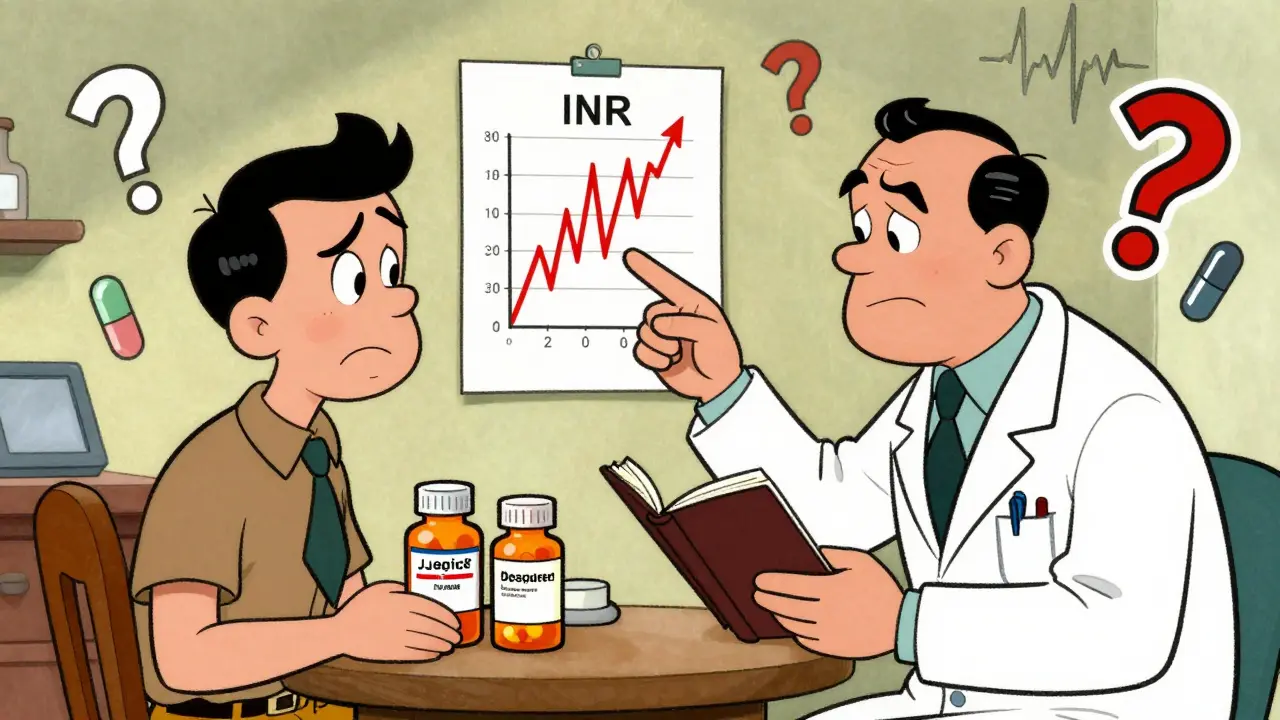
Most people assume generics and brand-name drugs are exactly the same. And technically, they are-same active ingredient, same dose, same way they work in your body. But for some people, that’s not enough. You might feel different after switching. Maybe your seizures came back. Maybe your blood thinning levels went wild. Maybe you broke out in a rash from a dye in the generic version. These aren’t just "in your head." They’re real, documented issues.
The FDA says generics must be bioequivalent to brand drugs. That means they deliver the same amount of medicine into your bloodstream, within an 80-125% range. Sounds fine, right? But for drugs with a narrow therapeutic index-like warfarin, levothyroxine, or certain epilepsy meds-that small window can make a big difference. One study found a 23% higher chance of seizure recurrence after switching from brand-name Keppra to generic. Another showed a 17% spike in ER visits for people who switched between different generic versions of warfarin.
And it’s not just about the active ingredient. Generics can have different fillers, dyes, or preservatives. If you’re allergic to lactose, gluten, or FD&C Red No. 40, you might react to a generic even if the medicine itself is identical. About 7% of patients report these kinds of reactions. That’s not rare. It’s common enough that pharmacists are trained to ask about it.
What to Say When You’ve Had a Bad Experience
Don’t say, "I don’t trust generics." That shuts the door. Instead, say, "I had a problem when I switched." Be specific. Write it down before your appointment. What happened? When? Did your lab numbers change? Did you feel worse? Did your symptoms return?
Use this simple structure: Situation (what’s happening now), Background (what happened before), Assessment (what you think is going on), Recommendation (what you need). For example:
- Situation: I’ve been having panic attacks again.
- Background: I was stable on brand-name Xanax for two years. When I switched to the generic last month, the panic attacks started within a week.
- Assessment: I think the change in formulation is affecting how my body absorbs the medicine.
- Recommendation: Can we go back to the brand? I have records from my pharmacy and my symptom journal.
This approach, called SBAR, works. Studies show it increases successful outcomes in 78% of cases. Doctors aren’t trying to deny you care-they’re juggling insurance rules, paperwork, and time. Give them clear, factual reasons to fight for you.
Bring Proof to Your Appointment
Doctors rely on data. A symptom journal isn’t just helpful-it’s powerful. Write down:
- Date you switched to generic
- What symptoms appeared (e.g., dizziness, nausea, mood swings)
- How bad they were (scale of 1-10)
- When they improved after going back to brand
Bring lab reports too. If you’re on warfarin, show your INR numbers before and after the switch. If you’re on thyroid medication, bring your TSH levels. These aren’t just numbers-they’re evidence. The FDA’s Drugs@FDA database lets you look up your drug’s ANDA number to confirm it’s a generic. Print that out. Show your doctor.
Some patients even bring the actual pill bottles-brand and generic side by side. Point out the difference in color, shape, or markings. It’s not about being difficult. It’s about showing that this isn’t just a feeling. It’s a pattern.
How Insurance Gets in the Way-and How to Fight Back
Eighty-two percent of insurance plans push you toward generics. That’s not personal. It’s money. Generics cost 85% less than brand drugs. But if your plan requires you to try the generic first, you’re stuck in a loop: switch, feel worse, go back to brand, get denied again.
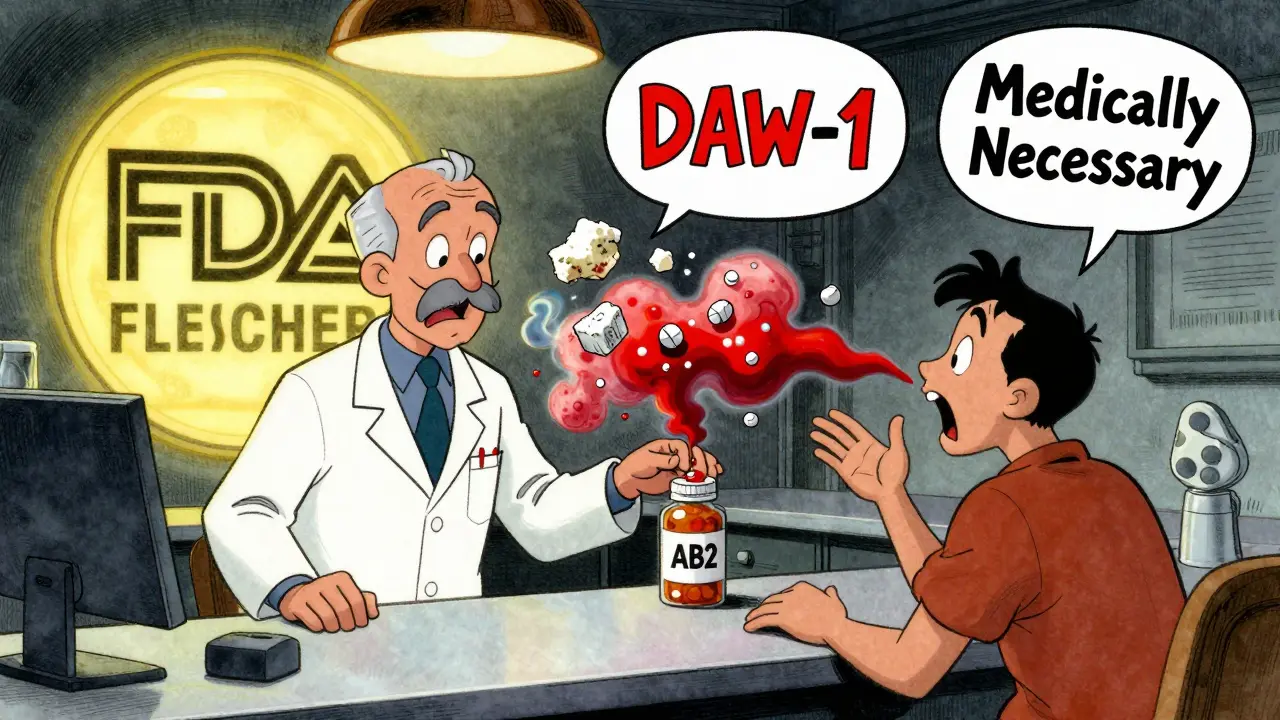
The key is Dispense as Written-or DAW-1. That’s a code your doctor puts on the prescription. It tells the pharmacy: "Don’t substitute. Give this exact drug." Ask your doctor to write it. If they say they can’t, say: "I’ve had documented problems with generics. Can you mark this as medically necessary?"
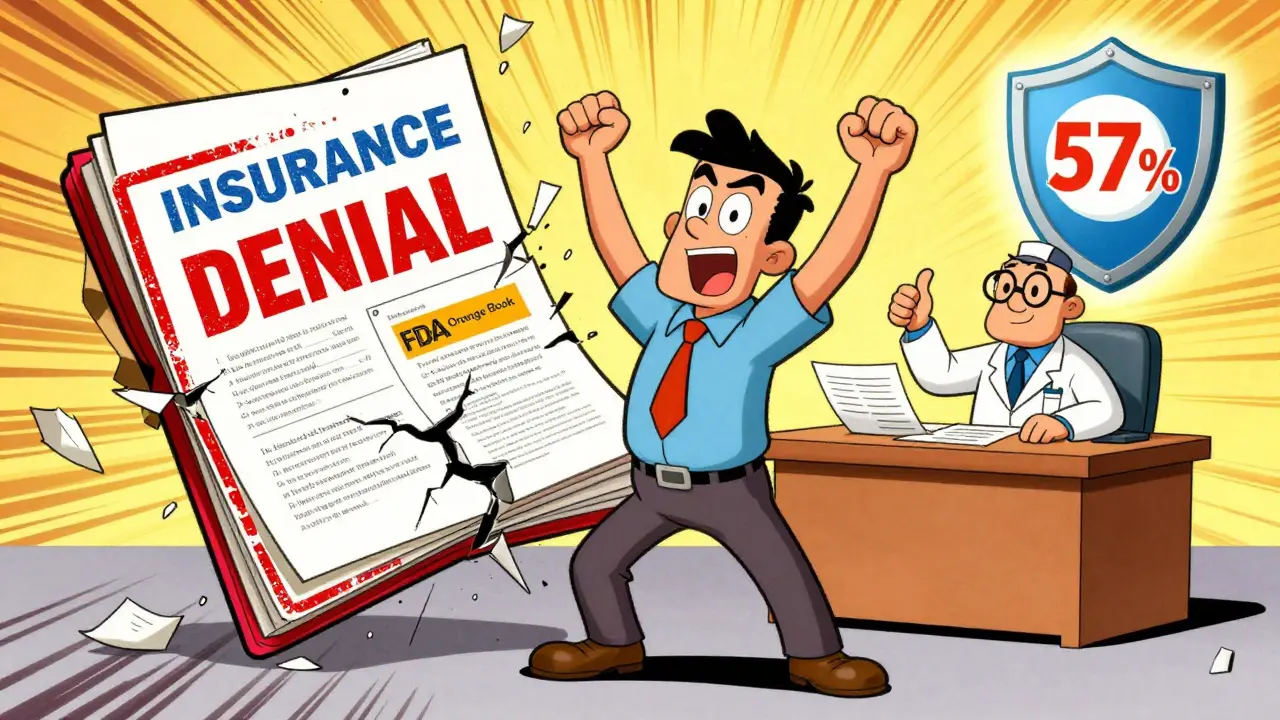
If your claim gets denied, appeal. You have the right. Seventy-two percent of denials are overturned when you submit clinical documentation. Gather:
- Your symptom journal
- Lab results
- Pharmacy records showing previous switches and reactions
- A letter from your doctor explaining why the brand is necessary
Don’t wait. Start the appeal as soon as you’re denied. The average time to get it approved? About 2.7 hours total-mostly filling out forms and calling your doctor’s office. That’s less than a lunch break.
What Your Doctor Needs to Know
Your doctor doesn’t want to write extra paperwork. They’re busy. But they also don’t want you to get sicker. If you’ve had a bad experience, give them the tools to help you.
Ask them to reference the FDA’s Orange Book. It lists which generics are rated as therapeutically equivalent to brand drugs. For drugs like levothyroxine, some generics are rated AB1, others AB2. That small difference matters. If your brand is AB1 and the generic is AB2, your doctor can argue it’s not interchangeable.
Also, mention the 2021 Neurology study showing higher seizure rates with generic anti-epileptics. Or the 2022 American Journal of Managed Care paper on warfarin. You don’t need to cite them perfectly. Just say: "I read that switching can cause problems for people like me. Can we check if mine is one of those cases?"
Most doctors will listen. But they need you to lead with facts, not fear.
When It’s Not About the Drug-It’s About the System
Some states let pharmacists switch your prescription without telling you. Forty-seven states allow automatic substitution. Twelve require your consent. Check your state’s rules. If you’re in a state that doesn’t require permission, ask your pharmacist to notify you before switching. Write it down in your file.
And if your medication is a biologic-like Humira or Enbrel-you’re already on a brand. Those don’t have generics. They have biosimilars, which are similar but not identical. Many doctors and patients treat them like brand-name drugs because the differences are harder to predict.
Medicare Part D has a special process for exceptions. If you’re on Medicare and your brand is denied, you can request an exception. Fifty-seven percent of those requests get approved with proper documentation. Don’t assume it’s hopeless.
What to Do Next
Here’s your action plan:
- Review your medication. Is it a narrow therapeutic index drug? (Think: seizure meds, blood thinners, thyroid meds, some antidepressants.) If yes, your risk is higher.
- Check your history. Did you have problems with a generic before? Write it down.
- Call your pharmacy. Ask if your current prescription is being substituted. If yes, ask them to stop.
- Prepare for your next appointment. Bring your journal, lab results, and a printed copy of your drug’s FDA rating.
- Ask your doctor for DAW-1. Say: "I need this prescribed as written because I’ve had bad reactions to generics."
- If denied, appeal. Submit your evidence. Don’t give up.
You’re not asking for special treatment. You’re asking for consistent care. Your body responds to what it knows. If the brand works, stay on it. You have the right to say so.
Can my pharmacist switch my brand medication without telling me?
In 47 states, yes-pharmacists can substitute a generic without telling you or getting your doctor’s approval. In 12 states, they must ask you first. Check your state’s pharmacy laws. To prevent this, ask your doctor to write "Dispense as Written" (DAW-1) on your prescription. That legally blocks substitution.
Are generics really as good as brand-name drugs?
For most people, yes. The FDA requires generics to have the same active ingredient, strength, and effect as the brand. But for drugs with a narrow therapeutic index-like warfarin, levothyroxine, or anti-seizure meds-even small differences in how the drug is absorbed can cause problems. About 14% of doctors report seeing different outcomes in patients after switching. If you’ve had a bad experience, your concern is valid.
Why do some people react to generics but not brands?
Generics can use different inactive ingredients-like dyes, fillers, or preservatives. If you’re allergic to lactose, gluten, or a specific dye (like FD&C Red No. 40), you might react to the generic version even though the medicine is the same. About 7% of patients report these kinds of reactions. Always check the inactive ingredients listed on the pill bottle.
How do I know if my drug has a generic version?
Go to the FDA’s Drugs@FDA database and search your drug’s name. If it has an ANDA number, it has a generic. If it only has an NDA number, it’s still under patent and doesn’t have a generic yet. You can also ask your pharmacist or check the FDA’s Orange Book, which lists approved generics and their therapeutic equivalence ratings.
What if my insurance won’t cover the brand drug?
You can appeal. Most insurance plans have a process for exceptions. Submit your symptom journal, lab results, and a letter from your doctor explaining why the brand is medically necessary. About 72% of these appeals are approved when you provide solid evidence. Don’t accept a denial without fighting it.
Can my doctor prescribe the brand even if a generic exists?
Yes. Your doctor can write "Dispense as Written" (DAW-1) on your prescription. This tells the pharmacy not to substitute. They may need to fill out prior authorization forms, but they’re legally allowed to do it. If your doctor says they can’t, ask them to explain why. Often, it’s because of paperwork-not medical rules.
Solomon Ahonsi
February 2, 2026 AT 03:57George Firican
February 3, 2026 AT 05:41Matt W
February 3, 2026 AT 09:36Anthony Massirman
February 4, 2026 AT 00:14Gary Mitts
February 5, 2026 AT 05:48clarissa sulio
February 6, 2026 AT 23:30jay patel
February 7, 2026 AT 02:29Ansley Mayson
February 7, 2026 AT 21:43Hannah Gliane
February 9, 2026 AT 03:06Murarikar Satishwar
February 10, 2026 AT 13:27Akhona Myeki
February 11, 2026 AT 14:46Brett MacDonald
February 13, 2026 AT 10:43