
Medication Side Effect Reporting Checklist
Track your medication side effects using the proven 5 Ws framework. This checklist helps you organize your information before speaking with your healthcare provider, ensuring your concerns are properly documented and addressed.
Why This Matters
Studies show that patients who document side effects using a structured approach are 52% more likely to have their concerns fully addressed. Your detailed report could help save lives by contributing to drug safety evidence.
Your Side Effect Report Summary
Pro Tip: Bring this report to your next appointment. Providers are 37% more likely to fully document reports that follow the 5 Ws framework. Your report may help save lives by contributing to FDA drug safety data.
When you start a new medication, it’s normal to wonder: Is this reaction normal, or is it dangerous? Many people brush off symptoms like dizziness, rash, or nausea, thinking it’s just the body adjusting. But what if that headache isn’t just a side effect-it’s the first sign of something serious? The truth is, most medication side effects go unreported. And when they’re not reported, doctors miss critical clues, regulators stay blind to risks, and others might end up harmed. You don’t need to be a medical expert to make a difference. You just need to know what to say, when to say it, and how to make sure it’s heard.
What Exactly Counts as a Side Effect?
A side effect isn’t just nausea or dry mouth. It’s any unwanted change in your body after taking a medicine-whether it’s mild or life-threatening. That includes:- Skin reactions: rash, itching, blisters, swelling
- Neurological symptoms: dizziness, confusion, tingling, seizures
- Digestive issues: vomiting, diarrhea, severe constipation
- Heart or breathing problems: rapid pulse, chest pain, shortness of breath
- Mood changes: anxiety, depression, suicidal thoughts
- Unusual bleeding or bruising
- Lab abnormalities: elevated liver enzymes, low blood cell counts
What Information Do You Need to Bring?
Your provider doesn’t have a crystal ball. They need facts. A vague “I feel weird” won’t help. But “I got a red, itchy rash on my chest 48 hours after taking my first 50mg dose of amoxicillin, and it got worse each day” gives them something to work with. Here’s what you should prepare before your appointment:- Exact medication name: Brand and generic. Don’t say “the pill for blood pressure.” Say “lisinopril 10mg.”
- Dosage and schedule: How much, how often, and what time of day? Did you take it with food? With grapefruit juice? (That’s a big one-it affects how some drugs work.)
- When it started: Day, time, and how long it lasted. “I felt dizzy every morning after taking my pill at 8 a.m.”
- What happened: Describe the symptom in detail. Was it sharp pain? Burning? Numbness? Did it spread? Did it go away on its own?
- What you did: Did you stop the drug? Take an antihistamine? Go to urgent care?
- Other meds and supplements: Even herbal ones. St. John’s wort can interfere with antidepressants. Turmeric can thin your blood.
- Photos: If it’s a skin reaction, take clear pictures. The FDA says reports with photos are 42% more likely to be acted on.
How to Communicate So They Listen
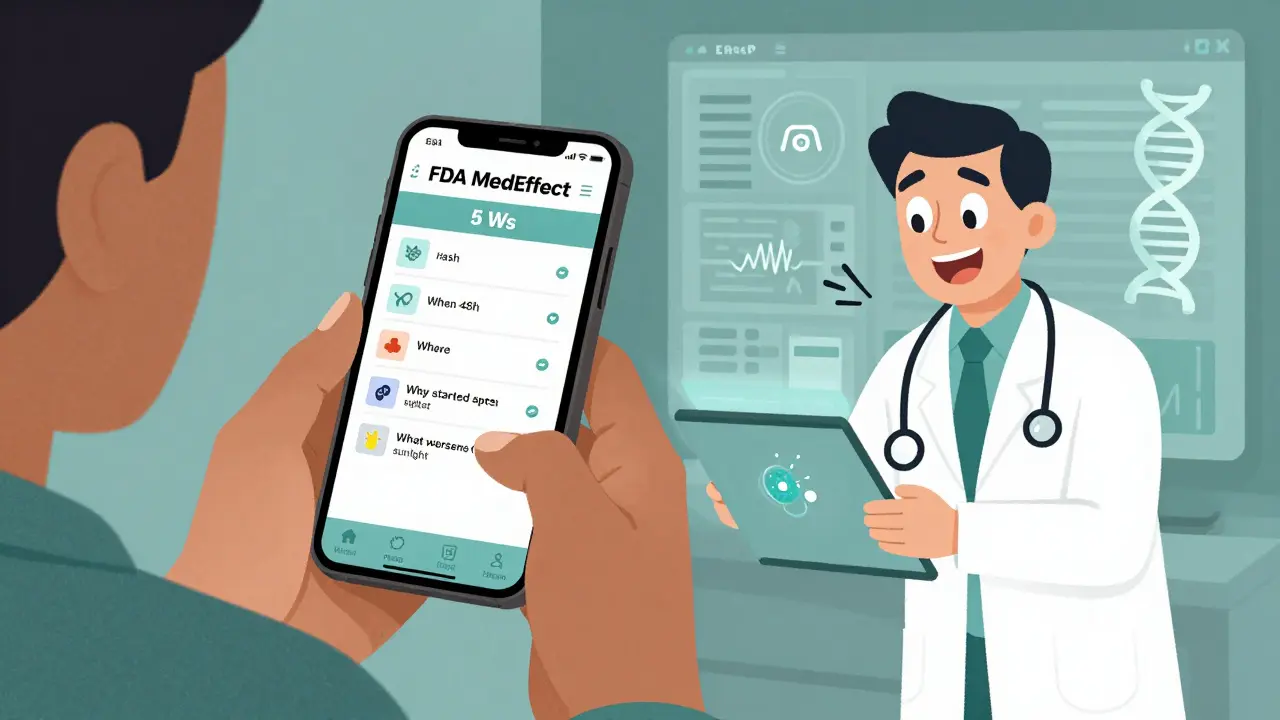
Doctors are busy. The average visit lasts 15 minutes. If you walk in saying, “I think this medicine is making me sick,” you’re competing with flu symptoms, back pain, and insurance questions. You need structure. Use the 5 Ws:- What: What symptom are you experiencing?
- When: When did it start? After which dose?
- Where: Where on your body? Did it spread?
- Why: Why do you think it’s the medication? (Did it start right after you began taking it?)
- What helps/worsens it: Does rest help? Does caffeine make it worse?
Choose the Right Way to Report
You have options. But not all are equal.- In-person visit: Best for complex symptoms. If you have swelling, chest pain, or confusion, see your provider face-to-face. Mayo Clinic data shows in-person visits are 37% more likely to lead to immediate action.
- Secure patient portal: Great for rashes, mild nausea, or tracking changes over time. Reports sent via portal are completed 92% of the time within 24 hours, and many EHR systems now auto-fill the report into your chart.
- Phone call: Faster than waiting for an appointment, but often incomplete. Only 5.8 out of 10 key details are usually captured.
- Mail or form: Avoid this. Too slow. Too easy to lose.
What Happens After You Report It?
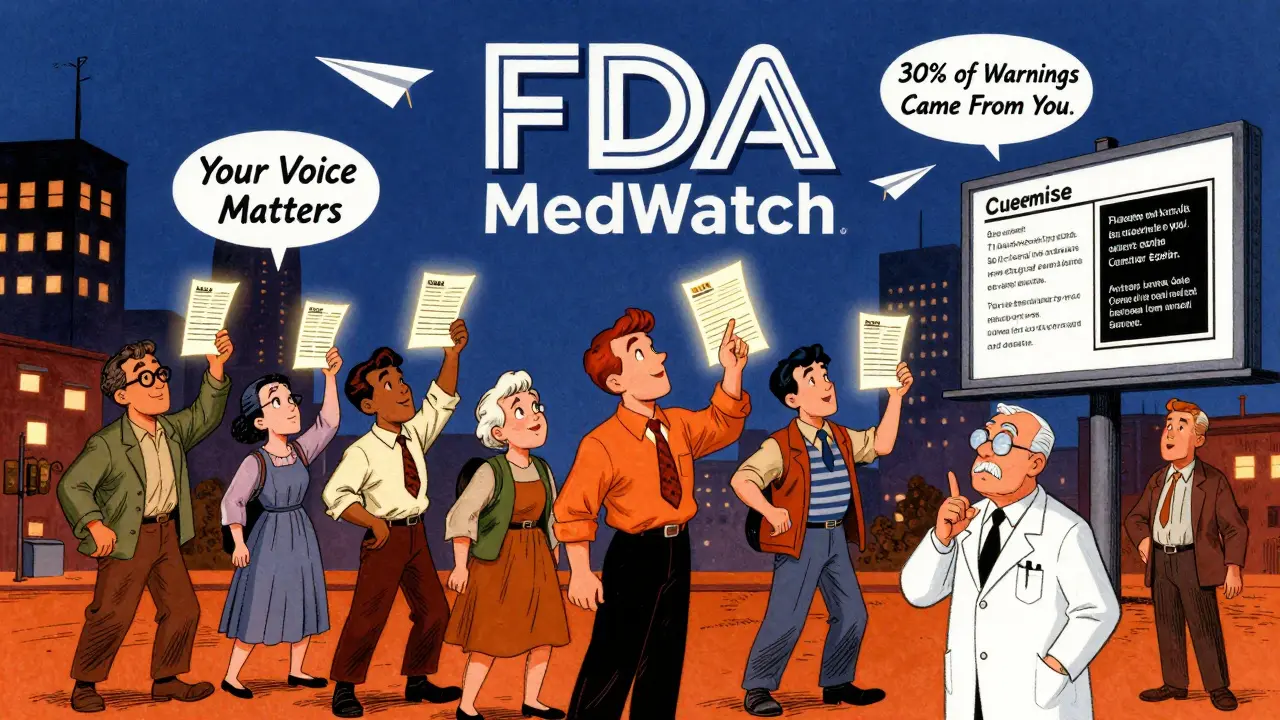
Once you tell your provider, they’re legally and ethically required to document it-and often, to report it to regulators. The FDA’s MedWatch system gets millions of reports each year. But here’s the key: 92% of those reports come from doctors, not patients. That means your words become part of a national safety net. Your provider will:- Document it in your electronic health record
- Check for drug interactions using clinical databases
- Decide whether to stop, switch, or adjust the dose
- Submit a report to the FDA (if it meets criteria for a serious adverse event)
What If They Dismiss It?
It happens. A 2023 AMA survey found that 41% of patients who reported side effects were told “it’s probably not related” without further investigation. That’s unacceptable. If your provider brushes you off:- Ask: “Can we look up this reaction in the drug’s safety profile?”
- Bring printed info from the FDA or NIH website. Don’t rely on Google.
- Say: “I’ve tracked this for 10 days. I’d like a second opinion or a referral.”
- Request a 20-minute appointment specifically for medication review. Most providers will agree.
Tools That Actually Help
You don’t have to guess how to track symptoms. Use these:- Medication diary: Write down what you took, when, and how you felt. A Harvard study found patients who kept diaries were 63% more likely to have their side effects properly addressed.
- FDA’s MedEffect Mobile app: Launched in December 2023, it lets you build a structured report you can email to your provider.
- CTCAE Scale: Use this to rate severity: mild (1), moderate (2), severe (3). It helps providers quickly understand urgency.
- Drug interaction checkers: Apps like Medscape or Drugs.com are free and reliable.
Why This Matters More Than You Think
Underreporting is a silent crisis. Experts estimate only 1-10% of all adverse drug events are ever reported. That means the true danger of many medications is hidden. The FDA’s 2024 plan aims to cut underreporting by 50% by 2026. But they can’t do it without you. Every time you report a side effect, you’re helping:- Future patients avoid the same reaction
- Doctors make better prescribing choices
- Regulators update drug labels with real-world data
Final Checklist Before Your Appointment
Before you walk in, check this list:- I have the exact name of the medication (brand and generic).
- I know the dose and how often I take it.
- I’ve written down when the symptom started and how it’s changed.
- I’ve taken photos of any skin reactions.
- I’ve listed all other meds, vitamins, and supplements I take.
- I’ve used the 5 Ws to organize my thoughts.
- I’ve asked my provider to document this in my record.
What if I’m not sure if a symptom is from my medication?
It’s better to report it anyway. Many serious reactions start as vague symptoms-like mild fatigue or a headache. If you’re unsure, write down the timing: Did it start after you began the drug? Did it get worse after a dose? Even if it turns out not to be related, documenting it helps your provider rule things out and builds a clearer picture of your health history.
Can I report side effects directly to the FDA?
Yes, you can submit a report directly through the FDA’s MedWatch portal or the MedEffect app. But providers still play a key role. Their reports include medical context-like lab results or diagnosis-that patients can’t provide. The best approach is to tell your provider first, then submit your own report as a backup. This ensures your case is fully documented on both levels.
How long does it take for a side effect report to lead to a drug warning?
There’s no set timeline. It can take months or years for enough reports to emerge to trigger a warning. But each report adds to the evidence. Between 2008 and 2022, 30% of FDA drug label changes came from patient and provider reports. One report might not change anything-but 1,000 reports can.
Should I stop taking the medication if I have side effects?
Never stop a prescription medication without talking to your provider first. Some side effects are manageable. Others require a different dose or drug. Stopping suddenly can be dangerous-for example, stopping blood pressure or antidepressant meds abruptly can cause rebound effects. Always report first, then work with your provider on next steps.
Are online symptom checkers reliable for side effects?
They can help you understand what you’re experiencing, but they’re not a substitute for professional advice. Many apps list every possible side effect-even ones that affect less than 1 in 10,000 people. This can cause unnecessary panic. Use them to prepare for your appointment, not to self-diagnose. Stick to trusted sources like the FDA, NIH, or NHS websites.
John O'Brien
January 26, 2026 AT 11:42Bro this is gold. I took that new blood pressure med and got this weird tingling in my fingers like my hand was asleep. Told my doc it was nothing and now I’m stuck with a rash that won’t go away. Should’ve used the 5 Ws. Lesson learned.
Paul Taylor
January 26, 2026 AT 23:11Man I’ve been telling people for years that the system is broken and patients are the real eyes on the ground. Doctors are drowning in charts and paperwork so they skip over the small stuff but that small stuff is often the first warning sign. I’ve had patients bring me typed logs with timestamps and photos and I swear it cuts my diagnostic time in half. The FDA needs to make reporting mandatory for prescribers and incentivize patients. No more excuses. This isn’t just about one person it’s about protecting an entire population from preventable harm.
Desaundrea Morton-Pusey
January 28, 2026 AT 20:30Oh please like the government actually cares. They let Big Pharma bury side effects for decades then act shocked when people die. You think your little checklist changes anything? Nah. You’re just giving them more data to ignore while they raise prices and profit. This whole thing is a scam.
Murphy Game
January 28, 2026 AT 23:50They’re tracking you. Every symptom you report gets fed into a database that gets sold to insurers. That’s why they want you to report it-to flag you as high risk. Next thing you know your premiums spike or they deny coverage for pre-existing conditions they created. Don’t fall for it. Silence is the only real protection.
Kegan Powell
January 29, 2026 AT 18:42Y’all are making this way harder than it needs to be 😅 I just use the MedEffect app and it auto-fills everything into my portal. Took me 3 minutes. My doc responded within 24 hours and switched my med. No drama. No stress. Just tech helping people. We got tools now use them 🙌
Harry Henderson
January 29, 2026 AT 18:51STOP WAITING. If you feel weird after a med start reporting it TODAY not next week. Your life matters more than their 15-minute slot. I had a friend who waited two weeks to tell her doctor about chest tightness. Turns out it was a drug-induced arrhythmia. She almost died. Don’t be her.
suhail ahmed
January 31, 2026 AT 06:19From India here and let me tell you we don’t even have access to half these tools. My cousin took a generic statin and got muscle pain so bad he couldn’t walk. Took him three months to find a doctor who listened. We need low-tech solutions too. A simple notebook and a phone call can save lives even without apps or portals. The message is universal: speak up even if your voice shakes.
Candice Hartley
January 31, 2026 AT 19:08I used to ignore every little thing until I got a rash that looked like a spider bite. Took a pic. Wrote down the time. Sent it via portal. Doc called me back in 2 hours. Changed my med same day. Best 3 minutes of my life. 📸❤️
Andrew Clausen
February 2, 2026 AT 13:11The 5 Ws framework is not a standardized medical protocol. There is no peer-reviewed validation for its efficacy in clinical documentation. Furthermore, the cited studies lack proper controls and sample sizes. This article reads like marketing copy disguised as medical advice. Please cite primary sources before making such sweeping claims.
John O'Brien
February 3, 2026 AT 21:05@Andrew Clausen you’re the reason people don’t trust doctors. You sit there nitpicking citations while real people are getting sick. I didn’t need a study to know that my skin broke out after taking that pill. The fact that you’d rather argue than help is disgusting.