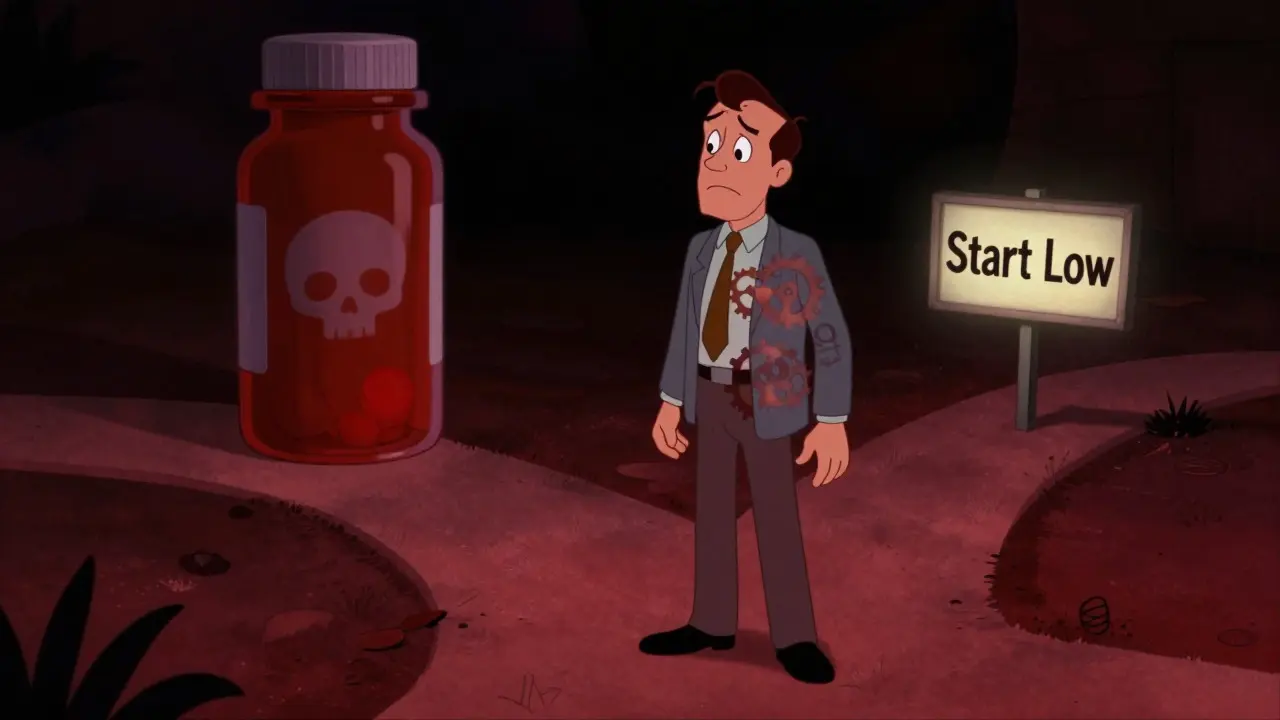
Imagine this: you’ve been off your medication for a few weeks. Maybe it was a vacation, a hospital stay, or just a break you thought you could handle. You decide to go back to the dose that worked before. It feels familiar. It feels safe. But inside your body, the chemistry has changed. Your system no longer expects that amount of drug. This mismatch is exactly why restarting medication after a break is one of the most dangerous moments in recovery and chronic pain management.
The core issue isn’t willpower; it’s biology. Specifically, it’s something called lost tolerance. When you stop taking a medication-especially opioids, benzodiazepines, or other central nervous system depressants-your body stops adapting to its effects. If you jump straight back to your old maintenance dose, you are essentially overdosing on your own history. The National Institute on Drug Abuse highlights this as a critical factor in many preventable deaths, noting that respiratory suppressant effects diminish rapidly during abstinence.
Understanding Lost Tolerance: Why Your Body Changes Fast
Tolerance is your body’s way of adjusting to a substance so that it requires less of an effect over time. When you remove the substance, that adjustment reverses. And it happens faster than most people expect.
For medications like methadone, tolerance can drop significantly within just three to five days. The Medicines Learning Portal notes that a patient without medication for more than a few days may need to start therapy again "from scratch." Even with shorter-acting opioids, a week off is enough to reset your baseline. This means the dose that kept you stable last month might now be lethal today.
Consider the tragic case of Philip Seymour Hoffman, who died from an overdose after 23 years of abstinence. He had used prescription opioids chronically in the past, but his body had long since forgotten how to handle them. This isn't just about illicit drugs; it applies to prescribed medications too. Whether it’s anxiety meds, sleep aids, or painkillers, the rule remains the same: if you haven’t taken it recently, your body doesn’t know what to do with the full dose.
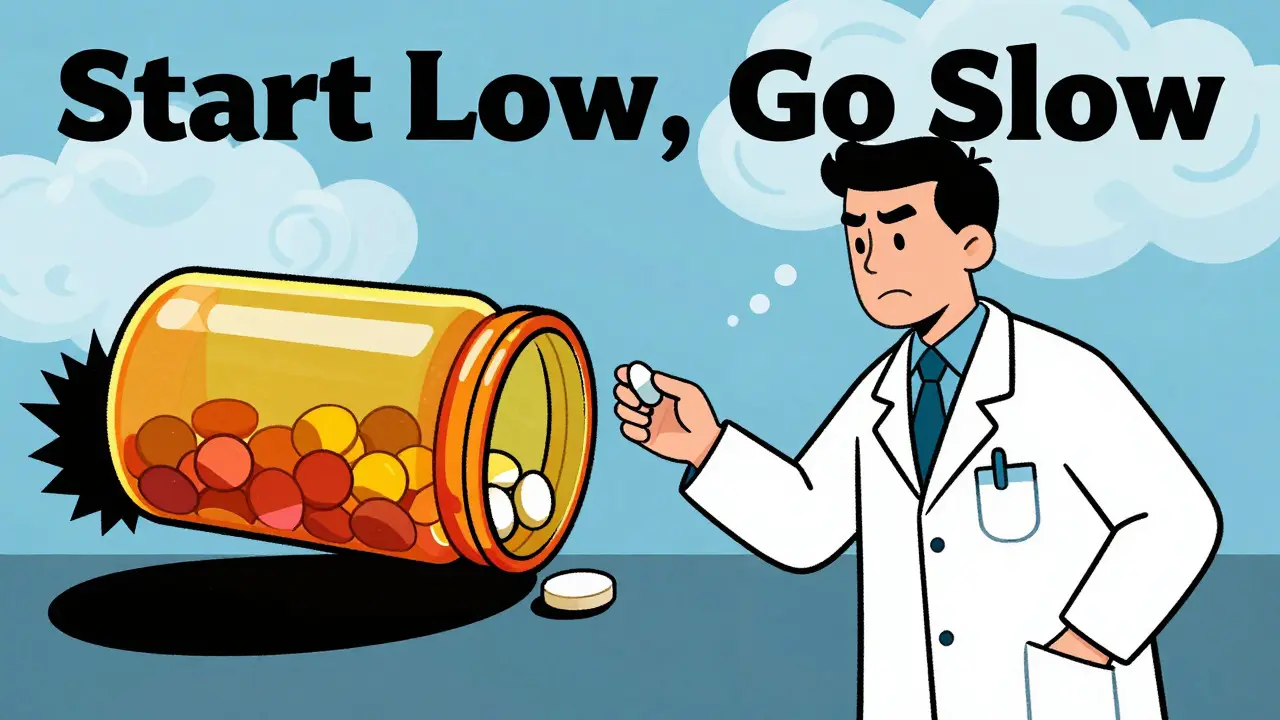
The "Start Low, Go Slow" Rule
If you are planning to restart a medication, the golden rule is simple: start low and go slow. Medical professionals across Calgary Clinical Pharmacology and Washington State Department of Health guidelines emphasize this approach to prevent severe side effects like postural hypotension or respiratory depression.
- Reduce the initial dose: Start at 25% to 50% of your previous maintenance dose. For example, if you were taking 40mg of an opioid, start with 10mg to 20mg.
- Wait before increasing: Do not increase the dose immediately. Wait at least 24 hours to see how your body reacts. Monitor for drowsiness, confusion, or slowed breathing.
- Incremental increases: If tolerated well, increase by small increments (e.g., 25% of the target dose) every few days until you reach a comfortable level.
This gradual re-introduction allows your receptors to readjust without overwhelming your system. It buys you time to assess safety rather than guessing blindly. Remember, the goal isn’t to get high or even to feel completely normal immediately; the goal is to avoid death while rebuilding stability.
Medication-Specific Risks and Protocols
Not all medications behave the same way when restarted. Understanding the specific risks associated with different classes of drugs is crucial for survival.
| Medication Class | Tolerance Loss Timeline | Key Risk Upon Restart | Recommended Action |
|---|---|---|---|
| Opioids (Heroin, Methadone) | 3-5 days (short-acting), 7-10 days (methadone) | Respiratory depression, coma | Start at 25-50% dose; have naloxone ready | Benzodiazepines (Xanax, Valium) | Within days | Sedation, respiratory failure | Gradual reintroduction; avoid alcohol |
| MAOIs (Depression meds) | Several weeks washout required | Serotonin toxicity | Wait 2 weeks before starting serotonergic drugs |
| Antipsychotics (Quetiapine) | After 1 week discontinuation | Postural hypotension (fainting) | Start at 25% target dose; rise slowly |
For instance, monoamine oxidase inhibitors (MAOIs) require a several-week washout period before switching to other serotonergic medications to prevent serotonin toxicity. A case study by Mason et al. (2016) showed dangerous interactions when venlafaxine was restarted too soon after MAOI discontinuation. Always check with a pharmacist or doctor about these specific windows.
The Danger of Mixing Substances
One of the biggest mistakes people make when restarting medication is combining it with other sedating substances. Alcohol, sleep aids, and benzodiazepines multiply the depressive effects on your central nervous system. Washington State Department of Health guidelines explicitly warn against polypharmacy risks during this vulnerable window.
If you are restarting an opioid, drinking even a single beer can push your respiratory rate below the danger zone (below 12 breaths per minute). The combination creates a synergistic effect where the total impact is greater than the sum of its parts. Keep your environment clean of other depressants for at least the first week of restarting.
Medical Supervision vs. Solo Restart
While some minor medications might be safe to restart on your own, high-risk drugs like opioids and benzodiazepines should ideally be managed under medical supervision. Evoke Wellness reports an 87% success rate for patients completing medically supervised restart protocols compared to only 42% for unsupervised attempts.
Why is supervision so effective? Because doctors can monitor vital signs in real-time. They can adjust dosages based on your clinical state rather than guesswork. If you have access to a primary care physician, an addiction specialist, or a pain management clinic, use it. Tell them you’ve had a break and ask for a "restart plan." Most providers are trained in the "start low, go slow" protocol and will appreciate your caution.
If professional help isn’t immediately available, you must create your own safety net. This involves having someone aware of your situation, keeping emergency numbers handy, and ensuring naloxone is accessible.

Naloxone: Your Essential Safety Net
Naloxone (brand name Narcan) is a life-saving medication that can reverse an opioid overdose. When restarting opioids after a break, having naloxone nearby is not optional-it is mandatory. Washington State’s overdose prevention documents emphasize sharing naloxone instructions with friends or family members.
You don’t need to be a healthcare worker to use it. In fact, bystanders save lives every day by administering it. If you live alone, consider carrying it with you or asking a trusted friend to keep a dose at their house. Many pharmacies now offer over-the-counter naloxone, and insurance coverage has improved significantly, with Medicare covering 100% of costs in many cases.
Keep in mind that naloxone wears off faster than some long-acting opioids. If you administer it and the person becomes unresponsive again, give another dose and call emergency services immediately. It buys time, but it doesn’t replace medical care.
Signs of Trouble: What to Watch For
During the first 24 to 48 hours of restarting, you are in the highest risk window. Be hyper-aware of your body’s signals. Here are the red flags that indicate you have taken too much:
- Slowed breathing: Fewer than 12 breaths per minute is a critical warning sign.
- Pinpoint pupils: Especially common with opioids, indicating high levels of drug in the system.
- Extreme drowsiness: Difficulty staying awake or slurred speech.
- Dizziness or fainting: A sign of postural hypotension, common with antipsychotics and some pain meds.
- Confusion or agitation: Can signal serotonin toxicity or severe withdrawal rebound.
If you notice any of these symptoms, seek help immediately. Do not wait to "see if it passes." Time is tissue, and in the case of respiratory depression, time is life.
Real-World Context: Why This Matters Now
The urgency of safe medication restarts has never been higher. The CDC’s 2024 Overdose Prevention Strategic Plan prioritizes standardized restart protocols, recognizing that 62% of fatal opioid overdoses occur within 72 hours of discharge from incarceration or treatment facilities. These are people whose bodies have suddenly lost tolerance due to forced abstinence.
Rural areas face unique challenges here. Only 32% of rural hospitals have implemented full restart protocols compared to 89% in urban settings. If you live in a remote area, you may need to take extra precautions, such as telehealth consultations or traveling to an urban center for initial doses.
New technologies are also emerging to help. Wearable respiratory monitors that automatically administer naloxone are currently in Phase 3 trials. While we wait for widespread adoption, sticking to the basics-low doses, slow increases, and naloxone availability-remains the best defense.
How long does it take to lose tolerance to opioids?
Tolerance to short-acting opioids like heroin can decrease significantly within 3 to 5 days of abstinence. For long-acting opioids like methadone, tolerance loss typically occurs within 7 to 10 days. However, individual metabolism varies, so it is safest to assume tolerance is lost after any break longer than a few days.
Can I restart my previous dose if I only missed a few days?
It is risky. Even a break of 3 to 5 days can lower your tolerance enough to cause severe side effects or overdose. Medical guidelines recommend starting at 25% to 50% of your previous dose and gradually increasing it over several days to ensure safety.
What should I do if I suspect an overdose after restarting medication?
Call emergency services immediately. If you have naloxone (Narcan), administer it right away. Place the person on their side to prevent choking, stay with them, and monitor their breathing until help arrives. Do not leave them alone.
Is it safe to mix alcohol with medication when restarting?
No. Alcohol is a central nervous system depressant. Mixing it with opioids, benzodiazepines, or other sedatives multiplies the risk of respiratory failure and overdose. Avoid alcohol entirely for at least the first week of restarting any new or resumed medication.
Do I need a doctor to restart all medications?
While not always legally required, medical supervision is highly recommended for high-risk medications like opioids and benzodiazepines. Doctors can provide a structured restart plan, monitor vital signs, and adjust dosages safely. For lower-risk medications, consult a pharmacist for guidance on safe restart protocols.