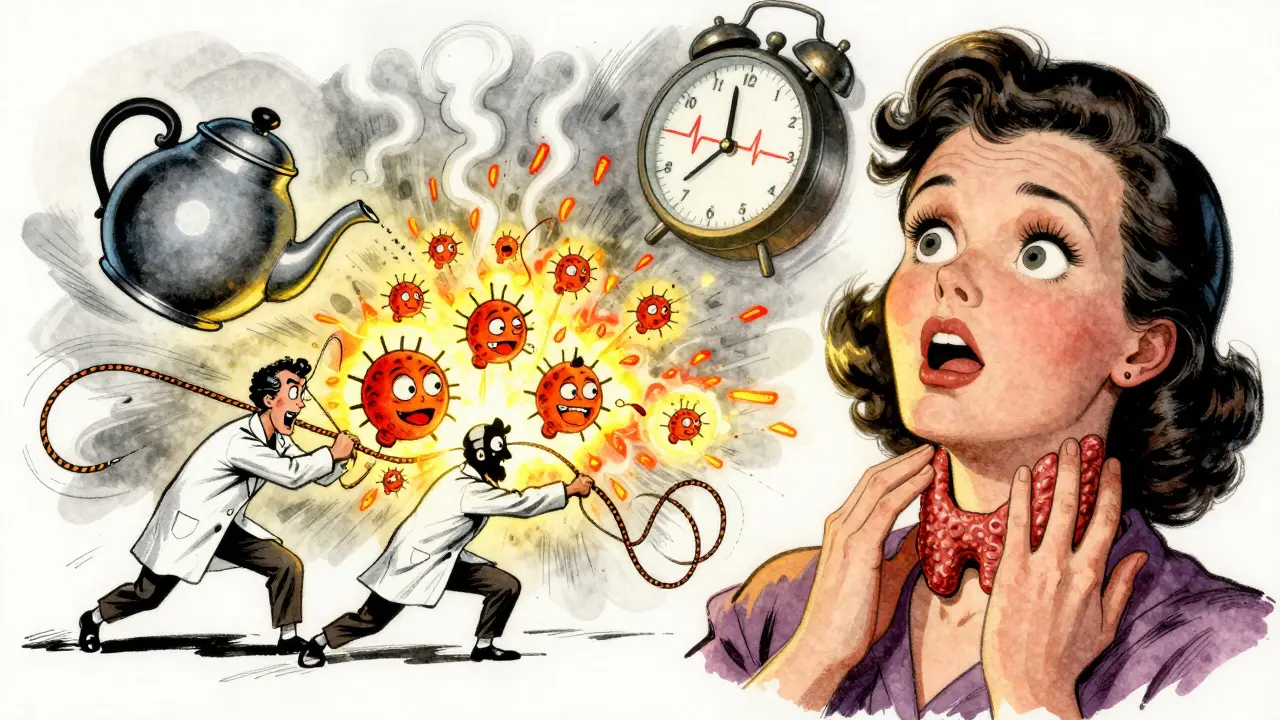
Graves’ disease isn’t just an overactive thyroid-it’s your immune system turning on itself. About 80% of all hyperthyroidism cases in the U.S. are caused by this autoimmune condition, where the body mistakenly attacks the thyroid gland, forcing it to pump out too much hormone. The result? A body running on overdrive: racing heart, unexplained weight loss, shaking hands, and sleepless nights. For many, especially women between 30 and 50, these symptoms start as vague fatigue or anxiety, leading to months of misdiagnosis. By the time it’s correctly identified, the damage can already be spreading-to the heart, the eyes, even the bones.
How Graves’ Disease Hijacks Your Thyroid
Your thyroid sits like a butterfly at the base of your neck, quietly regulating your metabolism, temperature, and energy. In Graves’ disease, immune cells produce abnormal antibodies called thyroid-stimulating immunoglobulins (TSI). These don’t just trigger the thyroid-they hijack it. TSI binds to the same receptors that normally respond to TSH (thyroid-stimulating hormone), tricking the gland into overproducing T3 and T4 hormones. The result? TSH levels crash below 0.4 mIU/L, while free T4 climbs above 1.8 ng/dL and free T3 pushes past 4.2 pg/mL. This isn’t just lab numbers-it’s your body stuck in high gear.
What makes Graves’ different from other causes of hyperthyroidism? Three clear signs: the overactive thyroid itself, eye problems (Graves’ ophthalmopathy), and rare skin changes (dermopathy). About half of patients develop bulging eyes, redness, or double vision. In 3-5% of cases, the optic nerve gets compressed, risking permanent vision loss. Skin changes, like thickened, reddish patches on the shins, are rare but unmistakable. These aren’t side effects-they’re direct signs the immune system is attacking tissues beyond the thyroid.
Why PTU Is Still Used Despite the Risks
When doctors first diagnose Graves’ disease, they often reach for antithyroid drugs. The two main ones are methimazole and propylthiouracil (PTU). Methimazole is the go-to for most adults-it’s taken once a day, works well, and has fewer severe side effects. But PTU? It’s the backup. It’s not preferred. It’s reserved.
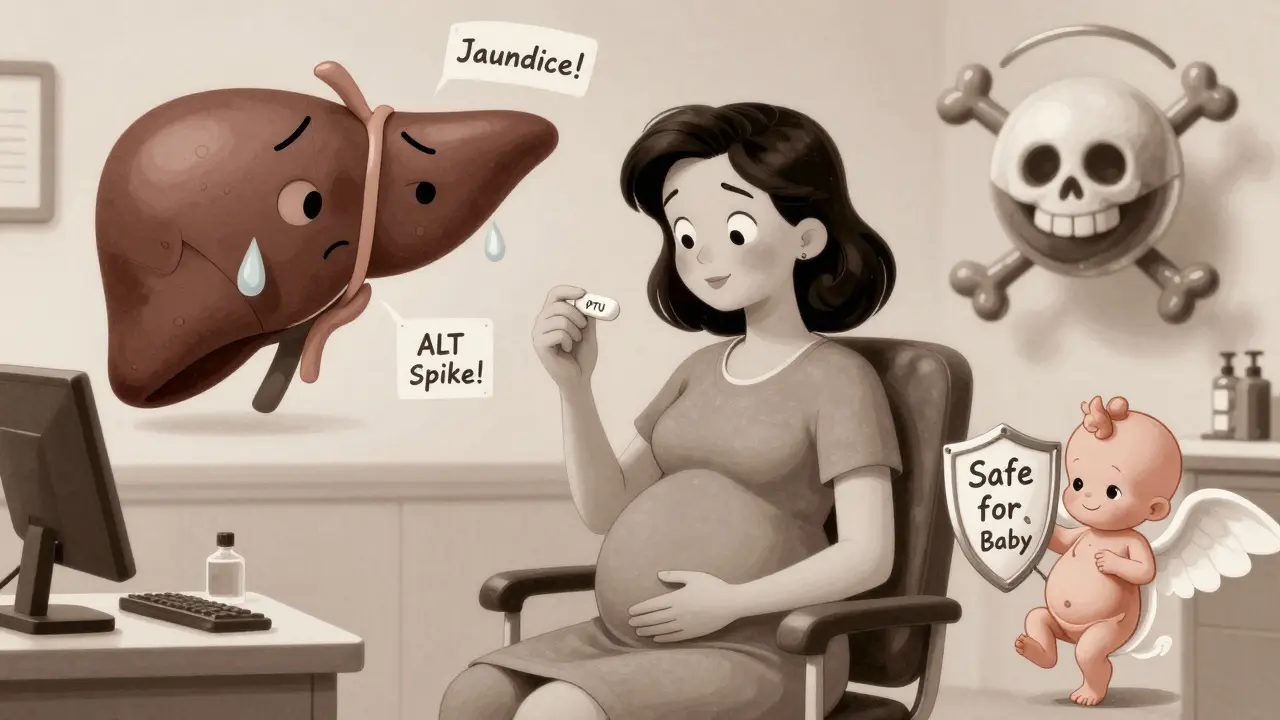
Why keep a drug with a black box warning from the FDA for severe liver damage? Because in the first trimester of pregnancy, PTU is safer for the baby. Methimazole can cause rare but serious birth defects. PTU, while risky for the mother’s liver, doesn’t cross the placenta as aggressively. That’s why endocrinologists choose PTU for pregnant women in early pregnancy-despite the need for monthly liver tests. One patient in Bristol shared: “PTU saved my pregnancy, but I had weekly blood draws. My ALT spiked to 120. I was terrified every time.”
PTU dosing starts at 100-150 mg three times a day. For severe cases or thyroid storm, it can go up to 800 mg daily. But it’s not a long-term solution. Liver toxicity affects 0.2-0.5% of users-enough to warrant immediate stoppage if jaundice, dark urine, or abdominal pain appear. Agranulocytosis, a dangerous drop in white blood cells, happens in 0.2-0.5% of cases too. That’s why any sore throat or fever during PTU treatment demands an emergency blood test.
How PTU Compares to Other Treatments
Antithyroid drugs aren’t the only option. Radioactive iodine (I-131) and surgery are common next steps.
Radioactive iodine is a one-time treatment that destroys overactive thyroid tissue. It works in 80-90% of cases. But the trade-off? Almost everyone ends up hypothyroid-needing lifelong thyroid hormone replacement. It’s effective, but permanent. Surgery, or thyroidectomy, removes the gland entirely. It’s fast, with a 95% success rate, but carries risks: damage to the voice box (1%) or parathyroid glands (1-2%), which control calcium levels.
Cost-wise, PTU and methimazole cost $10-$50 a month. Radioactive iodine runs $300-$1,500. Surgery? $5,000-$15,000. For many, the low cost of antithyroid drugs makes them the first choice-even if they’re not the final one.
But here’s the catch: 30-50% of people on antithyroid drugs go into remission after 12-18 months. That means stopping the medication and staying normal. But 40-60% relapse within a year. That’s why many end up choosing radioactive iodine or surgery-not because the drugs failed, but because the disease came back.
The Hidden Battle: Eyes, Emotions, and Delayed Diagnosis
Most people don’t realize Graves’ disease hits harder than the thyroid. In a 2023 survey of over 1,200 patients, 78% said anxiety and insomnia were their worst symptoms. Sixty-five percent lost 15-20 pounds without trying. Yet, nearly half waited 6-12 months for a correct diagnosis. Many were told they were “just stressed,” “going through menopause,” or “having a panic disorder.”
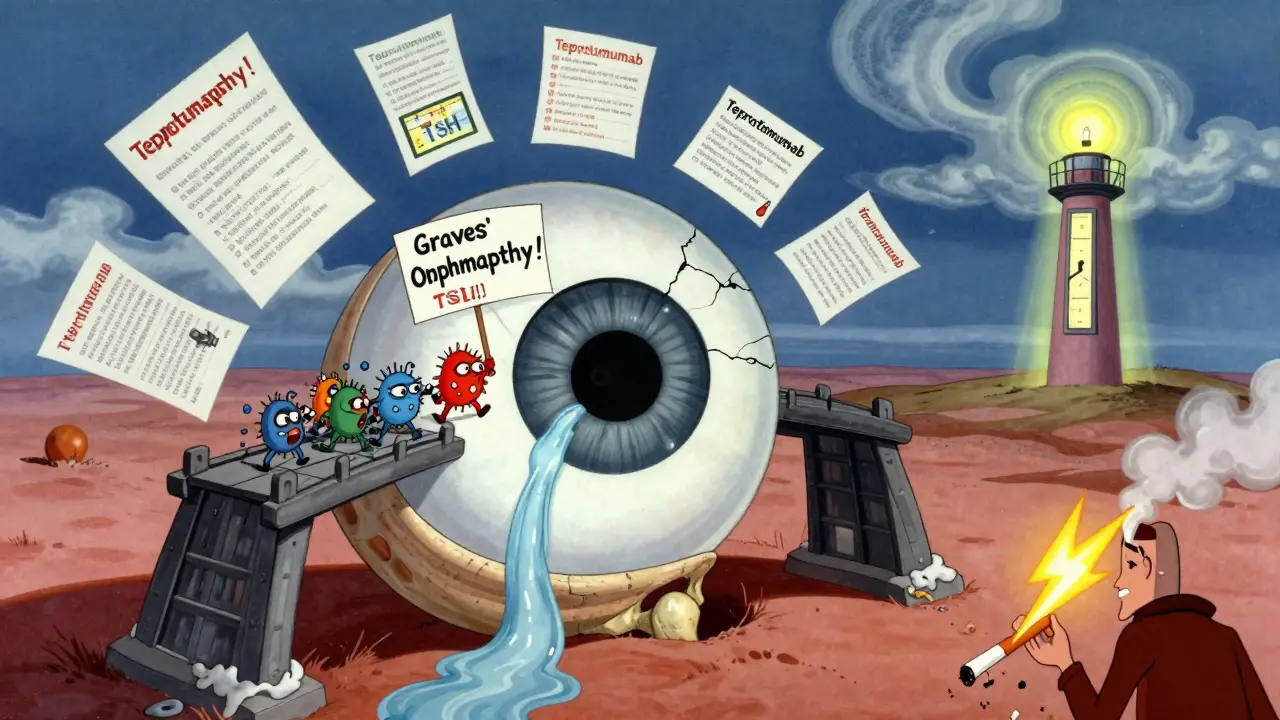
Even after thyroid levels normalize, eye symptoms often linger. About 40% of patients still have bulging eyes, dryness, or double vision. Some need steroid infusions, orbital radiation, or even eye surgery. Teprotumumab, a newer drug approved in 2021, reduces eye bulging in 71% of cases-but it costs $150,000 per course. Most insurance won’t cover it unless other treatments fail.
Smoking makes eye complications twice as likely. Quitting isn’t optional-it’s part of treatment. And stress? It doesn’t cause Graves’, but it can trigger flare-ups. That’s why patients are encouraged to find support groups. On Reddit’s r/GravesDisease, over 12,500 people share stories of fatigue, weight loss, and the emotional toll of living with an invisible illness.
Monitoring, Relapse, and the Long Road Ahead
Treatment isn’t a one-time fix. It’s a marathon. Patients on PTU need blood tests every 4-6 weeks at first. TSH, free T4, and liver enzymes are tracked closely. Once stable, checks go to every 2-3 months. But even when labs look perfect, symptoms can creep back.
Relapse risk is highest in the first year after stopping medication. If TRAb (thyrotropin receptor antibody) levels are above 10 IU/L at the end of treatment, the chance of relapse jumps to 80%. That’s why doctors now test TRAb at diagnosis and again after treatment. It’s not just about feeling better-it’s about measuring the immune system’s lingering attack.
Patients are taught to watch for signs of both over-treatment and under-treatment. Too much medication can cause fatigue, weight gain, and cold intolerance-signs you’ve slipped into hypothyroidism. Too little? Palpitations, tremors, and heat intolerance return. Heart rates over 100 bpm or a fever above 100.4°F? Call your doctor immediately. That could be thyroid storm-a rare but deadly emergency with a 20-30% death rate if untreated.
What’s Next for Graves’ Disease Treatment?
The future is getting personal. Researchers are now looking at genetic markers like HLA-DR3, which triples your risk of developing Graves’. Blood tests for immune profiles and gene variants may soon help predict who responds best to PTU, methimazole, or newer drugs like rituximab. Early trials with TSH receptor blockers show promise-normalizing thyroid function without causing hypothyroidism.
Meanwhile, home monitoring tools like the ThyroidTrack biosensor (FDA-approved in 2022) let patients check TSH levels at home with lab-level accuracy. It’s not widely available yet, but it’s coming. For now, the best tools are still blood tests, patient awareness, and honest conversations with your endocrinologist.
PTU isn’t perfect. It’s not the first choice. But for pregnant women, for those who can’t tolerate methimazole, or for thyroid storm-it’s still life-saving. And until a safer, equally fast-acting alternative arrives, it stays in the toolbox.
Can Graves’ disease be cured?
Graves’ disease can go into remission, meaning symptoms disappear and thyroid function returns to normal without medication. About 30-50% of people achieve this after 12-18 months of antithyroid drug treatment. But it’s not a permanent cure-relapse rates are 40-60% within a year of stopping drugs. For many, permanent treatments like radioactive iodine or surgery are chosen to avoid the risk of recurrence.
Why is PTU used only in early pregnancy?
PTU is preferred in the first trimester because it crosses the placenta less than methimazole, reducing the risk of rare birth defects linked to methimazole. After the first trimester, doctors usually switch back to methimazole because PTU carries a higher risk of severe liver damage. The trade-off is careful monitoring-monthly liver tests are required during PTU use in pregnancy.
What are the warning signs of PTU liver damage?
Signs include yellowing of the skin or eyes (jaundice), dark urine, nausea, vomiting, loss of appetite, abdominal pain, and unusual fatigue. These symptoms can appear anytime during treatment, even after months of no issues. If any of these occur, stop PTU immediately and seek medical help. Liver injury from PTU is rare but can be life-threatening if not caught early.
Can Graves’ disease affect your heart?
Yes. Untreated Graves’ disease increases the risk of atrial fibrillation, heart failure, and high blood pressure. Studies show it raises cardiovascular mortality by 20-30%. Even after treatment, some patients continue to have heart rhythm issues. That’s why heart monitoring is part of standard care-especially for those over 50 or with existing heart conditions.
Is Graves’ disease hereditary?
Yes. Genetics play a strong role. Twin studies show a heritability rate of about 79%. If a close family member has Graves’ or another autoimmune thyroid disease, your risk is significantly higher. It’s not guaranteed, but having a family history means you should be aware of symptoms and get tested if you notice unexplained weight loss, rapid heartbeat, or eye changes.
How long does it take for PTU to work?
PTU starts reducing thyroid hormone levels within 1-2 weeks, but it can take 4-8 weeks to fully control symptoms. Unlike radioactive iodine, which destroys the gland over time, PTU blocks hormone production directly. Patients often feel better within a month, but lab results take longer to normalize. Patience and consistent dosing are key.
Can you drink alcohol while taking PTU?
It’s best to avoid alcohol. Both PTU and alcohol are processed by the liver. Combining them increases the risk of liver damage. Even moderate drinking can stress the liver during treatment. Most endocrinologists recommend complete abstinence while on PTU to reduce the chance of complications.
What should you do if you miss a dose of PTU?
If you miss one dose, take it as soon as you remember-unless it’s close to your next scheduled dose. Never double up. Missing doses can cause hormone levels to spike again, bringing back symptoms like rapid heartbeat or anxiety. If you miss more than one dose in a row, contact your doctor. Consistency matters more than perfection.
Graves’ disease doesn’t go away with a single pill. It demands attention, patience, and a team approach. Whether you’re on PTU, methimazole, or heading toward surgery, the goal is the same: bring your body back to balance-not just in the lab, but in your life.
Sumit Sharma
January 12, 2026 AT 11:32Graves’ isn’t just hyperthyroidism-it’s a systemic autoimmune avalanche. TSI antibodies binding to TSH receptors? That’s molecular mimicry on steroids. PTU’s liver toxicity profile is nontrivial-ALT spikes aren’t just numbers, they’re hepatocellular distress signals. And yes, agranulocytosis is rare but lethal if missed. Monthly LFTs during pregnancy aren’t optional-they’re survival metrics. The real tragedy? Patients get misdiagnosed as ‘anxious’ while their T3 levels are through the roof. This isn’t stress. It’s immunological sabotage.
Jay Powers
January 13, 2026 AT 22:17man i had a friend who went through this and she was told she was just going through menopause at 34 lmao
ptu is scary but when you're pregnant and your endo says this is the least bad option you take it
also smoking and graves eye disease is like lighting a match next to gasoline
Prachi Chauhan
January 15, 2026 AT 19:33it's wild how we treat the thyroid like it's just a gland when it's basically the body's thermostat
and then we wonder why people feel like they're falling apart
ptu isn't magic-it's a bandaid on a bullet wound
but sometimes the bandaid is all you got until the real fix comes
and yeah, the eyes don't fix themselves even when the labs look perfect
that's the invisible part nobody talks about
Katherine Carlock
January 17, 2026 AT 03:53my mom was on PTU during her first trimester and we had to do weekly liver tests
she cried every time the nurse came in with the needle
but she said if it meant my eyes and brain weren't fried at birth, it was worth it
also-why is teprotumumab so expensive??? $150k for something that fixes bulging eyes??
someone’s making bank off our autoimmune pain
Sona Chandra
January 18, 2026 AT 04:50so let me get this straight-your immune system attacks your thyroid, your eyes, your skin, and your heart, and the best treatment we have is a drug that can KILL YOUR LIVER??
and then we wonder why people are depressed??
you get diagnosed, you get scared, you get tested, you get told to quit smoking, stop drinking, monitor your heart rate, and pray your ALT doesn't spike
and for what? 50% chance you'll relapse?
this isn't medicine. this is russian roulette with a thyroid
Lelia Battle
January 19, 2026 AT 18:59It’s remarkable how the medical community balances risk and benefit in autoimmune conditions. PTU’s use in early pregnancy reflects a nuanced understanding of placental transfer dynamics and teratogenic thresholds. While methimazole presents fetal risks, PTU introduces maternal hepatic vulnerability. The decision is not clinical-it is existential. And yet, we rarely discuss the psychological burden of chronic monitoring: the anxiety of every blood draw, the hypervigilance for jaundice, the guilt of potential harm. Remission is not cure. It is pause.
Rinky Tandon
January 20, 2026 AT 19:30you people are being way too nice about this
PTU is a last-resort drug with a black box warning and you’re acting like it’s a vitamin
if your doctor prescribes this without screaming about liver failure, fire them
and why are we still using this in 2025 when we have monoclonal antibodies and gene therapies in development?
because pharma doesn’t make enough money off it
and because doctors are lazy and stick to protocols
you think this is science? it’s institutional inertia wrapped in a white coat
Ben Kono
January 22, 2026 AT 01:32missed a dose of PTU once and my heart was pounding like a jackhammer
had to go to urgent care
doc said dont do that again
also dont drink
also dont smoke
also check your eyes
also get your TRAb tested
also monitor your TSH
also watch for sore throat
also get liver tests
also dont stress
also sleep
also eat
also dont eat too much
also... just die already