When you pick up a prescription at the pharmacy, you likely assume it is safe. You trust that the pill contains exactly what the label says-no more, no less. For most people, this trust is placed in generic medications, which make up the vast majority of prescriptions filled today. But recent investigations have shaken that confidence. Between 2018 and 2025, there were over 8,000 drug recalls, with contamination-related issues rising by 37% year-over-year. This isn't just about expired pills or broken seals; it’s about dangerous chemicals hiding inside life-saving medicines.
The core problem lies in the gap between cost efficiency and rigorous quality control. Generic drugs are designed to be cheaper versions of brand-name drugs, containing the same active ingredients. However, the pressure to keep costs low has sometimes led to shortcuts in manufacturing. From carcinogens in blood pressure meds to potent opioids leaking from patches, these failures pose serious health risks. Understanding where these contaminants come from and how they affect your health is the first step toward protecting yourself.
Key Takeaways
- Contamination is rising: Recalls linked to contamination increased by 37% annually through 2025, affecting millions of patients.
- Major culprits identified: NDMA in Valsartan (blood pressure) and benzene in Mucinex (cough syrup) are among the most dangerous recent cases.
- Supply chain opacity: Most Active Pharmaceutical Ingredients (APIs) come from China and India, where oversight varies significantly.
- Prevention requires vigilance: Patients should check batch numbers, ask pharmacists about sourcing, and monitor for unusual side effects.
- Regulatory changes are coming: New laws like GDUFA III aim to enforce real-time testing, but implementation lags behind risk.
The Hidden Dangers in Common Medications
Not all contamination issues are created equal. Some involve minor impurities, while others introduce known carcinogens into your system. Two recent cases highlight the severity of the issue.
First, consider Valsartan, a widely prescribed medication for high blood pressure. In 2018, regulators discovered that certain batches contained N-Nitrosodimethylamine, commonly known as NDMA. NDMA is a probable human carcinogen. The contamination wasn't a one-off error; it stemmed from a change in the manufacturing process at ZHP (Zhejiang Huahai Pharmaceutical), a major supplier in China. They introduced sodium nitrite without proper validation, leading to NDMA levels up to 200 times the FDA's acceptable daily intake limit of 96 nanograms. By September 2025, there were 1,348 pending federal lawsuits related to this contamination. Medical records from plaintiffs show that 68% developed cancer within five years of exposure, with colorectal cancer rates strikingly higher than the general population.
Another alarming case involves Mucinex, a popular over-the-counter cough suppressant. A lawsuit filed in June 2025 alleged benzene contamination in Walgreens-brand Mucinex products. Benzene is a known cause of leukemia. Independent testing revealed concentrations up to 4.7 parts per million (ppm), nearly double the FDA's safety threshold of 2 ppm. Plaintiffs reported developing bone marrow abnormalities after just 18 months of regular use. These cases demonstrate that contamination isn't limited to complex prescription drugs; even simple household remedies can carry hidden risks.
| Drug/Product | Contaminant | Source/Manufacturer | Health Risk | Status (2025) |
|---|---|---|---|---|
| Valsartan | NDMA (N-Nitrosodimethylamine) | Zhejiang Huahai Pharmaceutical (China) | Cancer (Colorectal, Liver) | 1,348+ Pending Lawsuits |
| Mucinex (Walgreens Brand) | Benzene | Contract Manufacturer (Unspecified) | Leukemia, Bone Marrow Damage | Lawsuit Filed June 2025 |
| Cisplatin (Chemotherapy) | Substandard Potency | Zee Laboratories (India) | Treatment Failure, Cancer Progression | FDA Warning Letters Issued |
| Duragesic (Fentanyl Patches) | Seal Failure/Leakage | Sandoz (Various Facilities) | Fatal Overdose Risk | 52 Million Patches Recalled (2002-2025) |
Why Is This Happening? The Supply Chain Problem
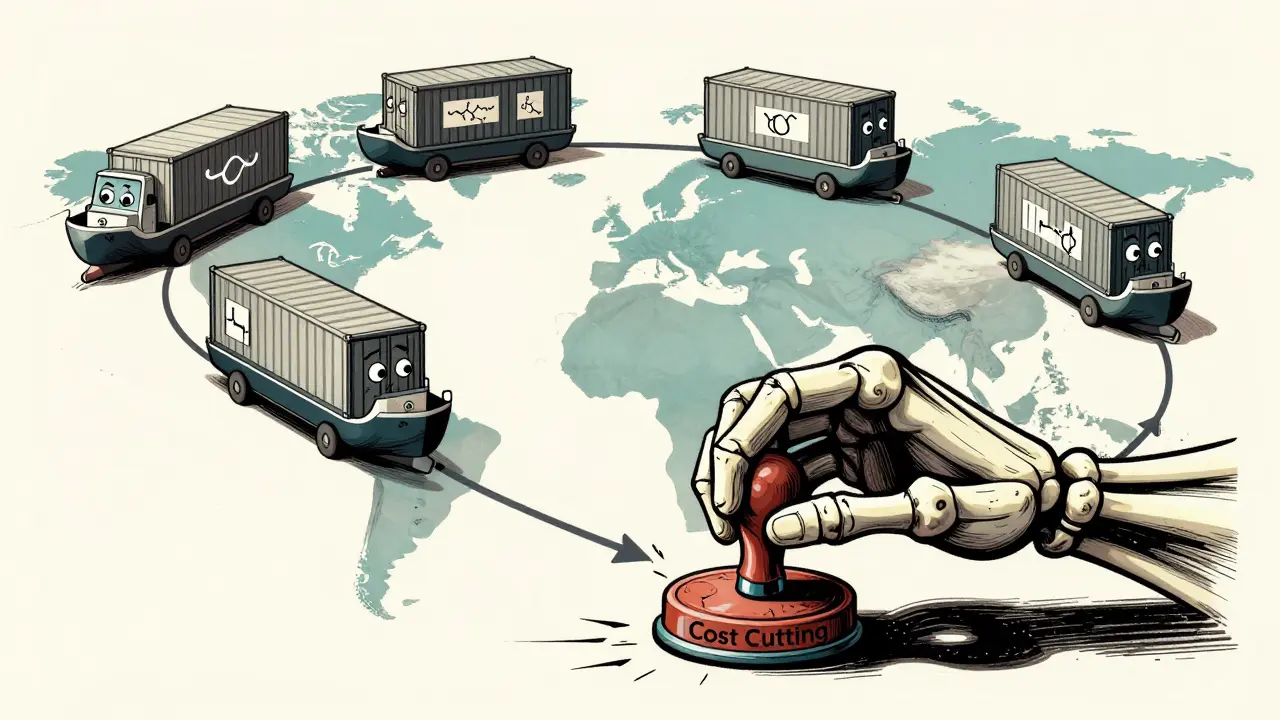
To understand why contamination occurs, we need to look at where generic drugs are made. The global supply chain for pharmaceuticals is heavily concentrated in Asia. According to Senator Rick Scott, 83% of the top 100 generic medicines consumed in the U.S. contain no American-sourced Active Pharmaceutical Ingredients (APIs). China produces approximately 80% of the world's APIs, while India manufactures 40% of the finished dosage forms sold in the United States.
This reliance on foreign manufacturing creates significant oversight challenges. The FDA inspects only 13% of Indian drug plants annually, despite India supplying such a large portion of the market. In December 2022, an inspection of Intas Pharmaceuticals' facility in Ahmedabad, India, revealed a "cascade of failure." Insulators found evidence of shredded documents and acid poured on quality records to hide violations. This lack of transparency means that when things go wrong, it often takes years to identify the root cause.
Furthermore, the economic incentives play a role. Generic manufacturers compete fiercely on price. To maintain thin profit margins, some companies may cut corners on quality control or delay necessary facility upgrades. For instance, continuous manufacturing-a technology that reduces contamination risks by 78% according to MIT research-is adopted by only 12% of U.S. facilities and just 3% of Indian plants. The upgrade costs $5-15 million per facility, a barrier many smaller manufacturers cannot or will not cross.
The Impact on Patient Health and Trust
The consequences of contaminated generics extend beyond legal battles; they directly impact patient outcomes. In oncology, precision is everything. A STAT News investigation in June 2025 revealed that 17 chemotherapy drugs from Indian manufacturers failed dissolution testing. Twelve samples showed less than 80% of the labeled active ingredient concentration. For cancer patients, this under-dosing can mean the difference between remission and progression. One study from Memorial Sloan Kettering documented complete remission failure in 7 out of 11 patients receiving contaminated cisplatin, compared to a 12% failure rate with verified brands.
Even non-critical medications can have severe effects. Patients taking contaminated levothyroxine (for thyroid conditions) reported wildly fluctuating TSH levels, forcing doctors to switch them back to expensive brand-name drugs. On forums like Reddit, healthcare professionals share stories of seeing multiple batches fail potency tests within months. This erosion of trust forces pharmacists to spend 22% more time verifying drug sources since 2020, with 68% checking FDA recall lists weekly.
How Regulators Are Responding
The FDA has acknowledged the gaps in its oversight. An internal review published in February 2025 admitted "significant gaps" in monitoring foreign facilities. In response, several initiatives are underway:
- GDUFA III (Generic Drug User Fee Amendments): Passed in June 2025, this legislation mandates real-time stability testing for high-risk products. It aims to catch degradation or contamination before drugs reach shelves.
- Name Transparency Initiative: Announced in September 2025, this policy seeks to stop the redaction of drug names in foreign facility inspection reports. Previously, the FDA withheld specific product names, making it hard for consumers to know if their medication was affected.
- AI-Powered Analytics: The FDA's 2026-2030 strategic plan includes using artificial intelligence to predict contamination risks based on manufacturing data patterns.
However, critics argue these measures are too little, too late. Dr. Dinesh Thakur, a former pharmaceutical industry whistleblower, stated that without meaningful penalties and independent oversight, problems will persist. The current budget for foreign inspections is $78 million, covering only 1,200 inspections against a backlog of 28,000 facilities requiring review.
What You Can Do to Protect Yourself
While systemic change is slow, individuals can take steps to minimize their risk. Here is a practical checklist for managing generic medication safety:
- Check Batch Numbers: When you receive a new prescription, note the lot or batch number on the bottle. If a recall occurs, you can quickly determine if your specific medication is affected.
- Ask Your Pharmacist: Don’t hesitate to ask where your generic drug is manufactured. Pharmacists have access to supply chain data and can often tell you if a particular manufacturer has had recent issues.
- Monitor for Side Effects: Be vigilant about new or worsening symptoms. If you start a new generic and experience unexpected reactions, contact your doctor immediately. Keep a log of when you started the medication and any changes in health.
- Use Reliable Sources for Information: Follow FDA recall alerts and reputable health news outlets. Avoid relying solely on social media rumors, but do pay attention to widespread reports from healthcare professionals.
- Consider Brand-Name Options for Critical Conditions: For life-threatening conditions like cancer or severe heart disease, discuss with your doctor whether the added cost of a brand-name drug is worth the peace of mind regarding purity and potency.
Looking Ahead: The Future of Generic Safety
The pharmaceutical industry is at a crossroads. The cost savings of generics are undeniable-they saved the U.S. healthcare system approximately $1.7 trillion over the past decade. However, the hidden costs of contamination, including litigation, healthcare expenses, and loss of life, are mounting. Market analysts project that contamination-related recalls will cost the industry $4.3 billion annually through 2027.
Technological solutions offer hope. Blockchain-based supply chain verification could provide end-to-end traceability, ensuring that every pill can be tracked from raw material to patient. Process Analytical Technology (PAT) allows for real-time monitoring during production, catching errors instantly rather than weeks later. As these technologies become more affordable and mandatory, the frequency of contamination incidents should decrease.
Until then, awareness is your best defense. By staying informed and proactive, you can navigate the complexities of modern pharmaceuticals with greater confidence. The goal isn't to reject generics entirely-they are vital to accessible healthcare-but to demand the same rigorous standards applied to brand-name drugs. After all, your health shouldn't depend on where a pill was made.
Are all generic drugs unsafe?
No, the vast majority of generic drugs are safe and effective. The contamination issues highlighted here represent a small percentage of the total market. However, because generics make up 90% of prescriptions, even a small failure rate affects millions of people. It is important to stay informed rather than fearful.
How can I tell if my medication has been recalled?
You can check the FDA's official recall website or sign up for alerts from your pharmacy. Additionally, keeping track of the lot number on your prescription bottle allows you to verify if your specific batch is included in any public notices.
What is NDMA and why is it dangerous?
NDMA (N-Nitrosodimethylamine) is a chemical contaminant classified as a probable human carcinogen. It was found in certain batches of Valsartan due to manufacturing changes. Long-term exposure to high levels of NDMA increases the risk of various cancers, particularly liver and colorectal cancer.
Why do generic drugs cost less than brand-name drugs?
Generic drugs are cheaper because manufacturers do not need to repeat the costly clinical trials required for brand-name drugs. They only need to prove bioequivalence, meaning the drug works the same way in the body. However, this cost advantage can sometimes lead to pressure on quality control budgets.
Should I switch to brand-name drugs for peace of mind?
For most conditions, generics are a safe and cost-effective choice. However, for critical treatments like chemotherapy or narrow-therapeutic-index drugs (like levothyroxine or warfarin), discussing brand-name options with your doctor may be worthwhile. Insurance coverage and personal risk tolerance should guide this decision.