More than 90% of the generic drugs Americans take every day are made overseas-mostly in India and China. That’s not a secret. What’s less known is how those factories are inspected, and whether the system actually protects patients. Until recently, the FDA treated foreign drugmakers very differently from U.S.-based ones. That’s changing. And if you rely on generic medications, you need to understand what’s at stake.
Why foreign manufacturing matters
The U.S. doesn’t make most of its generic drugs anymore. About 80% of the active ingredients in pills, injections, and creams come from abroad. Finished products? Around 40% are made overseas. India supplies nearly half of those ingredients. China adds another 13%. These aren’t small players. Companies like Sun Pharma, Dr. Reddy’s, and Teva have factories that churn out billions of tablets a year for U.S. pharmacies. The reason is simple: cost. Labor, land, and regulatory overhead are lower overseas. But lower cost doesn’t mean lower quality-on paper. The FDA says all manufacturers, no matter where they’re located, must follow the same rules: Current Good Manufacturing Practices, or cGMP. These rules cover everything from how clean the floors are to how data is recorded. If a pill is made in Ohio or Odisha, it should meet the same standard. But in practice, it didn’t.The inspection gap
For years, the FDA did about 12,000 inspections of U.S. factories each year. Most were unannounced. Inspectors showed up without warning, walked through the facility, checked records, and asked questions on the spot. If something looked off, they documented it right away. Meanwhile, inspections of foreign plants? Only about 3,000 a year. And here’s the kicker: manufacturers often got 8 to 12 weeks’ notice. That’s enough time to clean up, fix records, train staff, and hide problems. It’s like inviting an inspector to your house after you’ve spent a week scrubbing the floors and hiding the mess. The result? Foreign facilities were more than twice as likely to have serious violations. In 2024, 45% of foreign inspections found issues with data integrity-like fake test results or deleted records. At U.S. plants, that number was just 17%. Contamination problems? 22% of foreign sites had them. Only 10% of domestic ones did. This wasn’t a glitch. It was a system.What changed in May 2025
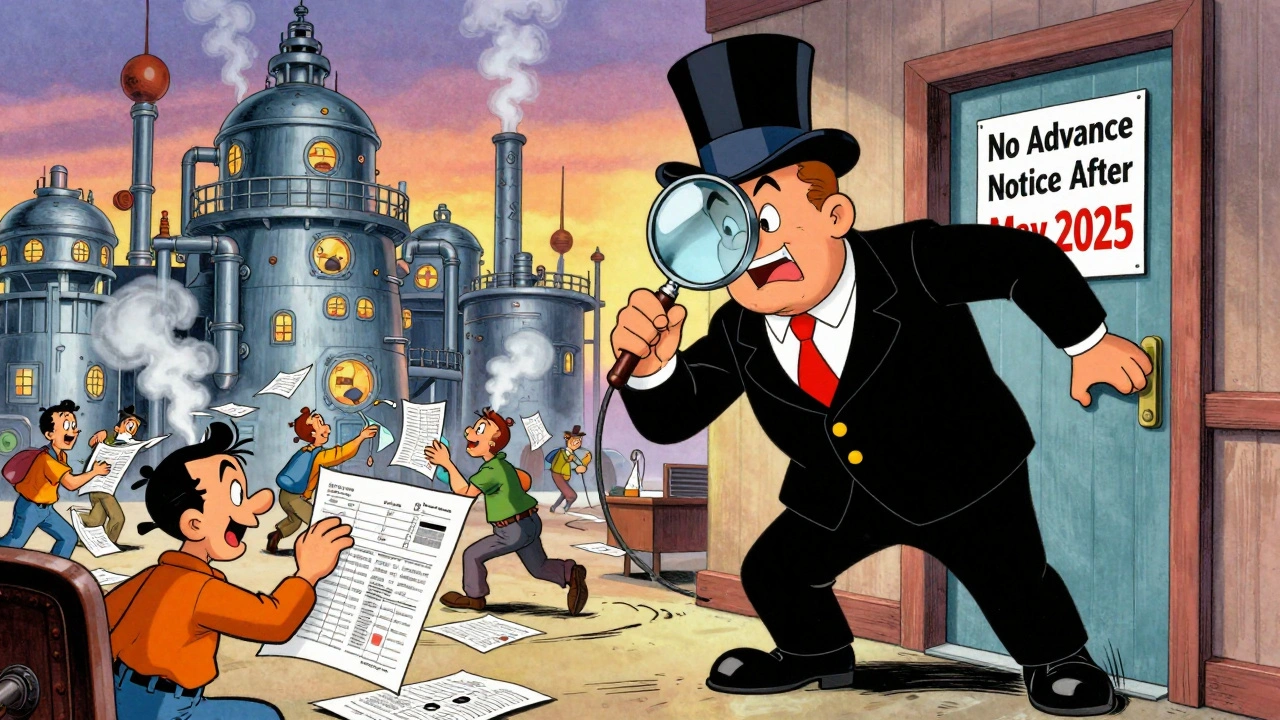
On May 6, 2025, FDA Commissioner Marty Makary announced a major shift: unannounced inspections for foreign factories would jump from 15% to at least 50% by mid-2026. That’s not a tweak. It’s a full reset. The move came after years of pressure. Senators Kirsten Gillibrand and Tim Scott sent a letter in April 2025 demanding answers after reports surfaced that the FDA had allowed drugs from flagged facilities to still enter the U.S. One example: Sun Pharma’s facility in India was banned in 2021 for falsifying data-yet four of its drugs were still approved for sale in the U.S. two years later. President Trump’s Executive Order 14135, signed the day before, forced the FDA to eliminate the inspection gap within 18 months. The agency responded by hiring 200 new inspectors for international sites and doubling down on real-time data reviews. No more advance notice. No more soft landings. Now, if you’re a foreign manufacturer, you could get a knock on the door with just 24 to 48 hours’ warning. Refuse entry? Your entire shipment gets blocked. No appeals. No delays.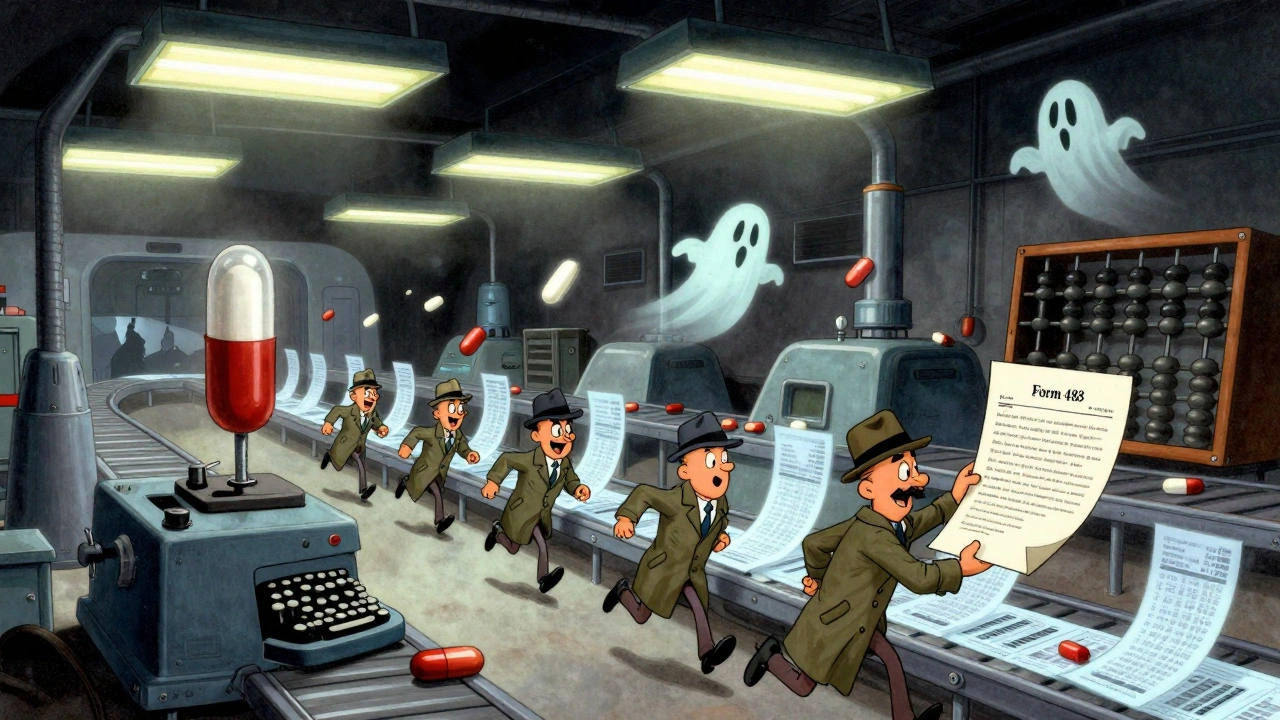
What the FDA looks for during inspections
An FDA inspector doesn’t just check for dirty floors. They dig into your systems. Here’s what they’re really looking for:- Data integrity: Are test results real? Are logs altered? Are electronic records backed up and unchangeable?
- Contamination control: Are air filters working? Are cleaning procedures documented and followed? Are workers trained to avoid cross-contamination?
- Equipment maintenance: Are machines calibrated? Are repair logs kept? Are outdated tools still in use?
- Quality control: Do you test every batch? Do you reject batches that don’t meet specs? Or do you just approve them to meet deadlines?
- Documentation: Is every step written down? Are signatures real? Are dates accurate?
How foreign manufacturers are adapting
Companies in India and China are scrambling. A PDA survey in early 2025 found that 68% of foreign manufacturers expect compliance costs to rise 15-25% because of the new inspection rules. Smaller factories, especially those with fewer than 50 employees, are struggling the most. Some are hiring ex-FDA inspectors as consultants. Others are running weekly mock inspections. One Indian plant started doing daily quality audits-something they never did before. The Generic Pharmaceutical Association says 42% of its members have already added new training programs or upgraded their documentation software. Experts say the learning curve takes 6 to 9 months. You can’t just change a policy. You have to change a culture. That means teaching every lab tech, every shift supervisor, every manager that lying about data isn’t a shortcut-it’s a criminal offense.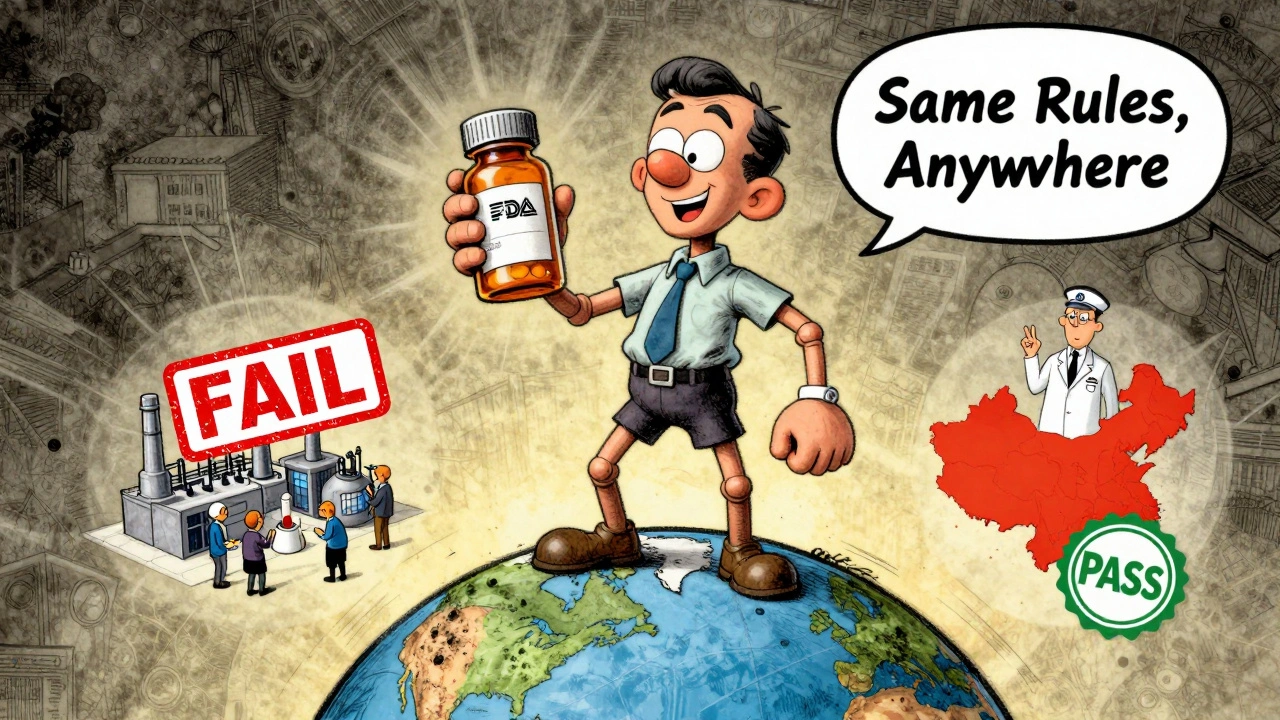
Could the U.S. copy the EU system?
The European Union doesn’t just inspect factories. It requires every drug batch to be signed off by a Qualified Person-a trained professional who lives in Europe and takes legal responsibility for the product’s safety before it leaves the factory. That’s a big difference. In the U.S., the manufacturer says, “We’re good.” In the EU, an independent expert says, “I’ve checked it. This is safe.” Brookings Institution researchers argue the U.S. should adopt something similar for imported drugs. Instead of relying on the foreign factory’s word, make the U.S. importer take responsibility. Require them to hire a Qualified Person who certifies each batch before it clears customs. It’s not a perfect fix. But it adds a layer of accountability. Right now, the FDA is the only check. With 12,000 domestic inspections and only 3,000 foreign ones, they’re stretched thin. A third-party gatekeeper could help close the gap.What this means for patients
You might think, “I take generic pills. Why should I care?” Here’s why: if a factory falsifies data, you could get a pill that doesn’t dissolve properly. Or one with too much or too little of the active ingredient. In rare cases, that leads to treatment failure-or worse. In 2023, the FDA recalled 127 batches of generic blood pressure meds because they contained a cancer-causing impurity. All came from overseas. In 2024, another recall affected 4 million tablets of generic metformin after contamination was found in the raw material. The FDA’s new policy won’t stop every bad drug. But it makes it harder to hide. It forces factories to be honest-not just when an inspector is coming, but every day.What’s next?
By 2026, the FDA plans to inspect at least half of all foreign drug plants without notice. They’ll also expand sharing of inspection data with regulators in Europe, Japan, and Australia. If a plant fails in India, the FDA will know-and so will the EMA or PMDA. Some analysts warn this could cause short-term shortages. If 15-20% of foreign facilities get shut down or delayed while they fix problems, supply chains will ripple. But long-term? The goal is safer drugs, not fewer options. The bottom line: generic drugs aren’t cheap because they’re low quality. They’re cheap because they’re made at scale. But scale can’t come at the cost of safety. The FDA’s new approach isn’t about punishing foreign companies. It’s about making sure every pill, no matter where it’s made, works the way it’s supposed to.Are foreign-made generic drugs safe?
Yes-when they meet FDA standards. The issue isn’t where drugs are made, but whether the factory follows the rules. Before 2025, many foreign plants had weak oversight. Now, unannounced inspections are increasing, making it harder to hide violations. Drugs from facilities that pass inspections are just as safe as those made in the U.S.
How does the FDA know if a foreign factory is violating rules?
FDA inspectors visit facilities without notice and review records, test samples, and interview staff. They look for signs of data falsification, contamination, poor equipment maintenance, and skipped quality checks. If they find problems, they issue a Form 483. Repeated failures lead to warning letters or import bans.
Why don’t U.S. drugmakers move production back home?
Cost is the main barrier. Building a compliant U.S. factory for generic drugs can cost over $100 million. Labor, utilities, and regulatory compliance are far more expensive here. Most generic drugmakers operate on thin margins. Without government incentives or price adjustments, moving production back isn’t financially feasible.
Can I tell if my generic drug was made overseas?
Not easily. The FDA doesn’t require country-of-origin labeling on prescription bottles. Some pharmacies list the manufacturer on the label, but not the country. If you want to know, check the drug’s package insert or contact the manufacturer directly. Most generic drugs sold in the U.S. are made abroad.
What should I do if I’m concerned about my medication?
Don’t stop taking your medicine. If you suspect an issue-like a change in how the pill looks, tastes, or works-talk to your pharmacist or doctor. You can also report adverse effects to the FDA’s MedWatch program. The FDA monitors drug safety continuously and will issue recalls if needed. Your best protection is staying informed and trusting the updated inspection system.
Jennifer Patrician
December 5, 2025 AT 11:18Oh wow, so now the FDA is suddenly ‘concerned’ about quality? Lol. They’ve been letting contaminated meds in for decades while pocketing pharma bribes. This ‘unannounced inspection’ crap? Just a PR stunt to make you feel safe while the same companies keep shipping poison. They’ll ‘inspect’ one plant, get a tour with clean floors and fake logs, then leave. Meanwhile, the real bad actors? They’re just moving operations to Vietnam or Bangladesh. You think this changes anything? Nah. It’s all theater.
Mellissa Landrum
December 6, 2025 AT 10:09they let china make our pills???!?!?!?!?!!? i knew it. i knew it. they put microchips in the metformin to track us. and the indians? they add rat poison to make us sleepy so we don’t notice the gov is watching. my aunt took a generic blood pressure pill and started whispering in latin. i’m not joking. this is a mind control op. we’re all lab rats. the fda is in on it. they got a deal with the devil. no one’s safe. not even your grandma’s aspirin.
Mark Curry
December 6, 2025 AT 19:00It’s kind of beautiful, really. We outsourced the dirty work because it was cheaper, then acted surprised when corners got cut. Now we’re trying to fix it by throwing more inspectors at the problem. But what if the real issue isn’t inspection-it’s trust? We want our pills cheap, but we also want them perfect. That’s a contradiction. Maybe we need to ask: are we willing to pay more so someone, somewhere, can make a living without lying? I don’t have the answer. But I think we owe it to ourselves to ask.
luke newton
December 8, 2025 AT 06:02Let’s be real. The FDA is a toothless tiger. They let Sun Pharma ship tainted drugs for YEARS. And now they’re ‘cracking down’? Please. This is the same agency that approved opioids like candy. If you’re taking generics, you’re playing Russian roulette with your life. And don’t tell me ‘it’s regulated’-regulation is just a word they use to make you feel better while they take your money and sell you poison made in a basement in Hyderabad. People are dying. And the bureaucrats? They’re sipping lattes in D.C. and patting themselves on the back.
Ali Bradshaw
December 8, 2025 AT 19:15Interesting shift. I’ve worked with pharma suppliers in India-some are world-class, others are barely hanging on. The real win here isn’t just inspections-it’s consistency. If every factory knows they can’t prep for an audit, they’ll start building quality into the system, not just the show. It’s like teaching someone to be honest instead of just good at lying on cue. Takes time. But this? This is the right direction. Slow, but steady.
an mo
December 9, 2025 AT 17:23Cost optimization ≠ quality degradation. The 80% active ingredient stat is misleading. It’s not ‘foreign = bad,’ it’s ‘unregulated = bad.’ The EU’s Qualified Person model is the only viable path forward. The FDA’s current model is a single point of failure with 12k inspections spread across 10k sites. It’s statistically impossible to guarantee safety. We need third-party certification, mandatory batch attestation, and blockchain-backed audit trails. Anything less is just performative governance.
aditya dixit
December 10, 2025 AT 20:00As someone from India who’s seen both sides-factories that cut corners and factories that treat quality like religion-I can say this: most workers here want to do right. They’re not evil. They’re under pressure. The new rules will hurt small plants, yes. But they’ll also push the good ones to shine. I’ve worked with labs that run daily audits because they know their reputation is on the line. This isn’t about blame-it’s about building systems where honesty is easier than cheating. And that’s worth the cost.
Lynette Myles
December 11, 2025 AT 05:07They’ve been lying for years. Now they’re pretending to care. Don’t believe it.
Annie Grajewski
December 12, 2025 AT 00:56so the fda finally noticed that maybe, just maybe, if you don’t inspect a factory for 12 weeks, the people there might… i dunno… make up data? shocking. who knew? next they’ll tell us water is wet and gravity exists. meanwhile, my generic Xanax tastes like regret and my doctor says ‘it’s the same chem.’ yeah, sure. if by ‘same’ you mean ‘same shape, same color, same price, and 0% chance it’ll help me sleep.’ congrats, america. you outsource your health and then blame the pills when they don’t work. genius.