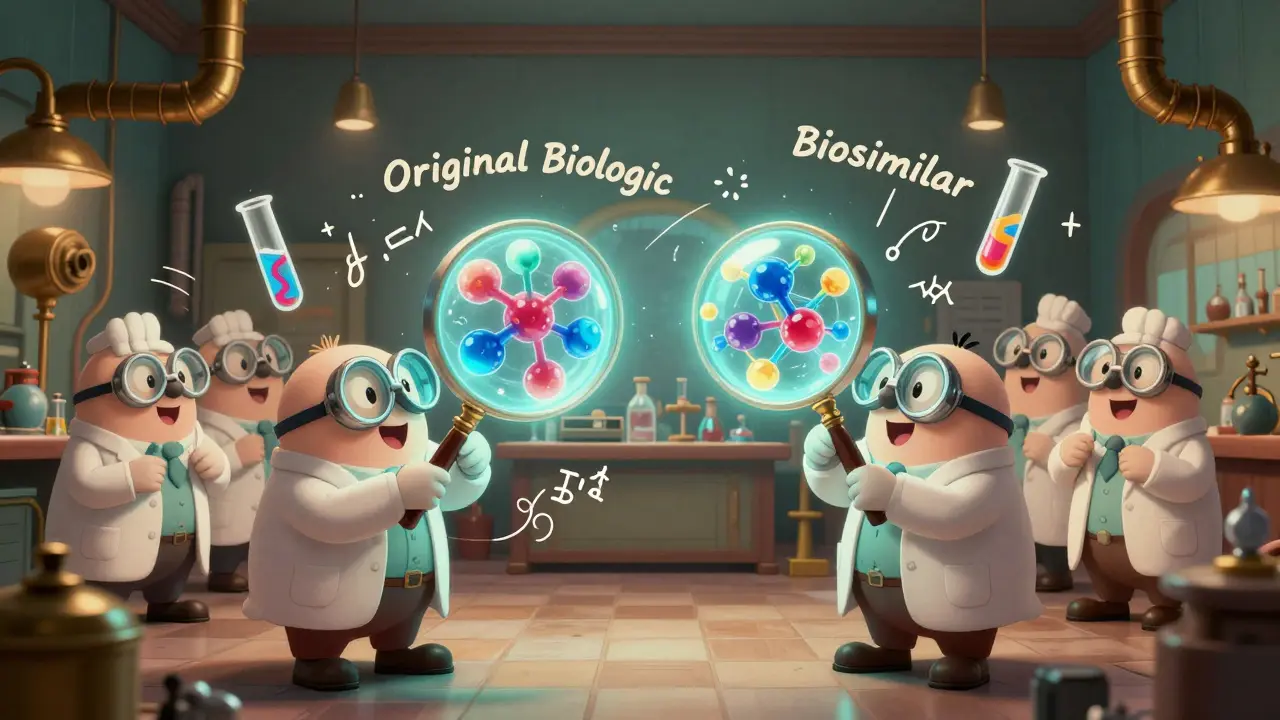
When you hear the word biosimilar, you might think it’s just another name for a generic drug. But that’s not true. Biosimilars aren’t copies like generics-they’re highly similar versions of complex biologic medicines, made from living cells. The FDA doesn’t rate them like you’d rate a movie or a restaurant. Instead, they go through a strict, science-heavy process to prove they work the same way as the original drug. And that process? It’s one of the most detailed in all of medicine.
What Makes a Biosimilar Different From a Generic?
Generics are simple. They’re chemically identical copies of small-molecule drugs like aspirin or metformin. You can break them down, test them in a lab, and confirm they’re the exact same molecule as the brand-name version. Biosimilars? They’re made from living cells-yeast, bacteria, or animal cells-and that makes them messy. Even tiny changes in how they’re grown or processed can change their shape, structure, or behavior in the body. Two biosimilars made by different companies might look almost the same under a microscope, but their biological activity could differ slightly. That’s why the FDA doesn’t call them “identical.” They call them “highly similar.”The FDA’s Step-by-Step Approval Process
The FDA doesn’t just look at one test. They build a case-like a detective putting together clues. The process starts with analytical studies. Scientists use advanced tools like mass spectrometry and capillary electrophoresis to compare the biosimilar to the original biologic. They check over 200 different characteristics: protein shape, sugar attachments, purity levels, even how the molecule folds. The goal? To show at least 95% similarity across the most important features. If they fall short, the application stops right there. If the analytical data looks good, the next step is animal testing. This isn’t always required, but if there’s uncertainty about safety, the FDA will ask for toxicity studies in mice, rats, or monkeys. Then comes human testing. Usually, it’s a small study-50 to 100 people-where they measure how the body absorbs and processes the drug. This is called a pharmacokinetic study. Sometimes, they also look at pharmacodynamics: how the drug affects the body, like whether it lowers inflammation or kills cancer cells. Immunogenicity is non-negotiable. The body’s immune system can react to these complex proteins. Even a small difference might trigger antibodies that make the drug less effective-or worse, cause side effects. So developers must track immune responses for up to a year in patients. No biosimilar gets approved without proof that the immune reaction is no worse than the original.The Role of the FDA Purple Book
You won’t find biosimilars listed in the same place as generics. The FDA’s Purple Book is the official directory for all biologics-both the original drugs and their biosimilars. Updated daily since early 2025, it’s searchable online and even has an API for developers and researchers. Each entry shows the reference product, the biosimilar name, approval date, and whether it’s designated as “interchangeable.” As of October 2025, the Purple Book lists 387 reference biologics and 43 approved biosimilars. Only 17 of those are interchangeable. That’s a higher bar. To earn that label, a biosimilar must prove it can be switched back and forth with the original drug without increasing risk or reducing effectiveness. It’s not just about being similar-it’s about being predictable in real-world use.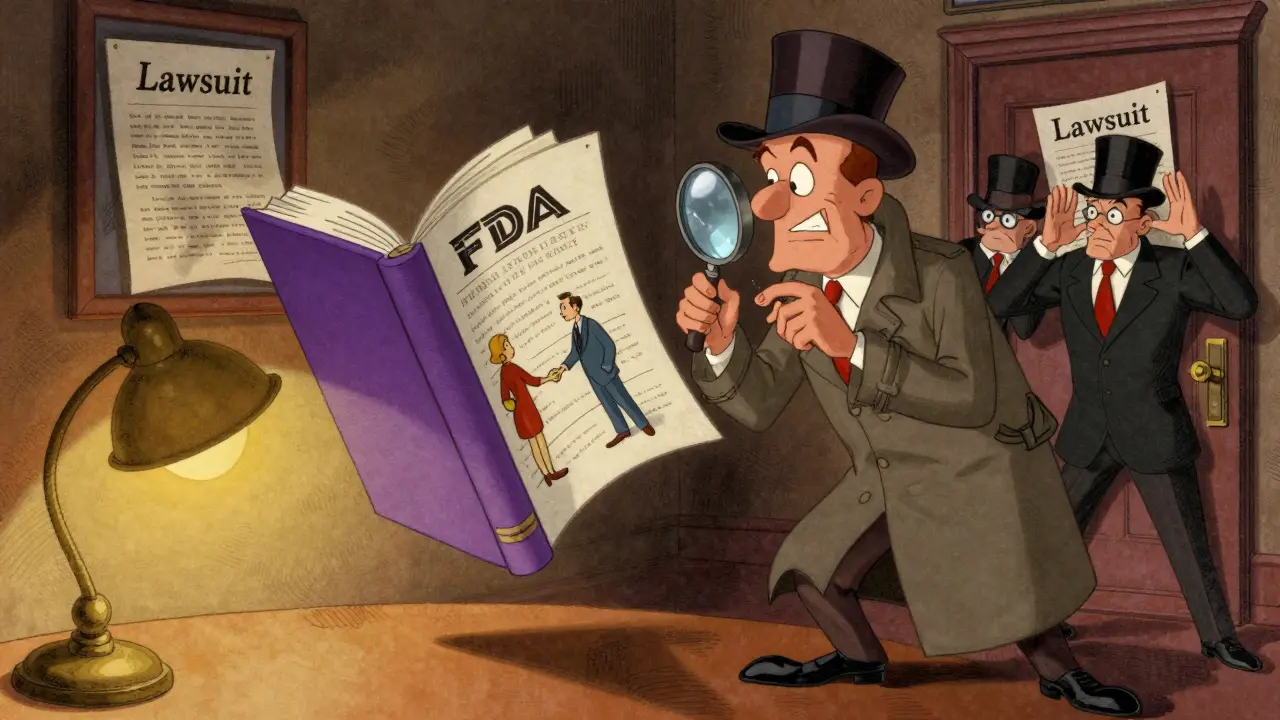
Why Approval Doesn’t Mean Launch
Just because the FDA says a biosimilar is approved doesn’t mean you can buy it at your pharmacy. Between 2015 and 2025, the FDA approved 43 biosimilars-but only 29 have actually reached the market. Why? Patent lawsuits. Big drug companies hold dozens of patents on their biologics, and they use them to delay competition. A single lawsuit can add over two years to the timeline. One drug, adalimumab (Humira), had 13 biosimilars approved in 2023, but only six launched by mid-2025 because of legal battles. Payers also play a role. Insurance companies often favor the original drug unless the biosimilar is significantly cheaper or they’re forced to switch by policy. In oncology, biosimilars took off fast-because hospitals want to cut costs on expensive cancer drugs. But for autoimmune diseases like rheumatoid arthritis, doctors are slower to switch. Many still worry about unknown long-term effects, even though data from the FDA’s Sentinel Initiative shows no increased risk of side effects in nearly 10 years of real-world use.How Much Do Biosimilars Save?
The whole point of biosimilars is to bring down costs. The FDA estimates they reduce prices by 15% to 30% compared to the original biologic. That’s not as dramatic as generics, which can drop prices by 80% or more. But biologics cost tens of thousands of dollars a year. A 20% savings on a $100,000 drug still means $20,000 saved per patient. By 2030, the FDA projects biosimilars will save the U.S. healthcare system $250 billion cumulatively. The biggest savings are in oncology. Drugs like rituximab and trastuzumab now have biosimilars that capture 65% to 75% of the market within 18 months of launch. In contrast, adalimumab biosimilars-approved in 2023-only reached 28% market share by mid-2025. That gap shows how much still depends on payer rules and prescriber habits, not just science.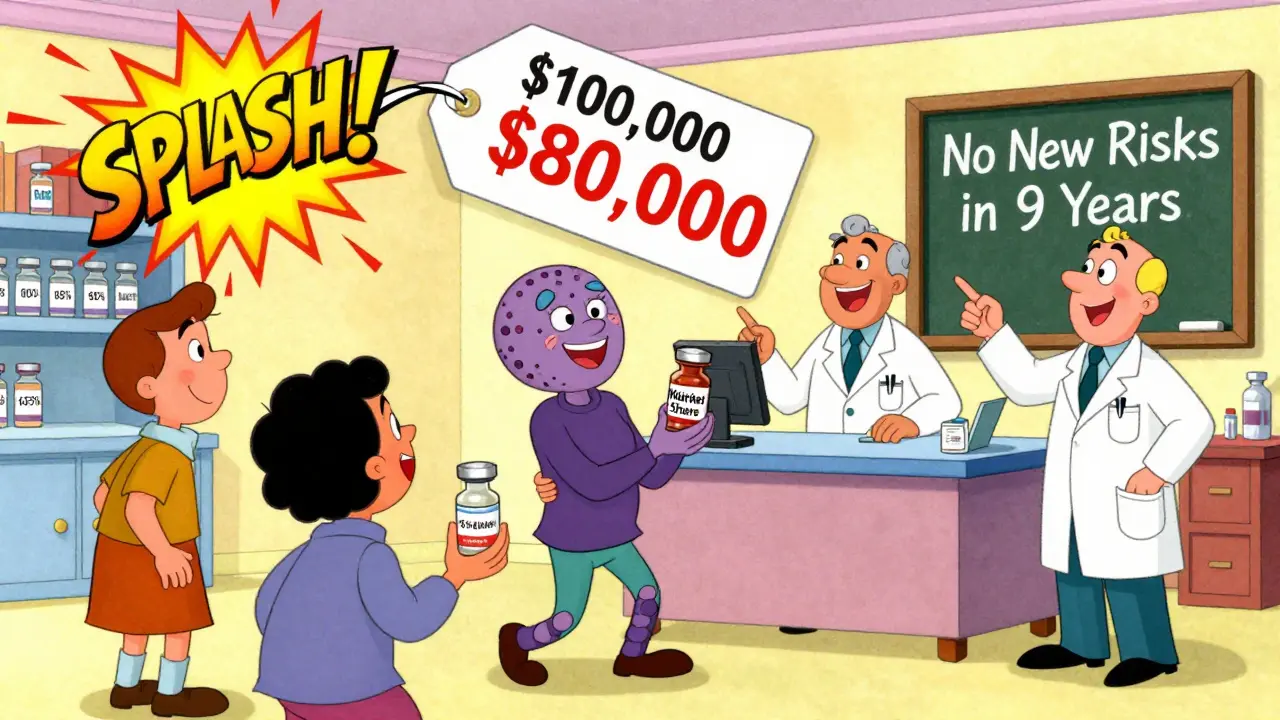
What’s Changing in 2025 and Beyond
The FDA has been updating its rules to make biosimilar development faster and smarter. In September 2024, they removed the requirement for comparative efficacy studies in many cases. If analytical data is strong enough, you don’t need to run full clinical trials in every disease the original drug treats. That’s a big deal. It cuts development costs by $50 million to $100 million per product and saves over a year of time. They’ve also dropped forced degradation studies-tests that exposed the drug to extreme heat or acid-because they didn’t predict real-world performance. And starting in 2026, the FDA plans to use artificial intelligence to analyze the massive amounts of data from analytical studies. That could speed up reviews and make them more consistent. The next frontier? Complex molecules like antibody-drug conjugates and gene therapies. Only three applications for these have been submitted so far-and none have been approved. The FDA admits they don’t yet have clear guidance for these newer types of biologics. That’s the next challenge.What Patients Should Know
If your doctor suggests switching to a biosimilar, you can feel confident. Every one of the 43 approved biosimilars has met the FDA’s highest standards. No biosimilar has shown a new safety risk in over nine years of monitoring. The data is clear: they work the same. The only difference is the price. If your drug is interchangeable, you can switch without asking your doctor. But if it’s not, your prescriber may need to write a new prescription. Always check with your pharmacist or provider if you’re unsure.Why This Matters for the Future of Medicine
Biosimilars aren’t just about saving money. They’re about access. Many patients can’t afford biologics. Without biosimilars, treatments for cancer, autoimmune diseases, and rare conditions would remain out of reach for millions. The FDA’s approach-rigorous, science-based, and evolving-ensures that those savings don’t come at the cost of safety. The road ahead isn’t easy. Manufacturing is still expensive. Patent fights are still long. But the progress is real. More approvals. Faster reviews. Better tools. And more patients getting the treatment they need.Are biosimilars the same as generics?
No. Generics are chemically identical copies of simple drugs made from synthetic chemicals. Biosimilars are highly similar versions of complex biologic drugs made from living cells. Even small changes in how they’re produced can affect how they work in the body, so the approval process is much more detailed.
Does the FDA rate biosimilars like they rate drugs?
The FDA doesn’t use a rating system like stars or grades. Instead, they approve biosimilars based on a scientific determination of biosimilarity. They require proof that the product is highly similar to the original and has no clinically meaningful differences in safety, purity, or potency.
What does it mean if a biosimilar is labeled “interchangeable”?
An interchangeable biosimilar has met an extra standard. It must prove that switching between it and the original drug won’t increase risk or reduce effectiveness. Pharmacists can substitute it without needing a new prescription from the doctor-just like with generics.
Why are so few biosimilars on the market even though many are approved?
Patent lawsuits are the biggest reason. Drugmakers use legal tactics to delay biosimilar launches, sometimes for years. Even after FDA approval, a biosimilar might not reach pharmacies for 11 months or longer. Payer policies and prescriber hesitation also slow adoption, especially in autoimmune diseases.
Are biosimilars safe?
Yes. Since the first biosimilar was approved in 2015, the FDA has tracked over 9 years of real-world use. Adverse event rates for biosimilars are statistically the same as for the original biologics. No new safety concerns have emerged from any of the 43 approved products.
How long does it take to get a biosimilar approved?
On average, it takes about 3.2 years from when a company files its application to FDA approval. That’s longer than in Europe, where the process averages 2.1 years. The U.S. process is more detailed, especially in analytical testing, which adds time but also ensures higher confidence in safety.
Can biosimilars be used for all the same conditions as the original drug?
Yes, if the FDA allows extrapolation. If a biosimilar is proven highly similar to the original, and the original is approved for multiple conditions, the biosimilar can be approved for all those uses-even if it wasn’t tested in every single one. This is based on strong analytical and clinical data, not guesswork.
What’s the biggest challenge for biosimilar developers today?
The biggest challenge is the cost and complexity of analytical testing. Characterizing a single biosimilar can require over 200 tests using advanced lab techniques, costing $120 million to $180 million. Many developers struggle with the technical expertise needed and the time it takes to meet the FDA’s 95-99% similarity thresholds.
Laia Freeman
January 30, 2026 AT 11:10Okay but like… why does it take 3 years to approve these things?? I got my flu shot yesterday and it was basically a needle in the arm - biosimilars are just fancy generics?? Why the drama?? 😩
rajaneesh s rajan
January 31, 2026 AT 01:47Let me get this straight - we’re spending $180M to prove a protein folds right… while half the planet can’t get insulin? 🤔 The real biosimilar here is capitalism - same shape, totally different effect.
kabir das
January 31, 2026 AT 21:51Ugh… another one of these ‘science-y’ posts… I swear every time I read something like this I feel like my brain is being force-fed legalese and lab reports… WHY CAN’T THEY JUST SAY ‘IT WORKS’ AND STOP??
Jasneet Minhas
February 1, 2026 AT 13:12👏👏👏 Finally, someone who gets it. The Purple Book is the unsung hero of modern medicine. And yes - 17 interchangeable? That’s still too low. Let’s make it 100. 💪💊
Ryan Pagan
February 1, 2026 AT 18:14Y’all are underestimating the complexity here. Biosimilars aren’t Lego blocks - they’re living sculptures. One wrong temperature during fermentation and you’ve got a protein that looks like a confused octopus. The FDA’s 200+ tests? Necessary. Painful? Yes. Worth it? Absolutely. This isn’t ‘generic aspirin’ - it’s biotech ballet.
Paul Adler
February 3, 2026 AT 02:15It’s fascinating how the regulatory framework evolves alongside the science. The removal of forced degradation studies in 2024 was a smart pivot - real-world behavior matters more than lab-induced chaos. Still, I worry about the long tail of immunogenicity in elderly populations. More longitudinal data needed.
Doug Gray
February 3, 2026 AT 11:02So… we’re spending billions to prove a protein is ‘close enough’… and then we still can’t get it on the shelf because lawyers are holding it hostage? 🤷♂️ The system is a Rube Goldberg machine built by people who think ‘compliance’ is a personality trait.
Kristie Horst
February 3, 2026 AT 22:25While I appreciate the thoroughness of the FDA’s process, I must express concern that the public perception of biosimilars remains clouded by misinformation. Many patients believe ‘similar’ means ‘inferior’ - a dangerous misconception. We need better patient education, not just better science.
LOUIS YOUANES
February 4, 2026 AT 00:44Wow. So after all that, it’s just… cheaper? I mean, I guess that’s the point - but honestly, if you had to explain this to a 12-year-old, would you even bother? Or would you just say ‘it’s a knockoff, but the FDA says it’s fine’?