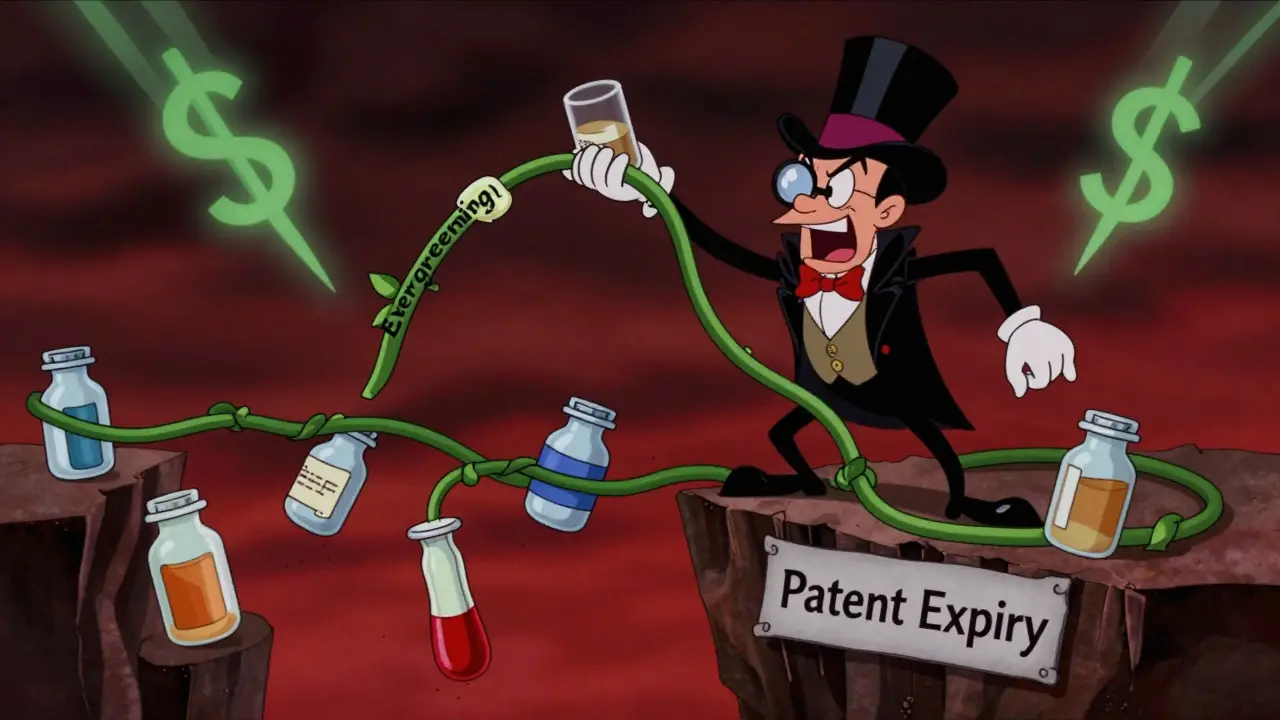
Imagine you’ve spent years building a product that everyone needs. Now imagine the clock is ticking toward the moment anyone can copy it and sell it for pennies. That is exactly what happens when a pharmaceutical patent expires. For big pharma companies, that expiration date is not just a deadline-it is a cliff. To stay off the edge, they use a strategy called evergreening. It is a legal and business playbook designed to extend the life of a drug’s monopoly long after the original innovation has been paid for.
You might think this sounds like cheating. In many ways, it feels that way to patients paying high prices. But evergreening sits in a gray area where law, science, and profit collide. It is not illegal, but it is controversial. Understanding how it works helps explain why your medicine costs so much and why cheaper generics often arrive late-or never at all.
What Is Evergreening?
Evergreening is a set of strategies used by pharmaceutical companies to extend the market exclusivity of their drugs beyond the standard patent term. The standard patent lasts 20 years from the filing date. However, because drug development takes 10 to 15 years, a company might only get seven or eight years of actual sales protection before generics flood the market. That window is too short to recoup the billions spent on research and development.
To fix this mismatch, companies file new patents for minor changes to an existing drug. These changes might include a different dosage form, a new delivery method, or a slightly altered chemical structure. Each new patent resets the clock, pushing back the arrival of generic competitors. This practice became systematic after the Hatch-Waxman Act of 1984 in the United States, which created the modern framework for balancing patent rights with generic entry.
The goal is simple: keep the monopoly alive. When a drug is protected by a patent, the company sets the price. When generics enter, prices typically drop by 80% to 85% within the first year. By delaying that competition, companies maintain higher revenue streams for longer periods.
Common Tactics Used to Extend Patents
Evergreening is not one single trick. It is a toolbox full of tactics. Companies deploy these strategies well before a patent expires, often starting five to seven years in advance. Here are the most common methods:
- New Dosage Forms: If a pill is taken once a day, the company might develop a version taken twice a day or a slow-release capsule. This new formulation gets its own patent.
- Combination Products: Adding a second active ingredient to an existing drug creates a new “combination” product that requires a separate patent application.
- New Indications: Finding a new disease or condition the drug can treat allows for additional patent protection and marketing claims.
- Pediatric Exclusivity: In the U.S., companies can gain an extra six months of market exclusivity if they conduct clinical trials on children, even if the results are negative.
- Orphan Drug Status: If a drug treats a rare disease affecting fewer than 200,000 people in the U.S., it qualifies for seven years of market exclusivity.
- Product Hopping: This involves discontinuing an older version of a drug as its patent expires and pushing doctors and patients to switch to a newer, patented version. AstraZeneca famously did this with Prilosec and Nexium.
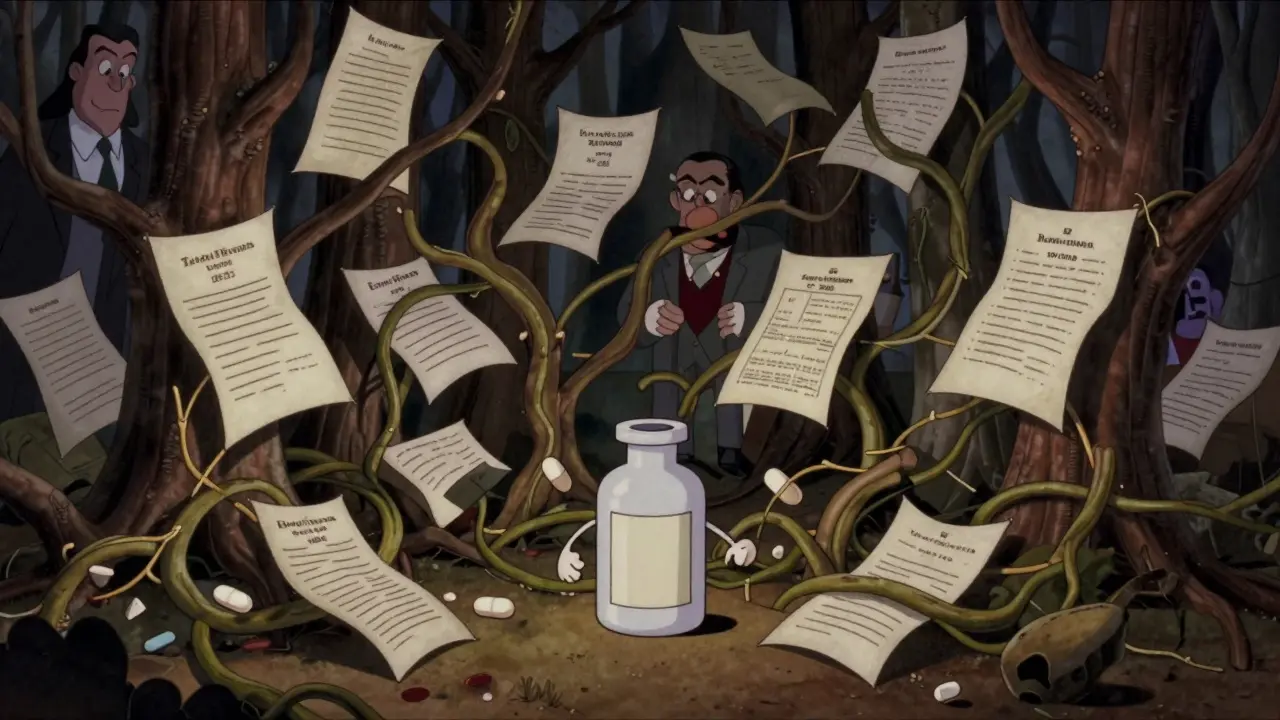
These tactics create what experts call a “patent thicket.” Imagine a forest where every tree is a patent. Generic manufacturers cannot enter the market until they clear the entire forest, which is expensive and legally risky. The sheer volume of patents deters competition.
The Cost of Delayed Generics
The impact of evergreening falls heavily on healthcare systems and patients. When generic competition is blocked, prices remain high. A study by Harvard University noted that extended monopolies directly harm patient access to drugs. For example, AbbVie’s drug Humira generated approximately $40 million daily due to aggressive patent strategies. The company filed 247 patent applications related to Humira, potentially extending protection until 2034.
This does not mean the drug isn’t effective. Humira is a breakthrough treatment for autoimmune diseases. But the question is whether the public benefits from prolonged exclusivity for minor modifications. Critics argue that evergreening prioritizes corporate profits over public health. Patients may be forced to pay thousands of dollars monthly for treatments they otherwise could not afford.
Generic substitution offers a powerful alternative. Once a generic enters the market, insurance plans and pharmacies automatically switch prescriptions to the cheaper option. This reduces costs for insurers, hospitals, and individuals. By delaying this switch, evergreening keeps the entire system more expensive.
| Factor | Original Brand-Name Drug | Evergreened Version | Generic Competitor |
|---|---|---|---|
| Development Cost | $2.6 billion average | Fraction of original cost | Minimal (bioequivalence studies) |
| Time to Market | 10-15 years | 1-3 years | Immediate upon patent expiry |
| Price Reduction | None | None or minimal | 80-85% within first year |
| Clinical Benefit | Significant | Often marginal | Equivalent |
| Patent Protection | 20 years from filing | Extended via new patents | None |
Is Evergreening Legal?
Yes, evergreening is legal. It operates within the boundaries of patent law. The U.S. Patent and Trademark Office (USPTO) grants patents for inventions that are novel, non-obvious, and useful. Minor modifications often meet these criteria, even if they offer limited therapeutic value.
However, regulators are increasingly scrutinizing these practices. The Federal Trade Commission (FTC) filed an antitrust lawsuit against AbbVie in 2022, challenging its Humira patent strategy as anticompetitive. The case highlights growing tension between intellectual property rights and fair competition.
The Inflation Reduction Act of 2022 also introduced Medicare drug price negotiations, which could reduce incentives for evergreening by capping prices for high-cost drugs. Additionally, the European Medicines Agency has implemented stricter requirements for demonstrating significant clinical benefit for modified drugs seeking additional exclusivity.
Despite these challenges, evergreening remains widespread. Nine major pharmaceutical companies have drugs in the top 20 for number of patent protections, according to UCLawSF research. AstraZeneca leads the field, extending market control by more than 90 years across six key drugs.
The Future of Pharmaceutical Patents
As regulatory pressure mounts, pharmaceutical companies are adapting. They are moving toward biologics-complex drugs made from living organisms-that are harder to replicate than traditional small-molecule pills. Biologics do not expire in the same way; instead, they face biosimilar competition, which is slower and more complex.
Companies are also exploring nanotechnology and pharmacogenomics. These emerging fields allow for highly targeted drug delivery and personalized medicine, creating new avenues for patent protection. While these innovations may offer genuine therapeutic benefits, they also raise questions about accessibility and affordability.
The World Health Organization criticized evergreening in its 2023 report on access to medicines, noting that it blocks affordable alternatives in low- and middle-income countries. As global health disparities widen, the debate over patent strategies will intensify.
For now, evergreening remains a dominant force in the pharmaceutical industry. It protects company revenues but limits patient savings. Understanding this dynamic helps consumers, policymakers, and healthcare providers navigate the complex landscape of drug pricing and access.
What is the difference between evergreening and legitimate innovation?
Legitimate innovation involves discovering a new molecular entity with significant therapeutic benefits, costing billions and taking over a decade. Evergreening focuses on minor modifications to existing drugs, such as new dosages or formulations, which are far less expensive and offer marginal clinical improvements.
Why do pharmaceutical companies use evergreening?
Companies use evergreening to extend market exclusivity and maintain high drug prices. Without these strategies, generic competition would drive prices down by 80-85%, significantly reducing revenue.
How does evergreening affect patients?
Evergreening delays the availability of affordable generic alternatives, keeping drug prices high. This can limit patient access to necessary treatments and increase overall healthcare costs.
Is evergreening considered unethical?
While legal, evergreening is often viewed as unethical by critics who argue it prioritizes corporate profits over public health. It exploits loopholes in patent law to block competition rather than fostering true innovation.
Can regulations stop evergreening?
Regulations can limit abusive patenting practices. Recent actions by the FTC, USPTO, and international bodies aim to increase scrutiny of minor modifications and promote faster generic entry, though evergreening remains prevalent.