
Symptom Tracker & Pattern Finder
Track Your Symptoms
Pattern Analysis
Tip: Review your entries weekly to identify repeating patterns. Consistency is key - most people see clear patterns after 14-30 days of tracking.
When you start noticing the same symptoms over and over - headaches after lunch, anxiety spikes at night, fatigue every Monday - it’s not just bad luck. It’s data. The key to stopping the cycle isn’t more medicine. It’s documenting side effects with enough detail to spot the real culprits. People who track their symptoms systematically don’t just feel better. They take control. Studies show they reduce symptom frequency by 40-60% and cut emergency visits by up to 37%. This isn’t guesswork. It’s science.
Why Tracking Works: Turning Feelings Into Facts
Your body talks. But most of the time, you’re too busy to listen. A headache isn’t just a headache. It might be tied to skipping breakfast, sleeping 5 hours, or eating aged cheese. Without a record, these connections stay hidden. That’s where tracking comes in. It turns vague discomforts into clear patterns. The ABC model - Antecedent, Behavior, Consequence - is the gold standard. It’s simple: What happened right before the symptom? (Antecedent). What did the symptom feel like? (Behavior). What happened right after? (Consequence). For example:- Antecedent: Ate pepperoni pizza at 7:30 PM
- Behavior: Throbbing headache, rated 8/10, started at 9:15 PM
- Consequence: Took ibuprofen, slept poorly, felt exhausted next day
What to Track: The 7 Essential Details
You don’t need to write a novel. But you do need to be specific. Here’s what actually matters:- Date and time: Write it down within 15 minutes of the event. Waiting longer? You’ll overestimate pain by 22%.
- Symptom intensity: Use a 0-10 scale. Zero is nothing. Ten is unbearable.
- Duration: How long did it last? 20 minutes? All night?
- Medications and doses: Not just what you took, but when. Did you take your pill at 8 AM or 11 AM? That changes everything.
- Sleep: How many hours? How deep? Even a 15-minute difference matters.
- Diet: What did you eat or drink? Be specific. “Coffee” isn’t enough. “12 oz black coffee, 7 AM” is.
- Stress and environment: Was it a loud office? A fight with your partner? A humid day? Note it.
Paper vs. Apps: Which One Actually Works?
There’s no one-size-fits-all tool. What works for one person crashes for another. Paper journals - like MedShadow’s symptom tracker - win for simplicity. They’re cheap, no batteries, no pop-ups. 91% of users keep using them after 30 days. For older adults, 68% are still writing in theirs after six months. If you’re not tech-savvy or hate screen time, paper wins. Digital apps like Wave or MigraineBuddy offer automation. They sync with your Apple Watch to track heart rate, sleep, and even body temperature. MigraineBuddy’s 2024 update uses Apple Watch’s new temperature sensor to catch migraine prodromes 28% earlier. These apps find patterns faster - 28% quicker than paper, according to Healthline. But they also get abandoned. 43% of users quit after two months because the interface is clunky. Here’s the truth: Consistency beats complexity. If you’ll use a sticky note on your mirror, use that. If you’ll open an app every night, go digital. The tool doesn’t matter. The habit does.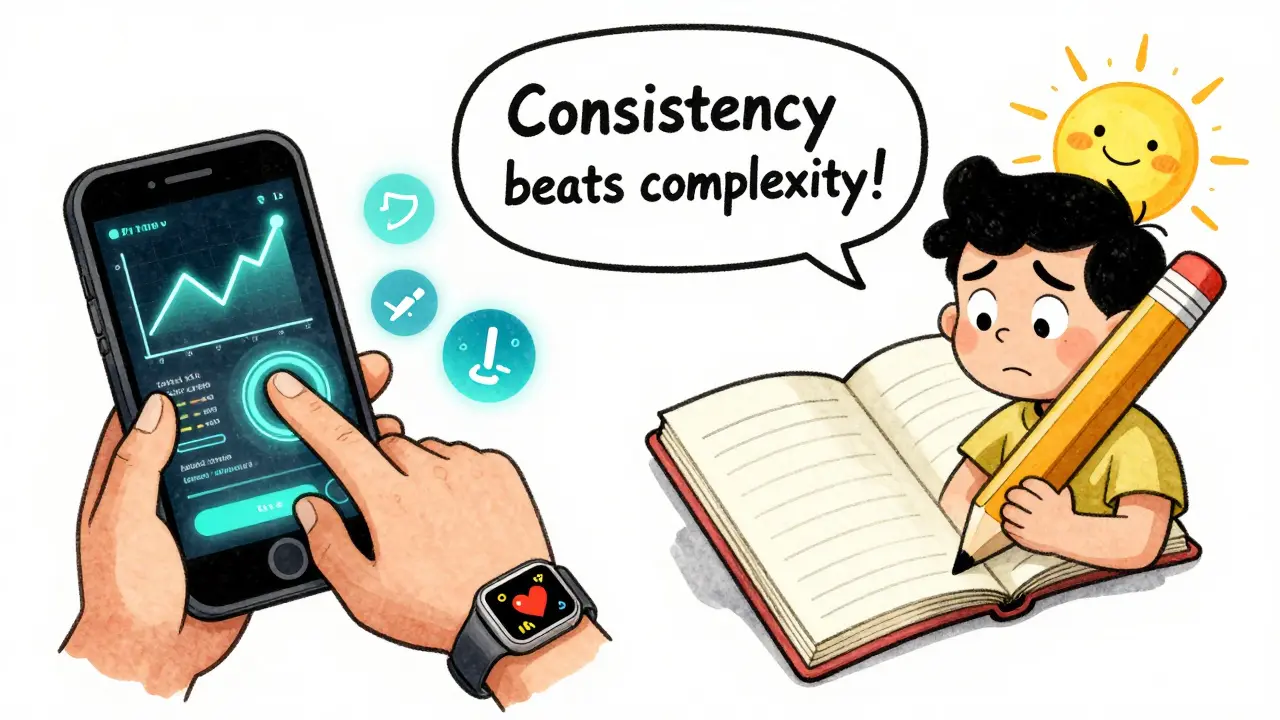
Who Benefits Most? Real Cases
Not everyone needs this. But if you have one of these, you’re a perfect candidate:- Migraine sufferers: 74% find at least one trigger within three months using MigraineBuddy. Common ones? Aged cheese, red wine, MSG. Reddit users report tyramine-rich foods as the #1 culprit.
- People with anxiety or depression: Tracking helps spot triggers like caffeine after 2 PM, social overload, or missed therapy sessions. One study showed 33% improvement in symptoms.
- Chronic pain patients: Fibromyalgia and arthritis patients who tracked sleep, weather, and activity reduced flare-ups by 36%.
- Parents of kids with autism: ABC charts help teachers and therapists understand meltdowns. UCLA found ABC tracking was 37% more effective than vague notes for identifying triggers in children.
The Dark Side: When Tracking Backfires
This isn’t a cure-all. For some, tracking becomes obsessive. Dr. Lisa Rodriguez from Harvard warns that 12-15% of people with anxiety disorders spiral into hypervigilance - checking their pulse every hour, doubting every bite of food, fearing every yawn. That’s not health. That’s harm. If you start feeling worse because you’re overanalyzing, pause. Talk to your provider. Maybe switch to weekly logs instead of daily. Or try a simpler method: just note the top three triggers each week. Also, don’t expect instant results. The first 10 days are messy. You’ll write “I felt bad” and “something happened.” That’s normal. The patterns don’t show up until day 14 or later. Stick with it.
How to Start Today: A Simple 5-Step Plan
You don’t need an app. You don’t need a fancy journal. Just follow this:- Choose your tool: Grab a notebook or download MigraineBuddy, Wave, or Twofold’s free template.
- Set a daily reminder: Pick a time - right after dinner or before bed. 5 minutes is enough.
- Track the 7 essentials: Time, intensity, sleep, food, meds, stress, environment.
- Don’t judge: Write it all down, even if it seems silly. “Ate yogurt” matters.
- Review weekly: Every Sunday, look back. Circle the repeats. What happened before every headache? Every panic attack? That’s your trigger.
What Comes Next: The Future of Tracking
This isn’t slowing down. The FDA just cleared Twofold’s tracker for use in clinical trials. The NIH is spending $15.7 million to standardize tracking across 12 diseases. AI tools are being tested to predict flares 48 hours ahead - with 63% accuracy. And the numbers show it’s here to stay. 41% of U.S. adults with chronic conditions are already tracking. By 2030, 92% of doctors expect it to be standard care. You don’t need to wait. Start today. One entry. One day. Then another. You’re not just logging symptoms. You’re learning your body’s language. And once you understand it, you’re no longer at its mercy.How long does it take to see patterns in side effect tracking?
Most people start seeing clear patterns after 14 to 30 days of consistent tracking. Magnetaba’s 2023 research found that 87% of successful trigger identifications required at least two weeks of daily logs. Some triggers, like food sensitivities or sleep disruptions, appear faster. Others, like stress-related flare-ups, take longer to isolate. The key is consistency - not speed.
Can I track side effects without using an app?
Absolutely. Paper journals have a 91% user compliance rate after 30 days, according to MedShadow’s 2024 report. Many people prefer them because they’re simple, private, and don’t need charging or updates. You can use a notebook, printable templates from Twofold, or even sticky notes. The tool doesn’t matter - the habit does.
What’s the most common mistake people make when tracking symptoms?
The biggest mistake is being vague. Writing “felt bad” or “headache” isn’t enough. You need specifics: intensity (0-10), time, what you ate, how much you slept, stress level. Also, waiting too long to log - symptoms are overestimated by 22% if recorded more than two hours after they occur. Write it down while it’s fresh.
Does tracking really reduce medication use?
Yes. MedShadow’s survey of 3,200 chronic illness patients found that 74% who tracked their symptoms reduced medication use by at least 25% by avoiding known triggers. For example, someone who discovers that aged cheese triggers migraines can eliminate it from their diet instead of reaching for painkillers every time. This isn’t about stopping meds - it’s about using them smarter.
Is side effect tracking only for people with serious conditions?
No. Anyone who notices recurring symptoms - fatigue, brain fog, irritability, bloating - can benefit. You don’t need a diagnosis. If something keeps happening and you don’t know why, tracking helps. It’s a tool for self-awareness, not just medical management. Even healthy people use it to optimize sleep, energy, or mood.
Can tracking make anxiety worse?
Yes, for some. About 12-15% of people with anxiety disorders report that constant monitoring becomes obsessive, leading to increased stress. If you find yourself checking your body every hour or fearing every small sensation, take a break. Switch to weekly logs, or talk to your provider. Tracking should empower you - not trap you.
jeremy carroll
December 16, 2025 AT 02:58Edward Stevens
December 17, 2025 AT 23:09Jonny Moran
December 17, 2025 AT 23:46Sinéad Griffin
December 18, 2025 AT 18:33Rulich Pretorius
December 19, 2025 AT 12:04Daniel Thompson
December 20, 2025 AT 16:22Daniel Wevik
December 20, 2025 AT 16:45Wade Mercer
December 22, 2025 AT 09:22Dwayne hiers
December 22, 2025 AT 21:28Sarthak Jain
December 24, 2025 AT 00:57Alexis Wright
December 25, 2025 AT 16:19Natalie Koeber
December 27, 2025 AT 00:27Thomas Anderson
December 27, 2025 AT 18:37Tim Bartik
December 29, 2025 AT 10:50