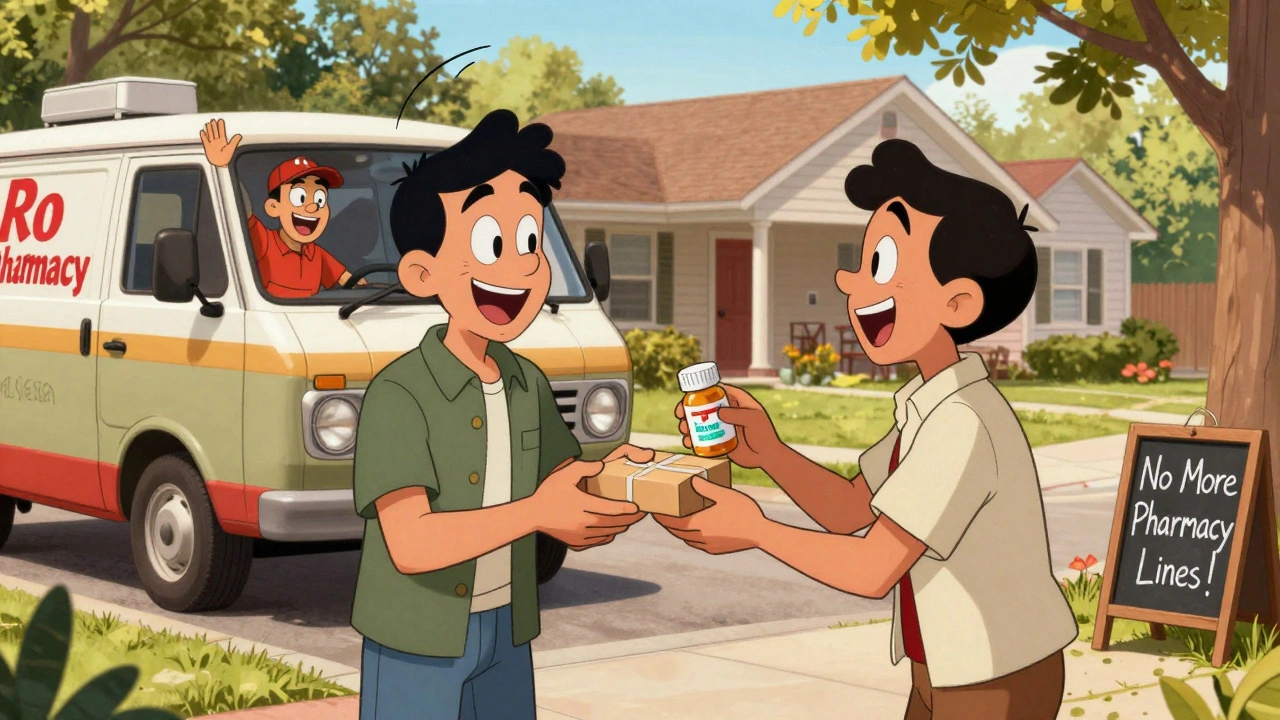
For years, getting your generic prescriptions meant driving to a local pharmacy, waiting in line, and paying whatever price your insurance or pharmacy benefit manager (PBM) decided to charge. But something’s changing. In 2025, you can order your generic blood pressure pills, antidepressants, or cholesterol meds online, have them delivered to your door in two days, and pay less than half of what you’d pay at Walgreens or CVS. This isn’t a fantasy-it’s happening right now, and it’s rewriting how Americans get their meds.
What Exactly Is a Direct-to-Consumer Generic Pharmacy?
A direct-to-consumer (DTC) generic pharmacy skips the middlemen. No PBMs. No wholesalers. No retail chains. Instead, companies like Ro is a digital health platform that offers generic medications directly to patients through telehealth consultations and home delivery, Hims & Hers, and Honeybee Health connect you directly to licensed pharmacists and suppliers. You answer a few health questions online, get a virtual consult with a doctor, and if approved, your prescription is filled and shipped-often within 48 hours.
This isn’t just about convenience. It’s about cost. Generic versions of drugs like metformin, lisinopril, or sertraline that cost $75 at your local pharmacy can be had for $15-$25 through these platforms. Ro processed over 2.1 million prescription orders in Q1 2025, most of them generics. That’s not a drop in the bucket-it’s a tidal wave.
How These Models Are Different from Traditional Pharmacies
Traditional pharmacy chains operate on a broken system. Here’s how it used to work: drugmaker → wholesaler → PBM → retail pharmacy → patient. Each step adds cost. PBMs negotiate rebates with drugmakers, but those savings rarely reach you. In 2024, the three biggest PBMs-CVS Caremark, Express Scripts, and OptumRx-made $28 billion in gross profit from these rebates, while patients still paid high out-of-pocket prices.
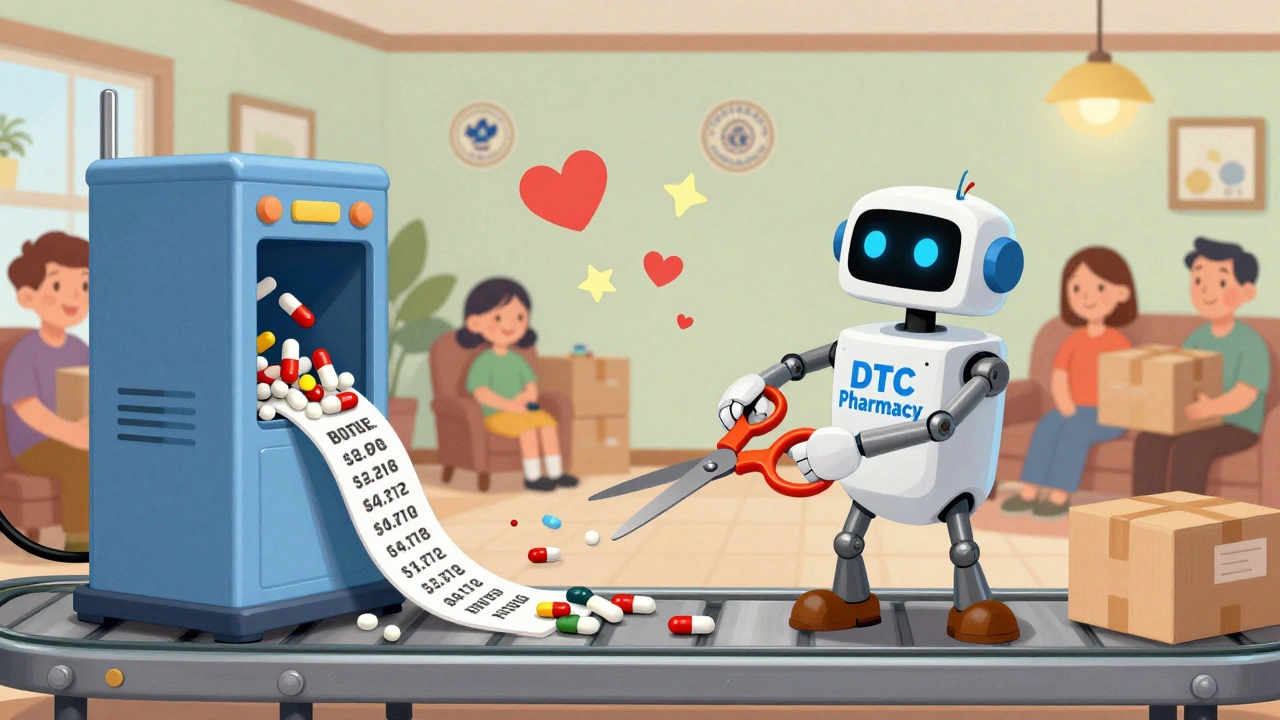
DTC generic pharmacies cut out the middle. They buy directly from manufacturers or bulk distributors, cut out rebate games, and pass the savings to you. They also use tech to streamline everything: AI-powered chatbots remind you to take your pills, digital prescriptions go straight to their pharmacy partners, and real-time inventory tracking ensures you don’t get stuck waiting for a backordered drug.
And unlike traditional pharmacies, these platforms are built for chronic conditions. If you’re on a daily medication, you can set up auto-renewals. No more running out. No more forgotten refills. A Drug Channels survey found that 73% of users on DTC platforms for chronic meds reported better adherence-because it’s just easier.
Who’s Running These Services?
There are two main types of players in this space:
- Telehealth-first platforms: Ro, Hims & Hers, Honeybee Health. These started as online clinics for things like hair loss or ED, then expanded into generics. They focus on cash-pay patients and don’t always work with insurance. Their strength? Simplicity and price.
- Big pharma’s DTC arms: LillyDirect, PfizerForAll, NovoCare. These are brand-name drugmakers launching their own delivery channels. While they mostly sell branded drugs now, they’re building infrastructure that will soon handle generics too. Their edge? Direct access to patient data and manufacturing control.
Ro leads the generic space. Their pricing is transparent: you see the cash price before you pay. No hidden fees. No surprise bills. In contrast, brand-name DTC platforms like LillyDirect offer 10-15% savings on drugs like Ozempic, but their real goal isn’t to undercut pharmacies-it’s to own the patient relationship.
Why This Is a Big Deal for Patients
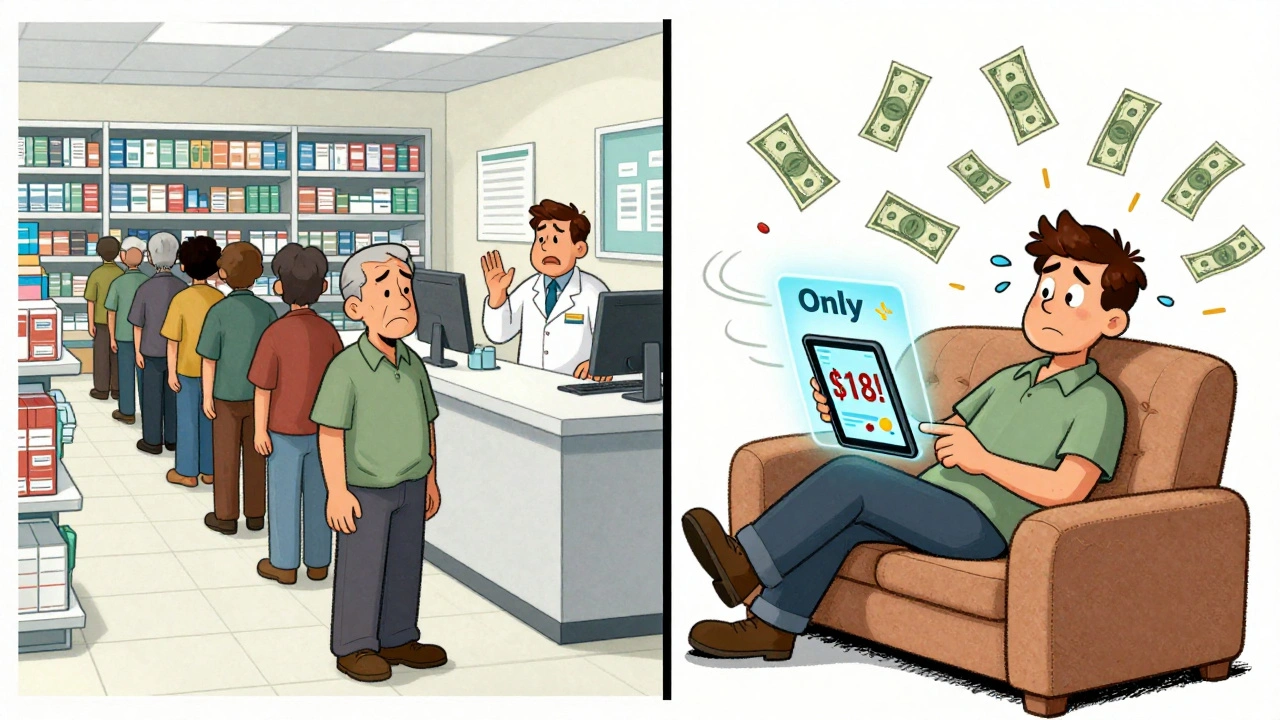
Let’s say you’re on a high-deductible health plan. Your deductible is $6,000. You need a generic antidepressant that costs $60 a month at your local pharmacy. That’s $720 a year-money you have to pay out of pocket before insurance kicks in.
Through Ro, you pay $18 a month. That’s $216 a year. You save $504. That’s not just a few bucks-it’s enough to cover your copay for a doctor’s visit, or your annual physical.
For people without insurance, the difference is even starker. A 30-day supply of generic metformin can cost $120 at a retail pharmacy. Online? $12. That’s not a discount. That’s a lifeline.
And it’s not just price. It’s time. No more taking a half-day off work to wait in line. No more calling your pharmacy at 5 p.m. only to hear, “We’re out. Come back tomorrow.” With DTC, you order at midnight. You get a text when it ships. You get it by Wednesday.
The Downsides and Risks
It’s not perfect.
First, availability. These platforms don’t carry every generic. You can get sertraline, metformin, atorvastatin-but not every obscure combo drug or specialty formulation. If your doctor prescribes something unusual, you might still need to go to a brick-and-mortar pharmacy.
Second, insurance integration. Most DTC generic services operate on a cash-pay model. If you have insurance, you can’t use it here. That’s great if you’re paying out of pocket, but if your insurance covers generics at $5, you might be worse off.
Third, pharmacist access. At a regular pharmacy, you can ask the pharmacist, “Does this interact with my other meds?” In DTC, you get an automated message or a chatbot. There are 24/7 pharmacist lines on the best platforms, but staffing is thin-typically one pharmacist for every 5,000 patients. In October 2025, Drug Topics reported 17 cases where potential drug interactions were missed because no pharmacist reviewed the full profile.
And then there’s delivery delays. Trustpilot reviews for Honeybee Health show 42% of negative feedback is about shipping. One user on Reddit said they waited 8 days for their refill. That’s not acceptable if you’re on a critical medication.
Regulation and Legal Gray Areas
Running a pharmacy across 50 states is a nightmare. Each state has its own licensing rules, packaging laws, and dispensing requirements. To legally operate, a DTC pharmacy must get licensed in all 50 states plus D.C. That takes 14 to 18 months and costs over $2 million in legal fees alone.
Then there’s the FDA. Medications must be stored and shipped under strict conditions. Temperature control. Tamper-proof packaging. Chain-of-custody records. Many new entrants fail these audits.
And the legal risks are growing. The Department of Justice is watching. In September 2025, STAT News reported the DOJ opened investigations into whether DTC programs violate the Anti-Kickback Statute-especially if they offer discounts tied to patient referrals or bundled services. While no charges have been filed yet, companies are being forced to redesign their marketing and pricing structures.
What’s Next? The Hybrid Future
Big pharma isn’t trying to kill CVS. They’re trying to own the data.
LillyDirect and PfizerForAll aren’t just selling drugs. They’re collecting real-time data on how patients take their meds, when they refill, and whether they experience side effects. That’s gold. It helps them improve drug design, predict shortages, and target marketing. That’s why they’re investing billions into building platforms that include telehealth, EHR integration, and AI-driven adherence tools.
The future isn’t DTC vs. traditional-it’s hybrid. You might get your insulin from your local pharmacy under insurance, but order your generic cholesterol pill from Ro. You’ll still see your pharmacist for complex questions. But for routine, high-volume generics? Online delivery is becoming the default.
By 2026, experts predict 40% of commercially insured patients will use a DTC pharmacy at least once a year. The market for DTC generic sales hit $18.7 billion in Q3 2025-up from $4.8 billion just two years earlier.
Should You Use One?
If you’re paying cash for generics, yes. Especially if you’re on a chronic medication, have a high deductible, or no insurance. The savings are real. The convenience is undeniable.
But here’s how to do it safely:
- Only use platforms that are licensed and display their pharmacy license number on their website.
- Check if they have a 24/7 pharmacist line-not just a chatbot.
- Compare prices. Use GoodRx or Blink Health to see what your local pharmacy charges.
- Don’t switch your entire regimen overnight. Start with one med.
- Keep a list of all your meds and share it with your primary doctor.
And if you’re on multiple medications, complex conditions, or are elderly? Talk to your doctor first. DTC is great for simple, stable prescriptions-not for managing heart failure or diabetes with five different drugs.
Final Thoughts
This isn’t just a tech trend. It’s a correction to a broken system. For too long, the pharmacy supply chain was designed to enrich middlemen, not patients. DTC generic pharmacies are forcing transparency, efficiency, and lower prices.
They’re not perfect. They’re not for everyone. But for millions of Americans paying out of pocket for daily meds, they’re the most honest, affordable option on the market.
And if you’ve been paying $50 a month for a generic drug you’ve been on for five years? It’s time to check what it costs online.
Are DTC generic pharmacies legal?
Yes, but only if they’re licensed in all 50 states and D.C. Reputable platforms like Ro and Honeybee Health are fully licensed and comply with FDA and HIPAA regulations. Always check for a visible pharmacy license number on their website. If you can’t find it, avoid them.
Can I use my insurance with DTC pharmacies?
Most can’t. DTC generic pharmacies typically operate on a cash-pay model to avoid PBM rebate systems. If your insurance already covers your generic at $5 or $10, you might not save money. But if you’re paying full price or have a high deductible, DTC often beats insurance pricing.
What if I need a drug that’s not available online?
Many DTC pharmacies only carry the top 50-100 most common generics-things like metformin, lisinopril, levothyroxine, sertraline. If your prescription is unusual, you’ll still need a traditional pharmacy. Always check the platform’s formulary before signing up.
Are the medications real and safe?
Yes, if you use licensed platforms. They source from FDA-approved manufacturers and follow strict storage and shipping rules. Counterfeit drugs are rare on regulated platforms. But avoid shady websites that don’t require a prescription or show no licensing info. If it looks too good to be true, it is.
How fast do these pharmacies deliver?
Most deliver within 2-5 business days. Ro and Honeybee Health typically ship within 24-48 hours after approval. Delivery times vary by location and whether you’re ordering for the first time. Expedited shipping is usually available for an extra fee.
Do I still need to see my doctor?
Absolutely. DTC pharmacies don’t replace your doctor. They’re a delivery channel. You still need regular check-ups, lab work, and medical oversight-especially for chronic conditions. Always inform your doctor if you switch to a DTC pharmacy so they can track your care properly.
What’s the biggest risk of using DTC pharmacies?
The biggest risk is bypassing pharmacist review. Pharmacists catch drug interactions, dosing errors, and allergies that automated systems miss. If you’re on multiple meds, have kidney or liver issues, or are over 65, always consult your pharmacist before switching. Use DTC for simple, stable prescriptions-not complex regimens.
If you’re paying cash for daily medications, DTC generic pharmacies are no longer a novelty-they’re the smartest option on the market. The system is changing. You don’t have to wait for it to catch up.
Gillian Watson
December 5, 2025 AT 12:17Pavan Kankala
December 7, 2025 AT 04:57Libby Rees
December 8, 2025 AT 14:10Rudy Van den Boogaert
December 9, 2025 AT 03:28Bill Wolfe
December 9, 2025 AT 17:53Benjamin Sedler
December 11, 2025 AT 05:38Alex Piddington
December 12, 2025 AT 02:31Gareth Storer
December 12, 2025 AT 11:27George Graham
December 12, 2025 AT 11:59Emmanuel Peter
December 13, 2025 AT 04:58Ashley Elliott
December 14, 2025 AT 19:20Augusta Barlow
December 15, 2025 AT 18:31Chase Brittingham
December 16, 2025 AT 02:51Rebecca Braatz
December 16, 2025 AT 22:14