Antidepressant Sleep Impact Guide
Analysis Results
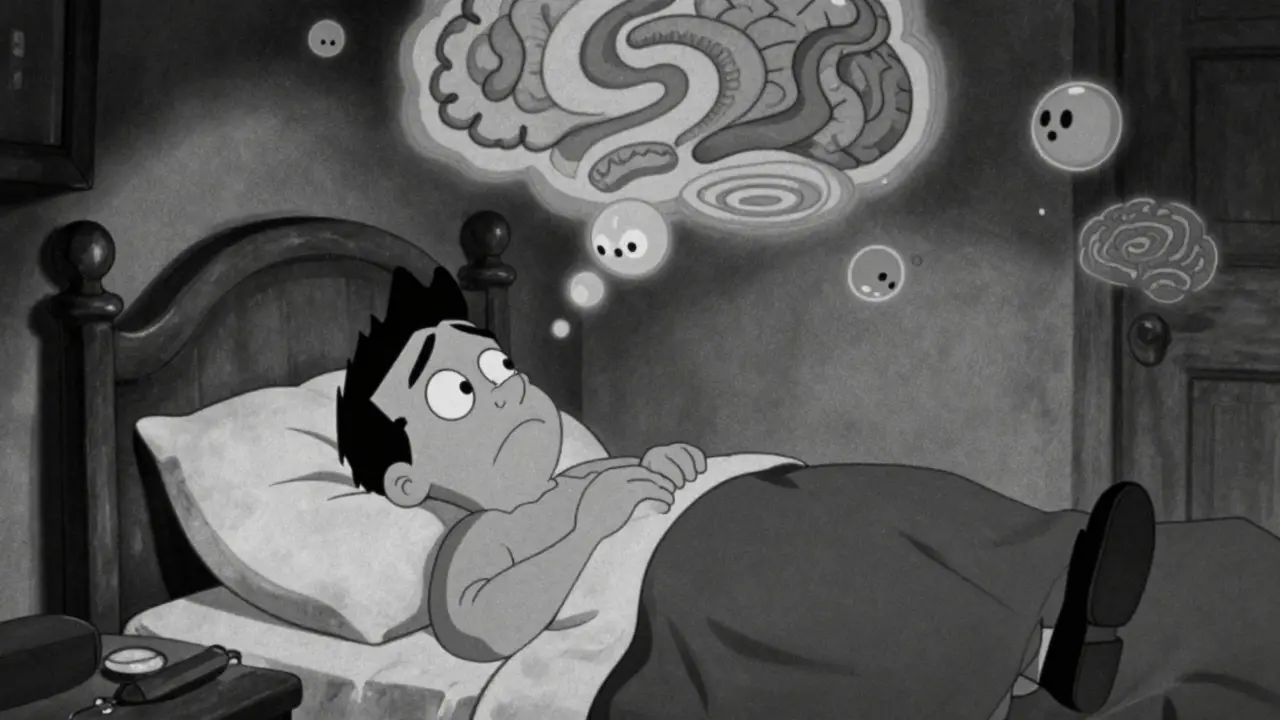
You start a new medication to feel better mentally, but suddenly, you're staring at the ceiling at 3 AM. It's a frustrating irony: the medicine meant to fix your mood is now stealing your sleep. Whether it's a racing mind, vivid dreams, or just a total inability to drift off, sleep disruption is one of the most common hurdles when starting antidepressants. The good news is that these changes aren't random; they're a result of how these drugs tweak your brain chemistry, and there are concrete ways to manage them.
Why Your Sleep Changes on Antidepressants
To understand why you're tossing and turning, you have to look at the chemicals in your brain. Most antidepressants work by modulating monoamines-specifically serotonin, norepinephrine, and dopamine. While these help lift your mood, they also act as the "on/off" switches for your sleep-wake cycle.
For instance, SSRIs (Selective Serotonin Reuptake Inhibitors) like sertraline or fluoxetine increase serotonin levels. While this is great for anxiety, serotonin actually suppresses REM sleep. Research shows that SSRIs can cut REM sleep by up to 29% and push back the time it takes to enter that dream state by nearly an hour. This is why some people report feeling "restless" or experiencing extremely vivid, strange dreams.
On the other hand, some medications are designed to be sedating. Mirtazapine is a prime example. Unlike SSRIs, it can actually increase total sleep time and make it much easier to fall asleep. However, the trade-off is often a heavy "brain fog" or daytime drowsiness that can make waking up feel like trekking through mud.
Comparing Different Antidepressants and Their Sleep Profiles
Not all antidepressants affect your pillow time the same way. Depending on whether you struggle with insomnia or hypersomnia (sleeping too much), your doctor might choose a different class of medication. Some push you awake, while others pull you under.
| Medication Class | Typical Effect on Sleep | Common Examples | Best For... |
|---|---|---|---|
| SSRIs | Increased insomnia, reduced REM | Fluoxetine, Sertraline | Hypersomnia (sleeping too much) |
| SNRIs | Variable; can be activating | Venlafaxine, Duloxetine | Low energy depression |
| Tetracyclics/Others | Sedating, improves sleep onset | Mirtazapine, Trazodone | Insomnia-predominant depression |
| Melatonergic | Preserves sleep architecture | Agomelatine | Maintaining natural sleep cycles |
Practical Tips to Get Your Sleep Back
If you're currently struggling, you don't have to just "tough it out." There are strategic adjustments you can make. The most important factor is often not *what* you take, but *when* you take it.
Shift your dosing window. If your medication is activating (like most SSRIs), taking it before 9 AM can significantly lower your risk of insomnia. By the time your head hits the pillow, the peak stimulating effects have worn off. Conversely, sedating agents like trazodone should be taken 2-3 hours before bed to ensure you're asleep when it hits and not waking up with a massive "hangover" the next morning.
The "Split Dose" Strategy. Some people find that taking their full dose at once is too much for their system to handle. A common tactic-currently being looked at in clinical trials-is splitting the dose: half in the morning and half in the early afternoon. This prevents a massive spike in serotonin right before bed while keeping the therapeutic levels steady in your blood.
Manage the "First-Month Hurdle." It's important to know that for many, the insomnia is temporary. For those on SSRIs, sleep disruption usually peaks between day 3 and day 7. For the majority of users, this settles down after about 3 to 4 weeks as the brain adapts to the new chemical balance. If you're in week one, hang in there; your brain is just recalibrating.
Red Flags: When to Call Your Doctor
While a few sleepless nights are common, some sleep changes are signs that your medication needs a tweak. Keep an eye out for these specific issues:
- Restless Legs Syndrome (RLS): If you feel an irresistible urge to move your legs, especially at night, tell your doctor. Some antidepressants can worsen RLS or cause akathisia (a feeling of inner restlessness).
- REM Sleep Without Atonia (RSWA): This is a fancy way of saying you're acting out your dreams-punching, kicking, or shouting in your sleep. This can be a side effect of certain antidepressants and requires a professional review.
- Severe Interaction: Be extremely cautious if you are combining bupropion with an SSRI. This combination is known to significantly spike the risk of severe insomnia.
A great way to track this is by keeping a simple sleep diary for two weeks. Note what time you took your meds, when you fell asleep, and how many times you woke up. This data is gold for your psychiatrist and helps them move from "I feel tired" to "I'm waking up three times a night," which allows for a much more precise dose adjustment.
Moving Toward Personalized Sleep Care
The future of treating depression is moving away from a one-size-fits-all approach. We're seeing a shift toward "sleep-profile matching." Instead of trying an antidepressant and seeing if you can sleep, doctors are starting to choose the drug based on your existing sleep patterns.
Newer treatments are also emerging. For example, zuranolone has shown promise in reducing insomnia symptoms much faster than older drugs. We're even seeing the rise of pharmacogenetic testing that analyzes your DNA to predict which medications will likely disrupt your sleep and which will help it. The goal is to stop the "trial and error" phase and get you to a stable mood and a full night's rest much faster.
How long does insomnia from SSRIs usually last?
For most people, the worst of the insomnia happens in the first week (peaking around days 3-7). In many cases, sleep patterns begin to stabilize and improve after 3 to 4 weeks of consistent use as the body adjusts to the medication.
Can I take a sleep aid while on antidepressants?
Many people do, but you must consult your doctor first. Some combinations can lead to "serotonin syndrome" or excessive sedation. Your doctor might suggest a low dose of a sedating antidepressant like trazodone or mirtazapine instead of a separate sleep med.
Why do I have such vivid dreams on these meds?
Antidepressants, particularly SSRIs, reduce the amount of REM sleep you get. This can cause "REM rebound" or alter the intensity of the dreams you do have, making them feel more vivid or strange than usual.
Is it better to take my antidepressant in the morning or at night?
It depends on the drug. If it makes you feel wired or alert (activating), take it before 9 AM. If it makes you sleepy (sedating), take it 2-3 hours before bedtime. Always check with your provider before changing your dosing schedule.
What is the best antidepressant for someone who can't sleep?
While only a doctor can prescribe, medications like mirtazapine and trazodone are often preferred for those with comorbid insomnia because they have built-in sedative properties. Agomelatine is also noted for preserving natural sleep architecture better than SSRIs.
Mike Arrant
April 24, 2026 AT 20:22Most of you are just failing at basic sleep hygiene. Stop looking at your phones and maybe try some actual meditation instead of just popping pills and complaining that you're awake. It's a lack of discipline.
Divyanshu Giri
April 25, 2026 AT 09:25keep pushing forward friends!! you are all champions for taking care of your mind just keep grinding it out and the sleep will come back like a flood!
Rick Brewster
April 27, 2026 AT 00:44the very notion that we can optimize sleep through chemical modulation is such a quaint mid-century dream really we are just attempting to negotiate with the biological void using crude tools that barely scratch the surface of human consciousness and honestly the insomnia is just the psyche screaming at the artificiality of the intervention we call medicine
Mayur Pankhi Saikia
April 27, 2026 AT 15:31Obviouslly... the arugment here is flopped...!!! Who actually believes a generic table??!! Totally naive...!!!
Amy Fredericks
April 27, 2026 AT 18:43I think it's really helpful to see the breakdown of different classes of meds. For those of us just starting, knowing that the first few weeks are the hardest helps us stay patient and supportive of ourselves. We can all get through this transition together.
Saptatshi Biswas
April 28, 2026 AT 18:57The sheer incompetence of Western pharmaceutical standards is staggering. My country's medical approach to holistic wellness puts this primitive trial-and-error method to shame. It is absolutely pathetic that patients are expected to simply 'endure' a month of insomnia while their brain chemistry is being hijacked by subpar synthetic compounds!
Sarah Watters
April 30, 2026 AT 00:53Funny how they mention 'pharmacogenetic testing' right at the end. Just another way for big pharma to collect our DNA profiles and sell them to insurance companies so they can hike our rates based on our predispositions. It's not about 'personalized care,' it's about data mining your genetic code while you're too tired to notice.
Ally Warren
May 1, 2026 AT 16:16Sleep is not merely a biological necessity but a bridge to the subconscious. When these medications alter our REM cycles, they aren't just changing sleep architecture; they are altering the very way we process existence and memory.
Dave Edwards
May 3, 2026 AT 06:14Oh please! 🙄 The 'split dose' strategy is just a fancy way of saying 'take your meds twice' and pretending it's a clinical breakthrough. Absolutely ridiculous! 🤡
Emma Cozad
May 4, 2026 AT 01:31absolute trash advice. my doc told me the same thing and i spent three weeks like a zombie before i just switched. dont trust the 'first month hurdle' garbage, its just a way to keep u on the hook long enough for the company to make a profit on the first refill
Mel Glick
May 4, 2026 AT 22:56Actually, in several other cultures, the integration of herbal support alongside these meds is way more common and effective! We need to stop pretending these pills are the only answer and start looking at the global perspective on mental health! It's high time we stop being so rigid!
vimal purwal
May 5, 2026 AT 23:09While I recognize the frustration expressed by some in this thread, I must insist that we maintain a level of professionalism and respect for the clinical process. It is my firm belief that the most sustainable way to achieve stability is through a rigorous adherence to the physician's guidelines, combined with a detailed sleep diary as mentioned, which allows for the most precise and data-driven adjustments to one's regimen. I strongly encourage everyone to remain patient and avoid making unilateral changes to their dosage without professional oversight, as the risks of serotonin syndrome are far more critical than a few nights of restlessness.
Anantha Lakshmi
May 6, 2026 AT 03:52Stay strong! 🌈 You've got this! Just keep tracking your progress and the light at the end of the tunnel is coming! ☀️
Nicole Antunes
May 6, 2026 AT 06:28It's quite comforting to know that the vivid dreams are actually a known biological reaction to REM suppression. It makes the experience feel less like a personal failing and more like a predictable step in the healing process. :)