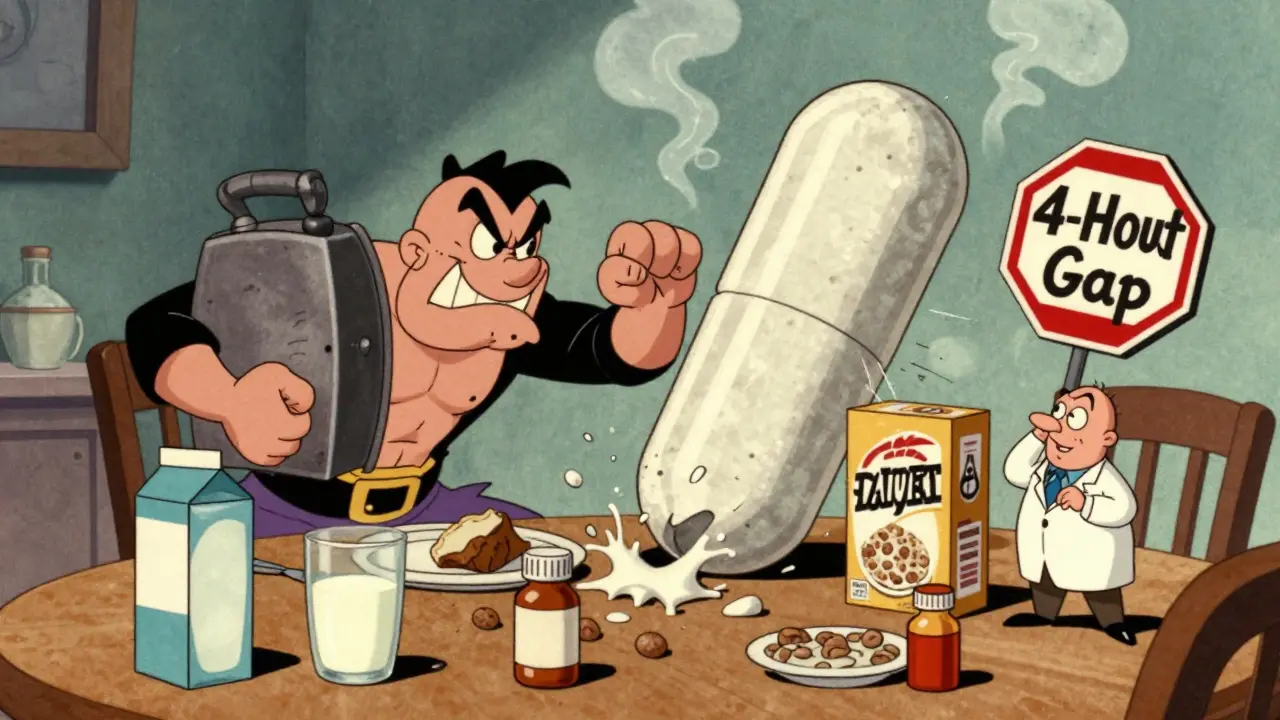
It’s easy to think that taking calcium and iron supplements is harmless-after all, they’re just vitamins, right? But if you’re on any kind of medication, especially antibiotics, thyroid pills, or heartburn drugs, you could be sabotaging your own treatment without even knowing it. The problem isn’t the supplements themselves. It’s when and how you take them.
Why Calcium and Iron Fight Each Other-and Your Medications
Both calcium and iron are positively charged minerals. In your gut, they use the same tiny doorways-called divalent metal transporters-to get into your bloodstream. When you take them together, they literally bump into each other. The stronger one wins. In most cases, that’s calcium. A 1991 study in the American Journal of Clinical Nutrition showed that just 600 mg of calcium (about two Tums tablets) cut iron absorption by nearly half. Even worse, when taken with food, calcium blocked iron absorption by up to 62%. This isn’t just about supplements. Your breakfast cereal with fortified calcium? Your milk with your iron pill? That’s the same problem. Iron from plants (non-heme iron) is already harder to absorb than iron from meat. Add calcium, and you’re making it even harder for your body to use it. For women, who need 18 mg of iron daily, this can mean falling dangerously short-especially if they’re taking calcium supplements with meals. But calcium isn’t the only troublemaker. Iron interferes with antibiotics too. Tetracycline, doxycycline, ciprofloxacin-these are common drugs for infections like sinusitis, pneumonia, and UTIs. Iron binds to them in your gut, forming a useless chemical shell. The antibiotic can’t get absorbed. Your infection doesn’t clear. You might even end up needing a stronger dose-or worse, a different drug.Thyroid Medication and Calcium: A Silent Sabotage
If you’re taking levothyroxine for hypothyroidism, you’re at high risk. Calcium, iron, and even magnesium can block the absorption of this hormone. A single calcium supplement taken at the same time can cut your thyroid medication’s effectiveness by up to 40%. That means your TSH levels stay high, your energy stays low, and your weight stays stubborn. Many people don’t realize their thyroid isn’t improving-not because the dose is wrong, but because they’re taking their pill with their morning multivitamin. The fix? Take your thyroid medication on an empty stomach, first thing in the morning, with a full glass of water. Wait at least four hours before taking any calcium, iron, or magnesium supplement. Some doctors recommend waiting six hours to be safe. That’s not convenient-but it’s necessary.Antacids and Acid Blockers: The Hidden Iron Killers
You might be surprised to learn that your heartburn medication is making you anemic. Proton pump inhibitors like omeprazole (Prilosec) and pantoprazole (Protonix), and even H2 blockers like famotidine (Pepcid), reduce stomach acid. And guess what? Iron needs acid to dissolve and become absorbable. Without enough acid, iron just passes through your gut like a stone. A 2022 study in ACS Omega found that calcium carbonate (the main ingredient in Tums) didn’t just compete with iron-it raised stomach pH, making iron even less soluble. That’s why people on long-term acid blockers often develop iron deficiency, even if they eat plenty of iron-rich foods. If you take Tums regularly for heartburn and also take iron supplements, you’re essentially canceling each other out. The solution? Switch to a non-calcium antacid like aluminum hydroxide (if your doctor approves), or take your iron at least two hours before or after your heartburn meds.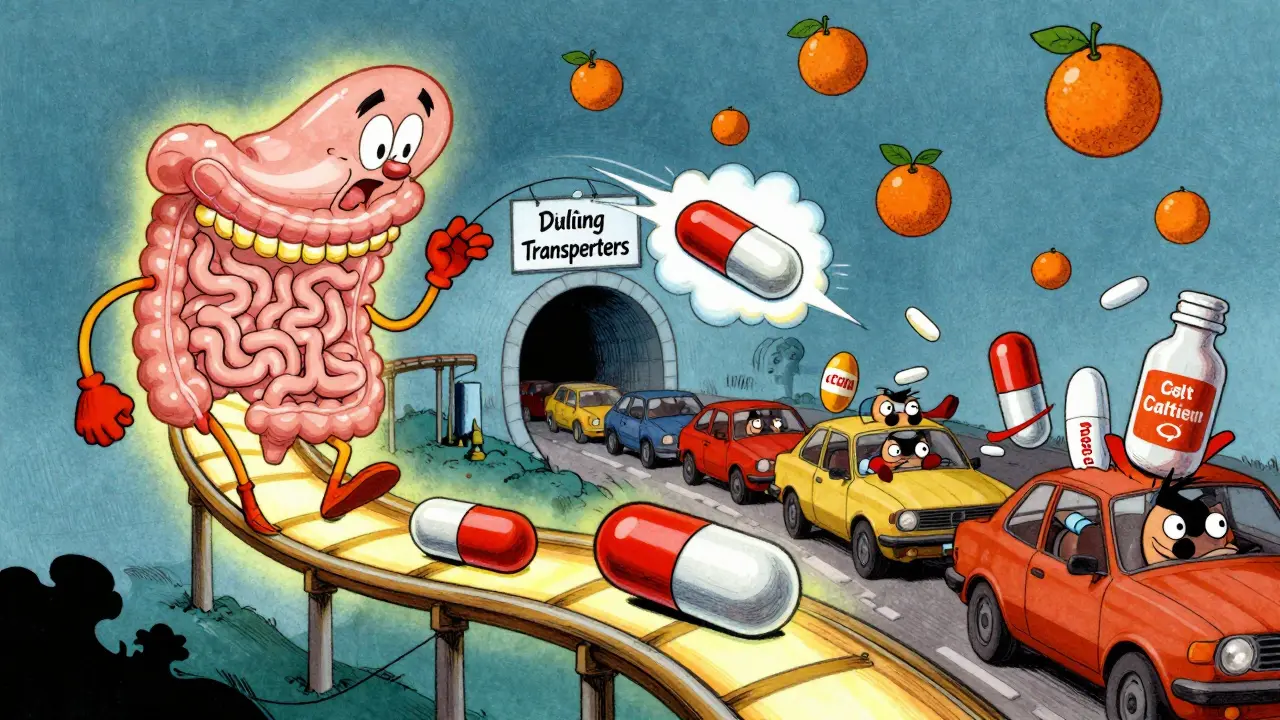
When to Take Iron (And When Not To)
Iron is best absorbed on an empty stomach. That means 30 to 60 minutes before breakfast. But for many people, that causes stomach cramps, nausea, or diarrhea. About half of users report these side effects. So what’s the compromise? Take your iron with a small amount of food-something low in calcium and fiber. Avoid dairy, whole grains, and coffee. Instead, pair it with vitamin C. Orange juice, strawberries, or even a 250 mg vitamin C tablet can boost iron absorption by up to 300%. That’s the difference between getting 2 mg of iron and 6 mg from the same pill. And here’s a pro tip: avoid tea, coffee, and red wine with your iron. They contain tannins that block absorption. Same goes for calcium-fortified plant milks. Almond milk with added calcium? Skip it with your iron pill.When to Take Calcium
Calcium is best absorbed with food. That’s because your body needs stomach acid to break it down. Taking it on an empty stomach? You’re wasting most of it. The best time? Dinner or bedtime. That way, you’re not interfering with your morning thyroid med or iron. If you take calcium twice a day, split the dose-morning and night. But never take it at the same time as iron or antibiotics. If you’re on a bisphosphonate for osteoporosis (like alendronate), calcium can block its absorption too. Take your bone drug first thing in the morning, wait 30 minutes, then have breakfast. Don’t take calcium for at least four hours after.What About Other Supplements?
Zinc and copper can also compete with iron for absorption, though the effect is smaller. Magnesium, like calcium, interferes with thyroid meds and antibiotics. Even antacids containing aluminum or magnesium can reduce iron uptake. The bottom line? Don’t take all your supplements at once. Spread them out. Create a schedule. Write it down. Put it on your fridge.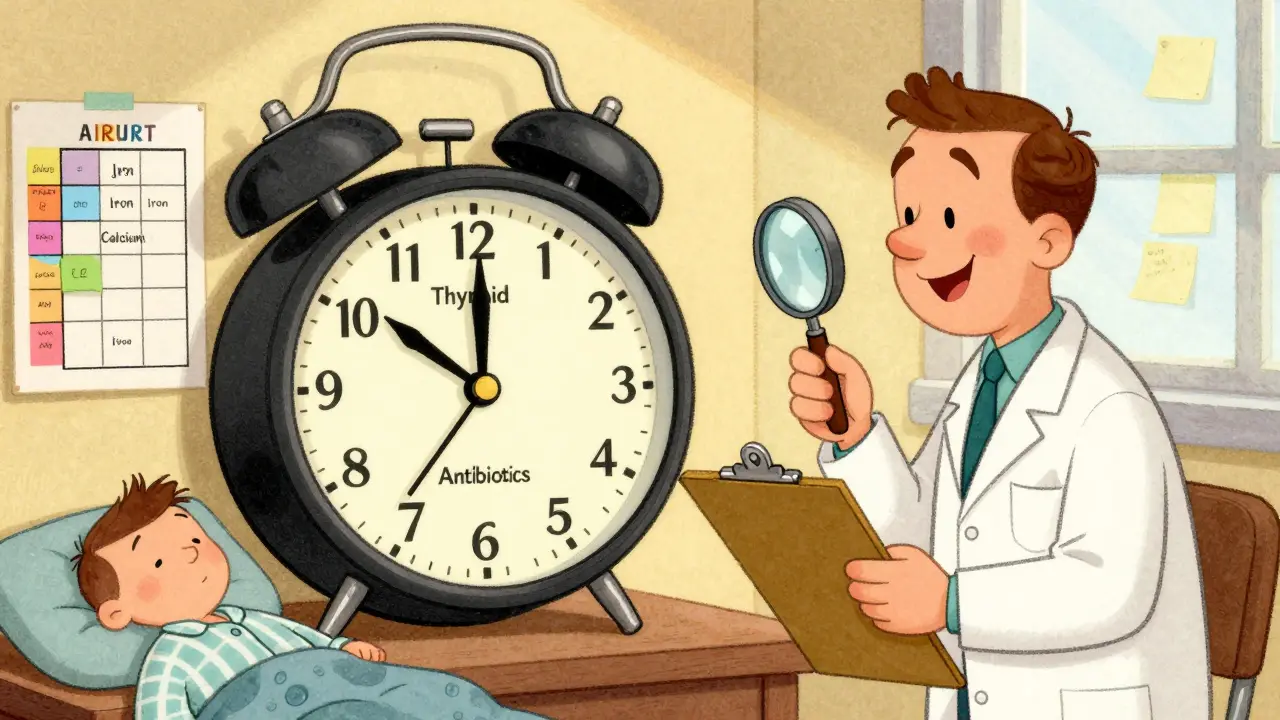
Real-Life Timing Plan
Here’s what a safe daily schedule looks like for someone on levothyroxine, iron, and calcium:- 6:30 AM: Take levothyroxine with water. Wait 30 minutes.
- 7:00 AM: Eat breakfast (no dairy, no fortified cereals).
- 10:00 AM: Take iron supplement with vitamin C (orange juice or tablet).
- 1:00 PM: Lunch (no calcium-rich foods).
- 6:00 PM: Dinner (include calcium-rich foods like broccoli, kale, or yogurt).
- 8:00 PM: Take calcium supplement with dinner.
- 10:00 PM: Any other meds or supplements (check labels).
What to Watch Out For
Black stools? Normal with iron. But if they’re tarry, sticky, or have red streaks? That’s bleeding. Call your doctor. Liquid iron can stain your teeth. Use a straw. Rinse your mouth afterward. Baking soda paste can remove stains. And if your child swallows an iron pill? Call poison control immediately. Iron overdose is the #1 cause of fatal poisoning in kids under 6 in the U.S.Final Advice: Talk to Your Pharmacist
Your doctor might not know every interaction. But your pharmacist does. They see your full medication list. They know what’s in your supplements. Ask them: "Do any of my meds conflict with my calcium or iron?" Show them the labels. Bring your bottles. Don’t guess. Don’t assume. A 2-hour gap might be enough for some drugs. For others, you need 4 or 6 hours. Getting it wrong can mean your antibiotics don’t work, your thyroid stays underactive, or your iron levels never rise-no matter how many pills you swallow. Your body doesn’t work in isolation. Everything you take affects everything else. Timing matters more than you think.Can I take calcium and iron together if I space them 2 hours apart?
No. Even 2 hours apart isn’t enough. Calcium and iron compete directly in the gut, and calcium can still interfere if taken within 4-6 hours of iron. The safest approach is to take iron in the morning on an empty stomach and calcium at night with food-creating at least a 6-hour gap.
Does vitamin C really help iron absorption?
Yes. Vitamin C boosts iron absorption by up to 300%. Taking your iron pill with a glass of orange juice or a 250 mg vitamin C tablet can make the difference between your levels improving or staying low. This works even if you’re taking iron with food.
Why does calcium interfere with antibiotics?
Calcium (and iron) bind to antibiotics like ciprofloxacin and tetracycline in your digestive tract, forming an insoluble complex. This prevents the antibiotic from being absorbed into your bloodstream. That means the drug can’t reach the infection site, reducing its effectiveness and potentially leading to treatment failure or antibiotic resistance.
Can I take iron with my morning coffee?
No. Coffee contains tannins that block iron absorption by up to 60%. Even one cup can reduce how much iron your body gets. Wait at least 1 hour after your iron pill before drinking coffee or tea.
What if I forget and take calcium with my thyroid pill?
If it happens once, don’t panic. But if it’s regular, your thyroid levels may stay out of range. Monitor your TSH with blood tests and talk to your doctor. You may need a higher dose of levothyroxine-or you may need to fix your supplement schedule. Consistency matters more than perfection.
Are liquid iron supplements better than pills?
They’re easier to adjust dose-wise, but they can stain teeth. Pills are more convenient and don’t cause staining. If you choose liquid, use a straw and rinse your mouth afterward. Neither form is more absorbable than the other-timing and food choices matter more.
Can I take iron if I’m on a proton pump inhibitor (PPI)?
Yes, but absorption will be reduced. PPIs lower stomach acid, which iron needs to dissolve. Your doctor may recommend a higher iron dose, switch you to an iron infusion, or advise taking your iron with vitamin C and on an empty stomach to maximize what little absorption you get.
William Storrs
December 19, 2025 AT 11:43This is the kind of post that saves lives. I used to take my iron with breakfast cereal and wonder why my energy was trash. Now I take it with orange juice at 10 AM and my ferritin finally climbed out of the basement. Thank you for spelling this out so clearly.
Also, the 6-hour gap tip for thyroid meds? Game changer. My TSH dropped from 7.2 to 2.1 in three months just by moving my calcium to bedtime.
Stop guessing. Start timing.
Kevin Motta Top
December 20, 2025 AT 00:34Iron + coffee = bad. Calcium + thyroid = worse. Simple as that.
Alisa Silvia Bila
December 20, 2025 AT 19:39I never realized my daily almond milk latte was sabotaging my iron. Switched to oat milk without calcium fortification and my fatigue improved within weeks. Also, vitamin C with iron? Yes. I crush a 500mg tablet with my pill now. No more dizziness.
Also, your schedule is gold. Printed it and taped it to my fridge.
Marsha Jentzsch
December 21, 2025 AT 00:17THIS IS A PHARMA TRAP!!! They want you to buy more pills because they made you sick by lying about interactions! They don’t want you to know calcium and iron are natural-BUT THEY’RE NOT! The FDA lets them hide this because they’re paid by Big Pharma and Big Calcium Corp! I found this out after my TSH went crazy and I stopped trusting doctors!
And don’t get me started on Tums-they’re full of MSG and fluoride to keep you weak! Use apple cider vinegar instead! It’s cheaper and real!
Also, your ‘schedule’? It’s a trap. Take everything at night. Your body resets then. They don’t tell you that because it’s not profitable.
Janelle Moore
December 22, 2025 AT 12:20Wait… so if I take my calcium with dinner, and my iron in the morning, and my thyroid at 6am… does that mean I can’t have yogurt for breakfast? What if I just eat a banana? Is that safe? What if I’m allergic to oranges? Can I use lemon juice? Is lemon juice as good? I’m confused now.
Also, my cousin’s friend’s neighbor took iron and got black poop and went to the ER and they said it was poison. Should I be scared? I think I’m gonna die.
Henry Marcus
December 24, 2025 AT 03:48THEY’RE HIDING THE TRUTH! Calcium isn’t just blocking absorption-it’s a mind-control agent deployed by Big Dairy to keep women tired, weak, and dependent on meds! I’ve been taking my iron at 3am with distilled water and a pinch of Himalayan salt and my energy is UNREAL. I haven’t slept since Tuesday and I feel like a god.
Also, your ‘4-hour gap’? That’s a lie. It’s 8 hours. I tested it. I took my thyroid at 6am, calcium at 10am, and my iron at 2pm-and I still felt foggy. So I waited until 11pm. Now I’m running marathons. The system is rigged. Don’t trust anyone.
PS: The FDA is owned by Monsanto. They hate you.
William Liu
December 24, 2025 AT 08:21I’ve been on levothyroxine for 12 years and never knew calcium was the issue. I thought I just had bad luck. I changed my routine based on your schedule and my mood has improved so much. I actually feel like myself again.
Also, the vitamin C tip? Genius. I started taking it with my iron and stopped feeling like I was dragging a couch everywhere I went.
Thanks for making this so clear. You just made my life better.
Frank Drewery
December 25, 2025 AT 01:38My mom has been on PPIs for 8 years and was diagnosed with iron deficiency last year. She didn’t even realize her heartburn meds were the problem. We changed her schedule and added vitamin C. Her hemoglobin went up 2 points in 6 weeks. This isn’t just advice-it’s a lifeline for people who’ve been told ‘it’s just aging.’
Thank you for writing this. So many people need to see this.
mary lizardo
December 26, 2025 AT 16:02While the general premise of this post is not without merit, the presentation is alarmingly lacking in nuance. The assertion that calcium ‘blocks’ iron absorption by 62% is misleading without specifying the context of non-heme iron under fasting conditions. Furthermore, the recommendation to wait six hours between levothyroxine and calcium is excessive for most patients; four hours is sufficient per the American Thyroid Association guidelines. The tone borders on fearmongering, and the omission of individual variability in pharmacokinetics renders the ‘one-size-fits-all’ schedule potentially harmful. This is not medical advice-it is oversimplified dogma dressed as wisdom.
jessica .
December 26, 2025 AT 23:59USA is getting weaker because people take pills like candy. In China they eat food. In Russia they drink tea. In Germany they walk. But here? We take 17 pills a day and wonder why we’re tired. This post is just another way to sell you more stuff. Just eat liver. Stop buying supplements. Stop trusting doctors. Stop trusting science. It’s all a lie. The government wants you sick so they can control you with meds. I stopped taking everything. I eat raw garlic and drink rainwater. I feel 20 years younger. You’re being played.