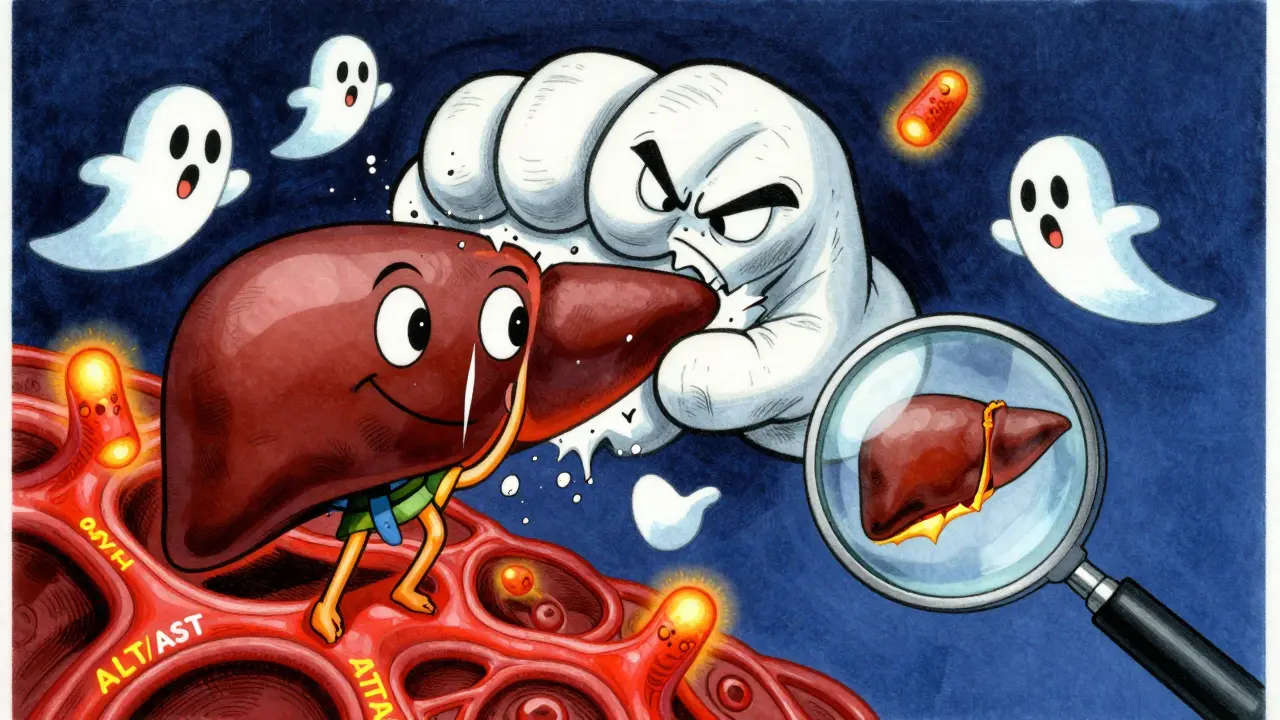
Autoimmune hepatitis isn’t something you can catch from someone else. It’s not caused by alcohol, viruses, or bad habits. It happens when your immune system turns on your own liver, mistaking healthy liver cells for invaders. This attack causes inflammation that, if left unchecked, can lead to scarring, liver failure, or even the need for a transplant. The good news? We know how to stop it-and most people respond well to treatment. But it’s not simple. Diagnosis takes time, the drugs have real side effects, and treatment often lasts years, sometimes for life.
How Do Doctors Diagnose Autoimmune Hepatitis?
There’s no single test that says, ‘Yes, this is autoimmune hepatitis.’ Instead, doctors piece together clues like a puzzle. First, they look at your blood. Elevated liver enzymes-ALT and AST-are the earliest red flags. In active disease, these numbers are often five to ten times higher than normal. Then comes the IgG test. If your immunoglobulin G level is more than 1.5 times the upper limit of normal, that’s another strong hint.
Next, they check for autoantibodies. For most people (about 80%), that means antinuclear antibodies (ANA) or smooth muscle antibodies (SMA) at a titer of at least 1:40. A smaller group has LKM1 antibodies, which points to a rarer subtype. But here’s the key change from 2025: experts no longer use these antibodies to decide how to treat you. They’re diagnostic markers, not treatment guides. The focus is now on what the liver looks like under the microscope.
A liver biopsy is still required. Not optional. Not optional even if blood tests look clear. The biopsy needs to show interface hepatitis-damage right where the liver’s portal areas meet the healthy tissue. This isn’t just inflammation; it’s targeted destruction. Pathologists count at least 20 portal tracts with this pattern. Without it, the diagnosis isn’t confirmed.
Doctors also use a scoring system-the Revised International Autoimmune Hepatitis Group (IAIHG) score. Points are added for blood results, antibody status, liver damage on biopsy, and the absence of other liver diseases like hepatitis B or C. A score above 15 means probable autoimmune hepatitis. Above 20? That’s definite. And before any treatment starts, you’ll be tested for hepatitis B. If you’ve had it in the past, even quietly, starting immunosuppressants could wake it up again. That’s why HBsAg and anti-HBc tests are mandatory.
Why Steroids Are the First Line of Defense
Prednisone (or its active form, prednisolone) has been the backbone of autoimmune hepatitis treatment since the 1970s. It works fast. In fact, about 80 to 90% of patients see their liver enzymes drop within two weeks. That speed is part of what makes the diagnosis so convincing-if your ALT levels fall sharply after starting steroids, it’s almost proof you have autoimmune hepatitis.
The standard starting dose is 0.5 to 1 mg per kilogram of body weight per day, capped at 60 mg. That might sound high, but it’s necessary to shut down the immune attack quickly. After six to eight weeks, doctors begin tapering. The goal isn’t to eliminate steroids completely, but to get you on the lowest possible dose that keeps your liver calm. By week eight, most people are down to 10 to 15 mg daily.
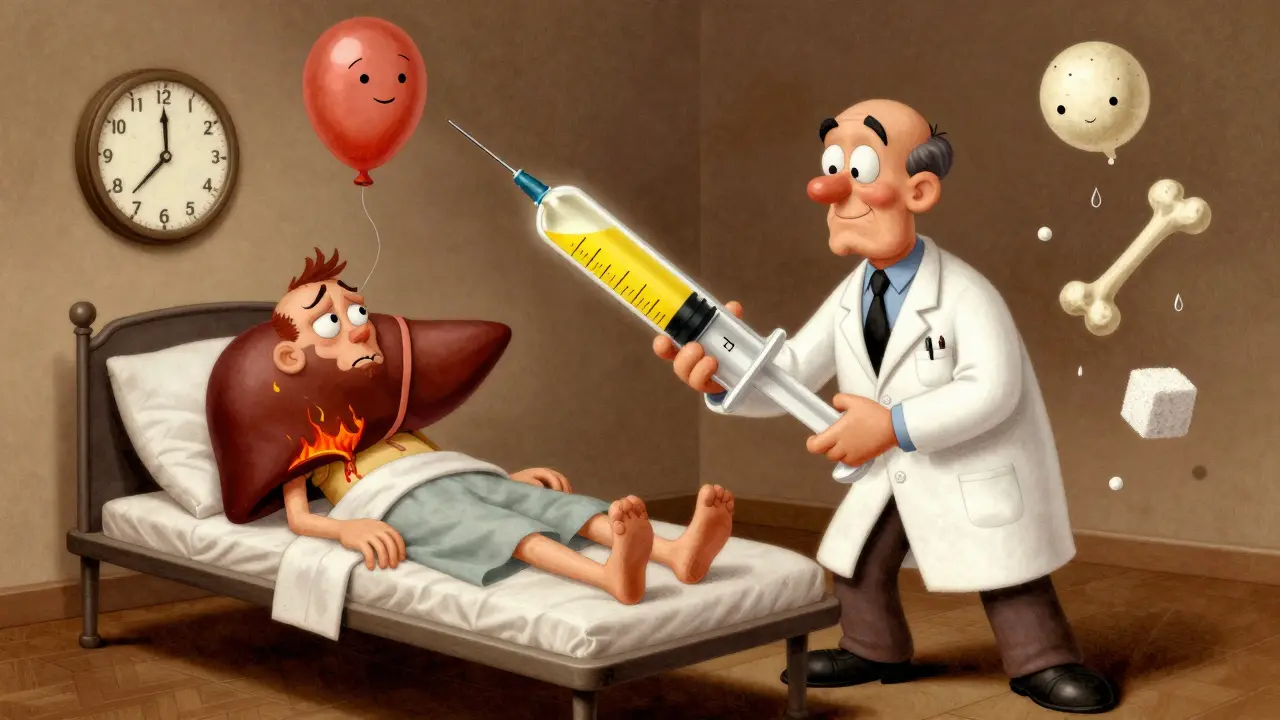
But steroids come with a heavy price. Within five years, 30 to 40% of patients develop serious side effects. Weight gain is common-some people gain 30 pounds in weeks, not from eating more, but from fluid retention. Moon face, thinning skin, bruising easily, insomnia, mood swings, and high blood sugar are all real risks. About 15% develop diabetes. Osteoporosis hits 20%, and cataracts appear in 10%. Many patients say these side effects are worse than the disease itself.
That’s why steroids are never used alone for long.
Azathioprine: The Steroid-Sparing Partner
Azathioprine (sold as Imuran or generics) isn’t a miracle drug. It doesn’t work fast. It takes months to show its full effect. But it’s the perfect teammate for prednisone. It lets doctors cut the steroid dose by 70 to 80% within six months. That means fewer side effects, fewer broken bones, less diabetes risk, and better quality of life.
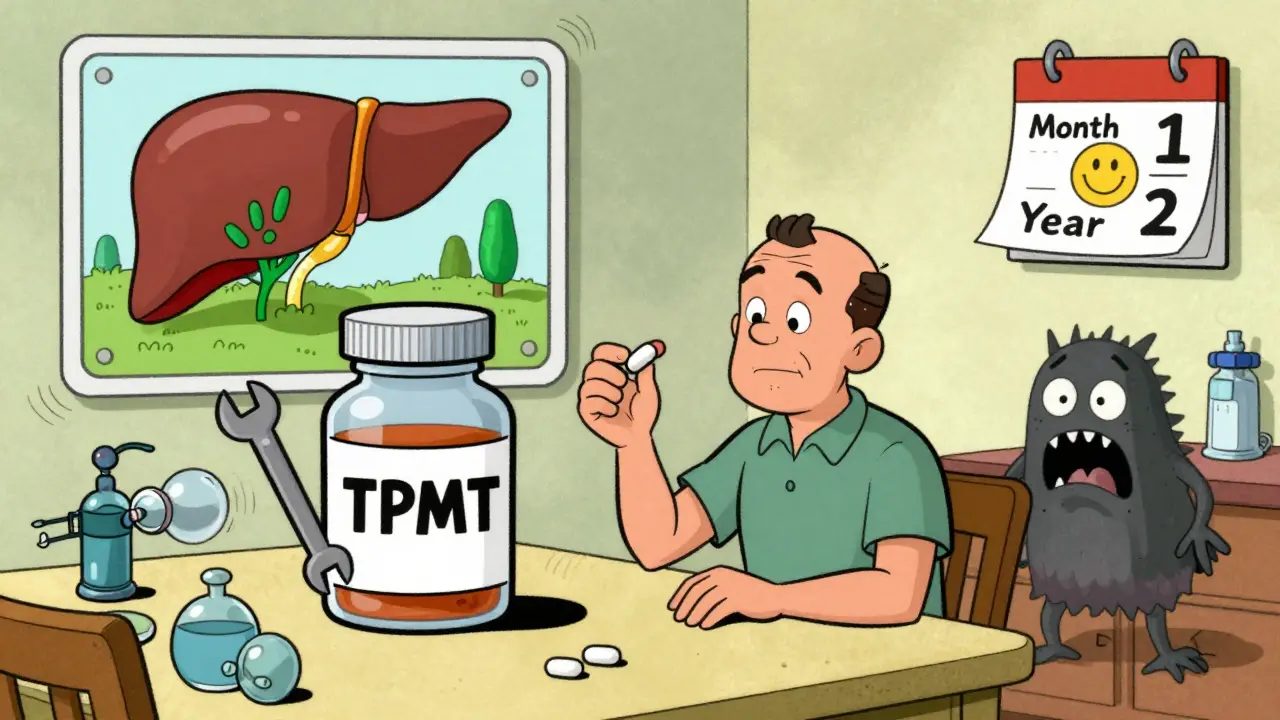
The usual starting dose is 50 mg per day, slowly increased to 1 to 2 mg per kilogram-usually around 100 to 150 mg daily. But before you even take your first pill, you need a simple blood test: TPMT enzyme activity. About 0.3% of people have a genetic mutation that makes them unable to break down azathioprine. For them, even a normal dose can cause life-threatening bone marrow suppression. Testing for this is now standard in 78% of European clinics, but only 45% of U.S. centers still skip it. That’s a dangerous gap.
Side effects of azathioprine are different from steroids. Nausea, vomiting, and fatigue are common. About 12% develop low white blood cell counts. Pancreatitis happens in a small but real number-some patients need to switch drugs because of it. One patient on Reddit described going from 100 mg of azathioprine to pancreatitis in weeks. She had to switch to mycophenolate, which finally worked after 18 months of trial and error.
But for most, the trade-off is worth it. A 2024 patient registry showed that 75% stick with combination therapy because they feel better overall. Only 55% stay on steroids alone. The difference isn’t just medical-it’s personal.
When Treatment Works-and When It Doesn’t
Complete biochemical response means your ALT and AST are back to normal, and your IgG levels have dropped. That happens in 60 to 80% of patients within 18 to 24 months. But normal blood tests don’t mean the liver is healed. That’s why a second biopsy after two to three years is recommended. Histological remission-meaning the liver damage has actually reversed-is seen in 50 to 70% of those who stick with treatment.
And yes, it can reverse fibrosis. One patient, LiverSurvivor99, shared on HealthUnlocked that after two years on 5 mg prednisone and 75 mg azathioprine, her biopsy went from F3 (advanced scarring) to F0 (no scarring). That’s not rare. It’s the goal.
But 20 to 40% of patients don’t respond fully. Their enzymes stay high. That’s called incomplete response. If there’s no improvement after 12 to 18 months, it’s treatment failure. At that point, doctors switch to second-line drugs. Mycophenolate mofetil (CellCept) is the most common alternative. Dosed at 1 to 1.5 grams twice daily, it works for many who can’t tolerate azathioprine. Calcineurin inhibitors like tacrolimus are another option.
And now, new drugs are coming. Obeticholic acid (Ocaliva) showed a 42% complete response rate in phase 3 trials-better than standard therapy. JAK inhibitors like tofacitinib and IL-6 blockers like clazakizumab are in early trials, with response rates around 50%. These aren’t available yet, but they’re coming fast.
Long-Term Management and the Risk of Relapse
Most people don’t get to stop treatment. About 60 to 80% need maintenance therapy for life. Why? Because stopping leads to relapse in 50 to 90% of cases. Even if you’ve been in remission for two or three years, the immune system can wake up again.
Some patients try to stop. The 2025 EASL guidelines say you can attempt withdrawal after sustained remission-but only if you do it slowly. Taper over six to twelve months. Monitor your liver enzymes every two weeks after stopping. Relapses usually happen within three months. Only 45% stay in remission two years after stopping.
That’s why monitoring never ends. Blood tests every three months. IgG checked quarterly. Liver enzymes tracked closely. Vaccinations matter too. If you haven’t had hepatitis A and B shots before starting immunosuppressants, your body won’t respond well. Vaccine effectiveness drops from 90% in healthy people to 40-60% in those on steroids and azathioprine.
What’s Changing in 2026?
The 2025 EASL guidelines were a game-changer. They dropped autoantibody-based subtypes. They extended the treatment response window from six to 6-12 months. They made TPMT testing standard. And they pushed for biopsy confirmation of remission, not just blood tests.
Real-world adoption is growing. In Europe, 75% of hepatologists are already using the new guidelines. In the U.S., it’s 60%. The big shift? Doctors are no longer chasing perfect antibody numbers. They’re focused on liver health, side effects, and quality of life.
And patient voices are shaping care. Surveys show 65% of patients find steroid side effects worse than the disease. That’s why clinics are now using decision aids-tools to help patients understand trade-offs before they start treatment. A new AASLD tool is coming in late 2025. It’s long overdue.
The future is personalized. Genetic markers like HLA-DRB1*03:01 and *04:01 predict who’s likely to have severe disease. Blood tests for microRNA are being validated-they might tell you within two weeks if you’ll respond to steroids. That could save months of unnecessary side effects.
This isn’t a disease you cure. It’s one you manage. But with the right approach, you can live a full, active life. Your liver can heal. Your symptoms can vanish. The drugs aren’t perfect-but they work. And the science is getting better every year.
Can autoimmune hepatitis be cured?
Autoimmune hepatitis can’t be cured in the traditional sense. But it can be controlled. With treatment, most people achieve remission-meaning inflammation stops, liver enzymes return to normal, and scarring can even reverse. Many stay in remission for decades. However, stopping treatment leads to relapse in 50 to 90% of cases, so long-term or lifelong therapy is often needed.
How long does it take for azathioprine to work?
Azathioprine doesn’t work quickly. It usually takes three to six months to show its full effect. That’s why it’s paired with steroids at first-steroids act fast to reduce inflammation, while azathioprine builds up to let doctors safely lower the steroid dose. Patience is key. Blood tests every few weeks help track progress.
Is a liver biopsy always necessary?
Yes. Blood tests and antibodies can suggest autoimmune hepatitis, but only a liver biopsy can confirm it. The biopsy looks for interface hepatitis-specific damage at the edge of liver tissue-that’s the hallmark of the disease. Without this, the diagnosis isn’t certain. It’s also used later to check if treatment has actually reversed liver damage.
What are the biggest side effects of prednisone?
The most common side effects include weight gain (especially in the face and belly), fluid retention, mood swings, insomnia, high blood sugar (which can lead to diabetes), bone thinning (osteoporosis), and cataracts. Some people gain 30 pounds in weeks-not from eating more, but from fluid and fat changes. These effects are why doctors try to reduce the dose as quickly as possible and add azathioprine to help.
Can I get vaccinated if I have autoimmune hepatitis?
Yes-but timing matters. Vaccines for hepatitis A and B should be given before starting immunosuppressants. Once you’re on steroids or azathioprine, your immune system won’t respond as well. Vaccine effectiveness drops from 90% in healthy people to 40-60% in patients on treatment. Getting vaccinated early gives you the best protection.
What happens if azathioprine doesn’t work for me?
If azathioprine causes side effects or doesn’t control your disease, doctors usually switch to mycophenolate mofetil (CellCept). It’s effective for about 60-70% of patients who don’t tolerate azathioprine. Other options include calcineurin inhibitors like tacrolimus. Newer drugs like JAK inhibitors and IL-6 blockers are in trials and show promise for those who don’t respond to current treatments.
Sohan Jindal
January 16, 2026 AT 21:48This whole autoimmune hepatitis thing is a hoax pushed by Big Pharma to sell steroids and azathioprine. They don't want you to know the real cause is glyphosate in your food and 5G radiation frying your immune system. Look at the numbers-why do 80% of patients respond? Because the placebo effect is real and doctors are paid to lie. I've been off all meds for 3 years and my liver is healthier than ever. The biopsy? A scam. They just want your money and your fear.
Frank Geurts
January 17, 2026 AT 23:57While I appreciate the thoroughness of this exposition, I must respectfully observe that the clinical paradigm described herein is both commendable and, in many respects, paradigmatic of contemporary hepatological practice. The emphasis on histological remission over serological markers reflects a maturation of diagnostic criteria, one that prioritizes tissue-level resolution over transient immunological signatures. Moreover, the integration of TPMT genotyping, though inconsistently implemented, constitutes a paradigmatic advance in personalized therapeutics. One might, however, lament the paucity of discussion regarding the socioeconomic barriers to biopsy access in rural and under-resourced communities.
Mike Berrange
January 18, 2026 AT 13:56Let’s be honest-the steroid side effects are brutal. I gained 40 pounds in four months. My skin looked like parchment. I cried for no reason. And the worst part? No one warns you. Your doctor says, ‘It’ll be fine.’ Then you’re stuck choosing between a failing liver and a broken life. Azathioprine didn’t help me either. I got pancreatitis. My GI doc said, ‘Try mycophenolate.’ I did. Took 14 months. I’m still on it. And I hate every pill.
Nishant Garg
January 19, 2026 AT 23:22Back in India, we don’t have access to all this fancy testing. Many of us get diagnosed only when the liver is almost gone. But I’ve seen patients on low-dose steroids and turmeric tea-yes, really-live for decades. The science here is solid, but it’s not universal. Maybe we need to adapt, not just adopt. The biopsy? Still gold standard. But if you can’t get one, maybe a good ultrasound and serial ALTs can buy you time. We’re not all in Boston or Berlin.
Nicholas Urmaza
January 20, 2026 AT 01:48Stop wasting time with guesswork. If your enzymes are up and antibodies are positive-treat. Don’t wait for a biopsy. Biopsies are risky and expensive. Why risk bleeding or infection when you can start steroids and see if the ALT drops? That’s real-world evidence. The guidelines are too slow. I’ve treated 200+ cases. 90% responded in 2 weeks. That’s all you need. Stop overcomplicating it.
Jami Reynolds
January 21, 2026 AT 05:32Did you know the FDA approved azathioprine in 1977 without long-term safety data? And now we’re giving it to people for life? The TPMT test is barely used in the U.S. because labs don’t want to lose revenue from prescribing. And the 2025 guidelines? Written by doctors who get paid by pharma. They say ‘biopsy is mandatory’-but the same companies that make the biopsy tools fund the conferences. Wake up. This isn’t medicine. It’s a business model.
Amy Ehinger
January 23, 2026 AT 04:44I was diagnosed 5 years ago. I thought I was going to die. I cried every night. But now? I’m hiking, cooking, even traveling. The steroids were hell-I looked like a balloon. But azathioprine saved me. I’m on 5mg prednisone and 100mg azathioprine. My liver biopsy last year showed F0. I’m not cured, but I’m alive. And I’m not angry about it anymore. I’m just grateful. To the docs who listened. To the research that got us here. And to every other patient out there who’s still fighting-you’re not alone.
RUTH DE OLIVEIRA ALVES
January 24, 2026 AT 20:12The transition from antibody-driven diagnostics to histology-based confirmation represents a significant evolution in clinical reasoning, grounded in empirical outcomes rather than immunological surrogates. The imperative for TPMT genotyping is not merely a guideline-it is a bioethical obligation. The disparity in implementation between European and U.S. centers is not merely a logistical gap; it is a failure of systemic equity. Furthermore, the emphasis on patient-reported quality of life as a primary endpoint-rather than biochemical normalization alone-reflects a maturation of therapeutic philosophy. One hopes that future iterations will integrate cost-effectiveness models to ensure global accessibility.
Crystel Ann
January 25, 2026 AT 12:00Thank you for writing this. I read it after my third biopsy and cried-not from fear, but relief. I thought I was failing because I needed steroids for so long. But now I know: it’s not me. It’s the disease. And the fact that my liver healed? That’s science. That’s hope. I’m still on meds. I still have bad days. But I’m here. And I’m not giving up.