The Hidden Battle Over Your Prescription Bill
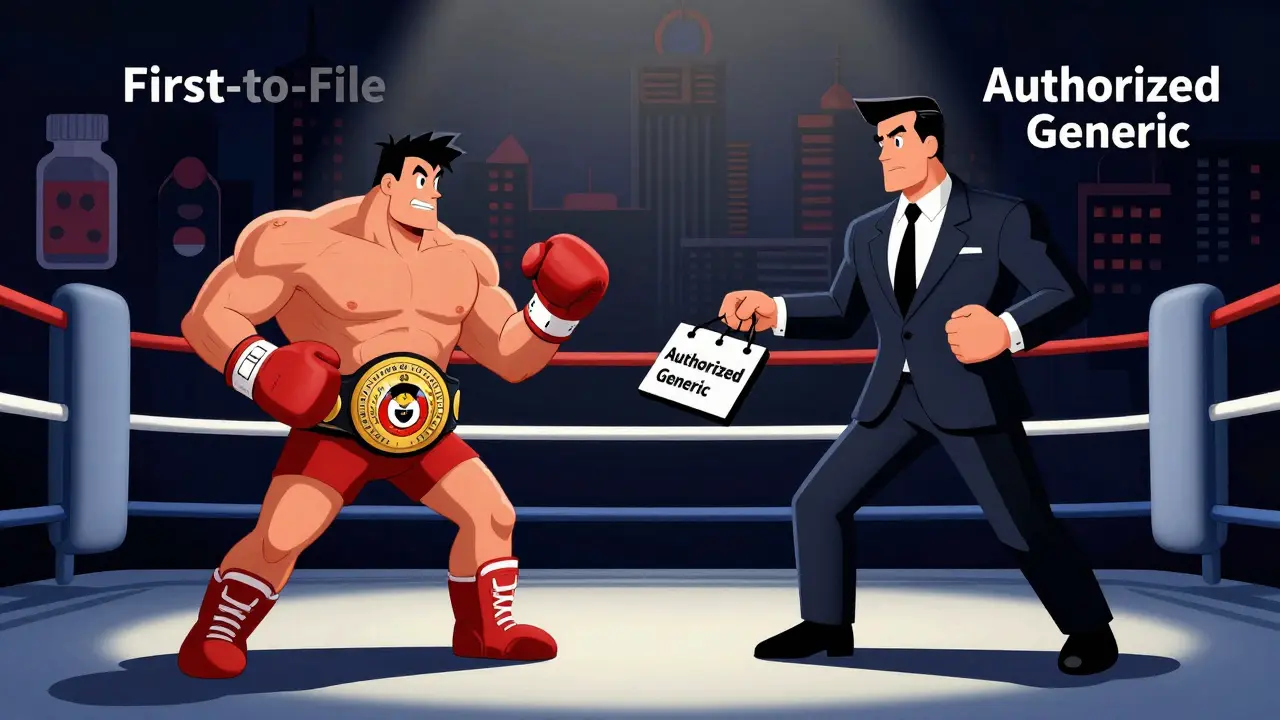
You’ve heard the promise: generic drugs are cheaper. You’ve seen the savings on your receipt. But not all generics are created equal, and the price tag you see depends heavily on a quiet battle happening behind the scenes between two specific types of manufacturers. On one side, you have first-to-file generics, which are the first independent manufacturer to win approval for a copy of a brand-name drug, earning a temporary monopoly. On the other, there are authorized generics, which are brand-name drugs sold without the brand label, often by the original manufacturer itself or a licensee.
This isn’t just legal jargon. It’s the reason why your pharmacist might charge you different amounts for what looks like the same pill at different times. The difference comes down to competition, exclusivity, and who holds the keys to the market during those critical first months after a patent expires.
Understanding the Players in the Market
To understand the cost comparison, you first need to know how these drugs enter the market. The system is built around the Hatch-Waxman Act, which is a 1984 U.S. law designed to balance patent protection with faster access to affordable generic medicines.
When a brand-name drug’s patent is nearing expiration, generic companies race to file an Abbreviated New Drug Application (ANDA) with the FDA. The first company to file this application gets a special prize: 180 days of marketing exclusivity. During this window, no other generic competitors can enter the market. This is the "first-to-file" generic. They get to be the only game in town for six months, allowing them to set prices higher than they would in a crowded market.
But here’s the twist. The brand-name manufacturer doesn’t have to sit back and watch their profits vanish. They can launch an authorized generic. Because this product is made under the brand’s original New Drug Application (NDA), it doesn’t need its own ANDA. It doesn’t need to prove bioequivalence separately because it *is* the brand drug, just repackaged. Crucially, the 180-day exclusivity granted to the first-to-file generic does not block the authorized generic from entering the market. So, while the first-to-file generic has a head start, the brand can jump into the ring immediately alongside them.
Price Tags: What the Data Actually Shows
So, who wins the price war? Does the presence of an authorized generic make things cheaper for you, or does it protect the brand’s high prices? The data from the Federal Trade Commission (FTC) and the FDA paints a clear picture: more competition usually means lower prices, even if that competition comes from the brand itself.
| Metric | First-to-File Generic Only | With Authorized Generic Competition |
|---|---|---|
| Retail Price Discount vs Brand | ~14% lower | ~18% lower (4% greater discount) |
| Pharmacy Acquisition Cost | ~20% lower than brand | ~27% lower than brand (7% greater discount) |
| Average Manufacturer Price (AMP) | 39% lower than brand | 54% lower than brand |
| First-Filer Revenue Impact | N/A | Reduces revenue by 40-52% |
Look closely at those numbers. When only the first-to-file generic is on the shelf, pharmacies pay about 20% less than the brand price. But when an authorized generic joins the mix, that pharmacy acquisition cost drops to 27% below the brand price. That’s a significant gap for healthcare providers and insurers.
For the consumer at the counter, the retail price also drops further. In markets with only the first-to-file generic, you’re looking at a 14% discount off the brand price. Add an authorized generic, and that discount stretches to 18%. While 4 percentage points might sound small, on expensive specialty drugs, that translates to hundreds of dollars saved per prescription.
The Squeeze on First-to-File Manufacturers
If authorized generics are so good for consumers, why do generic manufacturers hate them? The answer is simple: profit margins. The 180-day exclusivity period is supposed to be a golden ticket for the first-to-file generic. It’s meant to reward the risk of challenging the brand’s patent. Dr. Robin Feldman, a pharmaceutical policy expert at UC Hastings College of the Law, notes that this exclusivity period can be worth several hundred million dollars to generic manufacturers.
When an authorized generic enters the market, it splits that pie. The FTC’s 2013 report found that authorized generic competition reduces the first-filer’s revenues by 40% to 52% during that exclusive window. This pain doesn’t stop when the 180 days are up. The revenue impact persists for at least 30 months after the exclusivity period ends. Why? Because the authorized generic has already established supply chains and relationships with pharmacies and wholesalers, making it harder for the first-to-file generic to regain full market share once other traditional generics flood in.
This creates a strategic dilemma. Generic companies invest millions in testing and filing ANDAs. If the brand launches an authorized generic, the return on that investment shrinks dramatically. Critics worry this could discourage generic firms from challenging patents in the future, potentially delaying the entry of truly independent generics.

Why Brands Launch Authorized Generics
You might wonder why a brand-name company would cannibalize its own sales by selling a cheaper version of its drug. The logic is defensive. By launching an authorized generic, the brand keeps some revenue flowing instead of losing everything to the first-to-file generic. It’s a way to soften the blow of patent expiration.
Furthermore, authorized generics allow brands to stay in the conversation with pharmacists and doctors. Even as prices drop, the brand maintains a presence in the market. In some cases, this is part of a broader settlement strategy. After the Supreme Court’s 2013 decision in FTC v. Actavis, scrutiny increased on "pay-for-delay" settlements where brands paid generics to stay out of the market. Launching an authorized generic can sometimes be a alternative tactic to manage the transition period without outright illegal agreements.
However, this strategy isn’t always successful long-term. Research published in Health Affairs in 2023 showed that about 20% of authorized generics launched between 2010 and 2014 had no sales in Medicare data after five years. For many brands, the authorized generic is a short-term shield rather than a long-term asset.
The Bigger Picture: More Competitors, Lower Prices
The authorized generic vs. first-to-file debate is just the opening act. The real price crashes happen later. The FDA’s analysis shows that when you move from one competitor (first-to-file) to two (adding the authorized generic), prices drop significantly. But when four competitors enter, generic prices fall to 79% less than the brand price. With six or more competitors, prices plummet by over 95%.
This is why the initial 180-day period matters so much. It’s the most expensive phase of generic availability. Every bit of competition during this time-whether from an authorized generic or an early challenger-helps drive down costs. The FTC has consistently found that while authorized generics hurt the first-filer’s bottom line, they benefit consumers and save the healthcare system money during this critical window.
Recent improvements in FDA efficiency, such as the Generic Drug User Fee Amendments (GDUFA), have sped up approval times. First-cycle approval rates have jumped from 20% to 66%, cutting time to market by 13 months. This speed reduces the value of the exclusivity period, potentially changing how brands and generics strategize. As approvals get faster, the window for high-priced generics shrinks, making the immediate entry of authorized generics even more impactful on pricing dynamics.
What This Means for Your Wallet
As a patient, you don’t control which generic lands on the shelf. That decision rests with your insurer, pharmacy benefit manager (PBM), and local pharmacy inventory. However, understanding this dynamic helps you advocate for better pricing. If you’re paying a high copay for a generic, ask your pharmacist if there are other generic options available. Sometimes, switching to a different pharmacy or using a mail-order service can access products from different manufacturers, including authorized generics, which may offer better discounts.
Also, keep an eye on the "generic tier" of your insurance plan. Plans often update formularies as new competitors enter the market. If an authorized generic launches, your insurer might adjust rebates, leading to lower out-of-pocket costs for you. The presence of multiple generic suppliers, even if one is owned by the brand, is generally a sign that prices are moving in the right direction.
Is an authorized generic safe?
Yes. An authorized generic is manufactured by the same company that makes the brand-name drug, following the exact same specifications and quality controls. It contains the same active ingredients and meets all FDA standards for safety and efficacy. The only difference is the packaging and lack of brand name marketing.
Why are first-to-file generics more expensive than other generics?
First-to-file generics receive 180 days of market exclusivity, meaning they are the only generic option available during that period. This lack of competition allows them to charge higher prices than they would in a saturated market. Once the exclusivity period ends and other generics enter, prices typically drop significantly.
Do authorized generics hurt innovation?
This is a debated topic. Some argue that by reducing the profits of first-to-file generics, authorized generics might discourage companies from challenging patents. However, the FTC’s extensive studies have found no measurable reduction in the number of patent challenges by generic firms, suggesting that the financial incentives remain strong enough to encourage competition.
How can I tell if my generic is an authorized generic?
It can be difficult for patients to distinguish. Authorized generics often look very similar to the brand-name drug but may have different packaging colors or labeling that identifies the manufacturer as the brand owner or a licensee. Your pharmacist can usually identify the specific manufacturer and type of generic you are receiving.
Will prices drop further after the 180-day exclusivity period?
Yes, typically. The 180-day period is the most expensive phase for generics. Once the exclusivity ends, other generic manufacturers can enter the market. As more competitors join-moving from one to four or six suppliers-prices tend to fall sharply, often reaching 80-95% discounts compared to the original brand price.