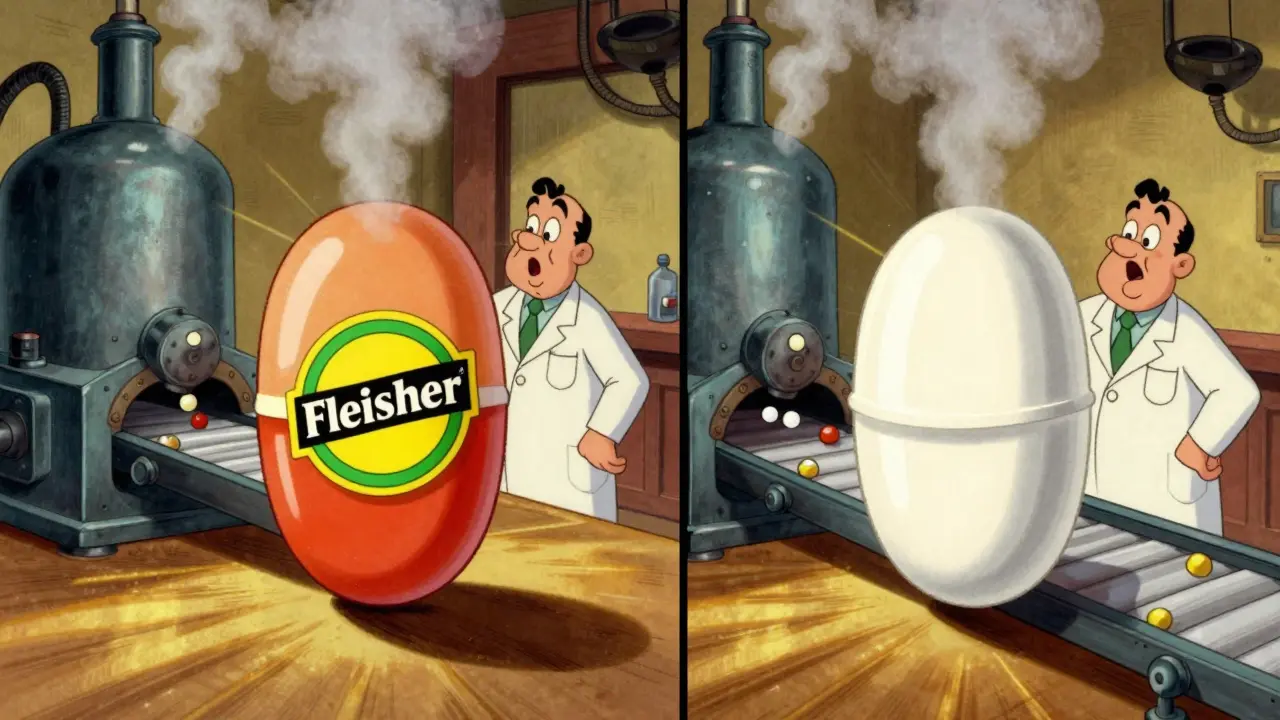
When you pick up a prescription, you might see two pills that look completely different-one with a big brand name on it, another with no name at all. You might wonder: is the cheaper one really the same? The answer, in many cases, is yes. Authorized generics are not just similar to brand-name drugs-they’re the exact same pills, made in the same factory, with the same ingredients, down to the last inactive component. The only difference? No brand logo on the bottle.
What Exactly Is an Authorized Generic?
An authorized generic is a brand-name drug that’s sold without the brand name on the label. It’s not a copy. It’s not a knockoff. It’s the real thing-manufactured by the same company that makes the branded version, using the same recipe, same equipment, same quality control. The U.S. Food and Drug Administration (FDA) defines it clearly: “An authorized generic is an approved brand name drug that is marketed without the brand name on its label.” That’s it. No changes. No shortcuts. No compromises.
These drugs exist because of the Hatch-Waxman Act of 1984, which opened the door for generic drugs in the U.S. But while traditional generics had to prove they worked the same way through testing, authorized generics skipped that step entirely. Why? Because they were already approved under the original brand’s New Drug Application (NDA). They don’t need a separate FDA review. They’re the same drug, just repackaged.
How Are Authorized Generics Different From Regular Generics?
This is where things get confusing-and important.
Regular generics, also called traditional generics, must contain the same active ingredient, strength, and dosage form as the brand. But they can have different inactive ingredients-things like fillers, dyes, or preservatives. Those might seem harmless, but for people with allergies, sensitivities, or digestive issues, even small changes can cause problems. One patient might switch from a brand to a generic and suddenly feel nauseous or get a rash. Not because the medicine doesn’t work-but because the binder changed.
Authorized generics don’t have that problem. They use the exact same inactive ingredients as the brand. If your body reacts to the brand, it will react the same way to the authorized generic. If you tolerate the brand perfectly, you’ll tolerate the authorized version too.
The FDA doesn’t list authorized generics in its Orange Book-the official directory of approved drugs with therapeutic equivalence ratings-because they’re not considered separate products. They’re the brand, just unlabeled.
Why Do Drug Companies Sell Them?
You might think: if a brand company makes an authorized generic, why don’t they just sell it under their own name? Simple: competition.
When a brand drug’s patent expires, other companies can launch their own generics. To protect market share, the original manufacturer often launches its own authorized generic-right when the competition arrives. It’s a smart move. They undercut the price of their own brand, but still charge more than traditional generics. It keeps patients loyal to their product and slows down the drop in revenue.
According to a 2022 study published in Health Affairs, over 150 authorized generics were on the market across 55 different drugs. Many are sold by the brand company itself, or by a subsidiary. Some are licensed to third parties. But they all come from the same original production line.
Are They Cheaper Than Brand Drugs?
Yes-but not always as cheap as you’d expect.
Brand-name drugs can cost 80-85% more than traditional generics, according to GoodRx data from 2023. Authorized generics usually sit in the middle. They’re cheaper than the brand, but often more expensive than the traditional generic version. Sometimes, they’re only 15-20% cheaper than the brand. That’s not a huge discount, but it’s still savings.
Why the higher price? Because the manufacturer doesn’t need to compete on price alone. They’re still the original producer. Pharmacies and insurers often place them on the same tier as traditional generics, so your copay might be low even if the list price isn’t rock bottom.
What Do Patients Actually Experience?
Real-world data shows patients rarely notice a difference.
A 2018 study in the National Center for Biotechnology Information (PMC) followed over 5,000 patients who switched from brand drugs to either traditional generics or authorized generics. The results? No meaningful difference in hospital visits, emergency room trips, or how often people stopped taking their meds. The only small outlier? A slightly higher rate of ER visits among those taking authorized generics-but researchers couldn’t explain why. It might have been random noise.
On patient forums and in doctor’s offices, many people report no change at all. One user on the American Academy of Allergy, Asthma & Immunology forum wrote: “I’ve been using the authorized generic of Xyzal for two years with identical results.” Another said: “I had bad reactions to the regular generic, but the authorized one? Perfect.”
Still, confusion is common. About 30% of patients, according to Pharmacy Times, question the switch when they see a new-looking pill. Pharmacists spend time explaining that the drug inside is unchanged. The FDA even offers printable materials to help with these conversations.
Can Your Pharmacist Substitute One Automatically?
It depends on your state and your doctor’s instructions.
In most states, pharmacists can swap a brand for a generic without asking you-unless your doctor writes “DAW” (Dispense As Written) on the prescription. That means no substitutions allowed.
But here’s the catch: if your doctor prescribes “Lisinopril 10mg,” your pharmacist might give you a traditional generic. If they want to give you the authorized generic, they might need to check with you or your insurance first, because it’s not always listed as interchangeable in their system. Some pharmacies don’t even stock it, or they assume you want the cheapest option.
If you want the authorized generic specifically, ask for it by name. Say: “Is there an authorized generic for this?” or “Can I get the one made by the same company as the brand?” It’s your right to know.
Should You Choose an Authorized Generic?
Here’s a simple rule: if you’ve had trouble with traditional generics-side effects, weird reactions, inconsistent results-ask for the authorized version. It’s your best shot at getting the exact same drug as the brand, without paying the brand price.
If you’ve never had an issue with generics, and your insurance covers the traditional one for $5, there’s no need to push for the authorized version. But if your copay is the same, why not? You’re getting the same medicine, with fewer unknowns.
For people with chronic conditions-high blood pressure, diabetes, epilepsy, or allergies-consistency matters. A tiny change in filler can throw off absorption. With an authorized generic, you eliminate that risk.
What’s the Future of Authorized Generics?
Experts predict authorized generics will keep a steady 5-7% share of the U.S. generic drug market through 2028, according to Evaluate Pharma. They’re not going away. But they’re under scrutiny.
Some lawmakers worry brand companies use them to delay real competition. The Affordable Prescriptions for Patients Act of 2023 proposed rules to limit this tactic. The FDA is also considering whether to list authorized generic prices in the Orange Book, so patients and insurers can compare more easily.
One thing’s clear: the science hasn’t changed. Authorized generics are the same as the brand. The only question is whether you’ll get the chance to use them-and whether your pharmacy and insurer make it easy.
What to Do Next
- Check your current prescription. Is it a brand? Ask your pharmacist: “Is there an authorized generic?”
- Compare prices. Sometimes the authorized generic costs the same as the traditional one. If so, choose it.
- If you’ve had bad reactions to generics before, request the authorized version. Document any changes in how you feel.
- Don’t assume the cheapest is the best. Sometimes, the identical version is worth the slight extra cost.
- Use the FDA’s website to look up your drug. They list authorized generics under the brand name.
You’re not taking a risk by switching to an authorized generic. You’re making a smarter choice. The medicine hasn’t changed. The price might have. And that’s the only difference that matters.
TONY ADAMS
January 26, 2026 AT 08:58Bro i switched to the generic and my anxiety went nuts. Like i swear i could feel the difference. Not even kidding. The brand made me chill, this cheap stuff made me wanna scream at my cat.
George Rahn
January 26, 2026 AT 20:00One must contemplate the metaphysical implications of pharmaceutical identity: if a pill is chemically identical yet stripped of its symbolic branding, does it retain its ontological essence? Or has it been exiled from the cathedral of medical legitimacy into the marketplace of anonymity? The FDA, in its bureaucratic wisdom, has rendered the soul of medicine into a commodity without a name.
Ashley Karanja
January 27, 2026 AT 15:15As someone with a history of autoimmune sensitivity to excipients, this is *so* important. I had a whole episode with a generic lisinopril that had magnesium stearate from a different source-triggered a flare-up. Switched to the authorized generic? Zero issues. It’s not about ‘brand loyalty’-it’s about molecular consistency. The inactive ingredients are the silent players in your physiology, and they matter more than most clinicians admit. The FDA’s silence on listing them in the Orange Book is a systemic gap, honestly. We need transparency, not just equivalence.
Karen Droege
January 28, 2026 AT 00:22Y’all need to stop treating meds like they’re cereal boxes. If your body reacts to a filler, that’s not ‘being picky’-that’s your immune system screaming. I’m a pharmacist in Vancouver, and I’ve seen people cry because they got the wrong generic and ended up in the ER. Authorized generics? They’re the unsung heroes. Don’t just grab the cheapest-ask for the one made by the original company. Your body will thank you. 🙏💊
Shweta Deshpande
January 29, 2026 AT 16:28Wow this is so helpful! I never knew there was a difference between generics. I’ve been using the cheap ones for my blood pressure and never had issues, but now I’m gonna ask my pharmacist about the authorized one just in case. Thanks for breaking it down so nicely 😊
Angie Thompson
January 30, 2026 AT 01:31OMG I just found out my ADHD med has an authorized generic and my copay’s the same?! I’ve been paying $80 for the brand for years 😭 I’m switching tomorrow. Why didn’t anyone tell me this sooner?? 🙌
shivam utkresth
January 30, 2026 AT 23:25Interesting. In India, generics are often the only option, and people trust them implicitly. But I see your point-Western pharma culture is obsessed with branding. The placebo effect of a logo is real, even if the pill isn’t.
bella nash
January 31, 2026 AT 13:50It is a matter of regulatory oversight and market dynamics. The absence of distinct nomenclature in the Orange Book renders patient awareness insufficient. The structural incentives are misaligned.
SWAPNIL SIDAM
February 2, 2026 AT 11:49My uncle died because of a bad generic. His heart stopped after switching. They said it was ‘equivalent.’ But his body knew the difference. Never again.
Betty Bomber
February 2, 2026 AT 15:41So… the authorized generic is just the brand with a blank label? Huh. I guess I’ve been using them without realizing it.
eric fert
February 2, 2026 AT 17:23Let’s be real-this whole authorized generic thing is Big Pharma’s sneaky way to keep you paying more while pretending they’re helping. They make the exact same pill, then sell it to themselves under a different name to undercut real generics. It’s a monopoly play disguised as consumer choice. The FDA’s complicit. And don’t get me started on how pharmacies don’t even stock them unless forced. This isn’t transparency-it’s manipulation dressed in white coats.
Curtis Younker
February 3, 2026 AT 12:40Guys, I switched to the authorized generic for my thyroid med last year and my energy is back! I used to feel foggy and tired all the time-thought it was just aging. Turns out the generic filler was messing with my absorption. Now I feel like I’m 30 again. If you’ve been feeling off on generics, don’t ignore it-ask for the authorized one. You’ve got nothing to lose and your health to gain 💪
Ryan W
February 4, 2026 AT 20:50Per FDA guidelines, the term ‘authorized generic’ is semantically redundant. All generics are ‘authorized’ under the Hatch-Waxman Act. The distinction is purely marketing-driven. The pharmacopeial equivalence standard is sufficient. The emotional attachment to branded packaging is a psychological artifact, not a clinical one.
Suresh Kumar Govindan
February 6, 2026 AT 13:44Authorized generics are a Trojan horse. The same corporation that charges $300 for the brand sells you the identical pill for $150… while blocking cheaper generics from entering the market. This is not consumer protection. This is economic warfare disguised as transparency.
Neil Thorogood
February 7, 2026 AT 12:06So… you’re telling me I’ve been overpaying for my anxiety meds because I thought the blue pill with the logo was ‘better’? 😳 I’m switching to the authorized version tomorrow. My wallet and my therapist will both thank you. 🙏💸