When you start taking an antidepressant, you’re hoping for relief - not a medical emergency. But if you take too much, or mix it with another medication, your body can flood with serotonin. This isn’t just a side effect. It’s serotonin syndrome, a life-threatening reaction that can strike in hours. And most people don’t see it coming.
What Exactly Is Serotonin Syndrome?
Serotonin syndrome happens when too much serotonin builds up in your nervous system. It’s not an allergy. It’s a pharmacological overload. The most common culprits are SSRIs like sertraline or escitalopram, SNRIs like venlafaxine, and MAOIs like phenelzine. But it’s not just antidepressants. Pain meds like tramadol, migraine drugs like sumatriptan, even some cough syrups with dextromethorphan can push you over the edge - especially when combined.
This isn’t rare. Between 2015 and 2022, reported cases rose 38%. SSRIs alone caused 62% of them. And it’s getting worse. Emergency visits for serotonin syndrome jumped 22% in just one year, according to CDC data through mid-2024. Most cases involve two or more serotonergic drugs. People aren’t taking extra pills on purpose - they’re just unaware of the risks.
The First Signs: Don’t Ignore These
The earliest warning signs are easy to miss. You might think you’re just anxious, or coming down with the flu. But there’s a pattern.
- Tremors - your hands shake when you’re at rest. Not from caffeine. Not from nerves. A jittery, involuntary shaking that doesn’t go away.
- Muscle twitching or jerking - sudden, brief contractions in your arms, legs, or torso. Like a muscle spasm you can’t control.
- Restlessness - you can’t sit still. You pace. You fidget. You feel wired, even if you’re exhausted.
- Sweating - drenching, unexplained sweat, even in a cool room.
- Nausea or diarrhea - gastrointestinal symptoms show up fast. In over 60% of cases, vomiting or loose stools are among the first signs.
- Dilated pupils - your pupils look wider than normal, even in bright light. Normal is 2-4mm. In serotonin syndrome, they’re often 5-8mm.
These symptoms usually show up within 24 hours - often within the first hour. Sixty percent of people notice something’s wrong within six hours of taking a new drug or increasing a dose. That’s why timing matters.
The Red Flags: When It Gets Dangerous
If the early signs are ignored, things escalate quickly. The body goes into overdrive. This is where serotonin syndrome becomes a medical emergency.
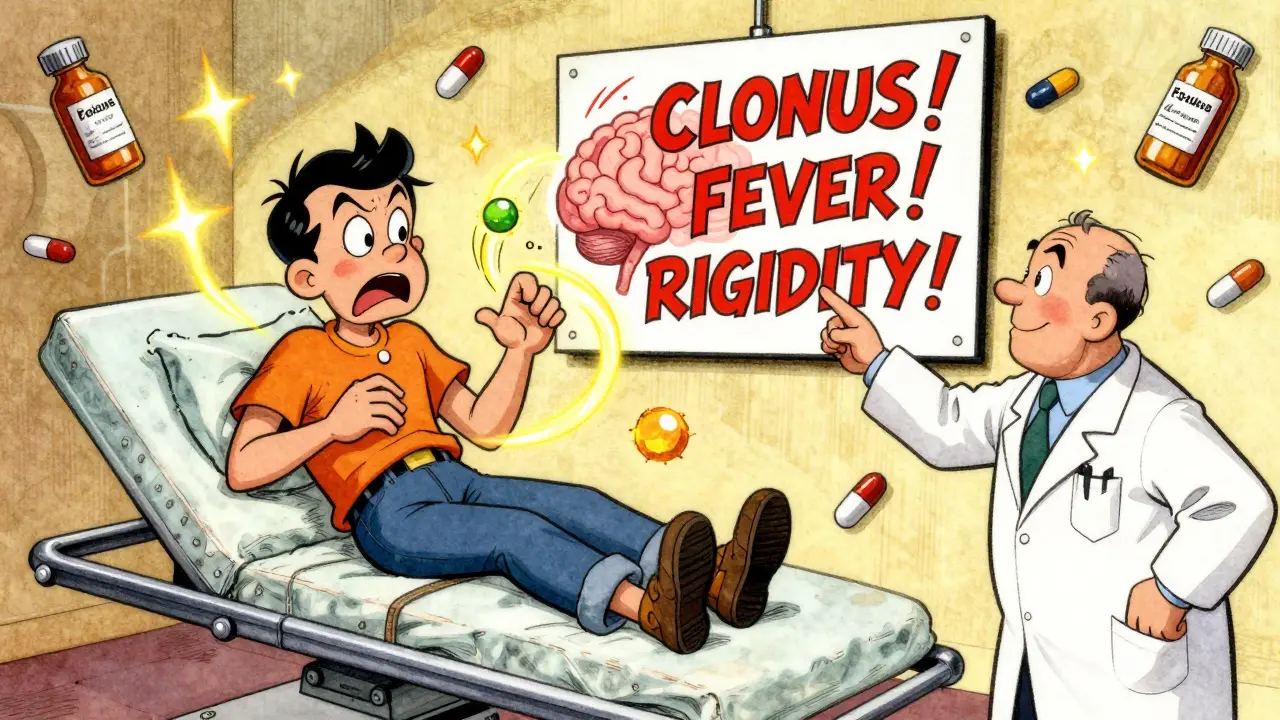
- Clonus - this is the #1 diagnostic clue. It’s a rhythmic, involuntary muscle contraction. Try this: gently push your foot upward. If your toes keep flexing and relaxing on their own - that’s clonus. It’s present in 92% of confirmed cases.
- High fever - body temperature above 38.5°C (101.3°F). In severe cases, it can hit 41.1°C (106°F). That’s not a fever from infection. It’s your muscles overheating from constant contraction.
- Muscle rigidity - your limbs feel stiff, like they’re locked. Not like a cramp. Like you’re made of wood. This is different from the stiffness of Parkinson’s or NMS - here, it’s paired with hyperreflexia.
- Fast heartbeat - heart rate over 100 bpm. In severe cases, it can race past 140.
- High blood pressure - systolic readings above 160 mmHg are common.
- Seizures - occur in nearly 30% of severe cases.
- Unconsciousness - if you or someone else stops responding, calls for help are urgent.
These aren’t just uncomfortable. They’re dangerous. High fever and muscle rigidity can lead to rhabdomyolysis - your muscles break down, releasing toxins that fry your kidneys. That’s how people die.

How Doctors Diagnose It - And Why It’s Often Missed
There’s no single blood test for serotonin syndrome. Serotonin levels in the blood don’t reliably predict symptoms. Instead, doctors use the Hunter Serotonin Toxicity Criteria. It’s simple: you need one of these combinations:
- Spontaneous clonus
- Inducible clonus + agitation or sweating
- Ocular clonus + agitation or sweating
- Tremor + hyperreflexia
- Muscle rigidity + fever + ocular or inducible clonus
This tool is 84% accurate at spotting serotonin syndrome and 97% accurate at ruling it out. But here’s the problem: 25% of cases are missed in emergency rooms. Why? Because doctors think it’s anxiety, the flu, or a panic attack. Patients often say, “I just feel weird.” They don’t connect the dots.
And it’s easy to confuse with neuroleptic malignant syndrome (NMS). NMS comes on slower - over days, not hours. It causes stiffness without tremors or clonus. And unlike serotonin syndrome, NMS patients have dry skin, constipation, and low blood pressure. The difference is subtle, but critical.
What to Do If You Suspect Serotonin Syndrome
If you or someone else has symptoms - especially clonus, high fever, or muscle rigidity - call 911 or go to the ER immediately. Don’t wait. Don’t text a friend. Don’t Google it.
At the hospital, treatment starts with stopping the offending drug. That’s step one. Then:
- Benzodiazepines - lorazepam or diazepam are given IV to calm the nervous system, reduce muscle spasms, and lower body temperature.
- Cooling - ice packs, cooling blankets, IV fluids to bring down fever. Speed matters - aim to drop temperature by 1-2°C per hour.
- IV fluids - to prevent dehydration from sweating and vomiting. Usually 150-200 mL per hour for adults.
- Cyproheptadine - the only specific antidote. Given as 12 mg orally or via feeding tube, then 2 mg every 2 hours until symptoms improve. Most people start feeling better within 48 hours if treated early.
About 30% of cases require hospitalization. But if caught early, most people recover fully within 24-72 hours. Delayed treatment? That’s when organ failure and death happen.
How to Prevent It
Most cases are preventable. Here’s how:
- Never mix antidepressants without doctor approval - especially SSRIs with MAOIs. You need a 14-day gap between stopping one and starting the other. The FDA requires this for a reason.
- Check every new medication - even over-the-counter ones. Dextromethorphan in cough syrup? Tramadol for pain? Triptans for migraines? All can trigger serotonin syndrome when combined with antidepressants.
- Ask your pharmacist or doctor - “Could this interact with my antidepressant?” Don’t assume they know your full list. Bring a written list of everything you take - including supplements.
- Know your symptoms - if you start shaking, sweating, or feeling agitated after a new drug or dose change, don’t brush it off. It’s not “just anxiety.”
- Don’t self-medicate - increasing your dose because you “don’t feel better yet” is dangerous. It takes weeks for antidepressants to work. Don’t rush it.
One study showed that when doctors do proper medication reconciliation - reviewing every drug a patient takes - the risk of serotonin syndrome drops by 62%. When patients are educated about the risks, cases fall by 47%.
Real Stories, Real Risks
On Reddit’s r/mentalhealth, over 1,200 people shared their experiences. Most said they weren’t warned about serotonin syndrome when prescribed their antidepressant. Two-thirds thought their early symptoms - tremors, sweating, diarrhea - were just side effects. One man took an extra dose of sertraline and a cold medicine with dextromethorphan. He developed clonus within two hours. He thought he was having a panic attack. He didn’t go to the hospital until he passed out. He spent five days in ICU.
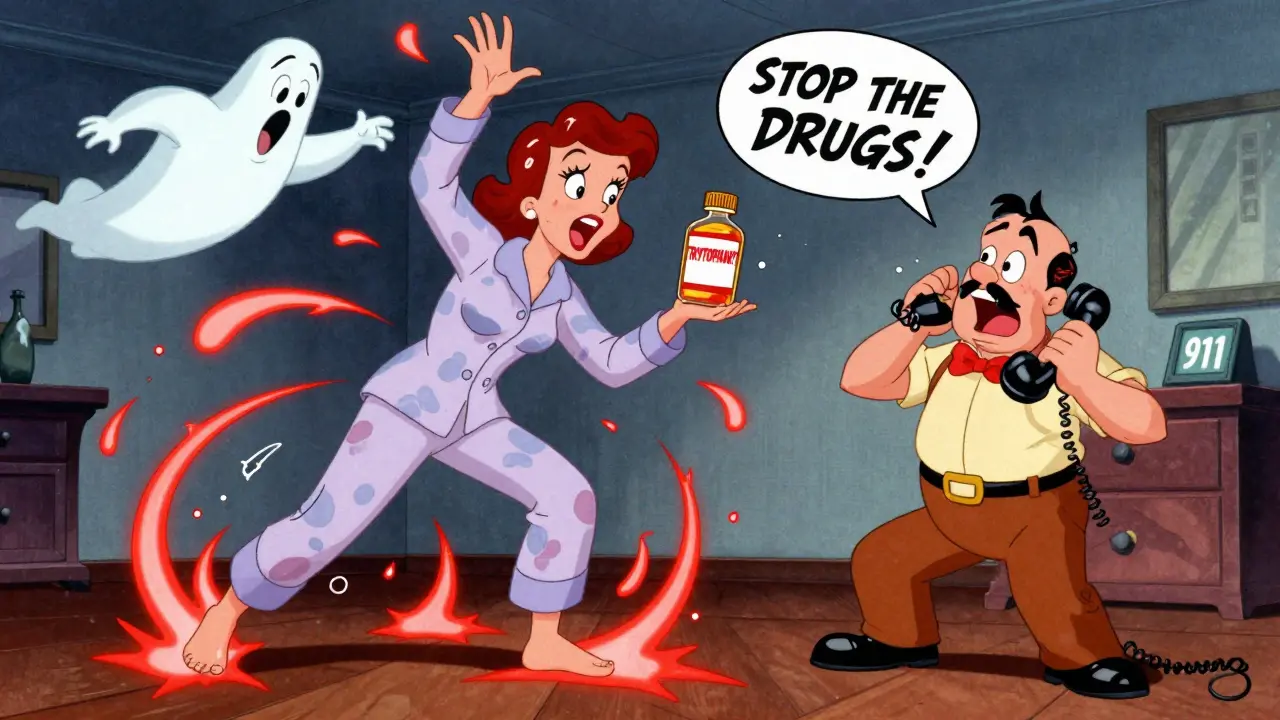
Another woman started venlafaxine and began taking melatonin with a little bit of tryptophan - a supplement she read was “good for sleep.” Within 12 hours, she couldn’t stop trembling. Her husband took her to the ER. They diagnosed serotonin syndrome. She recovered in 48 hours. She says now: “I wish someone had told me supplements aren’t always safe.”
These aren’t outliers. They’re common. And they’re preventable.
Bottom Line
Serotonin syndrome is rare - but deadly. It doesn’t care if you’re taking your meds as prescribed. It only cares if your serotonin levels spike too fast. The signs are clear if you know what to look for. Tremors. Sweating. Clonus. Fever. Muscle rigidity. Don’t wait for all of them. If you notice even two or three, especially after a new drug or dose change - act fast.
Antidepressants save lives. But they can also hurt you if used carelessly. Know the signs. Talk to your doctor. Keep a list of everything you take. And if something feels wrong - trust your gut. It might just save your life.
Can serotonin syndrome happen with just one antidepressant?
Yes. While most cases involve two or more serotonergic drugs, taking too much of a single antidepressant - especially SSRIs or SNRIs - can trigger serotonin syndrome. Overdosing, even unintentionally, raises serotonin levels fast enough to cause symptoms. It’s less common than drug interactions, but it still happens.
How long does serotonin syndrome last?
Mild cases usually resolve within 24 to 48 hours after stopping the medication and getting treatment. Severe cases can last several days, especially if there’s organ damage or if the drug has a long half-life (like fluoxetine, which can stay in your system for weeks). Recovery depends on how quickly treatment starts.
Are there any safe supplements to take with antidepressants?
Some are, but many aren’t. St. John’s Wort, tryptophan, 5-HTP, and even high-dose vitamin B6 can increase serotonin and trigger serotonin syndrome. Melatonin is generally low-risk, but some formulations contain hidden serotonergic ingredients. Always check with your doctor before adding any supplement - even if it’s labeled “natural.”
Can you get serotonin syndrome from withdrawing from antidepressants?
No. Withdrawal from antidepressants causes different symptoms - dizziness, brain zaps, nausea, irritability - but not serotonin syndrome. That only happens when serotonin levels are too high, not too low. However, restarting an antidepressant too soon after stopping can trigger it, especially if you switch to another serotonergic drug without a proper washout period.
Is serotonin syndrome the same as an allergic reaction?
No. An allergic reaction involves your immune system - think hives, swelling, trouble breathing. Serotonin syndrome is a drug interaction. It’s a chemical overload in your brain and nerves. It doesn’t cause rashes or anaphylaxis. But it can be just as dangerous - and it’s far more common.
Can children get serotonin syndrome?
Yes. While most cases are in adults, children and teens on antidepressants are also at risk, especially if they’re prescribed multiple serotonergic drugs. Parents should watch for restlessness, tremors, vomiting, or unusual agitation after starting or changing a medication. Early recognition is just as critical in younger patients.
What should I do if I think I’m having serotonin syndrome but I’m not near a hospital?
Call emergency services immediately. Do not try to drive yourself. If you’re alone, ask someone to call for you. While waiting, try to cool down - remove heavy clothing, sip water if you can keep it down, and stay calm. Do not take any more medication. Do not try to “sleep it off.” This is not something you can treat at home.
Oluwatosin Ayodele
December 26, 2025 AT 00:20People keep acting like serotonin syndrome is some rare glitch. It’s not. I’ve seen three ER cases in my hospital alone last year - all from patients mixing SSRIs with OTC cough syrup. The docs didn’t even consider it until the patient started clonusing in the waiting room. You don’t need to be a drug addict to get this. You just need to be dumb enough to think ‘natural’ means safe.
Mussin Machhour
December 27, 2025 AT 00:39Bro this is life-saving info. I just started sertraline and was about to grab that dextromethorphan cough stuff because I had a cold. Now I’m not. Seriously - if you’re on antidepressants, stop Googling random remedies. Talk to your pharmacist. Or better yet, just wait it out. Your body’s already doing enough.
Bailey Adkison
December 28, 2025 AT 19:46Wrong. The Hunter Criteria aren't the gold standard. They're a heuristic with 84% sensitivity but zero specificity for differential diagnosis. You're conflating correlation with causation. The real issue is polypharmacy and lazy prescribing. The CDC data is skewed because ERs are overdiagnosing it to avoid liability. Also, 'clonus' isn't a symptom - it's a sign. Learn the difference before you write medical content.
Michael Dillon
December 30, 2025 AT 14:50So let me get this straight - you're telling me I can't take NyQuil if I'm on Zoloft? What about that one time I took 3 Advil PMs and felt fine? This feels like fearmongering. I’ve been on antidepressants for 8 years. I know my body. If I feel weird, I'll just stop. Simple.
Gary Hartung
December 30, 2025 AT 16:24Oh wow. Another ‘awareness’ post. Let me guess - you’re a psychiatrist who got paid by Big Pharma to write this? Because this reads like a pharmaceutical ad disguised as public service. ‘Don’t mix meds!’ - yeah, because the FDA doesn’t already require 14 pages of warnings on every bottle. Why not just ban SSRIs entirely if they’re this dangerous? Or better yet - why don’t you tell us how many people die from *not* taking them?
Carlos Narvaez
December 31, 2025 AT 15:53Clonus is the key. If you see it, go now. No exceptions. Everything else is noise.
Harbans Singh
January 2, 2026 AT 12:04I’m from India and we don’t have access to cyproheptadine in most rural clinics. What do people do there? I’ve seen patients with tremors and fever get sent home with antipyretics. Is there any low-cost, widely available way to manage this before reaching a hospital? Maybe IV fluids and cooling alone can buy time?
Justin James
January 3, 2026 AT 15:04They’re hiding the real truth. Serotonin syndrome isn’t accidental - it’s engineered. The drug companies know exactly how many people will overdose on combinations. They profit from ER visits, hospital stays, and long-term rehab. They push these meds like candy and then sell you the antidote. Look at the patent timeline - every new SSRI comes with a ‘safe’ combo drug that’s actually just another serotonin booster. It’s a loop. And you’re all just sheep in the feedlot.
Rick Kimberly
January 3, 2026 AT 23:06While the clinical presentation of serotonin syndrome is well-documented, I would respectfully suggest that the emphasis on patient self-diagnosis may inadvertently contribute to health anxiety. A more prudent approach would involve structured medication reconciliation protocols implemented by primary care providers, rather than placing diagnostic burden on laypersons. The data supporting public education campaigns remains correlational, not causative.
Terry Free
January 5, 2026 AT 07:18Wow. So now we’re blaming people for taking cough syrup? Next you’ll say not drinking water causes kidney failure. People aren’t stupid. They just want to feel better. If your meds make you feel like shit, maybe the problem isn’t the NyQuil - it’s the damn antidepressant. Maybe you need to switch drugs instead of scaring people into silence.
Sophie Stallkind
January 5, 2026 AT 14:48Thank you for this meticulously researched and clinically accurate overview. The integration of Hunter Criteria with epidemiological data provides a robust framework for both clinical and public health intervention. I would encourage healthcare institutions to adopt standardized patient handouts based on this content, particularly in primary care and psychiatric outpatient settings.
Oluwatosin Ayodele
January 7, 2026 AT 12:53And yet here we are - the guy who says ‘I know my body’ is the same guy who died last week after taking tramadol with his SSRI. He didn’t think he was at risk either. You don’t get to be the exception. Not when your liver doesn’t know your ego.