Anticoagulant Bleeding Risk Calculator
Risk Assessment Tool
This calculator estimates your bleeding risk based on key factors from the article. Use it to discuss risk reduction with your doctor.
Risk Assessment Results
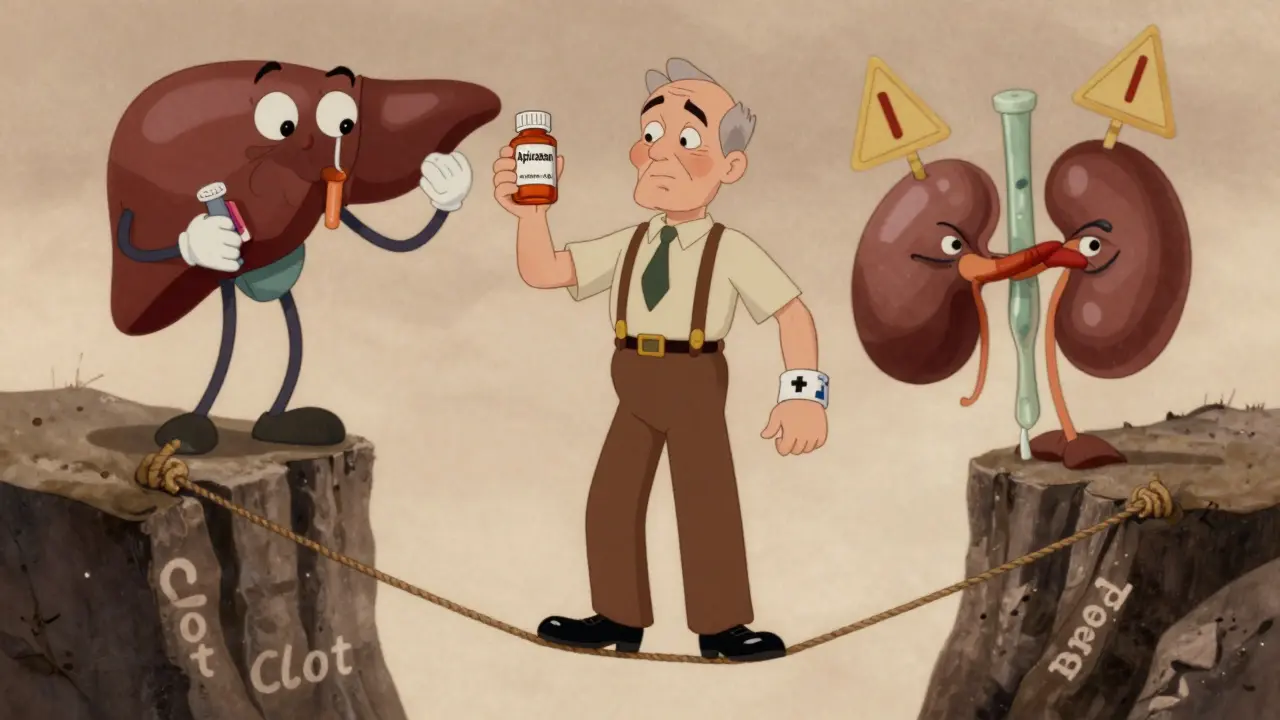
When you take an anticoagulant, you're not just taking a pill to prevent a stroke or clot-you're walking a tightrope between two dangers: blood clots and uncontrolled bleeding. This balance is why hemorrhage prevention isn't just a side note-it's the core of safe anticoagulant use. Millions of people worldwide rely on these medications, especially those with atrial fibrillation, deep vein thrombosis, or mechanical heart valves. But for every person who avoids a stroke, another might end up in the ER because of a bleed. The good news? With the right knowledge, most of these bleeding events are preventable.
Why Anticoagulants Can Cause Bleeding
Anticoagulants don’t make your blood "thin" like water. They interfere with specific proteins in your clotting system. Warfarin blocks vitamin K, which your liver needs to make clotting factors. DOACs like apixaban and rivaroxaban directly inhibit factor Xa or thrombin. Heparin boosts antithrombin, which shuts down clot formation. All of them reduce clotting power. That’s what you want-until it goes too far.The problem isn’t the drug itself. It’s how it interacts with your body. People over 75 have two to three times the risk of major bleeding. Those with kidney problems? Their bodies can’t clear the drugs properly, so levels build up. A creatinine clearance (CrCl) below 50 mL/min doubles the risk. And if you’re taking aspirin or clopidogrel on top of your anticoagulant? Your bleeding risk jumps by 50% to 70%. Many patients don’t realize they’re doubling their danger just by adding an over-the-counter painkiller.
Choosing the Right Anticoagulant
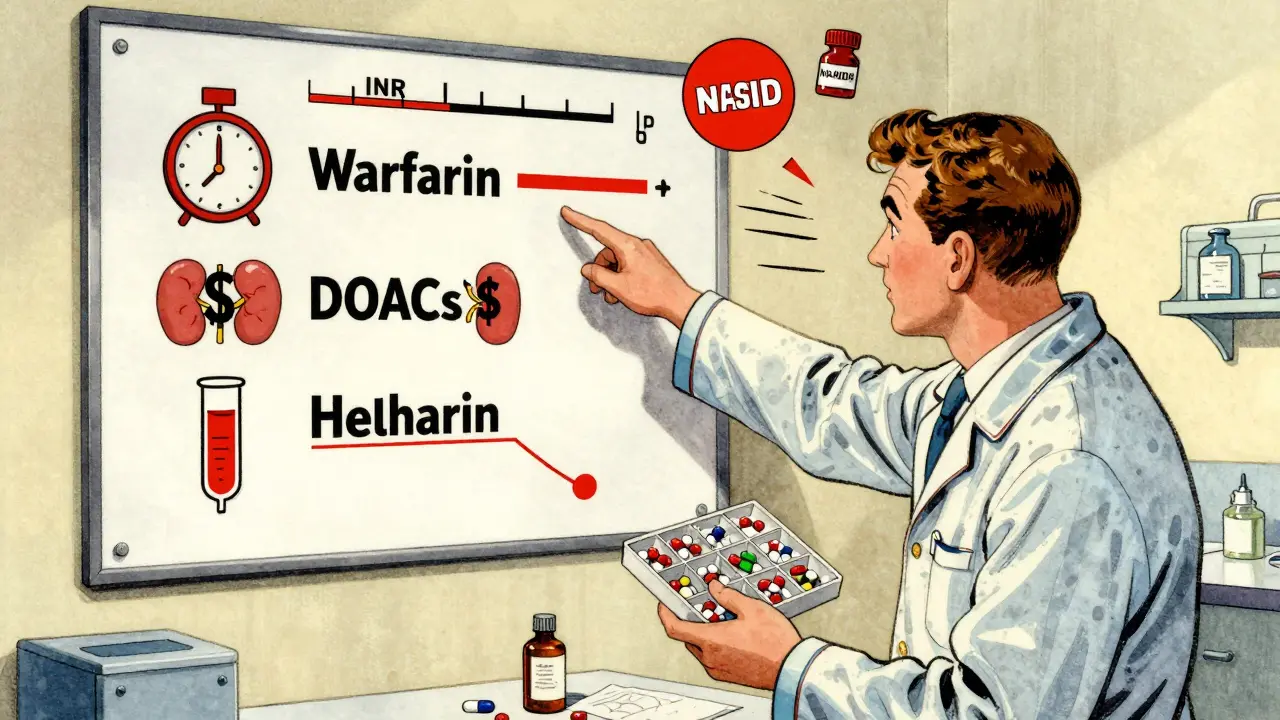
Not all blood thinners are created equal. Your choice depends on your health, lifestyle, and risks.- Warfarin: Cheap-just $4 a month-but requires frequent blood tests (INR). The target range is usually 2.0-3.0. If your INR drops below 1.5, you’re not protected. If it goes above 4.0, your bleeding risk spikes. Keeping your time in therapeutic range (TTR) above 70% is critical. Every 10% drop in TTR means a 15% higher chance of major bleeding.
- DOACs (apixaban, rivaroxaban, dabigatran, edoxaban): No regular blood tests. Fixed doses. But they’re expensive-apixaban costs around $550 a month without insurance. They’re also harder to reverse if you bleed. Still, studies show they cause 19-20% fewer major bleeds than warfarin. Apixaban has the best safety profile: 31% lower bleeding risk than warfarin in the ARISTOTLE trial.
- Heparins (enoxaparin, unfractionated heparin): Used in hospitals or for short-term treatment. They’re safe in kidney disease but can cause heparin-induced thrombocytopenia (HIT), a rare but dangerous drop in platelets.
Here’s the catch: DOACs aren’t always better. For patients with mechanical mitral valves or antiphospholipid syndrome, warfarin still outperforms. DOACs have been linked to more clots in these cases. So if you have one of these conditions, switching to a DOAC could be dangerous.
Key Risk Factors You Can Control
Some risks are out of your hands-age, kidney function, genetics. But others? You can manage them.- Don’t mix anticoagulants with NSAIDs. Ibuprofen, naproxen, even high-dose aspirin can irritate your stomach lining and make bleeding more likely. Use acetaminophen instead for pain.
- Check your kidney function. If you’re on a DOAC, your doctor should test your CrCl at least every 3-6 months. If it drops below 30 mL/min, you may need to switch or reduce your dose. Rivaroxaban requires dose reduction at CrCl <50; apixaban at <25.
- Never stop cold turkey. Stopping anticoagulants suddenly-even for a few days-can trigger clots. If you need surgery or a dental procedure, talk to your doctor. They might adjust your dose, not stop it.
- Watch for signs of bleeding. Bruising easily, pink or red urine, black stools, nosebleeds that won’t stop, or headaches with vision changes? These aren’t normal. Call your doctor immediately.
What to Do If You Bleed
Bleeding isn’t always an emergency. A small nosebleed or bruise? Monitor it. But major bleeding-vomiting blood, sudden weakness, severe abdominal pain-needs immediate action.Reversal agents exist, but they’re not magic bullets:
- For warfarin: 4f-PCC (four-factor prothrombin complex concentrate) works in minutes. Vitamin K helps but takes hours. Don’t wait for vitamin K alone in a major bleed.
- For dabigatran: Idarucizumab (Praxbind) is the specific antidote. It’s given as two vials IV. It works fast-within minutes.
- For apixaban, rivaroxaban, edoxaban: Andexanet alfa (Andexxa) reverses them. But it costs about $13,000 per dose and isn’t available everywhere.
- For heparin: Protamine reverses unfractionated heparin. It doesn’t work well for enoxaparin or other LMWHs.
Here’s what most hospitals do: If you’re on a DOAC and have a major bleed, they’ll check if the drug is still in your system using specific tests. If it is, they’ll give the antidote. If not, they’ll treat the bleeding directly-fluids, transfusions, pressure, surgery.

Long-Term Strategies for Prevention
Preventing bleeding isn’t just about drugs. It’s about habits.- Use a pill organizer. Taking two doses by accident is a common error, especially in older adults.
- Keep a bleeding diary. Note any bruising, bleeding episodes, or falls. Bring it to appointments.
- Wear a medical alert bracelet. If you’re found unconscious, paramedics need to know you’re on a blood thinner.
- Ask about desmopressin (DDAVP). For people with inherited bleeding disorders like von Willebrand disease who also need anticoagulation, this drug can help reduce bleeding by boosting clotting proteins. A 2021 study showed it cut blood loss in women undergoing abortions on anticoagulants.
And here’s something many don’t know: After a bleed, restarting anticoagulation often saves lives. The American College of Cardiology recommends restarting in most patients within days-unless you’re at very low risk for clots (like someone with a single provoked DVT that happened over a year ago). The risk of a clot after stopping is often higher than the risk of another bleed.
The Future: Better Tools on the Horizon
Researchers are working on solutions that could change everything:- Ciraparantag: A universal reversal agent in trials. If it works, it could reverse all DOACs and heparins with one drug.
- Point-of-care tests for DOACs: Just like INR for warfarin, these tests could show real-time drug levels. Early models suggest they could cut bleeding events by 15-20%.
- AI risk predictors: Tools that combine age, kidney function, genetics, and medication history to estimate your personal bleeding risk-so your dose is tailored, not one-size-fits-all.
These aren’t sci-fi. They’re coming. But today, the best tool you have is awareness. Know your drug. Know your kidneys. Know your signs of bleeding. And never, ever stop taking your anticoagulant without talking to your doctor.
Can I take ibuprofen while on a blood thinner?
No, it’s not safe. Ibuprofen and other NSAIDs increase your risk of stomach bleeding and interfere with platelet function. Even occasional use can be dangerous. Use acetaminophen (Tylenol) for pain instead, and always check with your doctor before taking any new medication.
Which anticoagulant has the lowest bleeding risk?
Apixaban has the lowest major bleeding risk among DOACs and is 31% safer than warfarin based on the ARISTOTLE trial. It’s often the first choice for older adults or those with kidney issues, as it requires dose reduction only at very low kidney function (CrCl <25 mL/min). However, it’s not safe for mechanical heart valves.
Do I need blood tests if I’m on a DOAC?
Routine blood tests aren’t required for DOACs like they are for warfarin. But your doctor should still check your kidney function (CrCl) every 3-6 months, especially if you’re over 75 or have diabetes, heart failure, or high blood pressure. If your kidneys decline, your DOAC dose may need adjustment or you may need to switch.
Can I stop my blood thinner before surgery?
Never stop on your own. For minor procedures like dental work, you usually keep taking it. For major surgery, your doctor will decide whether to pause it, reduce the dose, or bridge with heparin. Timing depends on the drug, the surgery, and your clotting risk. Stopping too early can cause a stroke or clot; stopping too late can cause dangerous bleeding.
What should I do if I fall and hit my head while on anticoagulants?
Even if you feel fine, go to the ER. Internal bleeding in the brain can develop slowly. A head injury on anticoagulants can be life-threatening even without obvious symptoms. Doctors will likely order a CT scan to check for bleeding. Don’t wait for a headache or dizziness-act fast.
Is warfarin still used today?
Yes, and it’s still the best option for some people. It’s the only anticoagulant proven safe and effective for mechanical heart valves and antiphospholipid syndrome. It’s also the cheapest. If you can manage the blood tests and diet restrictions, it’s a reliable choice. But for most others, DOACs are safer and easier.
Aisling Maguire
March 1, 2026 AT 08:20Lisa Fremder
March 3, 2026 AT 00:00Justin Ransburg
March 4, 2026 AT 10:50Sumit Mohan Saxena
March 5, 2026 AT 00:35Brandon Vasquez
March 5, 2026 AT 19:04Vikas Meshram
March 7, 2026 AT 18:47Jimmy Quilty
March 9, 2026 AT 01:11Miranda Anderson
March 10, 2026 AT 06:39Gigi Valdez
March 10, 2026 AT 20:04Sneha Mahapatra
March 10, 2026 AT 20:24bill cook
March 12, 2026 AT 14:28Sumit Mohan Saxena
March 13, 2026 AT 01:32