
Did you know that nearly 4% of pediatric hospital admissions stem directly from inappropriate medication use? It is a startling reality for any parent navigating the complex world of childhood illnesses. When your child gets sick, the instinct is often to give them what worked for you or your spouse. But children are not simply smaller versions of adults. Their bodies process medicines in ways that can be unpredictable if you ignore developmental stages.
We need to talk about Pediatric Medications. These aren’t just scaled-down adult pills. They require specific adjustments for weight, metabolism, and organ function. If you get the dosing wrong, even a common fever reducer can become dangerous. So, how do you navigate the labels, the liquid suspensions, and the confusing guidelines?
Why Size Isn't Enough: Understanding Developmental Physiology
You might think that adjusting the dose based on weight is all that matters. While weight is crucial, it tells only part of the story. A newborn’s liver and kidneys function differently than a teenager’s. This difference changes everything about how long a drug stays in their system.
Age-appropriate medications refer to pharmaceutical formulations and dosing regimens specifically designed for children based on developmental stages. For instance, neonates often require concentrations up to 100 times lower than adults because their filtering systems are immature. By the time a child reaches adolescence, their metabolism usually mirrors an adult’s, allowing for standard dosing. This transition period creates significant risk zones, particularly between birth and five years old.
The World Health Organization recognized this gap with their 9th Essential Medicines List for Children in 2023. They established core sets for children aged 1 month to 5 years and separately for 5 to 12 years. Why split these groups? Because a 4-year-old needs a liquid suspension they can swallow, while an 11-year-old might tolerate a chewable tablet. Ignoring these distinctions leads to errors.
The KIDs List: Drugs to Avoid
In 2020, the Pediatric Pharmacy Association created a critical resource called the Key Potentially Inappropriate Drugs in Pediatrics (KIDs) List. Updated for 2025, this list acts like a safety manual for avoiding life-threatening mistakes. It categorizes medications into two buckets: those you should strictly avoid and those requiring extreme caution.
| Medication Class | Risk Category | Key Reason |
|---|---|---|
| Codeine & Tramadol | Avoid | Respiratory failure due to unpredictable metabolism |
| Montelukast | Use with Caution | Sleep disturbance risks for patients ≤18 years |
| Fluoroquinolones | Avoid | Cartilage toxicity concerns under 18 years |
| Aspirin | Avoid | Reye's syndrome risk in viral infections |
Take codeine, for example. Many parents assume this strong painkiller is safe for severe toothaches or coughs. However, the KIDs List recommends avoiding it entirely for all children. Why? Because genetics play a huge role in breaking down opioids. Some children metabolize codeine too quickly, turning it into morphine faster than their body can handle, leading to respiratory depression.
This is distinct from the Beers Criteria, which focuses on elderly patients. Pediatric guidelines like the KIDs List highlight that younger bodies have unique vulnerabilities. Even commonly prescribed sleep aids or antihistamines carry 'use with caution' warnings depending on the specific age group. Always check the latest list before administering anything not recommended by your doctor.
Precise Dosing: Weight Versus Age
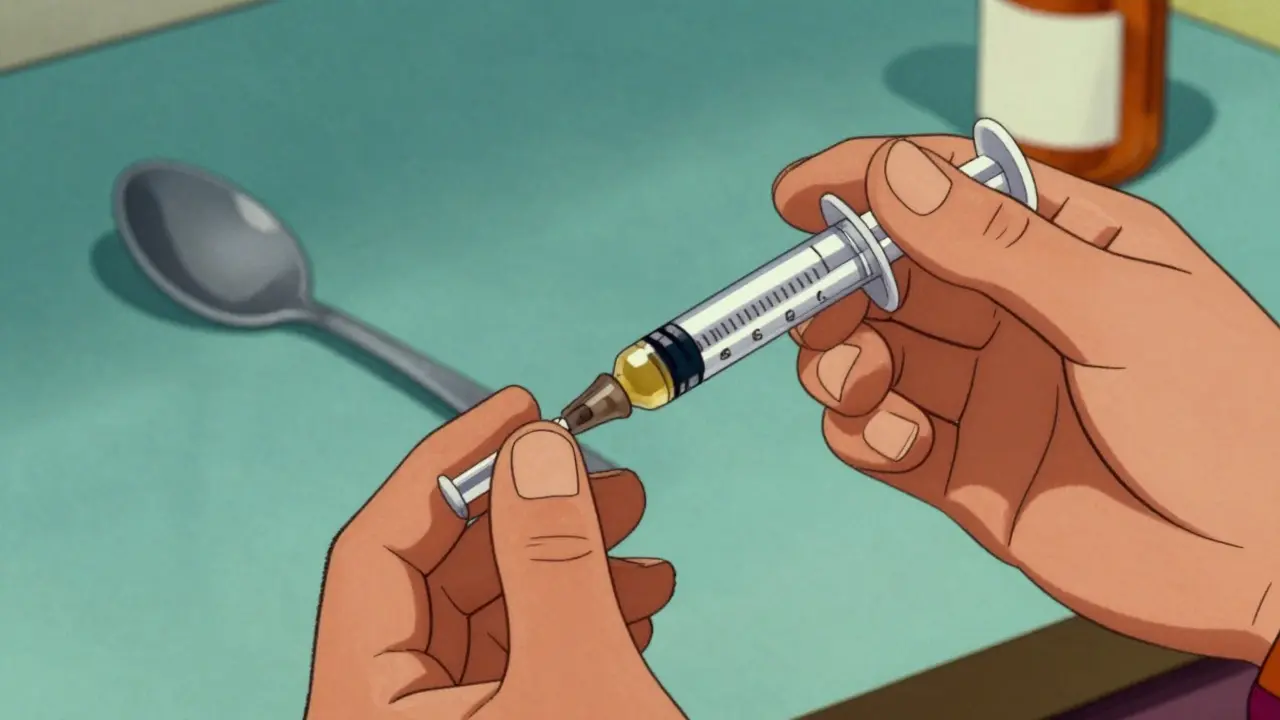
One of the most frequent sources of confusion comes right from the medicine bottle label. You might see instructions written for adults or vague ranges. For children, especially those under 40 kg, dosing must be calculated by weight, typically in milligrams per kilogram (mg/kg).
Consider a standard antibiotic like amoxicillin. Guidelines suggest 25-35 mg/kg/day divided into doses every eight hours for seven days. If your child weighs 10 kg, that calculation determines the total volume of liquid they receive. If you guess, you risk under-dosing, which feeds antibiotic resistance, or overdosing, which stresses their kidneys.
Research from JAMA Pediatrics shows that 68% of pediatricians struggle with administering accurate doses when commercial formulations aren't perfect fits. A toddler weighing 12 kg might fall between standard cup markings. Using kitchen teaspoons is a dangerous habit; studies show 42% of caregivers make errors with non-standard measuring devices. You need a marked syringe or an oral dosing spoon designed for medicine.
For pain management, the math gets trickier. Infants under 12 years often need specific analgesics every 6-8 hours, capping at a maximum single dose of 600 mg. Once they hit 12 years, the range shifts to adult-like protocols, but the ceiling remains vital. Acetaminophen, for example, has a strict daily limit of 75 mg/kg/day. Exceeding this can cause liver damage, which happens silently until it becomes severe.
Formulation Challenges: Taste and Volume
Even if the dose is correct, getting the medicine down is a battle. Children under five typically require liquid formulations, chewable tablets, or orally disintegrating forms. Standard pills pose choking hazards and cannot be swallowed safely by toddlers.
Age-Appropriate Formulations must consider taste, volume, and administration ease. Community health centers report that 35% of medication non-adherence stems from these issues. A bitter liquid antibiotic can trigger gag reflexes. During the 2022-2023 influenza season, switching to fruit-flavored oseltamivir increased adherence by 58%. Palatability is not a luxury; it is a clinical necessity.
Parents often ask if they can crush a pill to mix with food. Generally, you shouldn't unless directed. Extended-release coatings protect the stomach or control release speed. Crushing them can dump the whole dose at once. Liquid versions exist for this reason, often sweetened to mask bitterness. However, sugar-free options are now preferred to protect developing teeth, balancing taste with dental hygiene.
Electronic health records are starting to help here. Hospitals implementing pediatric safety modules have seen inappropriate dosing decrease by 61%. Yet, at home, you are still the last line of defense. Keep a consistent routine and never double up if a dose is missed. Always check the concentration printed on the bottle, as older brands might have different strength ratios than newer versions.
Antibiotic Stewardship in Young Patients
Viral infections like colds or the flu do not respond to antibiotics, yet inappropriate prescribing happens in 30% of pediatric outpatient visits. This contributes to antimicrobial resistance, causing thousands of deaths annually. The challenge lies in distinguishing bacterial ear infections from viral congestion.
Amoxicillin remains the first-line treatment for otitis media in 87% of cases. Azithromycin is reserved for those allergic to penicillin, despite convenience, because bacteria develop resistance to it quickly (25-40% rate in some regions). You must trust the diagnosis. If a doctor prescribes a broad-spectrum drug, ask if it covers typical pathogens like Streptococcus pneumoniae.
Also, watch for interactions. About 22% of pediatric hospital admissions involve children taking five or more medications simultaneously. This polypharmacy increases the risk of side effects. If your child is on multiple prescriptions, keep a written log. Share this list with every specialist you visit. It ensures nobody prescribes something that clashes with another drug.
Navigating Red Flags and Emergencies
Adverse drug reactions affect up to 18% of hospitalized children, with half occurring in ages 1-10. What signs should worry you? Watch for unusual rash, persistent vomiting, or breathing changes. While mild diarrhea might happen with antibiotics, severe dehydration needs immediate care.
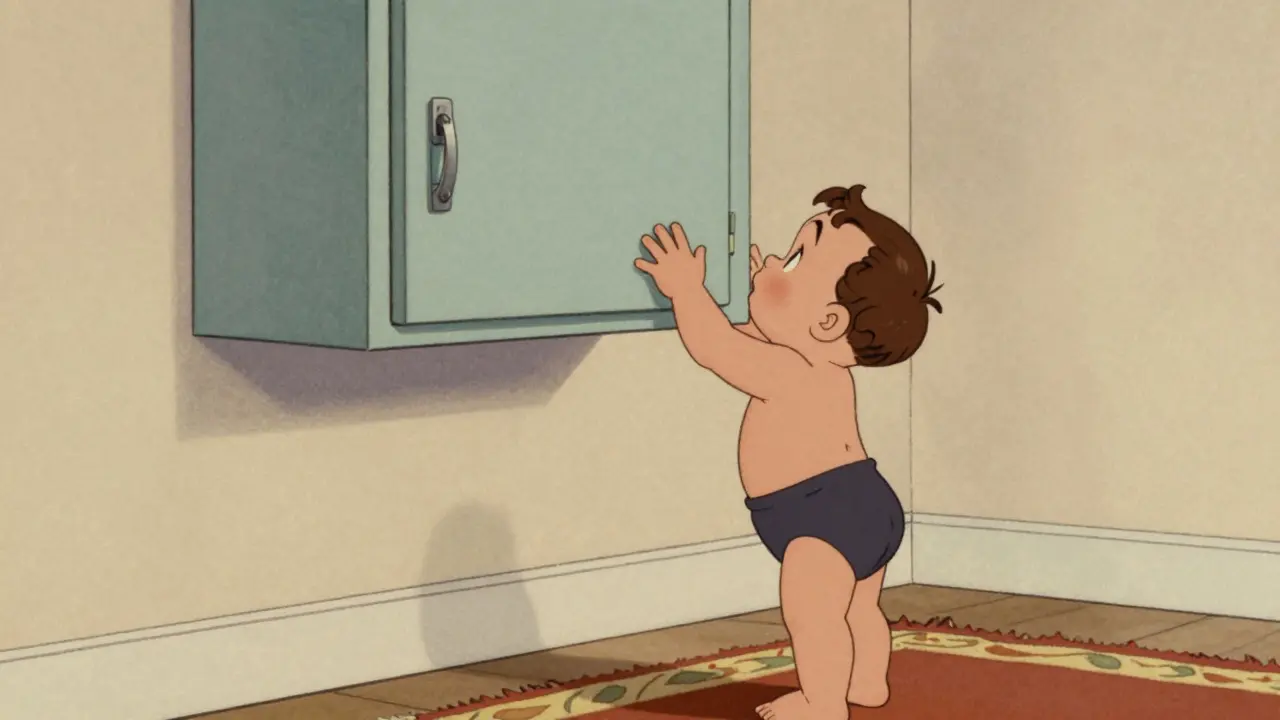
Keep emergency numbers handy and know the symptoms of anaphylaxis. Even common medicines can cause rare allergies. Store all medications out of reach. Childproof caps aren't foolproof; kids treat them like puzzles to solve. The safest storage is high and locked away.
Can I give my child leftover antibiotics?
Absolutely not. Antibiotics expire and lose potency. More importantly, previous sickness might be different from the current infection. Using old meds promotes resistance.
Is it okay to cut an adult pill in half?
Only if your pharmacist says yes. Some pills are coated or controlled-release, meaning cutting them ruins the medication delivery system.
What if my child refuses to take liquid medicine?
Try mixing small amounts with chocolate syrup or yogurt if allowed by the label. Never force it deeply into the throat to avoid choking.
How do I measure doses accurately?
Never use kitchen spoons. Use the syringe or cup provided with the medication, or buy a calibrated oral dosing tool from a pharmacy.
When should I call the doctor about a reaction?
Call immediately if you notice swelling, trouble breathing, hives, or if your child seems unusually lethargic after a dose.
Taking charge of your child's medication safety starts with knowing the basics. It is better to ask questions than to guess. With the right tools and knowledge, you can minimize risks and support their recovery effectively.
Goodwin Colangelo
April 3, 2026 AT 06:23Dosing errors are the biggest risk factor when dealing with kids.
Most parents just grab whatever is in the cabinet without checking the concentration label.
I remember seeing a case where teaspoons were used instead of calibrated syringes.
The volume variance is massive between household spoons and medical tools.
It makes me worry whenever I see older parents giving liquid medicine.
They usually think they know exactly what a milliliter looks like.
But visual estimation fails consistently under stress or fatigue.
We really need better labeling on every single bottle produced commercially.
Rachelle Z
April 3, 2026 AT 06:55This info is super scary!! 😱🙀
I never realized how dangerous kitchen spoons actually were!!!
Thanks for sharing this stuff!! 👍💯
Hope Azzaratta-Rubyhawk
April 4, 2026 AT 19:07You absolutely need to read the label on every bottle before handing it to a kid.
Habit kills people way faster than most folks realize these days.
Metabolism shifts wildly when you grow up from infant to teen.
So many grown ups just slice a pill in half for toddlers thinking it works.
That bad idea ruins livers before anyone sees the damage signs.
We gotta educate ourselves because pharmacies move way too fast.
Panic hits hard during sickness and makes people forget the basics.
Shaking hands drop the medicine cup and mess up the exact amounts needed.
Calm breathing helps you measure the right weight ratio correctly.
Expiration dates are there for a reason and ignoring them is risky.
Old antibiotics build resistance that hurts us all eventually.
Writing down every med taken helps doctors spot conflicts quickly.
Five drugs together create danger zones nobody plans for.
Kids deserve a recovery path that keeps side effects far away.
Knowledge saves lives and stops unnecessary trips to hospitals yearly.
HARSH GUSANI
April 5, 2026 AT 15:07People in our country manage this fine without western rules.
Doctors here know better than these lists anyway.
Trust your local pharmacist more than internet guides.
simran kaur
April 7, 2026 AT 03:13These guidelines are pushed by big pharma interests heavily.
They want you dependent on their specific liquid formulations.
Watch how fast new drugs hit the market after these warnings.
Natural immunity gets ignored while sales spike massively.
Jenna Carpenter
April 7, 2026 AT 06:59Yiu shoudl never guess with dosages.
Meds r dangrous if u dont measure right.
I cant beleive peopel skip this step alway.
Gud thing this post is here to help us.
Mark Zhang
April 7, 2026 AT 18:55Typos aside the message is important indeed.
Mistakes happen when we get tired or rushed.
Being careful keeps everyone safe in the house.
sophia alex
April 9, 2026 AT 01:50Only educated parents understand the gravity of this situation!
The masses will continue to harm their children ignorantly :-(
We know better and take the extra steps needed.
Brian Shiroma
April 10, 2026 AT 23:16Education does not always equal good parenting skills honestly.
Some experts follow the labels too rigidly for their own good.
Blind adherence is just another form of negligence sometimes.
Joseph Rutakangwa
April 12, 2026 AT 10:28Weight matters most here.